Barbell Split Jerk
The Barbell Split Jerk is an explosive overhead lift where you drive a barbell from shoulder height to a locked-out position overhead while dropping into a split stance, one foot forward and one foot back. It comes from Olympic weightlifting, where it's the second half of the clean and jerk, but it has earned a place in general strength training because it teaches you to apply force fast and to stabilize a heavy load overhead in an athletic position.
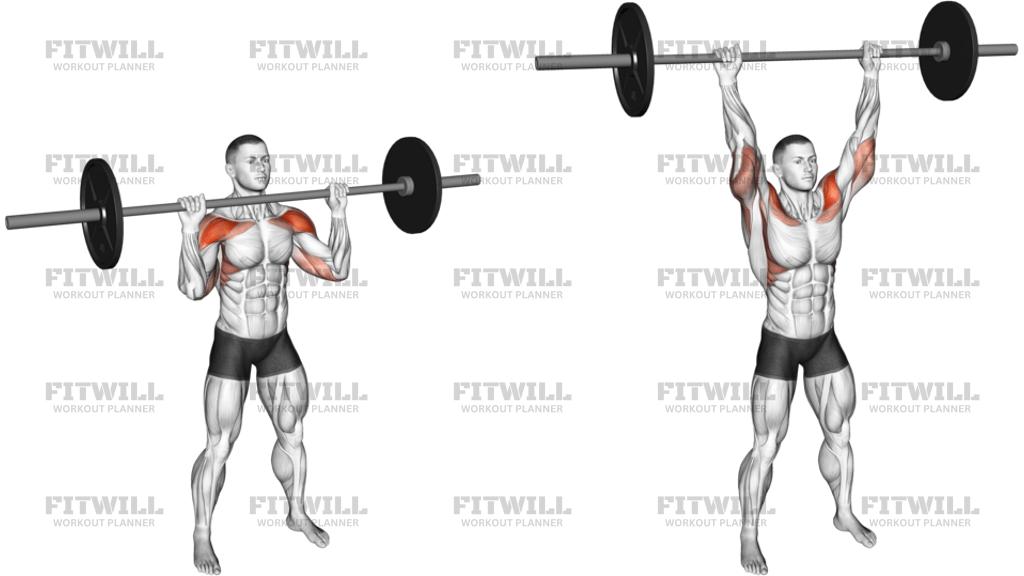
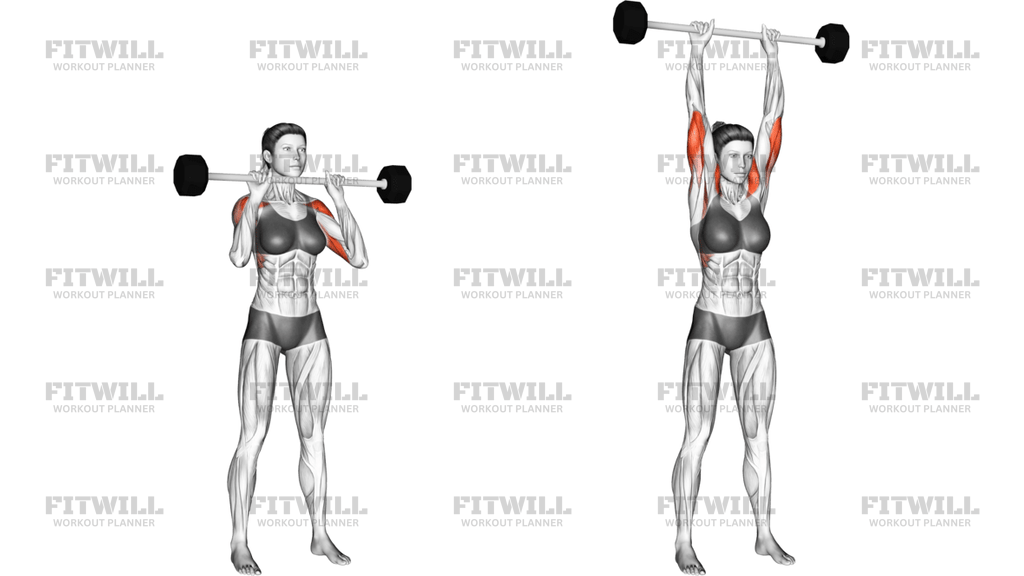
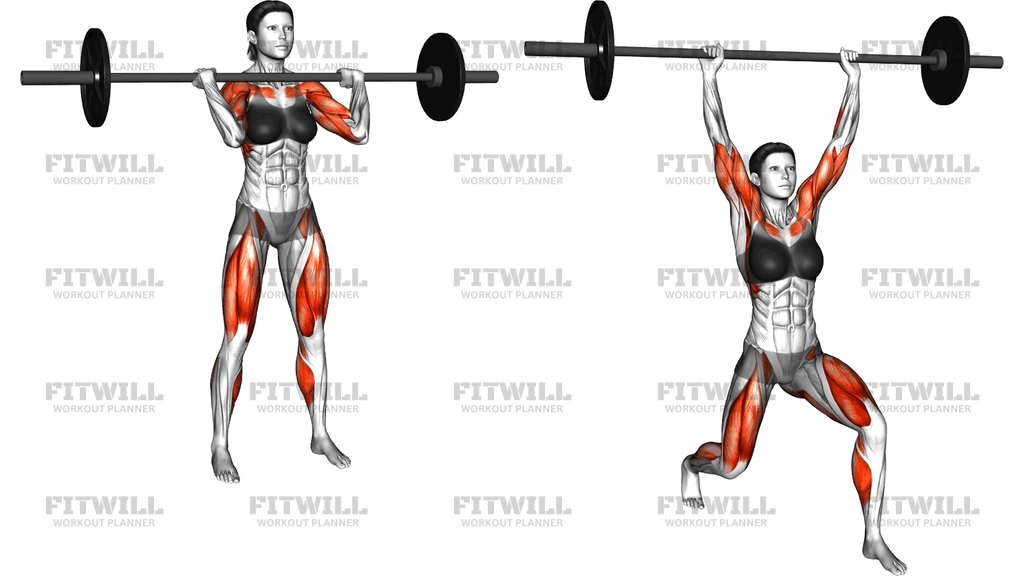
The movement starts from the front rack: barbell resting on the front of your shoulders, elbows down and relaxed, feet about hip-width apart. You perform a short, controlled dip by bending the knees, then drive upward violently through the legs. That leg drive, not your arms, is what launches the bar. As the bar travels up, you quickly split your feet and punch your arms into full extension, catching the bar with your torso upright and your head slightly forward so the bar stacks over your shoulders, hips, and ankles.
The split is what separates this from a push press or push jerk. Splitting the legs lets you drop deeper under the bar without needing as much overhead or hip mobility, so many lifters can jerk more weight this way than with any other overhead variation. The front leg takes most of the load while the back leg provides balance and a brake against forward drift. Because both feet stay in contact with the floor, the catch is stable and repeatable once you learn the footwork.
Muscularly, the Barbell Split Jerk is a full-body effort. The quads, glutes, and calves produce the drive, the core transfers that force into the bar, and the shoulders, triceps, and upper back finish the lift by pressing hard into the lockout. The front-load position also challenges the upper back and midline far more than a behind-the-neck or dumbbell variation.
This lift suits intermediate lifters who already have a solid front squat and overhead press and want to develop power, coordination, and overhead strength. It is common in weightlifting programming, CrossFit-style training, and off-season work for athletes in jumping and sprinting sports. Start light, treat the footwork as a skill, and only add load once you can catch in a balanced split with the bar stacked over your midline every rep. If you have shoulder or knee issues that make deep split catches uncomfortable, a push press is a simpler substitute while you build the positions.
[ Workout Log & Planner ]
Put your next workout in Fitwill
Keep your plan and training log ready when you are.


Instructions
- Set a barbell in a rack at about upper-chest height and grip it with your hands roughly shoulder-width or slightly wider, just outside your shoulders.
- Step under the bar and take it into a front rack position: bar resting on the front of your shoulders and upper chest, elbows pointed down and slightly forward, wrists neutral. Unrack and stand tall with feet hip-width apart.
- Take a deep breath into your belly, brace your core like you are about to be punched, and pull your ribs down over your hips.
- Dip by bending your knees a few inches, keeping your torso vertical and your weight balanced over the middle of your feet.
- Drive up explosively through your legs, fully extending your hips and knees so the bar pops off your shoulders.
- As the bar rises, split your feet: one foot steps forward, the other drives straight back, and you punch your arms hard to lock the bar out overhead.
- Catch in the split with your front shin roughly vertical, your back knee softly bent, and the bar directly over the base of your skull, not in front of it.
- Hold the lockout for a beat, then bring your front foot back to hip width, followed by the back foot, keeping the bar locked out until you are standing straight.
- Exhale at the top, take a new breath, and reset your brace before dipping for the next repetition.
- After your final rep, lower the bar with control back to your shoulders or safely to the floor.
Tips & Tricks
- The dip is short and controlled, but the drive should be violent. A slow, grindy push with the arms is the most common reason the bar ends up out front.
- If the bar drifts forward on the catch, your head is probably pulling back too early or your front foot is landing too close. Step the front foot further out and keep the chin tucked until the bar passes your face.
- Your back foot should land first or simultaneously with the front foot, with the toes turned slightly inward. Landing flat-footed on the back leg kills your balance.
- Keep your elbows down in the dip, not flared high. High elbows in the dip tip the bar forward off the shoulders and force you to chase it.
- Practice the split footwork with an empty bar or a broomstick until the pattern is automatic. Jerking fails far more often from confused feet than from weak arms.
- Do not drop the back knee all the way to the floor in the catch. A moderate split depth with a vertical front shin is more stable and easier to recover from.
- Lock the elbows fast and press your shoulders up toward the bar. A soft elbow catch that you finish pressing out turns the lift into a slow press and loses the timing benefit.
- Recover by stepping back first with the front foot, then bringing the back foot in. Walking the feet together under load is a common way to lose the bar forward.
- Keep your torso upright during the dip. If your chest drops, the bar slides forward and the drive goes into your lower back instead of into the bar.
Frequently Asked Questions
Which muscles does the Barbell Split Jerk work the most?
The quads, glutes, and calves generate the drive, while the shoulders and triceps finish the lockout. Your core and upper back work hard to transfer force from the legs into the bar and keep it stacked overhead.
Is the Barbell Split Jerk suitable for beginners?
It is better learned after you are comfortable with the front rack position and a basic overhead press. Beginners can start with an empty bar or a light bar, drilling the dip, drive, and split footwork before adding meaningful load.
How deep should the split be in the Barbell Split Jerk catch?
Deep enough that your elbows lock out without you having to press the bar up, but not so deep that your back knee crashes toward the floor. A vertical front shin and a soft back knee with the heel up is the target position.
Why does the bar keep landing in front of my head?
The bar usually drifts forward because the dip sends it off the shoulders at an angle, or because the feet land too close together so there is no room for your head to move forward under the bar. Step the front foot further out, let your chin pull back slightly as the bar passes, and finish with the bar over the base of your neck.
How is the Barbell Split Jerk different from a push press?
In a push press you stay standing and press the bar up with your arms for most of the range. In the split jerk you drive the bar with your legs and drop into a split stance to catch it with straight arms, which lets you handle heavier loads.
Which foot should go forward in the split?
Use whichever leg feels natural and balanced, and stick with it so the pattern becomes automatic. Many lifters match the leg they would step with instinctively, but there is no correct side.
How much should I dip before driving the bar?
A short dip of roughly two to four inches is enough. A deep, slow dip makes it hard to reverse direction powerfully and often causes the chest to lean forward.
Can I use dumbbells instead of a barbell for this movement?
Yes, a dumbbell split jerk is a useful regression or variation, but the barbell version lets you load heavier and trains the specific front rack position used in weightlifting. Keep the same dip, drive, and split mechanics.
How should I miss a Barbell Split Jerk safely?
If the bar is drifting out of position, push it away from your body and step back out of the split rather than chasing it. Use bumper plates or a platform if available, and never try to catch a failed jerk with a bent-arm grip.
How many sets and reps should I do for the Barbell Split Jerk?
Because it is a technical power lift, lower reps work best, usually sets of 1 to 3 repetitions with full rest between sets. Stop the set when your footwork or lockout position starts to break down.