Dumbbell Single Arm Leaning In Lateral Raise
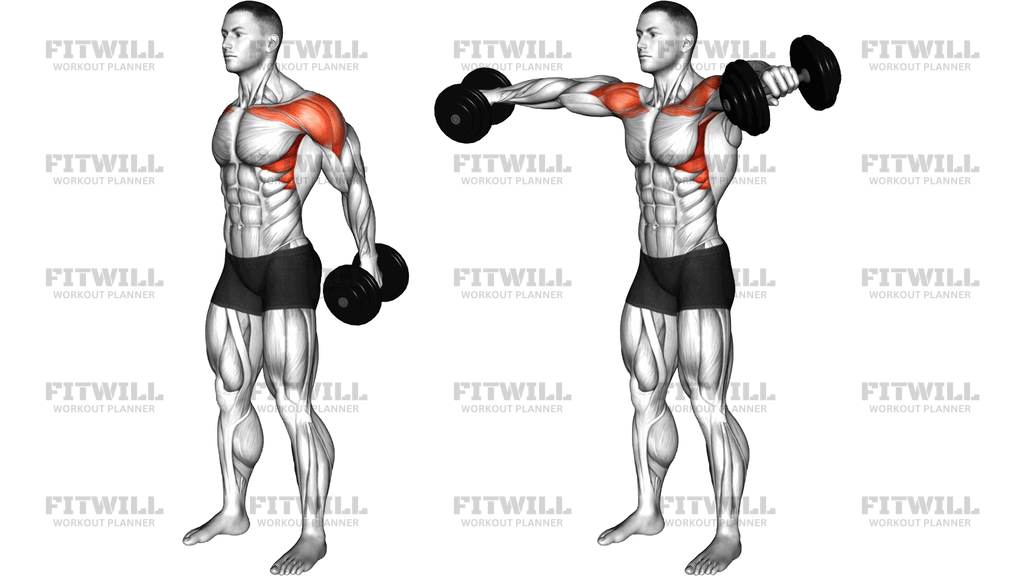
The Dumbbell Single Arm Leaning In Lateral Raise is a lateral raise variation where you hold onto a fixed bar or rack upright with one hand, lean your body away at an angle, and raise a dumbbell with the free arm. The lean is the whole point of the setup: by tilting your torso sideways, your working arm starts closer to your body's midline, which lengthens the range the shoulder travels through and keeps tension on the side deltoid at the very bottom of the rep, where a standing lateral raise is usually weakest.
This version is especially useful for lifters who feel standard lateral raises mostly in the front of the shoulder or in the traps, or who swing the weight up with momentum once the set gets hard. Because you are braced against the rack, your torso has less freedom to sway and cheat, so the side shoulder has to do the lifting on its own. The angle also gives you a slightly stronger contraction in the upper half of the movement, which is why many coaches use it as a quality volume builder after heavier pressing work.
To set it up, grip a secure upright or bar at about hip to waist height with your non-working hand, feet close together near the base of the rack. Let your body lean outward so your torso, working arm, and the rack roughly form a wide triangle. Hold the dumbbell at your thigh with a neutral grip, arm relaxed but not fully slack.
From there, raise the dumbbell out and up in a smooth arc until your arm reaches roughly shoulder height or slightly above, keeping a soft bend in the elbow. Lead with the elbow rather than the hand, and avoid shrugging the weight up. Lower the dumbbell slowly along the same path until it is near your thigh, then begin the next rep. Exhale as you lift, inhale as you lower.
Use light to moderate weight on this exercise. The leaning position adds a balance and core-stability demand, and the stretched starting position puts more load on the shoulder at the bottom of the range, so heavy dumbbells tend to turn the movement into a swing. Pick a load you can control for 10 to 15 strict reps per side, keep your shoulders level and your ribs stacked, and stop the set as soon as your body starts pulling on the rack to help the lift.
If you have any current shoulder discomfort, warm up thoroughly first and work within a pain-free range. A cable handle set at a low pulley is a close substitute if no suitable rack or fixed bar is available for bracing.
[ Workout Log & Planner ]
Put your next workout in Fitwill
Keep your plan and training log ready when you are.


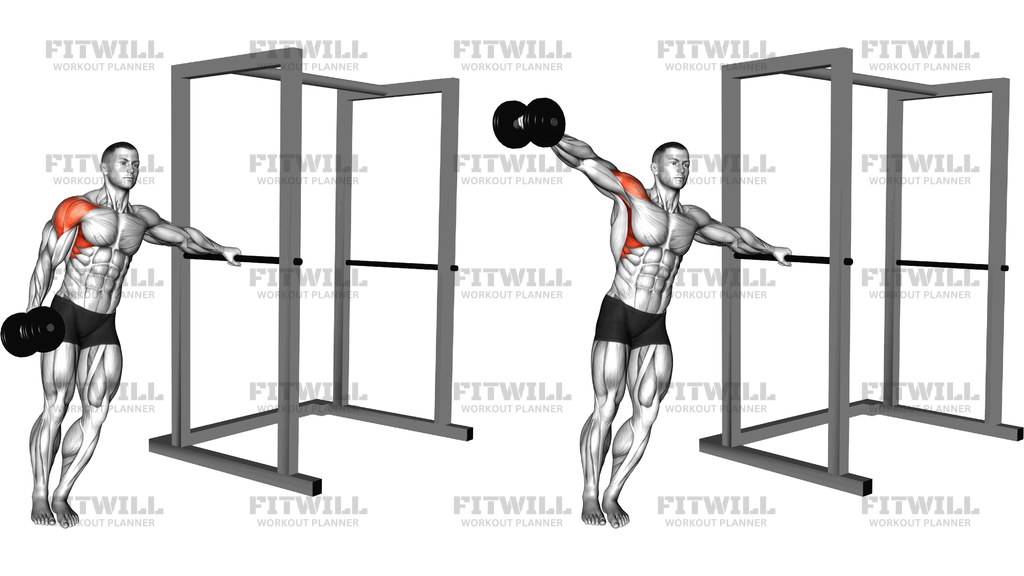
Instructions
- Stand beside a power rack or another secure fixed bar and grip an upright at roughly hip to waist height with your non-working hand.
- Place your feet close together near the base of the rack, then let your hips drift away from the rack so your torso leans outward at an angle while your gripping arm stays extended.
- Pick up a dumbbell with your free hand using a neutral grip, letting it hang at your outer thigh with a small, comfortable bend in the elbow.
- Brace your core, keep both shoulders level, and check that your neck stays long rather than tilting down toward the floor.
- Raise the dumbbell out to the side in a wide arc, leading with the elbow, until your arm is level with or slightly above your shoulder.
- Pause briefly at the top with the arm roughly parallel to the floor, feeling the side of the shoulder working rather than the trap.
- Lower the dumbbell under control along the same arc until it is just short of your thigh, keeping tension so the arm does not drop and swing.
- Exhale during the raise and inhale during the lowering phase on every rep.
- Complete all reps on one side, stand back upright before releasing your grip on the rack, then switch hands and repeat on the other side.
Tips & Tricks
- If you find yourself pulling on the rack to start each rep, the dumbbell is too heavy or the set is finished; the free hand is there for balance, not assistance.
- The more you lean away from the rack, the harder the bottom half of the rep becomes, so start with a modest angle and increase it gradually as your control improves.
- Do not let your hips sag toward the floor or your torso rotate toward the working side; this usually means the core is fatiguing before the shoulder is.
- Keep the working elbow slightly bent and fixed at the same angle throughout; straightening the arm at the top is a common way lifters try to make the top of the rep easier.
- If your upper trap takes over, consciously press your working shoulder blade down before the first rep and keep it there as you raise the arm.
- Because the arm hangs across your body at the start, a brief warm-up set without the lean helps you find the right arc before loading the shoulder.
- Grip the rack at a height that lets you lean comfortably; holding it too high forces your shoulder to ride up and shortens the raise.
- Work barefoot or in flat shoes with stable footing, since the leaning stance puts more demand on your ankles than a normal standing raise.
- Do the weaker or non-dominant side first and match its rep count with the stronger side to keep both shoulders developing evenly.
Frequently Asked Questions
What muscles does the Dumbbell Single Arm Leaning In Lateral Raise work?
The main muscle is the lateral deltoid on the side of the working shoulder. The front deltoid and upper traps assist, and your core and hip stabilizers work to hold the leaning position.
Why lean away from the rack instead of doing a normal standing lateral raise?
Leaning shifts the starting position so the dumbbell begins closer to your midline, which loads the side deltoid in a longer range and keeps tension at the bottom of the rep. The rack also stops torso swinging, making it harder to cheat.
Is the Dumbbell Single Arm Leaning In Lateral Raise suitable for beginners?
Yes, as long as the weight is light and the lean angle is modest at first. Beginners should practice holding the leaning position without a dumbbell until they feel stable before adding load.
How high should I raise the dumbbell in this exercise?
Raise the arm until it is about level with your shoulder, or slightly above if it stays comfortable. Going far past shoulder height mainly shifts work to the upper traps rather than the side deltoid.
What should I do if my traps take over during the Dumbbell Single Arm Leaning In Lateral Raise?
Reduce the weight, keep the shoulder blade pressed down before each rep, and stop the raise at shoulder height. Shrugging is usually a sign the load is too heavy for the deltoid to lift on its own.
Can I do this exercise without a rack?
Yes. Any secure fixed bar or sturdy upright works for bracing, and a single handle attached to a low cable pulley is a close alternative that keeps the same leaning setup.
How heavy should the dumbbell be?
Choose a weight you can lift for roughly 10 to 15 strict reps without pulling on the rack or swinging the arm. The leaning position makes the shoulder work harder at the bottom, so most lifters need less weight than in a standard lateral raise.
How many sets and reps should I use?
Two to four sets of 10 to 15 reps per side works well, usually placed after heavier compound pressing or pulling exercises as targeted shoulder work.
Is it safe for the shoulder joint?
For most people it is a safe isolation exercise when done with controlled weight and a pain-free range. Warm up first, and if raising the arm to shoulder height causes pinching or discomfort, shorten the range and reduce the load.
Which side should I train first?
Start with your weaker or non-dominant arm and match the rep count on the stronger side. This helps prevent one shoulder from doing more total work than the other over time.