Dumbbell Low Windmill
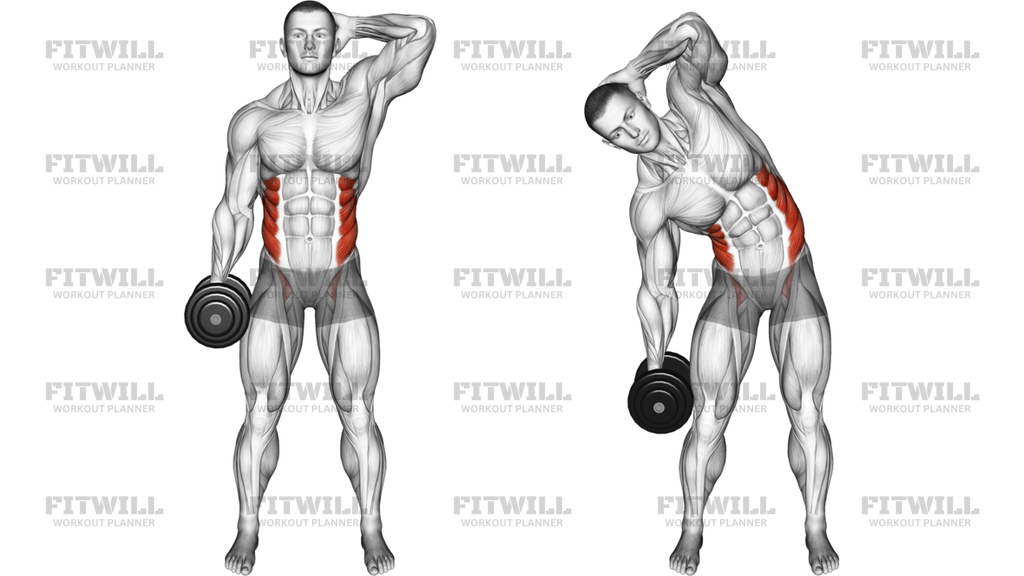
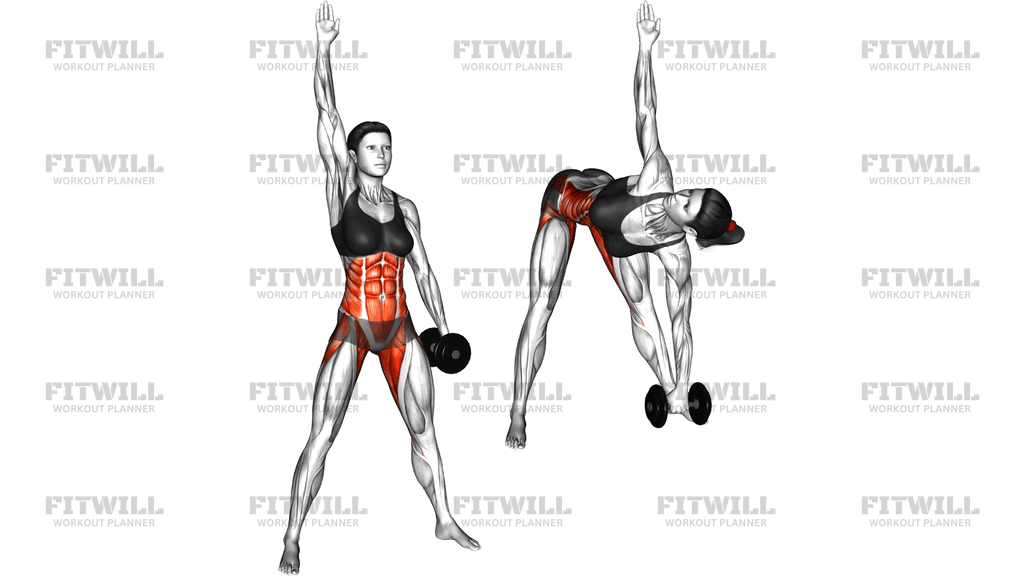
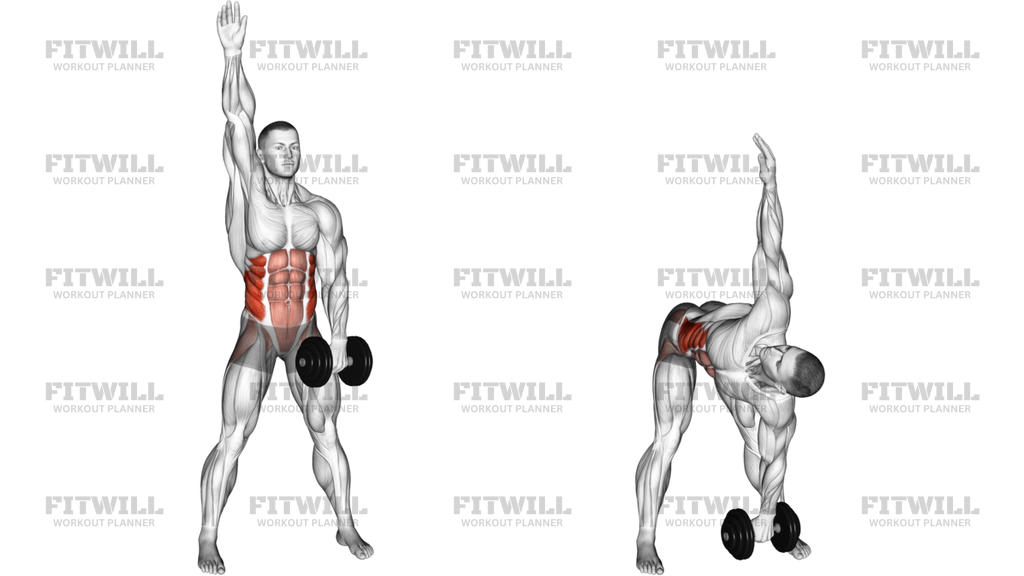
Dumbbell Low Windmill is a loaded hip hinge and rotation drill for the obliques, waist, and hip stabilizers. The image shows a single dumbbell held in the lower hand while the opposite arm reaches straight overhead, which turns the exercise into a side-bending and anti-rotation challenge rather than a simple curl or reach. It is most useful when you want trunk strength that carries over to hinging, bracing, and overhead control.
The low-hand position matters because it changes the leverage on the torso. As you hinge toward the dumbbell side, the ribs, pelvis, and shoulders have to stay organized so the spine does not collapse into a twist. The working side obliques, deep abdominal wall, and glute on the stance side help keep the torso stacked while the hamstrings and adductors allow the hip to fold. The raised arm is not decoration; it gives you a reference for shoulder position and helps keep the chest open as you descend.
Set the feet a little wider than hip width, turn them out only as much as you need, and keep the dumbbell close to the outside of the loaded-side leg. The free arm stays vertical with the palm open and the shoulder packed down. From there, push the hips back and slightly away from the dumbbell while the upper body tilts and rotates just enough to keep the top hand stacked over the shoulder. The goal is a long line from the grounded foot through the hip and rib cage to the lifted hand.
This is not a max-range movement. Only lower as far as you can while keeping the spine long, the dumbbell controlled, and both shoulders aligned. A small knee bend on the loaded side is fine if it helps you keep the hamstrings and low back out of the driver seat. Stand back up by driving through the feet, bringing the hips under you, and finishing tall without swinging the weight or cranking through the lower back.
Use it as accessory work, a warm-up for hinge patterns, or a core-strength block when you want lateral-chain tension and balance between sides. It is best performed with light to moderate loads and deliberate reps. If your shoulder mobility, hamstring length, or trunk control is limited, reduce the depth before you reduce control. The exercise should feel demanding through the side of the torso and hip, not sharp in the low back.
[ Workout Log & Planner ]
Put your next workout in Fitwill
Keep your plan and training log ready when you are.


Instructions
- Stand with your feet slightly wider than hip width and hold one dumbbell in the lower hand beside the loaded-side thigh; extend the other arm straight overhead with the palm facing forward.
- Turn the feet out only a little, keep the standing leg soft, and lock your eyes on the raised hand before you start the descent.
- Brace your midsection, keep the rib cage stacked over the pelvis, and shift your hips toward the dumbbell side without letting your chest cave in.
- Hinge at the hips and slide the dumbbell down the outside of the loaded-side leg, keeping it close to the shin and ankle.
- Let the free arm stay vertical so the shoulders remain stacked while the torso rotates just enough to keep the chest open.
- Lower only until you reach your clean limit, then pause briefly without losing the long line from the top hand through the shoulder and trunk.
- Drive through the feet to stand back up, bringing the hips forward under your torso instead of yanking with the lower back.
- Finish tall with the dumbbell back beside the thigh, reset your breath, and repeat on the same side or switch sides as programmed.
Tips & Tricks
- Keep the dumbbell close to the leg on the way down; if it drifts away from the shin, the low back usually takes over.
- Think of the raised arm as a ceiling reach, not a twist. If that hand falls forward, the rib cage usually follows.
- A small bend in the loaded-side knee is fine if it helps you keep the hips back and the torso long.
- Use your exhale to help you stand out of the bottom position; do not hold your breath so hard that your ribs flare.
- Stop the descent when the pelvis starts to tuck or the shoulder stack breaks, even if the dumbbell has not reached the ankle yet.
- Light to moderate loads work best here because the difficulty comes from control, not from moving the heaviest dumbbell possible.
- Keep pressure through the full foot of the loaded-side leg so the hip does not collapse inward as you hinge.
- If the hamstrings are the limiter, shorten the range and own the top half before chasing a deeper bottom position.
Frequently Asked Questions
What does the Dumbbell Low Windmill train?
It trains the obliques, deep core, hip stabilizers, and shoulder stack that help you resist side bending and rotation under load.
Which hand holds the dumbbell in this variation?
The dumbbell stays in the lower hand on the loaded side while the opposite arm reaches straight overhead.
How far should I hinge in the low windmill?
Only as far as you can keep the dumbbell close to the leg, the lifted arm stacked, and the spine long without rounding.
Is this exercise suitable for beginners?
Yes, if you start very light and treat it as a control drill. Beginners should keep the range short and the pace slow.
What is the most common mistake?
Letting the torso fold and twist at the same time is the big error. The goal is a controlled hip hinge with the shoulders staying organized.
Should I feel this in my low back?
No. You may feel work in the side of the trunk and the hip, but sharp low-back stress usually means the hinge or range is off.
Can I use this as a warm-up?
Yes. It works well as a warm-up for hinging, overhead work, or any session where you want trunk control and hip stability.
How do I make the exercise harder without just using more weight?
Slow the descent, pause briefly in the bottom, or slightly increase the range while keeping the dumbbell tight to the leg and the top arm stacked.