Dumbbell Russian Twist
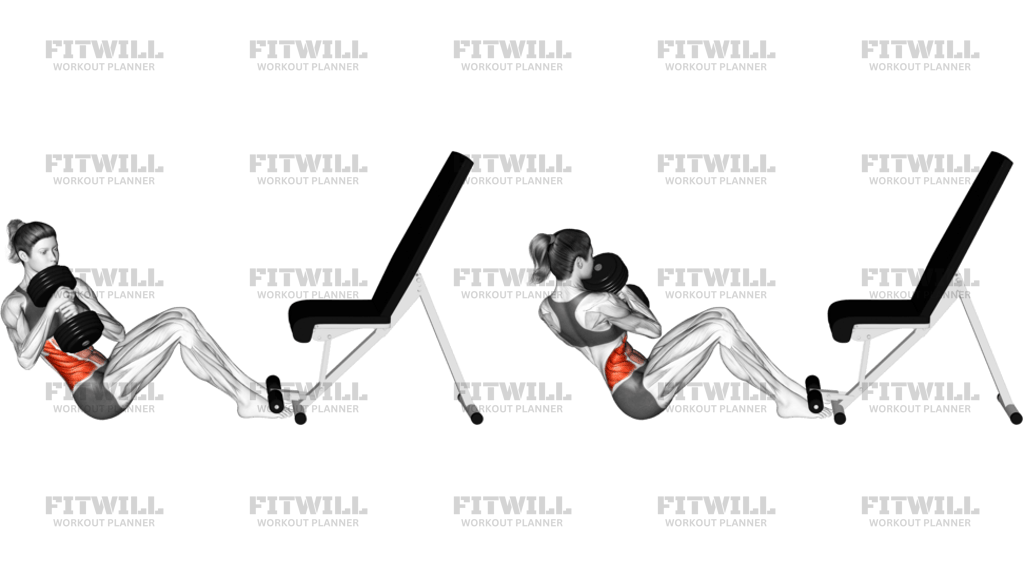
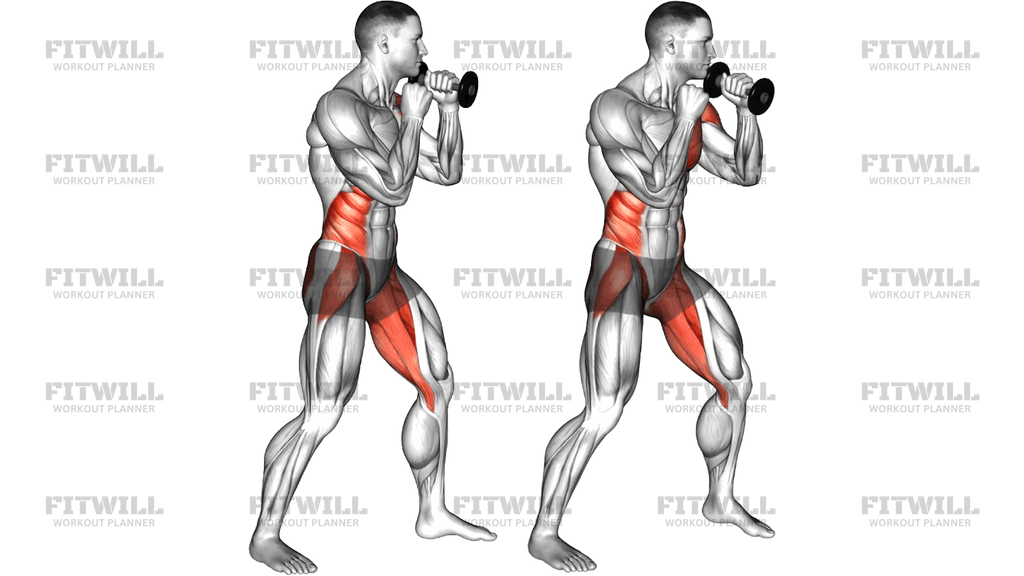
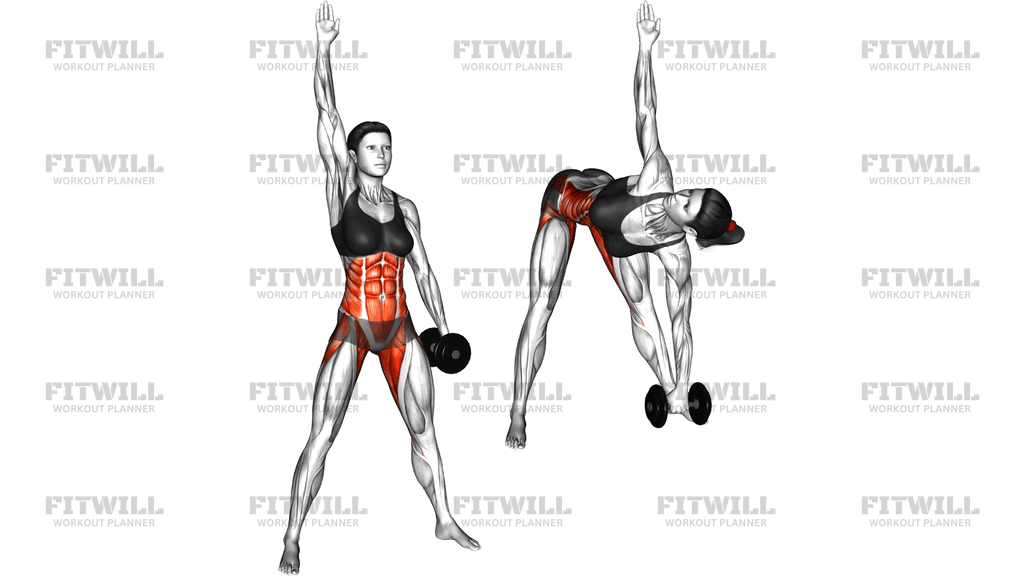
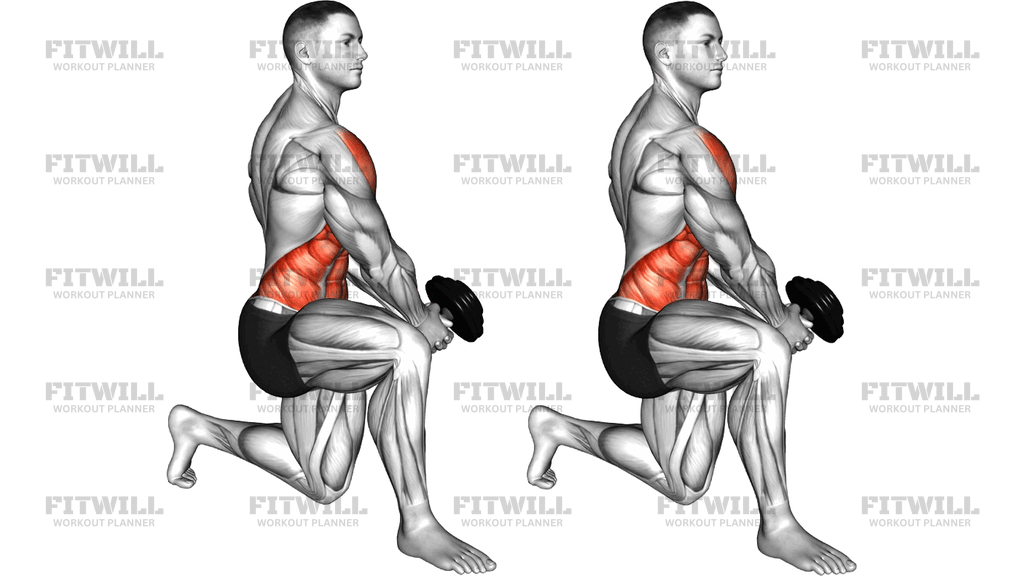
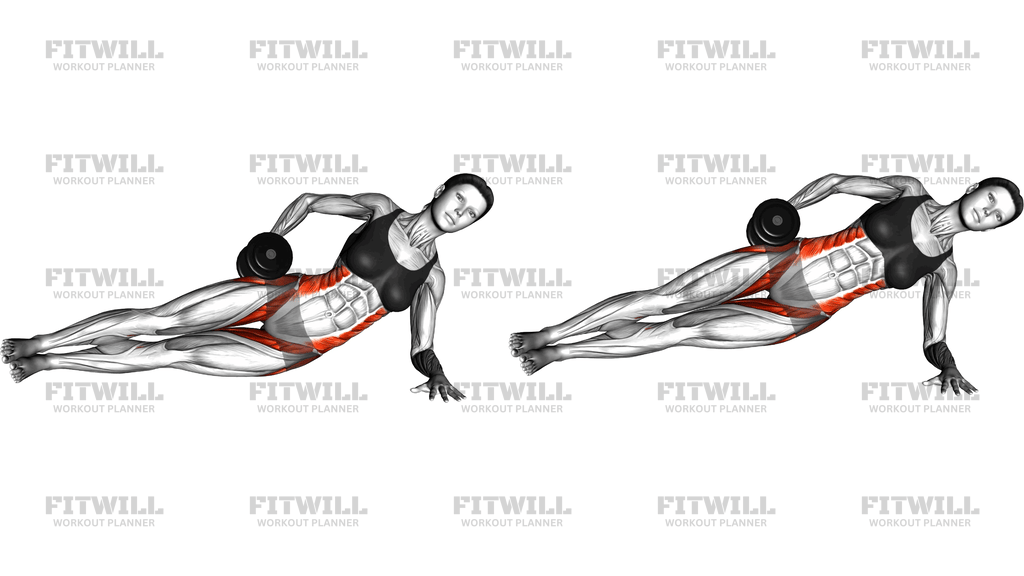
Dumbbell Russian Twist is a floor-based rotational core exercise that asks the obliques to control repeated trunk rotation while the pelvis stays mostly quiet. In the image, the lifter sits back with the knees bent, the feet anchored under a bench-style support, and the dumbbell held close to the chest so the arms stay compact and the torso does the turning.
The main training effect is rotational strength and control through the external obliques, with the rectus abdominis, transversus abdominis, and spinal stabilizers helping keep the torso organized. It is usually best treated as a controlled core drill rather than a heavy lift. The closer the weight stays to the body, the more the abs and obliques have to manage the twist instead of letting the shoulders or hips throw the load around.
Setup matters because the exercise becomes sloppy very quickly if you lean back too far, pull with the arms, or let the low back round. Sit tall first, hinge back only enough to create tension, and keep the ribs down as you rotate. The dumbbell should travel in a smooth arc from one side of the torso to the other, not bounce from hand to hand or swing across the body. A short pause at each side makes the rep more honest and usually more effective.
This movement fits well in core blocks, accessory work, athletic conditioning, or as a finisher after bigger lifts. Use a light-to-moderate dumbbell that lets you keep the shoulders, neck, and breathing steady for the full set. Beginners can scale it by keeping the feet on the floor, reducing the lean-back angle, or using a shorter twist. If the feet are anchored like the demo image, keep that anchor quiet and let the trunk create the motion instead of dragging yourself into the turn with the legs.
[ Workout Log & Planner ]
Put your next workout in Fitwill
Keep your plan and training log ready when you are.


Instructions
- Sit on the floor with your knees bent and your feet anchored under a bench or other stable support, then hold one dumbbell with both hands close to your chest.
- Lean your torso back until your abs are engaged and your spine stays long, keeping your chest open and your neck relaxed.
- Brace before you turn so your ribs and pelvis stay organized instead of collapsing into the twist.
- Rotate your shoulders and ribcage to one side, moving the dumbbell in a small arc toward the outside of that hip.
- Exhale as you reach the end of the twist and briefly pause without bouncing or jerking the load.
- Reverse the motion under control, bringing the dumbbell back through center before rotating to the other side.
- Keep the movement coming from your torso, not from swinging the arms or kicking the legs.
- Continue alternating sides for the planned reps, then bring the dumbbell back to center and sit taller before ending the set.
Tips & Tricks
- Keep the dumbbell tight to your sternum; letting it drift away from your body turns the twist into a shoulder swing.
- Rotate the ribcage, not just the hands. If your elbows move a lot but your torso does not, the load is too light or the range is too forced.
- A short pause at each side makes the obliques do more of the work and reduces momentum.
- If your low back rounds, sit a little taller or reduce how far you lean back before twisting.
- If the anchored feet pull your hips forward, move the support slightly farther away or keep the feet lighter on the floor.
- Choose a weight you can control for the last rep without speeding up the descent back through center.
- Keep the chin neutral and the shoulders down so the neck does not take over the set.
- Exhale into each turn so the trunk can brace without holding a rigid breath for the entire set.
Frequently Asked Questions
What muscle does Dumbbell Russian Twist target most?
The obliques are the main target, especially when you keep the dumbbell close and rotate the torso instead of swinging the arms.
Can beginners perform this exercise?
Yes. Beginners should start with a light dumbbell, a smaller lean-back angle, and a slower twist so the low back stays comfortable.
Do I need to hook my feet under a bench?
No, but the bench-style anchor shown in the image can help keep the legs steady. If you use one, make sure it is stable and does not pull you forward.
Should the dumbbell travel far away from my body?
No. Keep it close to the chest or upper sternum so the obliques have to control the turn instead of the shoulders throwing the weight around.
What should move first, my hips or my shoulders?
The shoulders and ribcage should rotate first while the hips stay mostly quiet. If the knees are swinging, the set is getting too momentum-driven.
Why does this exercise bother my lower back sometimes?
Usually the lean-back angle is too deep or the torso is rounding. Sit a little taller, shorten the twist, and keep the ribs down.
Is this more of a strength move or a core endurance move?
It is usually trained as a controlled core endurance and stability drill, although slower pauses and heavier dumbbells can make it feel more strength-focused.
How can I make the exercise harder without using a heavier dumbbell?
Slow the tempo, pause at each side, or keep the feet less supported so the trunk has to control more of the rotation.