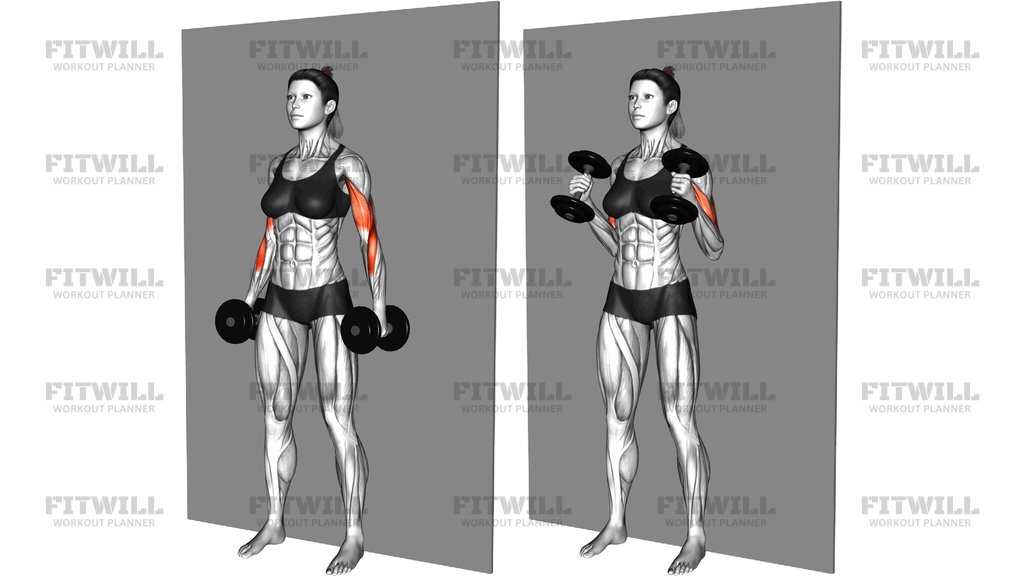
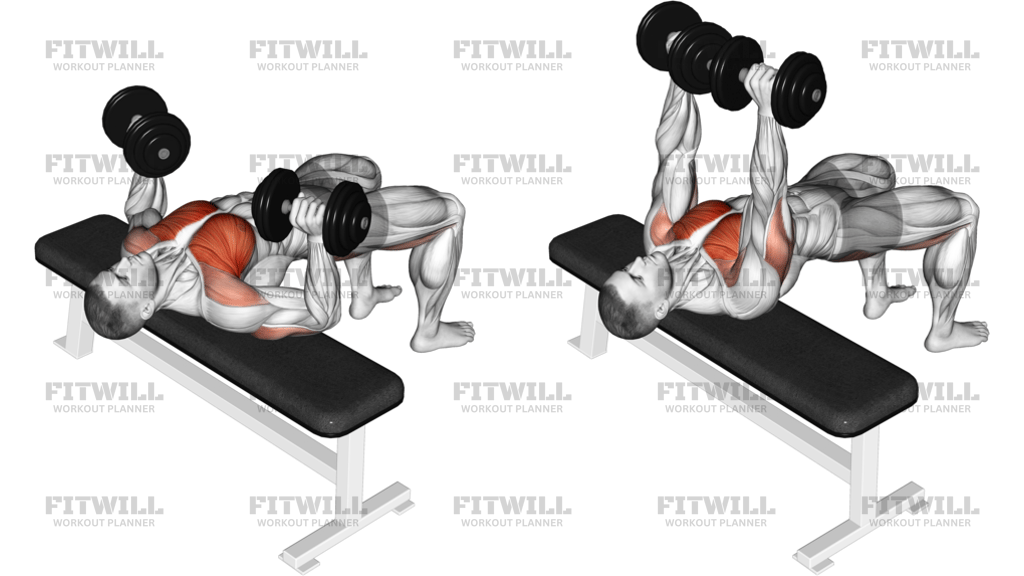
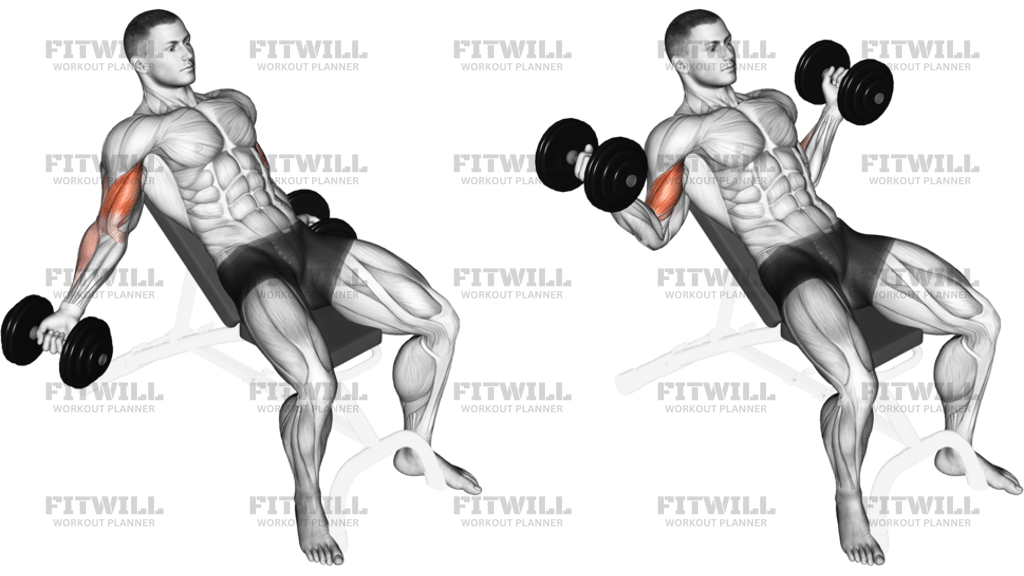
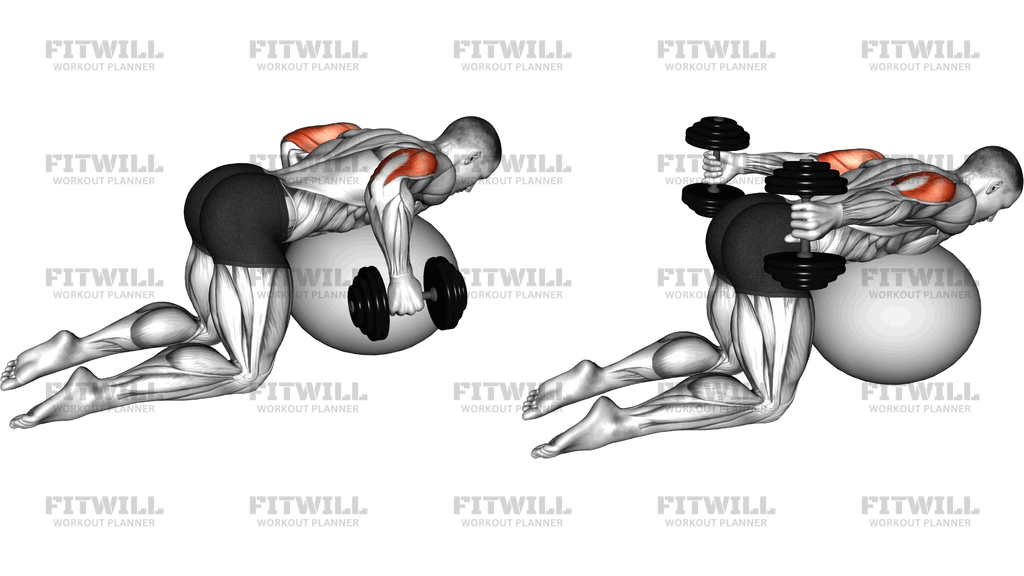
Dumbbell Underhand Front Raise
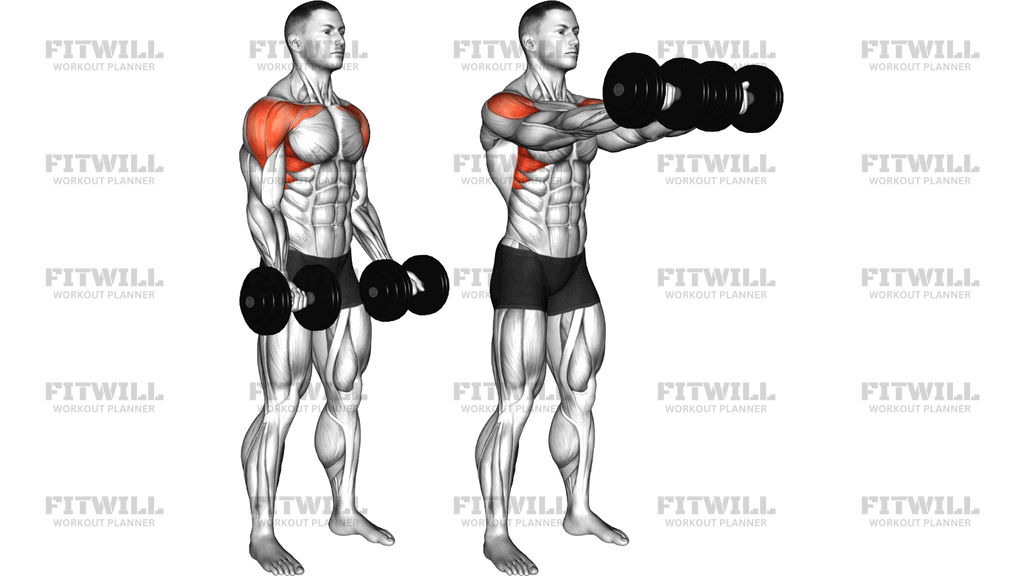
The Dumbbell Underhand Front Raise is a standing isolation exercise where you lift a pair of dumbbells straight out in front of your body to shoulder height, keeping your palms turned up toward the ceiling throughout the lift. That underhand grip is what separates this version from the standard neutral-grip or overhand front raise, shifting slightly more emphasis onto the front delts and the clavicular head of the chest as the arms travel upward.
The setup is simple: stand tall with a dumbbell in each hand, arms hanging at your sides, palms facing forward in front of your thighs. From there, you raise both dumbbells together along a straight vertical path until your arms are roughly parallel to the floor, then lower them under control. Because both arms work at the same time with the same load, it is easy to spot and correct side-to-side strength differences over a few sessions.
This movement is useful for anyone who wants to build noticeable front shoulder development, particularly lifters whose pressing work does not fully cover direct anterior deltoid volume. It also carries over to overhead pressing, throwing, and any daily task that involves lifting something out in front of the body. Since the front delts already get heavy involvement from bench presses and overhead presses, this raise works best as a targeted accessory rather than the centerpiece of a shoulder routine.
The underhand position matters because it changes how the arm lines up at the shoulder. With the palm rotated up, the anterior deltoid is placed in a favorable line of pull, and the upper chest fibers contribute more than they would in a pronated version. The trade-off is that the position can feel less comfortable for lifters with cranky shoulders, so the range of motion should stay within what feels smooth and pain-free rather than forcing the dumbbells to eye level.
Execution quality comes down to controlling the torso. The weight hangs far from your body at the top, which creates a long lever arm and a strong urge to swing or lean back to finish the rep. Keeping your ribs down, glutes engaged, and the lift driven purely by the shoulders is what makes light-to-moderate weights productive. Start conservatively, typically in the 8 to 15 rep range, and only add load when you can complete every rep without momentum taking over.
[ Workout Log & Planner ]
Put your next workout in Fitwill
Keep your plan and training log ready when you are.


Instructions
- Stand with your feet about hip-width apart, holding a dumbbell in each hand with an underhand grip so your palms face forward, arms fully extended down in front of your thighs.
- Roll your shoulders back and down, keep a soft bend in your knees, and brace your core as if preparing for a light push to the stomach.
- Exhale and raise both dumbbells straight out in front of you, keeping the arms nearly straight with just a small bend at the elbows.
- Keep your palms rotated upward toward the ceiling for the entire lift instead of letting them turn inward or down.
- Continue raising until the dumbbells reach about shoulder height and your upper arms are roughly parallel to the floor.
- Pause briefly at the top without shrugging your shoulders up toward your ears.
- Inhale and lower the dumbbells back down along the same vertical path, taking two to three seconds on the way down.
- Stop the descent when the dumbbells touch lightly in front of your thighs, then begin the next rep without swinging or bouncing.
- Keep your torso upright and your lower back from arching throughout every rep; reset your brace between sets.
Tips & Tricks
- Choose a lighter weight than you would use for lateral raises only after testing a few reps; the underhand position changes the leverage and most lifters overshoot their first set.
- If you feel a pinch at the front of the shoulder at the top, stop a few degrees short of parallel rather than forcing the full height.
- Watch for the elbows bending more as fatigue sets in, which turns the raise into a partial front curl; lock in your elbow angle before the first rep.
- Squeeze your glutes and brace your abs before the first lift to stop the common habit of leaning the torso backward as the dumbbells rise.
- Keep the dumbbells moving in one straight line in front of your body; letting them drift out to the sides turns the set into a hybrid front-lateral raise.
- If your wrists collapse backward at the top, grip the handles firmly and think about knuckles leading the lift instead of the palms.
- Avoid bouncing the dumbbells off your thighs at the bottom to start the next rep; a light touch and a deliberate restart keep tension on the front delts.
- Because both arms lift together, glance sideways in a mirror occasionally to confirm one side is not lagging or rising faster than the other.
- Place this exercise after your main presses in the workout so tired front delts do not compromise your heavy overhead or bench work.
Frequently Asked Questions
Which muscles does the Dumbbell Underhand Front Raise work?
The front delts are the primary movers, with the clavicular head of the chest assisting because of the underhand palm position. The traps and forearms work isometrically to stabilize the shoulder girdle and grip the dumbbells.
Why use an underhand grip instead of a neutral grip for front raises?
Turning the palms up changes the line of pull at the shoulder and brings more upper chest involvement into the lift. Many lifters also find it gives a stronger contraction at the top, though those with irritable front shoulders may prefer the neutral version.
Is the Dumbbell Underhand Front Raise good for beginners?
Yes, it is a straightforward movement to learn, but beginners should start with very light dumbbells. The main skill to master is keeping the torso still, which takes a few sessions of conscious bracing.
How high should I raise the dumbbells?
Raise them to about shoulder height so your upper arms are parallel to the floor. Going much higher mostly shifts work to the traps and can stress the shoulder joint.
Why do I feel this in my lower back?
That usually means your torso is leaning back to help swing the weight up. Lighten the load, squeeze your glutes, and brace your abs so the lift comes from the shoulders alone.
Can I raise one arm at a time instead of both?
Yes, alternating or single-arm versions reduce the demand on your core and let you focus on each side, though you will need to resist torso rotation even more with one dumbbell loaded.
What can I use if I do not have dumbbells?
A barbell plate held with an underhand grip, a cable set low behind you, or a resistance band anchored under your feet all replicate the same front-raising path. Adjust the resistance so the hardest point is still around shoulder height.
How many sets and reps should I do?
Two to four sets of 10 to 15 reps works well as an accessory movement. Because the front delts already assist in your pressing exercises, moderate volume with strict form beats heavy, sloppy sets.
Is it safe to do this exercise every shoulder workout?
For most lifters, yes, as long as the total front delt volume from presses and raises stays reasonable. If the front of the shoulder feels consistently irritated, reduce frequency or switch to a neutral-grip raise for a while.