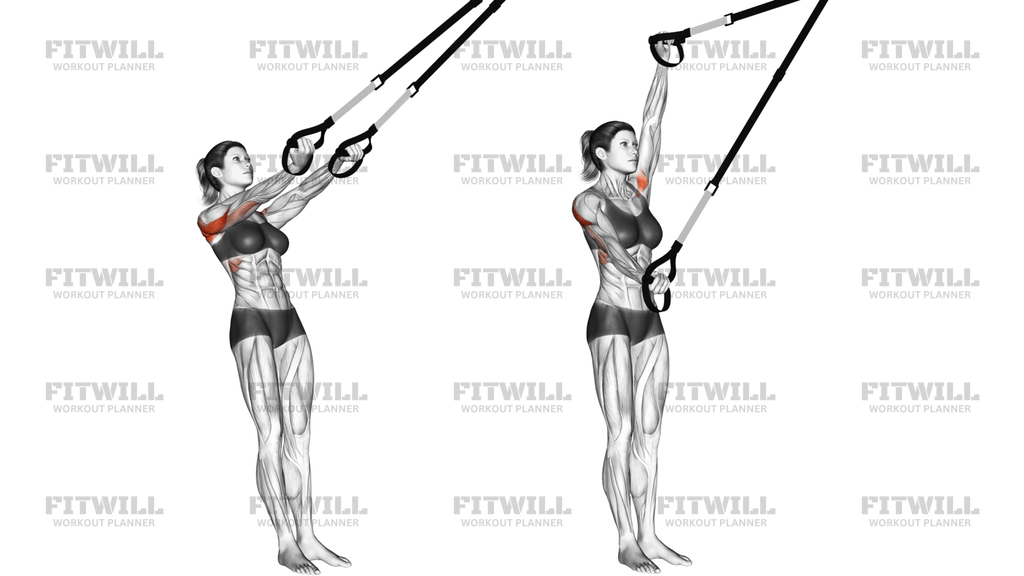
Suspension Rear Delt Row
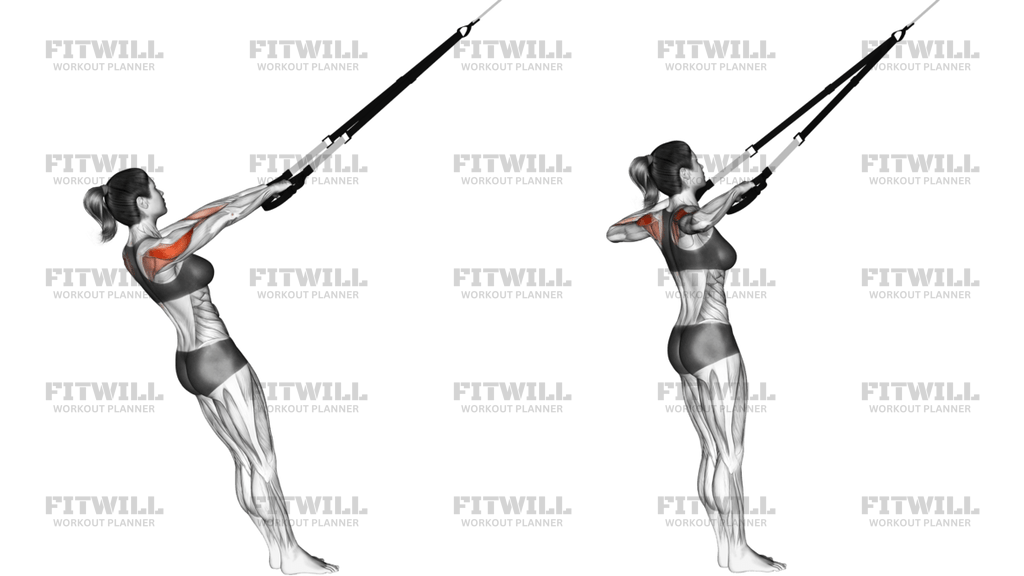
Suspension Rear Delt Row is a standing suspension-trainer pulling exercise that shifts the work toward the rear shoulders and upper back. Because your body angle creates the load, the exercise feels more like a controlled lever than a machine row, and small changes in foot position make a big difference. It is useful when you want a simple setup that still challenges shoulder control, posture, and pulling strength.
The main emphasis is on the rear delts, with the rhomboids, traps, and upper back helping guide the shoulder blades. The straps also ask the triceps and forearms to stabilize the handles while your torso stays rigid. That makes Suspension Rear Delt Row a good option for lifters who want more upper-back volume without needing a cable stack or heavy weights.
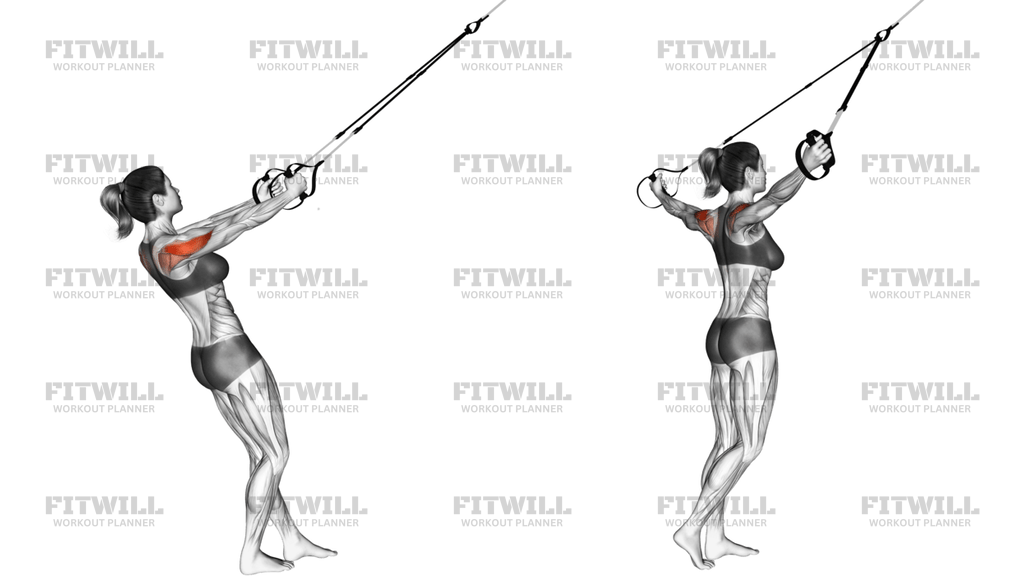
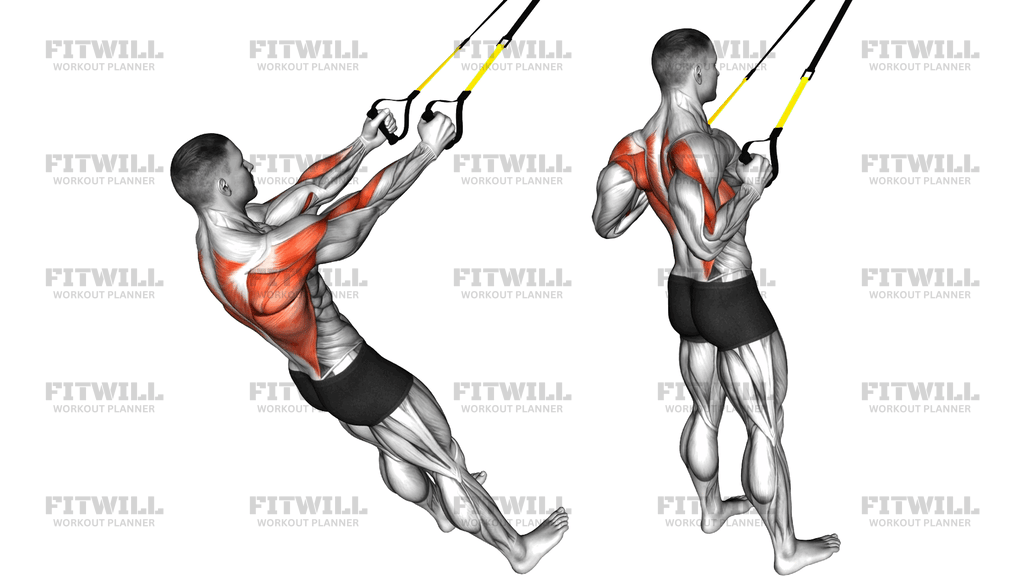
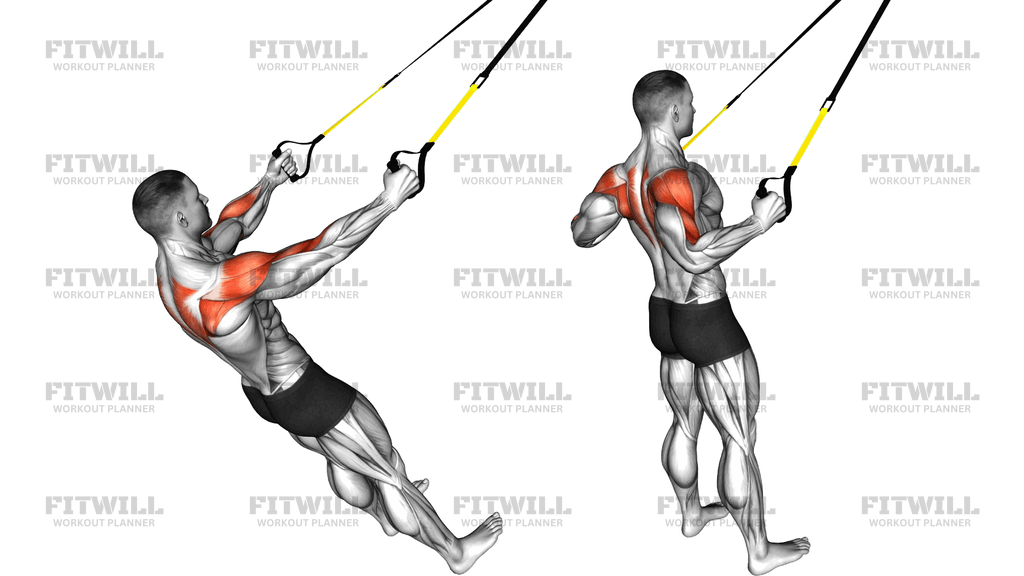
The setup matters more than in a standard row. Face the anchor, hold the handles with a neutral grip, and walk your feet forward until the straps are tight and your body forms one long line from ankles to shoulders. The more you lean back, the harder the row becomes, so choose a body angle that lets you keep your ribs stacked and your neck long from the first rep. If the straps are too loose at the bottom, step forward and recheck the line before you begin the set.
Each rep should feel like a high-elbow pull rather than a low lat row. Pull the handles toward the sides of your face or upper chest, let the elbows travel out and back, and finish by squeezing the rear shoulders without shrugging. Lower slowly until the arms are long again, then repeat with the same body angle and the same strap tension so the set stays honest. The shoulders should move smoothly around the ribcage instead of jerking back and forth.
Suspension Rear Delt Row is especially useful as accessory work, posture work, or a home-training substitute for cable rear-delt rows and face pulls. It also scales well for beginners because the stance can be made more upright, and it can be used for higher-rep shoulder finisher work when heavier rowing is already done. Keep the motion smooth, avoid twisting away from the straps, and stop the set if the shoulders start to pinch or the body starts swinging.
Fitwill
Log Workouts, Track Progress & Build Strength.
Achieve more with Fitwill: explore over 9600 exercises with images and videos, access built-in and custom workouts, perfect for both gym and home sessions, and see real results.
Start your journey. Download today!




Instructions
- Face the suspension anchor, hold both handles with a neutral grip, and walk your feet forward until the straps are taut and your body leans back in a straight line.
- Set your feet about hip-width apart, plant your heels, and keep your ribs stacked over your pelvis instead of arching your lower back.
- Start with your arms straight and your shoulders set down, then brace your midsection before the first pull.
- Pull the handles toward the sides of your face or upper chest while letting your elbows travel out and back at shoulder height.
- Keep your wrists straight and finish the pull by squeezing the rear shoulders and upper back without shrugging your traps upward.
- Pause briefly at the top so the straps stay still and your torso does not drift toward the anchor.
- Lower yourself under control until your arms are straight again and the straps are fully tensioned.
- Keep breathing steady, exhaling as you pull and inhaling on the way back to the start.
- Step your feet closer to the anchor to reduce the load or farther forward to increase it, then repeat for the planned reps.
Tips & Tricks
- A small change in foot position changes the difficulty a lot, so adjust your stance before you start adding more reps.
- Keep the elbows high and wide; if they tuck to your sides, the movement turns into a regular row instead of a rear-delt row.
- Think about pulling the upper arms back rather than curling the handles with your hands.
- Stop the pull before your shoulders shrug toward your ears.
- Use a short pause at the top if you want more rear-delt tension and less swinging.
- If your wrists bend back, keep the knuckles and forearms in one line through the whole rep.
- Keep the chest tall but avoid flaring the ribs, or the body will turn the rep into a low-back arch.
- Make the lowering phase slow enough that the straps never go slack between reps.
Frequently Asked Questions
What muscles does Suspension Rear Delt Row work most?
It mainly targets the rear delts, with the rhomboids and mid traps helping control the shoulder blades.
How is Suspension Rear Delt Row different from a regular suspension row?
The elbows stay higher and wider, so the pull finishes closer to the upper chest or face line instead of the lower ribs.
Where should I place my feet for Suspension Rear Delt Row?
Start with a stance that lets you lean back in a straight line with the straps already under tension, then walk the feet forward only if you can still control the return.
Should my elbows stay high during the whole rep?
Yes. Keeping the elbows high and wide is what shifts the work toward the rear shoulders instead of the lats.
Is Suspension Rear Delt Row beginner-friendly?
Yes, as long as you start more upright and keep the range short until you can hold the body line without swinging.
What is the biggest form mistake in Suspension Rear Delt Row?
The most common error is shrugging the shoulders and turning the pull into an upper-trap movement instead of a rear-delt row.
Can I use Suspension Rear Delt Row instead of face pulls?
Yes. It is a good bodyweight alternative when you want rear-delt and upper-back work without a cable stack.
What should I do if my shoulders feel pinched?
Shorten the range, stand more upright, and keep the elbows from dropping too low; if the pinch stays, stop the set.