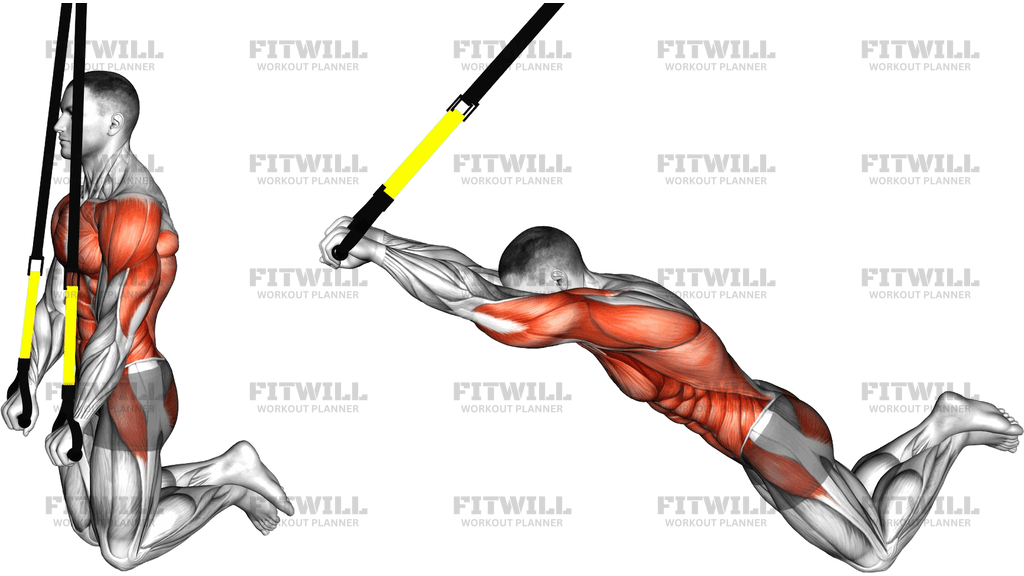
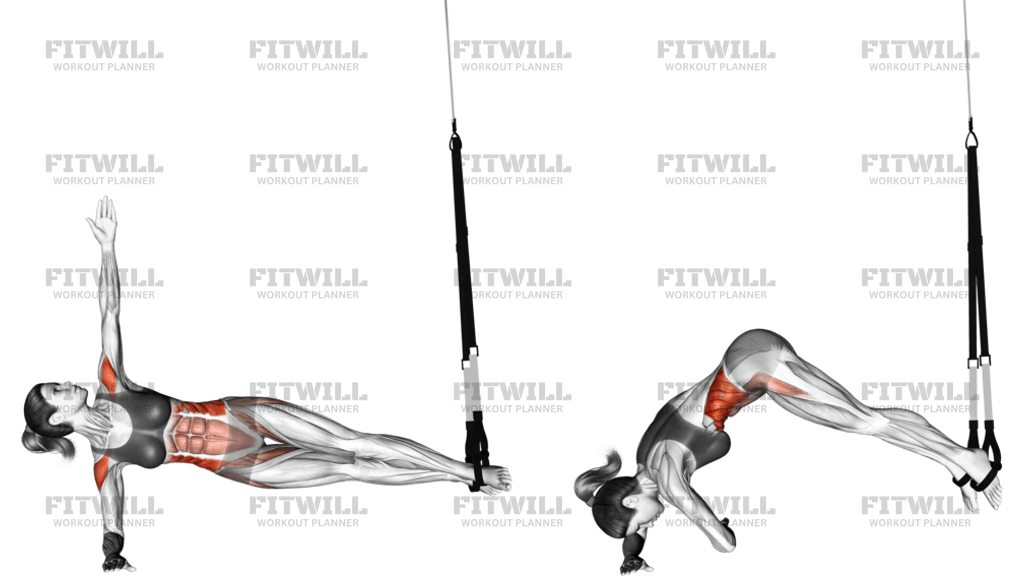
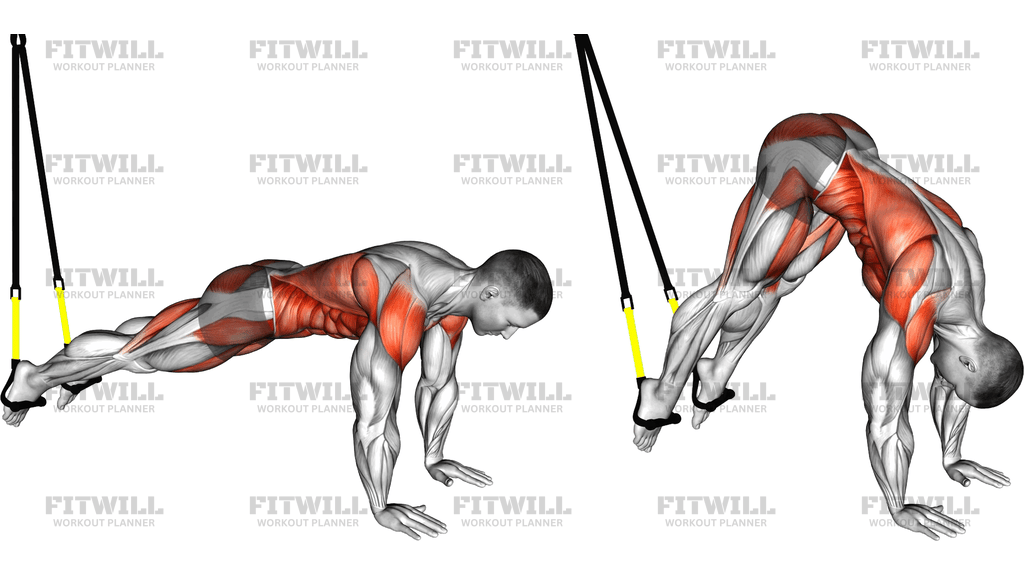
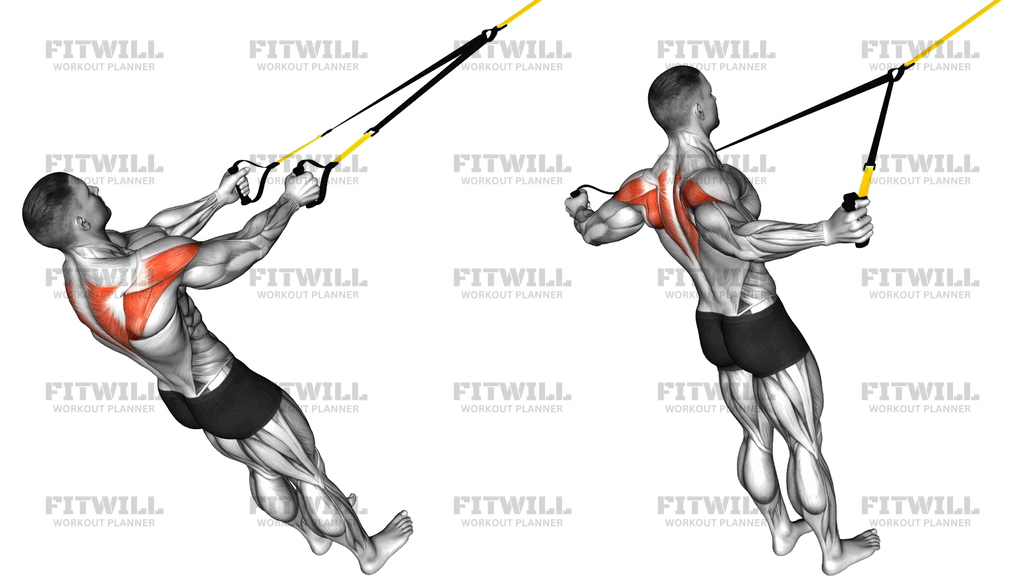
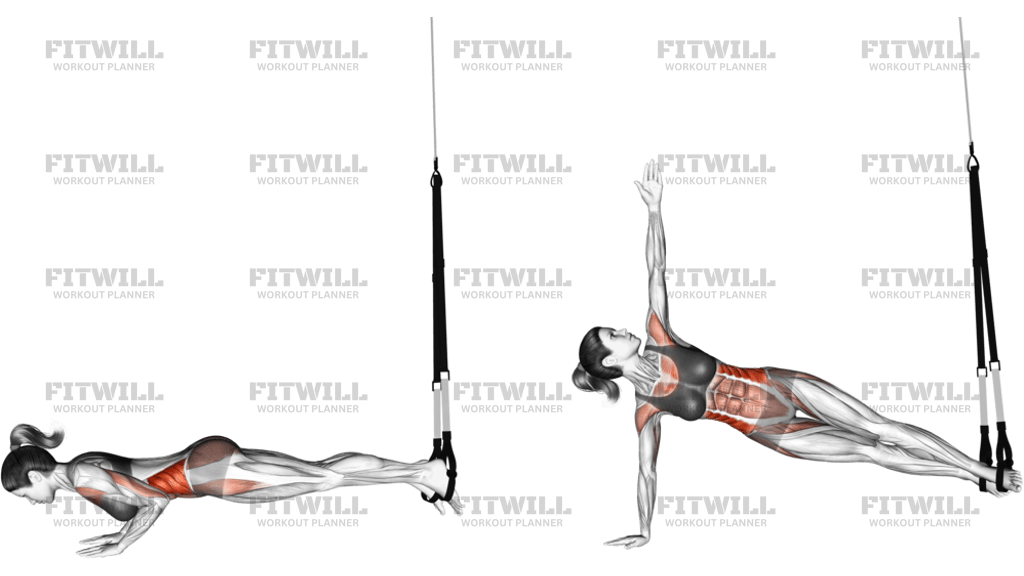
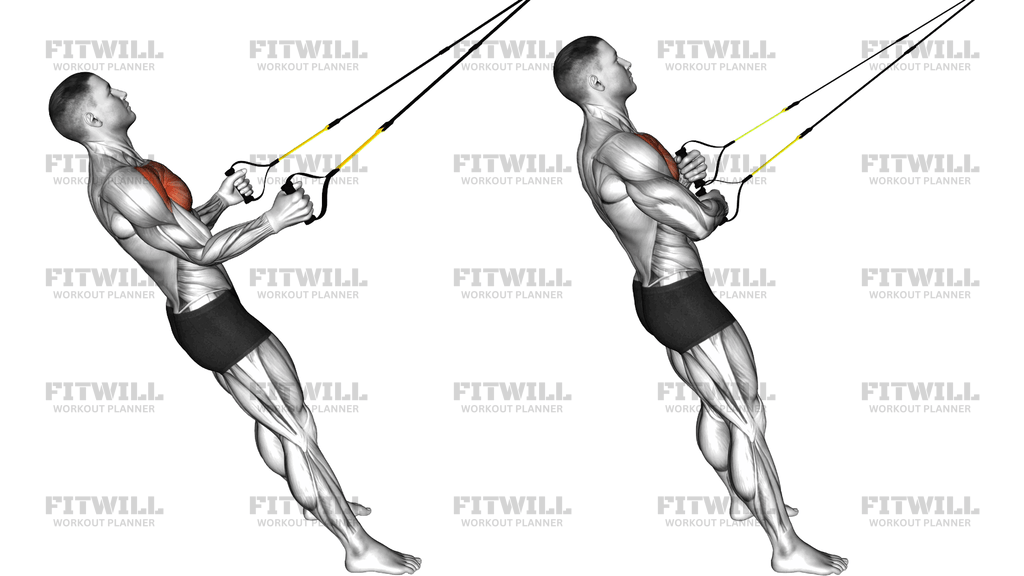
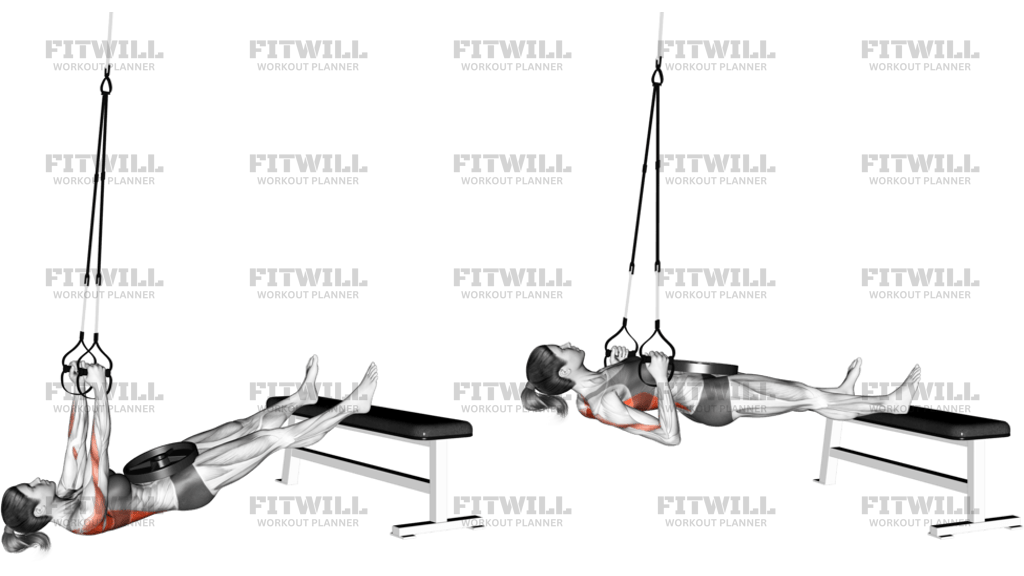
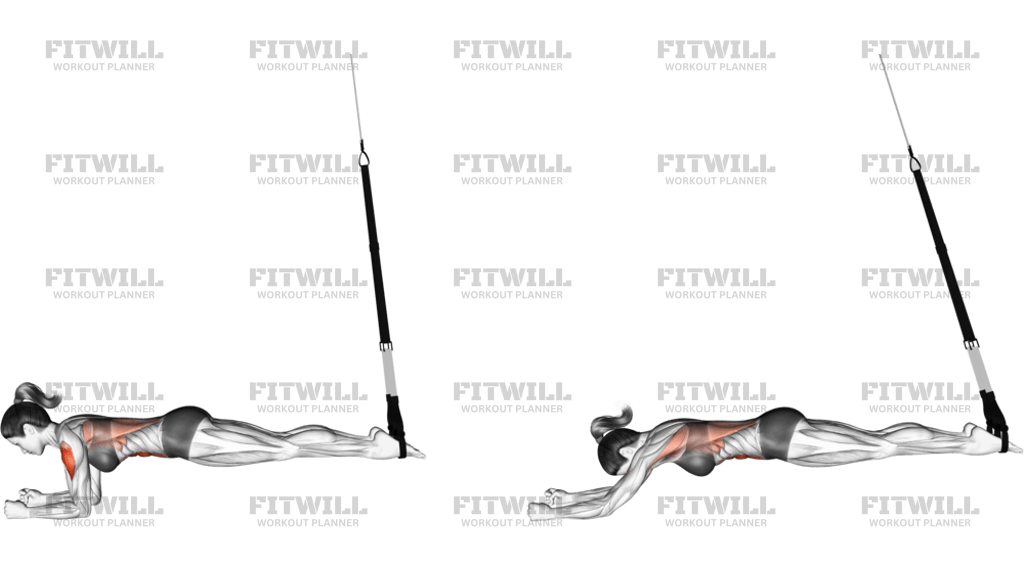
Suspension Supine Plank
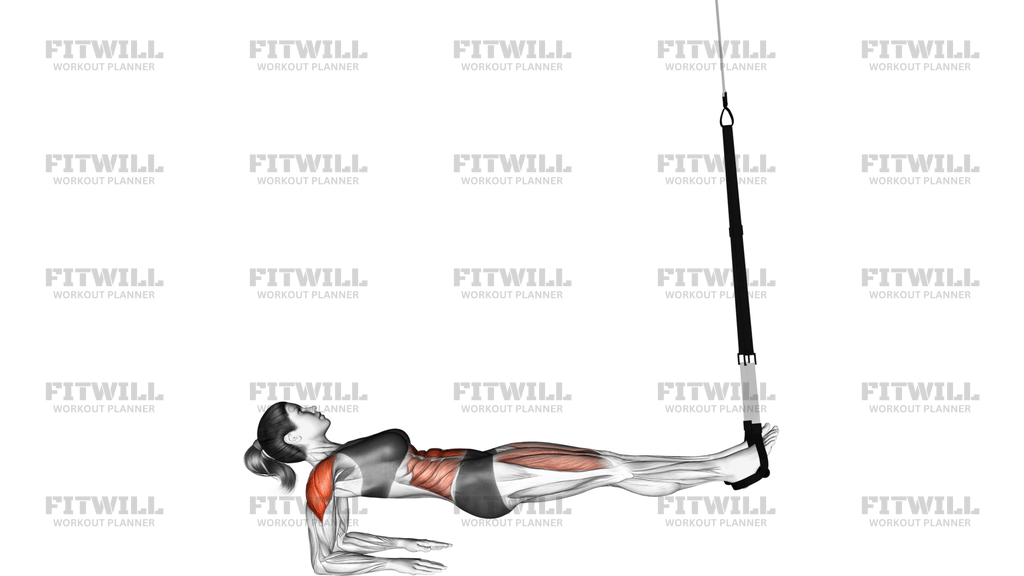
Suspension Supine Plank is a suspension-based reverse plank variation performed face up with the feet secured in the straps and the forearms on the floor. It trains the front side of the body to hold a rigid line while the shoulders, upper back, and arms keep the body steady. Because the feet are elevated and unstable, the exercise demands much more control than a floor plank and quickly exposes any loss of hip position or rib control.
The main purpose of the movement is to keep the torso long while resisting extension and sagging through the low back. The abdominals and hip flexors help keep the pelvis organized, while the delts, triceps, traps, and rhomboids stabilize the shoulder girdle and support the body against the floor. That makes this a useful option for core training, shoulder endurance, and bodyline control in athletic programs.
Setup matters more here than in a basic plank. The forearms should be planted under the shoulders, the elbows should stay directly below the shoulder line, and the feet should sit securely in the suspension straps before you lift into the hold. Once you are up, the body should look like one straight line from shoulders to heels, with the ribs down and the pelvis level instead of tipped forward.
Each repetition should feel deliberate. Lift or hold the hips high enough to keep the body straight, then lower only as far as you can without bending at the hips or arching the back. The straps should stay quiet and controlled; if they swing, the set has usually become too fast or too hard. Smooth breathing and a calm neck make the hold more effective and reduce compensation through the shoulders.
Use Suspension Supine Plank when you want a core movement that also challenges shoulder stability and total-body tension. It works well in warmups, accessory work, core circuits, or posture-focused sessions. If the straps are too long or the body starts shaking uncontrollably, shorten the lever, reduce time under tension, or regress to a floor reverse plank until you can hold the line cleanly.
[ Workout Log & Planner ]
Put your next workout in Fitwill
Keep your plan and training log ready when you are.


Instructions
- Adjust the suspension straps so your feet can sit securely in the loops while you lie face up on the floor.
- Plant your forearms on the floor with your elbows under your shoulders and your palms facing down or slightly inward.
- Slide your heels or ankles into the straps, then extend your legs so the body is long and the straps are just off tension.
- Brace your abs, tuck the ribs down, and keep your neck long before lifting into position.
- Press the forearms into the floor and lift the hips until your body forms a straight line from shoulders to heels.
- Keep the glutes active and avoid letting the low back arch or the ribs flare as you hold the top position.
- Lower the hips only a few inches if the movement is a repetition, or keep the position locked if you are performing an isometric hold.
- Breathe in short, controlled breaths without losing the brace, then reset the body carefully after the set.
Tips & Tricks
- If the straps swing, shorten the set or reduce the range instead of trying to fight the instability with faster reps.
- Keep the elbows stacked under the shoulders so the front of the shoulders does not take over the hold.
- Think about pulling the front of the rib cage toward the pelvis to stop the low back from arching.
- A slight posterior pelvic tilt helps the abs stay on and keeps the hips from drifting into an overextended position.
- Squeeze the glutes hard enough to keep the legs in line with the torso, but do not press so aggressively that the toes cramp in the straps.
- Keep the chin slightly tucked so the neck stays long and you do not crane toward the ceiling.
- Use smaller hip pulses if you are doing reps; the goal is a clean line, not a big lift.
- Stop the set when the shoulders start shrugging toward the ears or the straps begin to pull you out of alignment.
Frequently Asked Questions
What muscles work hardest in Suspension Supine Plank?
The abs, glutes, and shoulder stabilizers do most of the work, with the delts, triceps, traps, and upper back helping keep the body rigid.
Should my forearms stay under my shoulders the whole time?
Yes. If the elbows drift forward or back, the shoulders lose a stable base and the hold becomes harder to control.
Where should my feet be in the suspension straps?
The heels or ankles should sit securely in the loops so the straps support the legs without sliding as you lift and hold.
Is this exercise a hold or a moving rep?
It can be either. Most people use it as an isometric hold, but small controlled hip lifts and lowers can be added if the body stays straight.
Why does my lower back feel this exercise more than my abs?
That usually means the ribs are flaring or the hips are dropping. Re-brace, squeeze the glutes, and lift only as high as you can hold without arching.
Can beginners do Suspension Supine Plank?
Yes, but only with short holds, calm breathing, and a setup that keeps the straps steady. A floor reverse plank is a good regression if the suspension version is too unstable.
What should I do if the straps start swinging?
End the set or shorten the lever. Swinging usually means the hold is too long, the bodyline is breaking, or the rep tempo is too fast.
How can I make this exercise harder without adding weight?
Extend the hold time, keep the legs straighter, or reduce how much you rely on the straps while still keeping the hips and ribs in line.