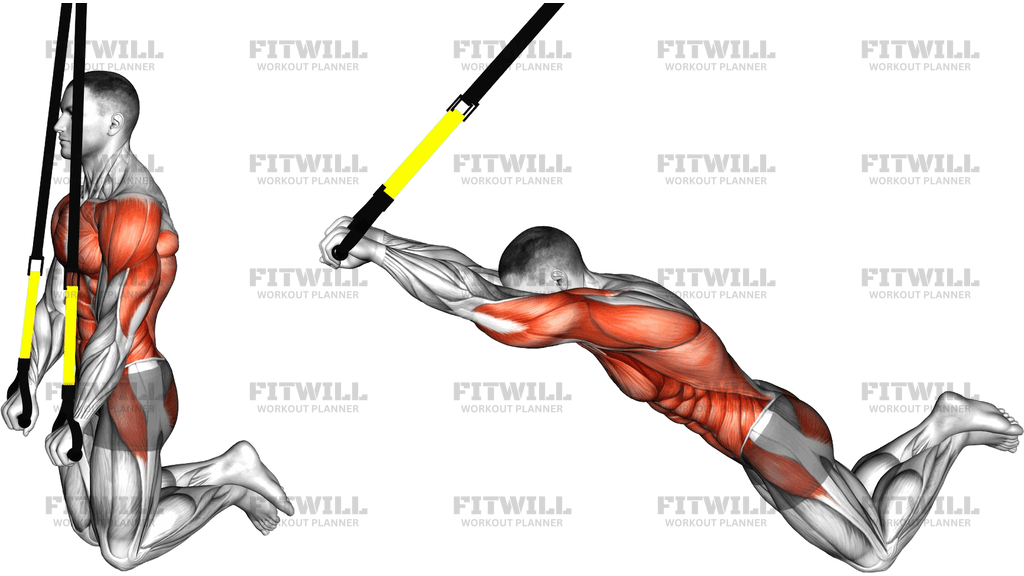
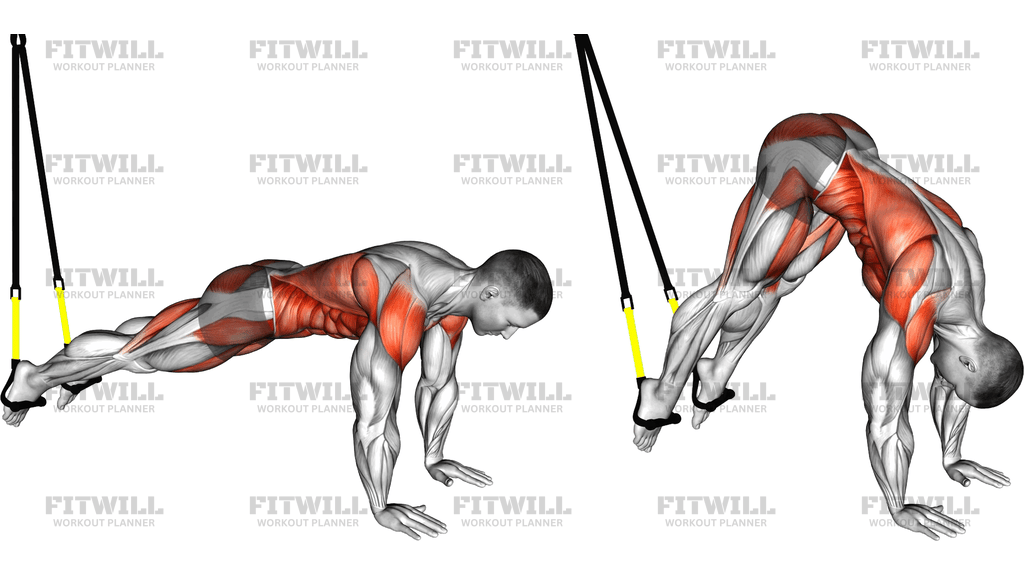
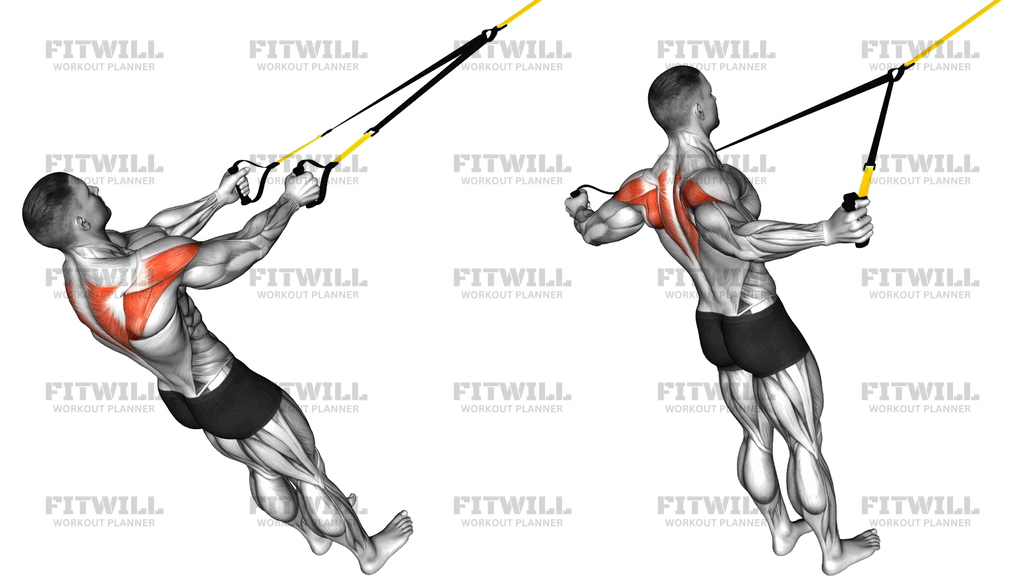
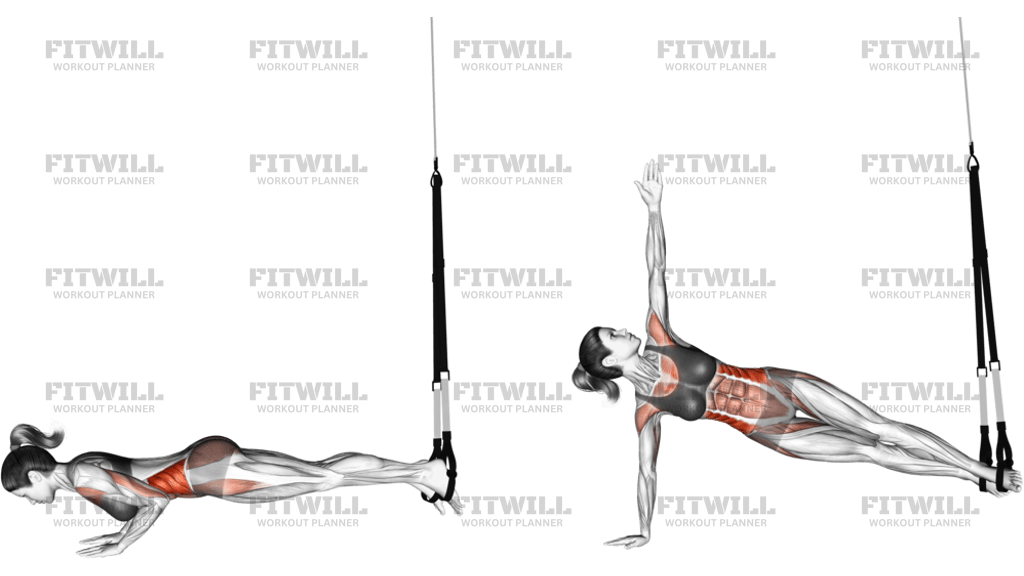
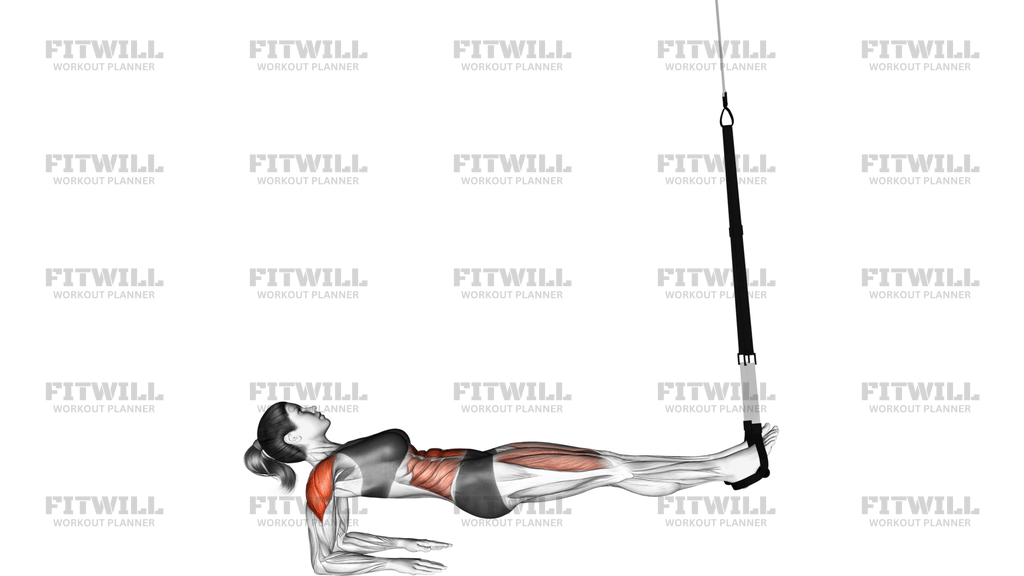
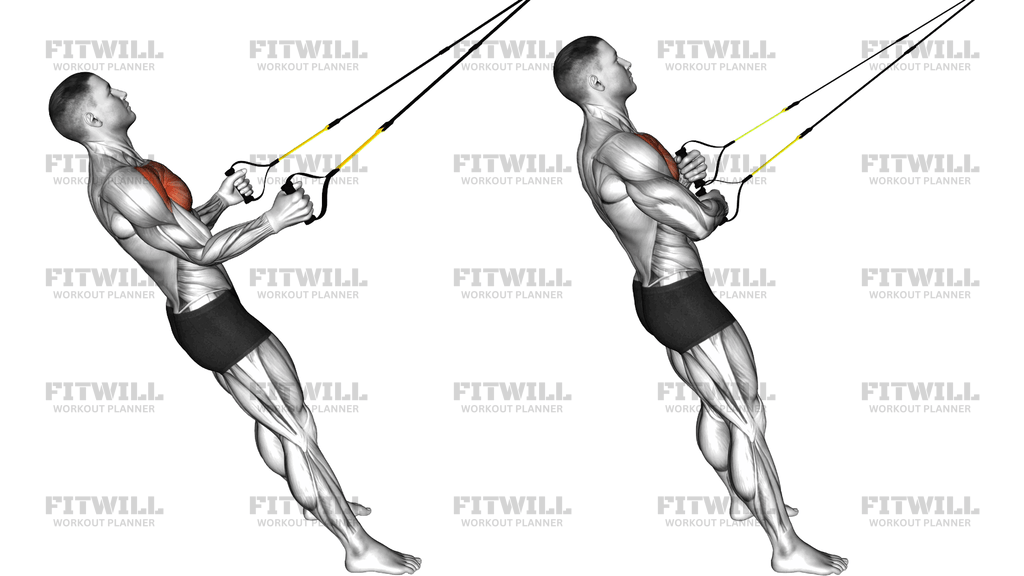
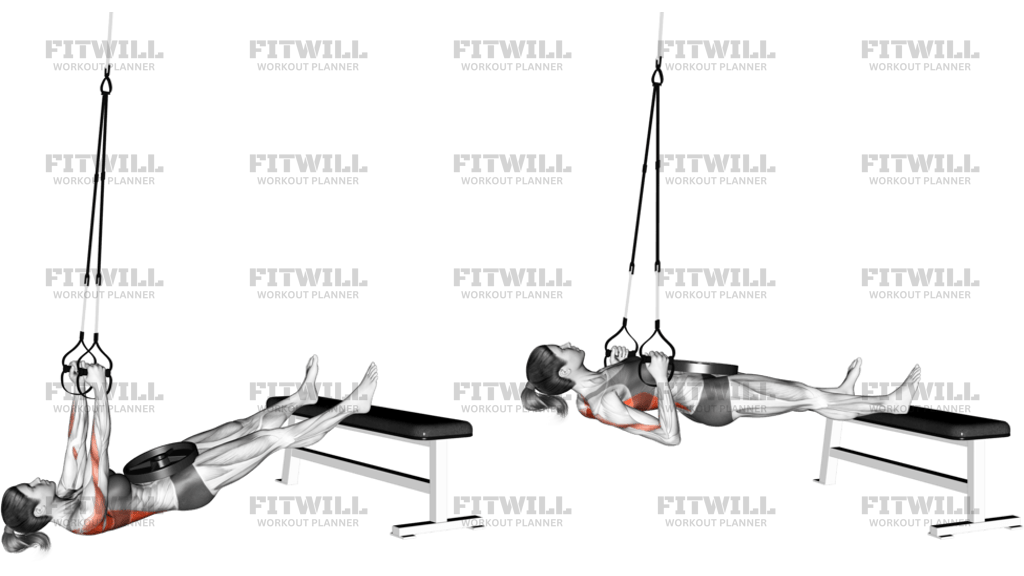
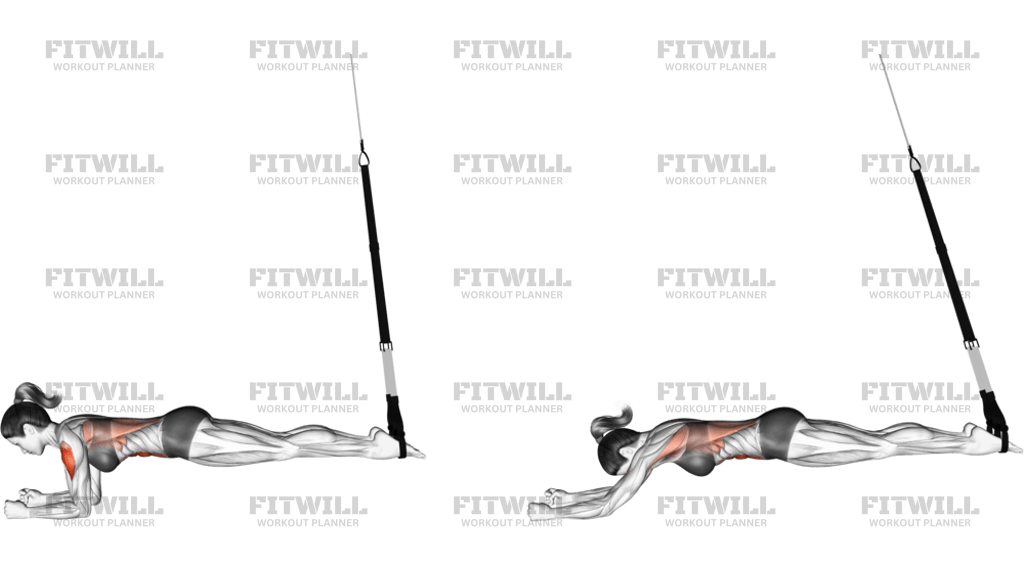
Suspension Twist Side
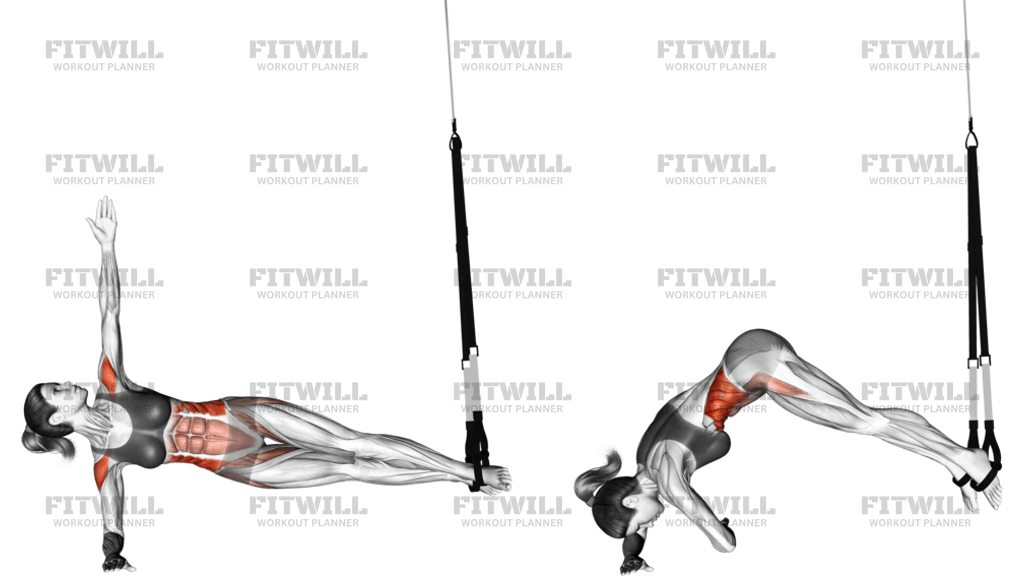
Suspension Twist Side is a suspension-based side-body drill that asks your waist, core, shoulders, and hips to stay organized while the body moves through a controlled twist. The exercise looks simple at a glance, but the suspension straps make the position much more demanding because they challenge balance, shoulder stability, and trunk control at the same time.
The movement is most useful when you want better oblique strength, anti-rotation control, and side-plank stability. The support shoulder has to stay packed while the midsection resists sagging, arching, or spinning out of position. That makes the exercise valuable for athletes and lifters who need to control rotation through the torso instead of letting the hips and ribs drift apart.
Set the straps so you can reach the start position without shrugging or collapsing into the shoulder. Get into a long side-plank line, stack the body, and make the support side feel firm before you begin. From there, rotate and tuck with control, then return to the long line slowly so the straps stay quiet and the torso does the work instead of momentum.
Use the exercise as accessory core work, a warm-up for rotational training, or a stability drill in a full-body session. It works best with slow, deliberate repetitions and a range you can keep smooth from start to finish. If the shoulders feel irritated, shorten the range and keep the body more upright; if the lower back takes over, reduce the twist and focus on keeping the pelvis level.
Good reps feel controlled through the waist and steady through the support shoulder. The goal is not to chase a huge twist or a flashy finish position. The goal is to keep the body aligned while the suspension setup tries to pull it out of line, then return to the start with the same control you had at the beginning.
[ Workout Log & Planner ]
Put your next workout in Fitwill
Keep your plan and training log ready when you are.


Instructions
- Set the suspension straps to a height that lets you reach the start without shrugging or hanging too low.
- Stand side-on to the anchor, place your support hand under the shoulder, and secure your feet in the straps.
- Extend into a straight side-plank line from head to heels before you begin the first rep.
- Stack the shoulders and hips, then lightly squeeze the glutes so the pelvis stays level.
- Brace your midsection and inhale to prepare without flaring the ribs.
- Rotate the torso and draw the hips through the twist under control while the support shoulder stays packed.
- Only twist as far as you can keep the straps quiet and the body from collapsing.
- Reverse the motion slowly back into the long side-plank position and exhale through the hardest part.
- Reset your alignment before the next repetition so each rep starts from the same position.
Tips & Tricks
- Keep the support wrist or hand directly under the shoulder so the joint is stacked instead of drifting forward.
- Think about moving the hips and ribs together; twisting only the upper body usually turns this into a sloppy crunch.
- If the straps swing, slow the lowering phase and pause until the system goes still before the next rep.
- A small range done cleanly is better than forcing a bigger twist that makes the pelvis drop or the ribs flare.
- Keep the neck long and look where it helps you stay balanced instead of cranking the head toward the twist.
- Use a shorter lever by bending the knees slightly if the position is too difficult to hold with straight legs.
- Exhale as you rotate so the core can tighten without over-arching the lower back.
- Stop the set as soon as the support shoulder starts to shrug or the side plank line breaks.
Frequently Asked Questions
What muscle does Suspension Twist Side target most?
The main emphasis is on the obliques and deep core, with the support shoulder and hips working hard to keep the body aligned.
Can beginners perform this exercise?
Yes, but beginners should use a short range, slow tempo, and a setup that lets them hold the side-plank position without shaking.
How should I set up the straps before starting?
Set the straps high enough that you can get into the side-plank position without shrugging, and make sure your support hand is stacked under the shoulder.
What is the biggest form mistake in this movement?
The most common error is letting the hips sag or swing while the shoulders twist, which turns the exercise into momentum instead of control.
Do I need to use a full twist on every rep?
No. Only twist as far as you can keep the side-plank line, the support shoulder, and the suspension straps under control.
Why do my shoulders feel this exercise so much?
The support side has to stabilize your body against the straps, so shoulder engagement is normal even though the waist and obliques are driving the movement.
Can I make this exercise easier if my core fatigues quickly?
Yes. Shorten the range, slow the tempo, or bend the knees slightly so you can keep the pelvis level and the straps quiet.
How do I progress Suspension Twist Side?
Progress by cleaning up the line first, then adding more control, a slower lowering phase, or a slightly longer twist rather than chasing speed.