Decline Diamond Pike Push Up
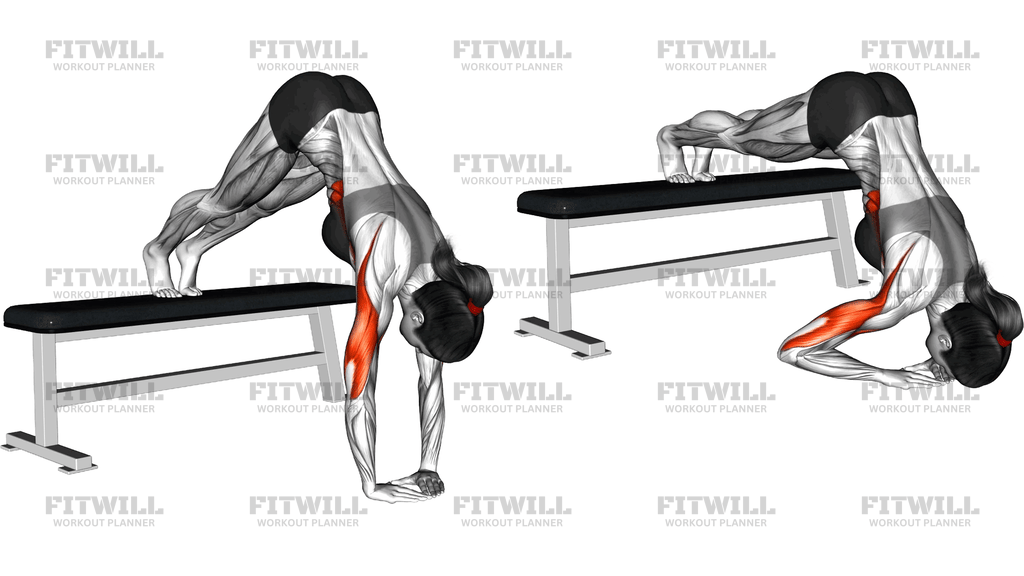
The Decline Diamond Pike Push Up is a demanding bodyweight pressing movement that combines three challenging elements: an inverted pike position, elevated feet on a bench, and a close-grip diamond hand placement on the floor. You set up like an upside-down push-up with your hips stacked high over your shoulders, then bend your elbows and lower your head toward your hands before pressing back up. The result is a movement that loads the shoulders much like an overhead press while the narrow hand position puts the triceps under serious tension throughout every rep.
The bench elevation is what separates this from a standard floor pike push-up. With your feet raised, more of your body weight sits directly over your hands, and your torso angles closer to vertical, which mimics the overhead pressing position more closely. The diamond grip then shifts additional work to the triceps, since the narrow base forces the elbows to travel close to the body rather than flaring outward. Expect your front delts, triceps, and upper chest to do most of the pressing, with your traps, serratus, and core working hard to keep your torso stable.
This exercise suits intermediate to advanced trainees, particularly anyone working toward handstand push-ups or looking for an overhead pressing option without weights. It is popular in calisthenics programs, home workouts where only a bench is available, and shoulder-focused bodyweight sessions. Because the setup demands solid straight-arm strength and comfortable wrist extension, it is best layered on top of regular pike push-ups rather than used as a first pressing exercise.
Setup quality largely determines how well this movement goes. Your hip height controls how much weight loads the arms, and your hand position controls the elbow path, so both deserve attention before the first rep. A flat bench roughly knee height works well; the higher your feet, the steeper the angle and the harder the press. Keep the bench anchored against something solid so it cannot slide away as your toes press into it.
To perform it well, think of lowering in a straight line rather than straight down. Bend the elbows and let your head travel slightly forward between your hands so the crown of your head approaches the floor just past your fingertips. Press back up until the elbows reach full extension and squeeze the triceps at the top. Moving slowly and keeping the hips high turns each rep into a controlled strength effort instead of a momentum-driven bounce.
As for safety, the two common trouble spots are the wrists and the shoulders. Warm up both before training, spread your fingers to distribute pressure across the palms, and stop the descent at a depth you can reverse with control. If you feel pinching at the shoulder or sharp wrist pain, reduce the foot elevation or switch to a slightly wider hand position until your strength and mobility catch up.
[ Workout Log & Planner ]
Put your next workout in Fitwill
Keep your plan and training log ready when you are.


Instructions
- Place a flat bench on a non-slip surface and set your hands on the floor in front of it, fingers spread, with your thumbs and index fingers nearly touching to form a diamond shape.
- Walk your feet back and place the tops of your feet or toes on the bench so your body forms an inverted V, with your hips stacked high above your shoulders and your arms fully extended.
- Press the floor away with straight arms, squeeze your legs together, and glance back toward the bench so the back of your head stays neutral rather than dropping forward.
- Brace your core and pull your belly button slightly upward to prevent the lower back from sagging as you load the shoulders.
- Inhale, then bend your elbows and let them travel back toward your hips at roughly 45 degrees, guiding your head forward and down between your hands.
- Lower until the crown of your head is close to the floor just beyond your fingertips, keeping your hips elevated the entire time.
- Exhale and press through your palms, driving the floor away until your elbows lock out fully and the triceps contract at the top.
- Complete all reps in the set, then step one foot off the bench at a time and stand up slowly to avoid dizziness from the inverted position.
Tips & Tricks
- If your hips sink toward the bench as you tire, the set is turning into a decline push-up rather than a Decline Diamond Pike Push Up; end the set or reduce depth to keep the hips high.
- Elbows that flare out wide to the sides are the most common fault with the diamond grip. Cue yourself to point them back at your hips, and if you still cannot control the path, widen your hands slightly.
- Do not let your head dive straight down between your hands. Aim it slightly forward past your fingertips so the shoulders, not just the triceps, do their share of the pressing.
- The wrists take a lot of extension in this exercise. Spread your fingers wide, grip the floor, and shift pressure toward the heel of the palm rather than the fingertips.
- Start with a standard knee-height bench before raising the feet. Every inch of elevation adds load to the shoulders and makes the balance harder to manage.
- Bouncing the head toward the floor at the bottom robs you of strength gains and stresses the neck. Pause briefly at the bottom of each rep, even if it means getting fewer reps.
- Keep your weight centered over the diamond, not shifted forward toward the fingers. If your toes feel like they are doing the work on the bench, walk your hands back an inch.
- If the full movement is too heavy, lower your feet to the floor and practice the diamond pike push-up first, then return to the bench version once you can manage 10 clean reps.
- Set the bench against a wall or rack so it cannot slide backward as your feet press into the top edge.
Frequently Asked Questions
What muscles does the Decline Diamond Pike Push Up work?
The front delts and triceps do most of the pressing, with the diamond grip placing extra load on the triceps in particular. The upper chest, traps, and serratus assist, while the core holds the inverted position steady.
How is the Decline Diamond Pike Push Up different from a regular pike push-up?
Elevating the feet on a bench shifts more body weight over your hands and steepens your torso angle, making the press harder and more overhead-like. The diamond hand position further emphasizes the triceps compared to a shoulder-width setup.
Is the Decline Diamond Pike Push Up good for beginners?
It is quite demanding on the wrists, triceps, and shoulders, so most beginners should master regular pike push-ups on the floor first. Once you can perform 8 to 10 controlled reps there, the bench-elevated version becomes a reasonable next step.
How high should the bench be for the Decline Diamond Pike Push Up?
A standard flat bench around knee height works well for most people. Raising the feet higher increases the difficulty and shifts the angle closer to a true handstand press, so progress gradually.
Why do my elbows flare out during the Decline Diamond Pike Push Up?
The narrow diamond grip makes it tempting to let the elbows drift outward, which strains the shoulders and reduces triceps work. Deliberately point your elbows back toward your hips as you lower, and widen your hands slightly if the path still feels unstable.
Can I do the Decline Diamond Pike Push Up without a bench?
Yes. Place your feet on the floor in a pike position with the same diamond hand placement to get a very similar pressing effect, just with less body weight over your hands.
My wrists hurt when my hands form the diamond. What should I change?
Spread your fingers wide and press through the base of the palm to reduce pressure on the wrists, and make sure you warm up before training. Using parallettes or push-up handles keeps the wrists straighter and often removes the discomfort entirely.
Does the Decline Diamond Pike Push Up help with handstand push-ups?
It is one of the better progressions because the elevated position loads the shoulders similarly to pressing upside down. It is not a perfect substitute, but it builds the pressing strength and body awareness you need before attempting wall-supported handstand push-ups.
How many sets and reps of the Decline Diamond Pike Push Up should I do?
Three to four sets of 5 to 10 controlled reps is a solid working range for strength. If you cannot manage 5 clean reps, drop the foot elevation; if you exceed 12 easily, elevate the feet higher or slow the lowering phase.
Is it safe to let my head touch the floor at the bottom?
Aim to bring the crown of your head close to the floor without actually resting on it, since touching down encourages bouncing and neck strain. Lower only to a depth you can press out of smoothly and without pain.