Dumbbell Pullover
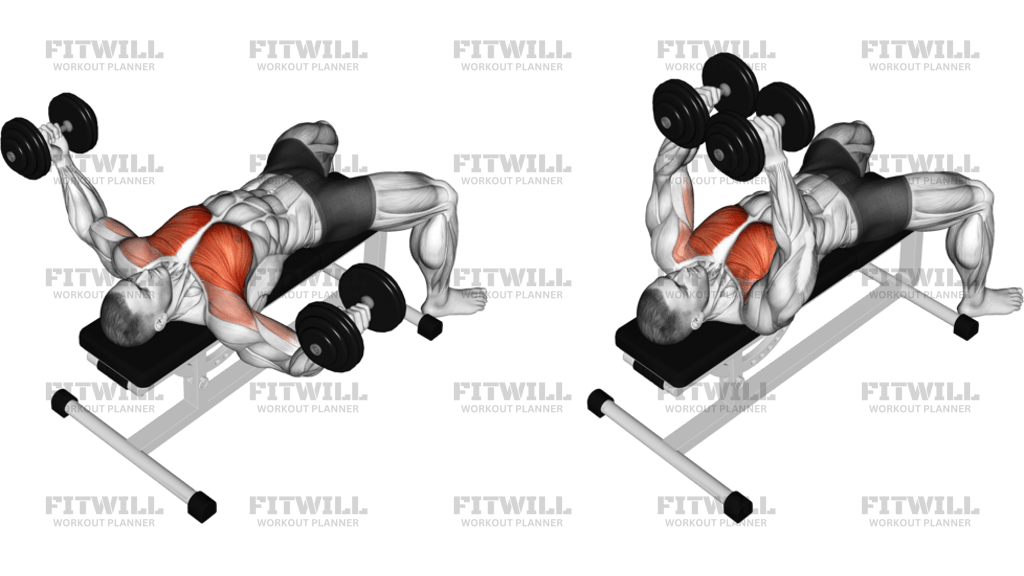
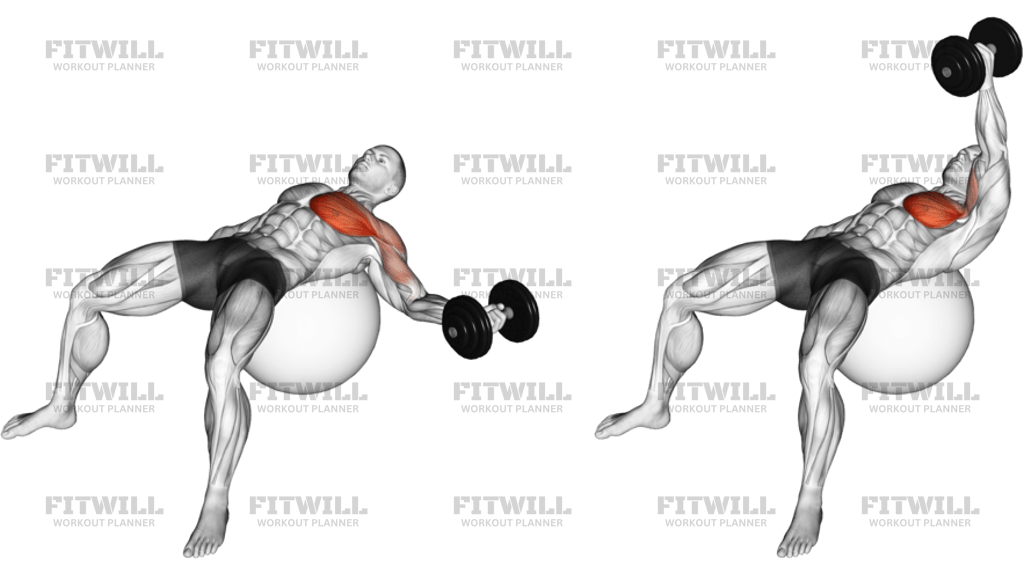
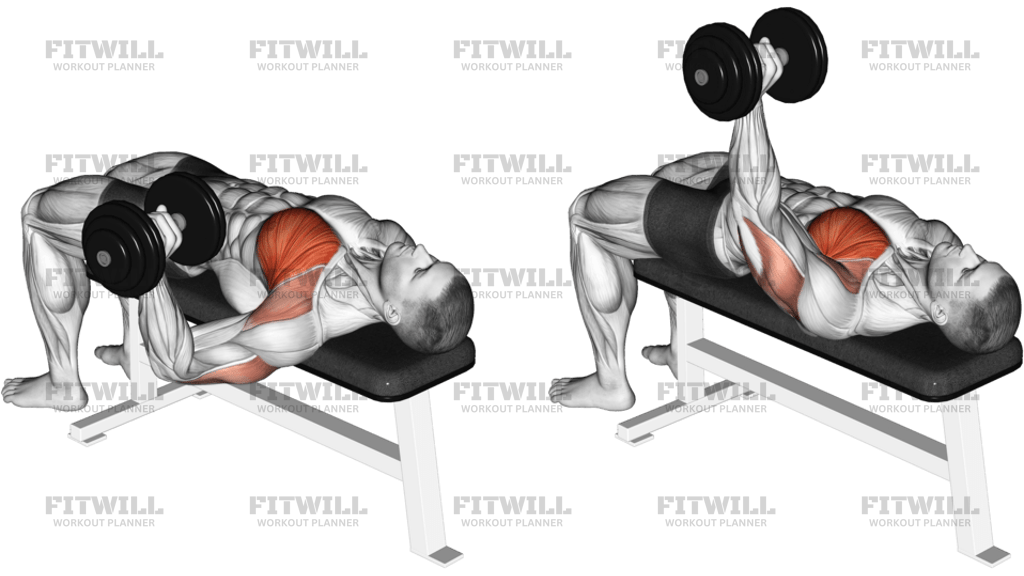
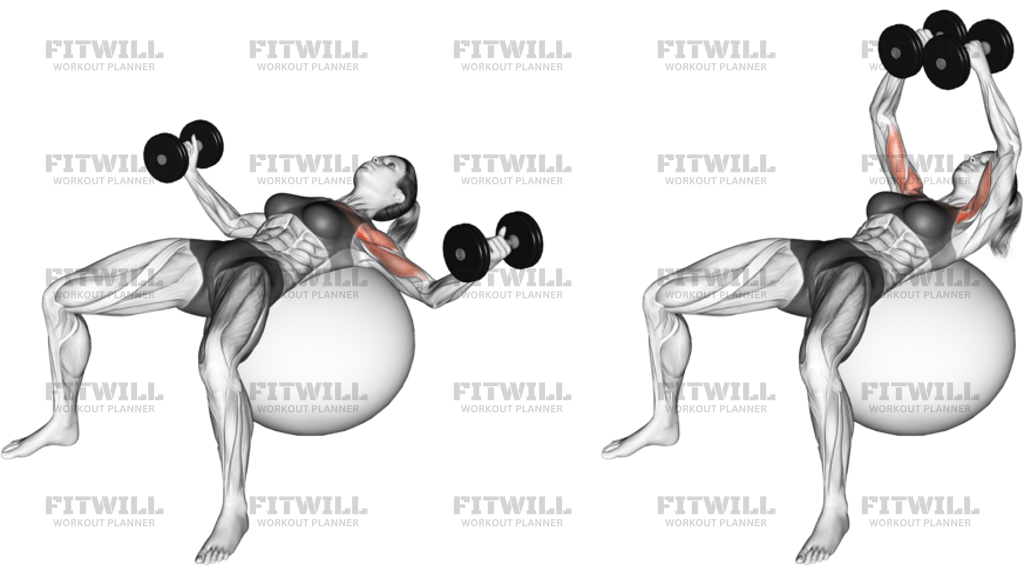
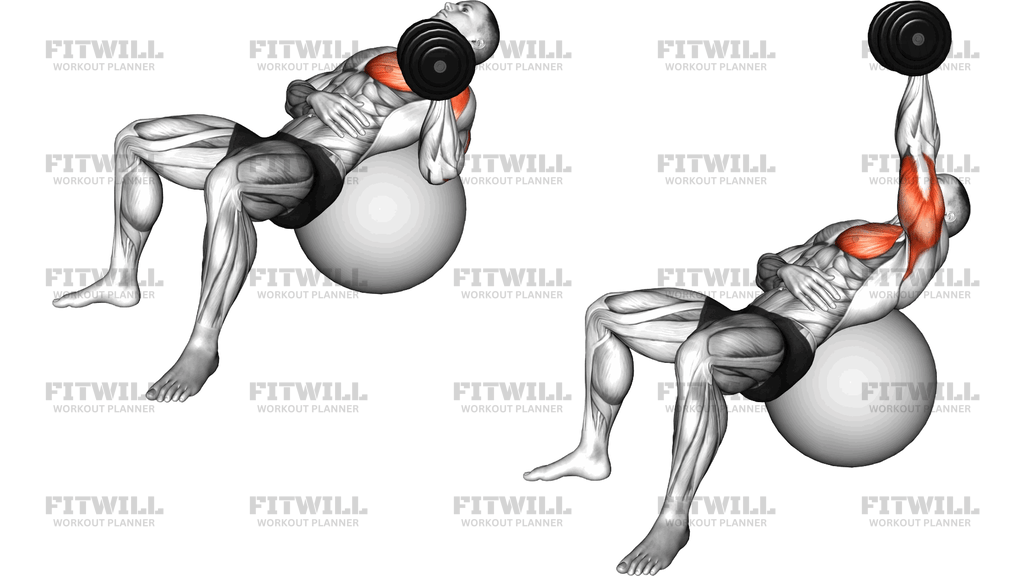
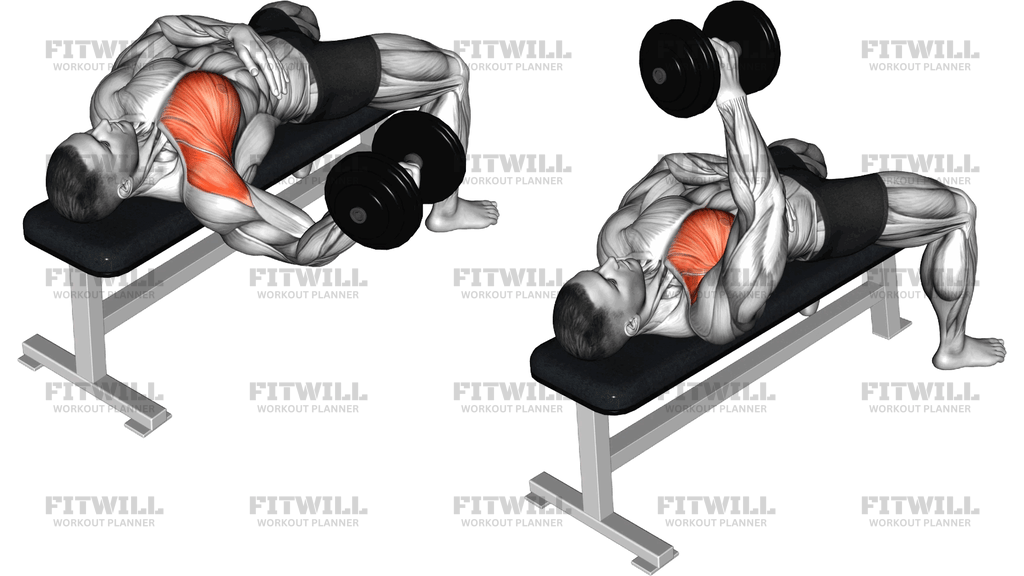
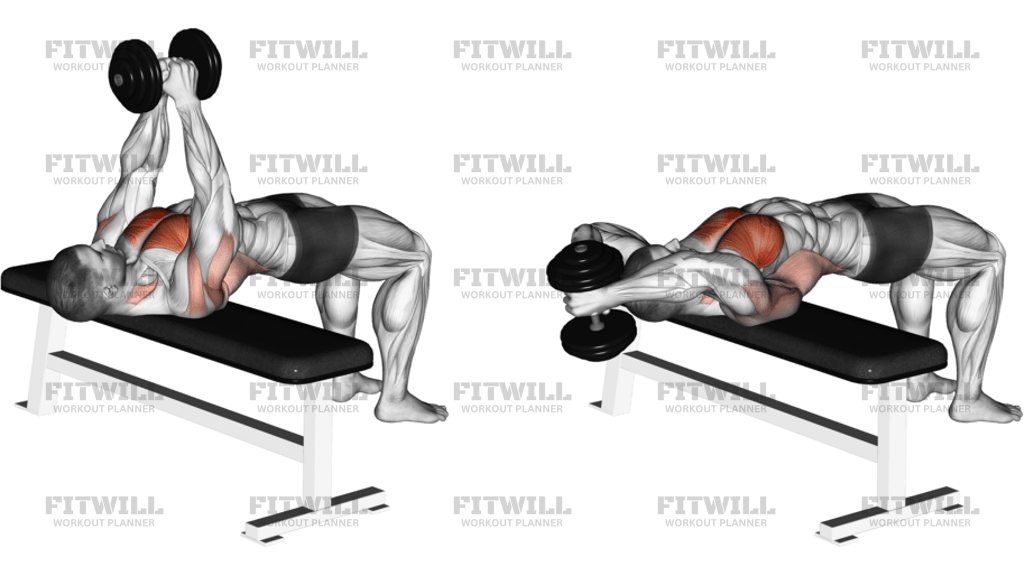
Dumbbell Pullover is a single-dumbbell bench exercise that uses a long overhead arc to train the chest, lats, serratus, triceps, and shoulder stabilizers. In the image, the lifter is lying across a flat bench with the hips raised, which creates a braced torso and a clear line for the dumbbell to travel from above the chest to behind the head and back again.
The setup matters because the movement is not just an arm motion. The shoulders guide the dumbbell while the ribcage, pelvis, and bench position keep the upper body from turning the rep into a back arch or a loose swing. A controlled bridge can make the torso feel more stable, but only if the lower back stays comfortable and the ribs do not flare up to chase range.
Perform the rep by starting with one dumbbell held over the chest with slightly bent elbows. Lower it in a smooth arc until the upper arms reach a comfortable stretch overhead, then drive the dumbbell back along the same path to finish above the chest. The best reps feel long and controlled, with the shoulders moving freely while the core and glutes keep the torso quiet.
This exercise is useful as a chest or lat accessory after pressing or rowing work, especially when you want loaded shoulder flexion without a machine. Choose a load that lets you keep the same elbow angle and the same bench position on every rep. If the shoulders pinch, the lower back takes over, or the dumbbell path gets sloppy, shorten the range or reduce the weight.
Done well, the dumbbell pullover can be a strong builder for chest and upper-torso control without needing heavy loading. It rewards patience: smooth lowering, a clear stretch, and a clean return matter more than forcing the dumbbell farther overhead than your shoulders can own.
[ Workout Log & Planner ]
Put your next workout in Fitwill
Keep your plan and training log ready when you are.


Instructions
- Lie across a flat bench with your shoulders supported and your feet planted firmly on the floor.
- Hold one dumbbell with both hands above the middle of your chest, keeping a slight bend in your elbows.
- Lift your hips into a controlled bridge so your torso feels braced and your ribcage stays down.
- Set your shoulder blades and keep your neck relaxed before you start the first rep.
- Lower the dumbbell in a smooth arc behind your head, letting the upper arms move while the elbows stay softly bent.
- Stop when you feel a strong but comfortable stretch through the chest and lats.
- Pull the dumbbell back along the same arc until it is stacked above your chest again.
- Exhale as you return the weight, then reset the bridge and repeat with the same path.
Tips & Tricks
- Use a lighter dumbbell than you would for pressing; the long lever makes the pullover feel heavier than it looks.
- Keep the elbows softly bent from start to finish so the movement stays a pullover, not a triceps extension.
- Think about moving the dumbbell in a wide arc around the head, not dropping it straight behind you.
- Keep the ribs from popping up when the weight reaches overhead; the bridge should support the torso, not turn into a back arch.
- Press through the feet and glutes to keep the hips steady if you are using the bridged setup shown in the image.
- Stop the lowering phase before the front of the shoulders pinch or the lower back starts to extend.
- Use a slower descent than ascent so you can feel the stretch and keep the dumbbell path consistent.
- If the bench position feels unstable, reduce the range first and only then reduce the tempo or load.
Frequently Asked Questions
What muscles does Dumbbell Pullover work?
It mainly works the chest and lats, with help from the serratus, triceps, and shoulder stabilizers. The hips and core also have to stay organized if you use the bridged bench setup.
Why are the hips raised on the bench in this dumbbell pullover?
The bridge gives the torso a firmer base and helps keep the ribcage from flaring as the dumbbell moves overhead. If that position bothers your lower back, keep the hips lower or perform a shorter range.
How far behind my head should the dumbbell go?
Only as far as you can keep the shoulders comfortable and the dumbbell path smooth. The goal is a controlled stretch, not forcing the weight into a deeper range.
Should my elbows stay bent during the pullover?
Yes. A small, fixed bend keeps tension on the chest and lats and keeps the movement from turning into a straight-arm triceps pattern.
Can beginners use the dumbbell pullover?
Yes, if they start light, keep the bench setup stable, and shorten the range before trying to chase a big overhead stretch.
What is the most common mistake with this exercise?
The most common mistake is turning the rep into a rib flare and lower-back arch. The dumbbell should move overhead while the torso stays controlled on the bench.
Should I feel this more in my chest or lats?
Both are involved, but the exact emphasis changes with your arm path and torso control. If the chest feels worked, the path is usually centered; if the lats dominate, the overhead stretch and return are usually longer.
What should I do if my shoulders feel pinched on the bench?
Shorten the lowering range, lighten the dumbbell, and keep the elbows slightly softer. If the pinch remains, use a different accessory that does not require as much overhead shoulder motion.