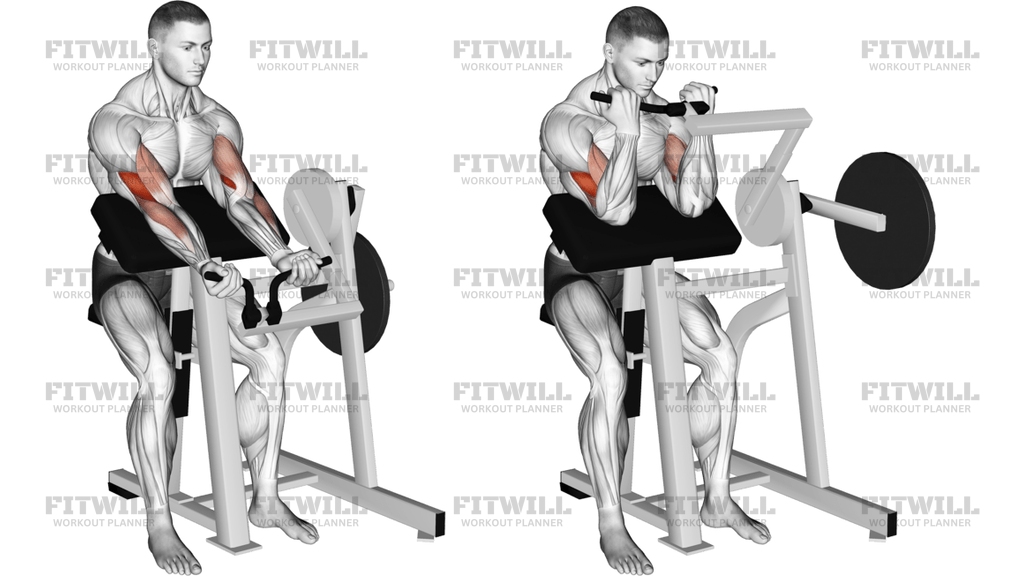
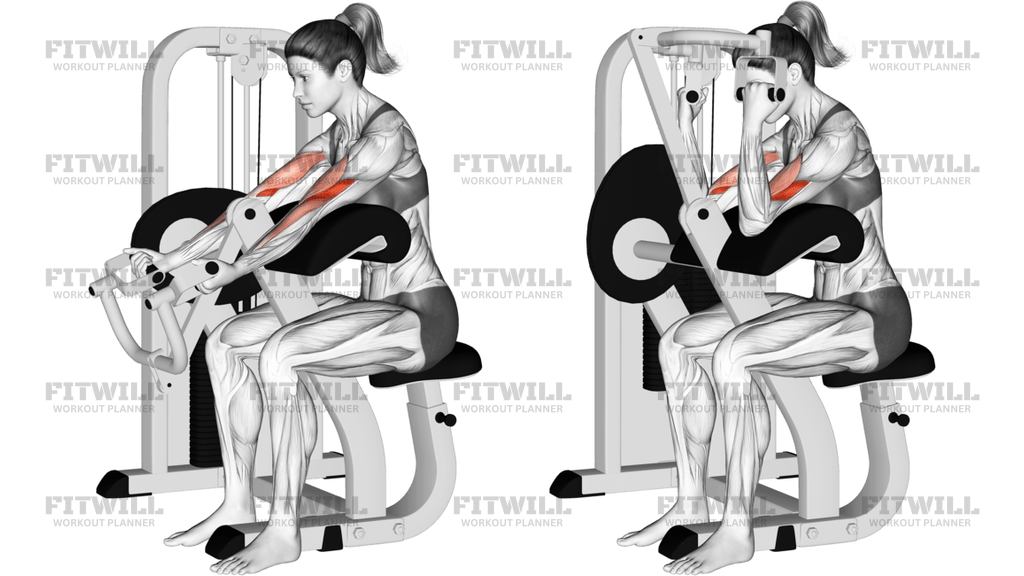
Lever Single Arm Bicep Curl
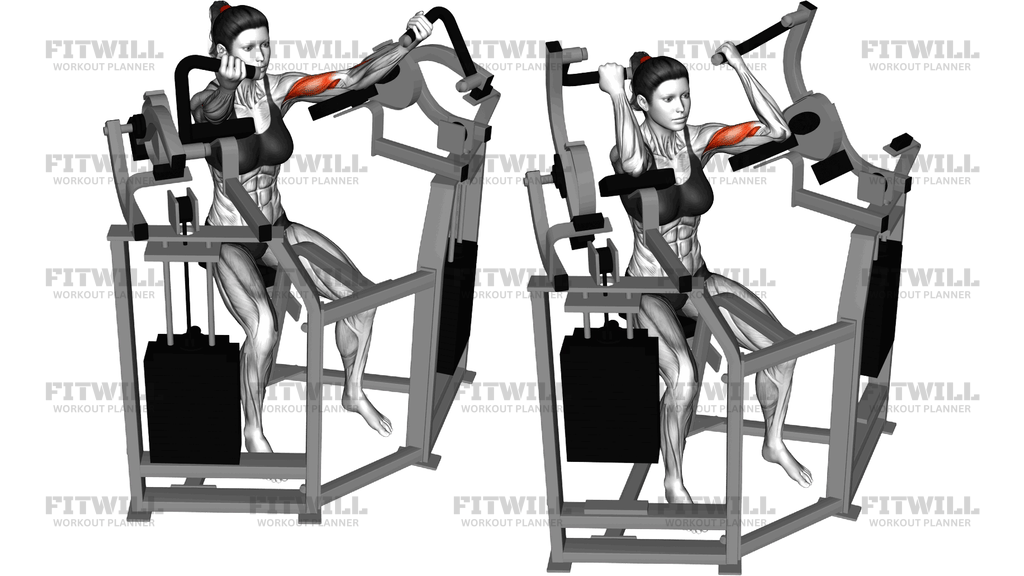
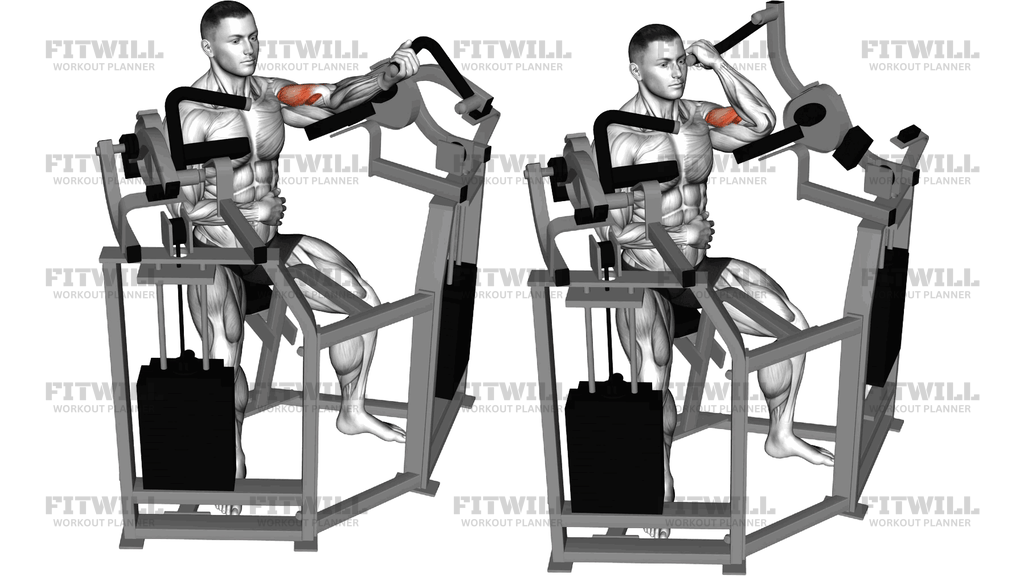
The Lever Single Arm Bicep Curl is a machine-based isolation exercise performed seated at a leverage curl station, working one arm at a time. Your upper arm rests on a padded support attached to the machine's lever arm, and you curl the handle up toward your shoulder by bending only at the elbow. Because the machine fixes the arc of the movement and supports the elbow, nearly all of the work lands on the biceps without the shoulder or body needing to contribute.
This exercise suits a wide range of lifters. Beginners appreciate the guided path and the fixed elbow position, which removes much of the coordination demand of a free-weight curl. More experienced lifters use it late in an arm session, when the biceps are fatigued and stabilizing a dumbbell becomes the limiting factor instead of the biceps themselves. It is also a practical choice for lifters returning from a layoff who want to reload the arms with a controlled, supported movement.
The primary muscle trained is the biceps brachii on the front of the upper arm, with strong contribution from the brachialis underneath it and the brachioradialis and forearm flexors working to hold the handle. Training one arm at a time exposes and helps correct side-to-side differences, since the stronger arm cannot quietly take over the load the way it can during two-arm curls.
The setup matters because the elbow pad height and seat position determine where the resistance curve hits hardest. Sit with your chest tall against the vertical pad and place the back of your upper arm flat on the support so the elbow sits just in front of the machine's pivot. If the pad is too low or you drift forward off it, the movement turns into a partial shoulder flexion exercise and the biceps lose tension at the bottom.
To perform it well, curl the handle up in a smooth arc until your forearm is close to your upper arm, squeeze briefly at the top, then lower under control until the arm is nearly straight. Avoid letting the stack or lever slam back at full extension; the lowering half is where much of the growth stimulus lives. Keep the wrist neutral and the grip firm but not crushing.
In practice, this movement fills the role of a strict, low-skill bicep builder. Use it as a finisher after rows or pulldowns, as a primary arm movement on a machine-focused day, or as a way to train the arms hard when grip fatigue or lower back strain from free-weight curls is a concern.
[ Workout Log & Planner ]
Put your next workout in Fitwill
Keep your plan and training log ready when you are.


Instructions
- Adjust the seat so that when you sit with your chest against the vertical pad, the working arm's elbow rests comfortably on the padded lever support with the upper arm angled slightly forward.
- Grip the machine's handle with one hand using a neutral-to-underhand grip, and place your free hand on your abdomen or the machine frame for stability.
- Sit tall with your chest on the pad, feet flat on the floor, and brace your core lightly so your torso stays still throughout the set.
- Start with the arm nearly straight and the upper arm in full contact with the pad, elbow pinned just ahead of the machine's pivot point.
- Exhale and curl the handle up in a smooth arc, bending only at the elbow, until your forearm comes close to your biceps.
- Pause for a moment at the top and squeeze the biceps without shrugging the shoulder or lifting the elbow off the pad.
- Inhale as you lower the handle slowly back along the same arc, extending the elbow until the arm is almost straight while keeping tension on the biceps.
- Keep the pad in contact with the upper arm for the whole rep; if the elbow floats forward, the weight is too heavy.
- Complete all repetitions on one arm, then switch hands, adjust your position, and perform the same number of reps on the other side.
- After the final rep, lower the lever fully under control and let the stack settle before standing up from the seat.
Tips & Tricks
- The most common mistake is driving with the shoulder to start the rep. If your upper arm leaves the pad at the bottom, reduce the weight and restart the set with a strict elbow-only curl.
- Keep the wrist straight and in line with the forearm. Curling with a bent-back wrist shifts stress to the forearm and wrist joint and reduces biceps involvement.
- Do not drop into the stretch. Letting the lever crash into full extension is the fastest way to lose tension and irritate the elbow; take two to three seconds on the way down.
- Because each arm works alone, match reps to your weaker side rather than letting the stronger arm set the standard.
- If the top of the movement feels like a dead spot, check the seat height. A slightly higher seat often aligns the machine's strength curve better with your arm length.
- Squeeze the handle firmly, but avoid white-knuckling it. Excessive grip tension recruits the forearms to the point where they fatigue before the biceps do.
- Keep your chest in contact with the pad on every rep. Rocking back to help the handle up turns a strict biceps exercise into a whole-body heave.
- Slow half-reps at the stretched position, where the arm is nearly straight, are a useful intensity technique once strict full reps are comfortable with a light load.
- Warm the elbows up with a few very light single-arm curls before adding working weight, since machine curls load the elbow in a fixed path.
Frequently Asked Questions
Which muscles does the Lever Single Arm Bicep Curl work?
The biceps brachii is the primary mover, with the brachialis and brachioradialis assisting and the forearm flexors working to hold the handle. Because the elbow is supported, few other muscles contribute meaningfully.
Is the Lever Single Arm Bicep Curl good for beginners?
Yes. The fixed arc and padded arm support make it one of the easiest curl variations to learn, since you only need to bend the elbow without stabilizing a free weight.
Why does the machine support the upper arm on a pad?
The pad pins the elbow so the shoulder cannot swing and momentum cannot assist the lift, forcing the biceps to move the resistance alone through the machine's preset arc.
Should I train both arms in the same set or alternate?
Finish all repetitions on one arm, rest briefly if needed, then match the exact same rep count on the other arm. This keeps the loading honest between sides.
My elbow keeps lifting off the pad during the curl. What should I change?
The weight is likely too heavy, or the pad is set too low for your arm length. Reduce the load first, then adjust the seat so the elbow naturally rests just in front of the pivot with the arm relaxed.
How does this compare to a dumbbell curl?
A dumbbell curl demands more stabilization and allows more freedom in the path, while the lever version removes those demands and gives steadier tension. Many lifters use both, with the machine version later in the session when control is harder to maintain.
Can I use the Lever Single Arm Bicep Curl if my grip tires quickly?
Yes, and that is one of its advantages. The handle and fixed lever mean a fatiguing grip is less likely to end the set than it is during heavy dumbbell curls, though you should still stop if your hold on the handle becomes insecure.
How many reps and sets should I do?
For general arm development, three to four sets of eight to fifteen reps per arm works well. Use a weight you can lower slowly on every rep without the elbow leaving the pad.
Is it safe for the elbows?
For most people, yes, because the supported position and fixed path reduce joint stress. Still, warm up with light reps, avoid slamming into full extension, and stop if you feel sharp pain in the elbow during the movement.