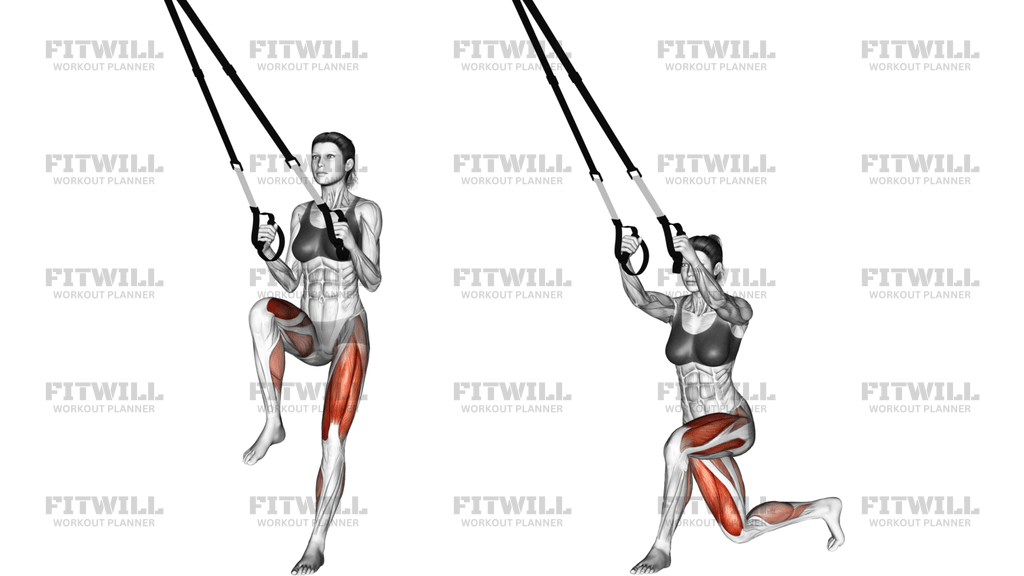
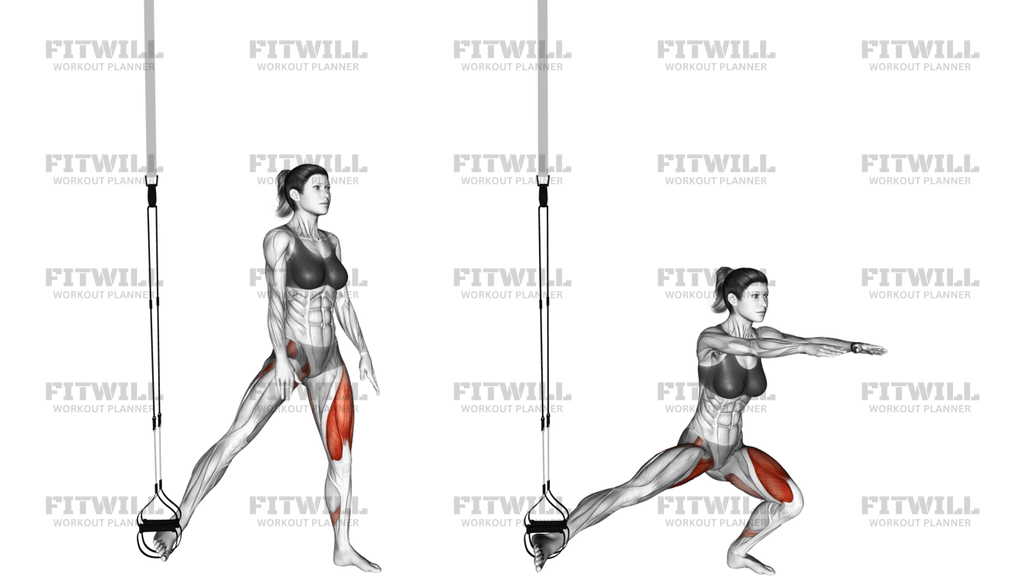
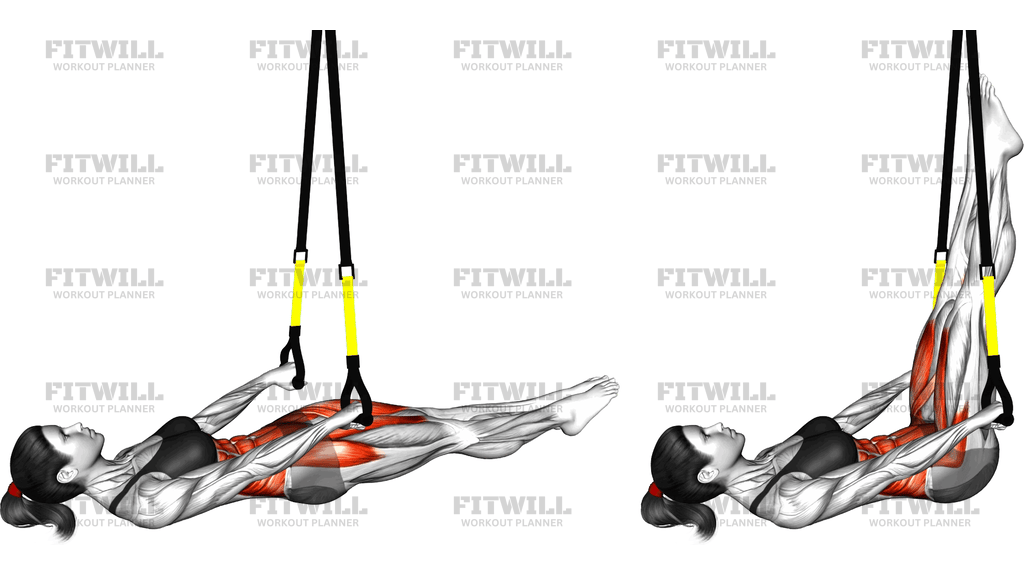
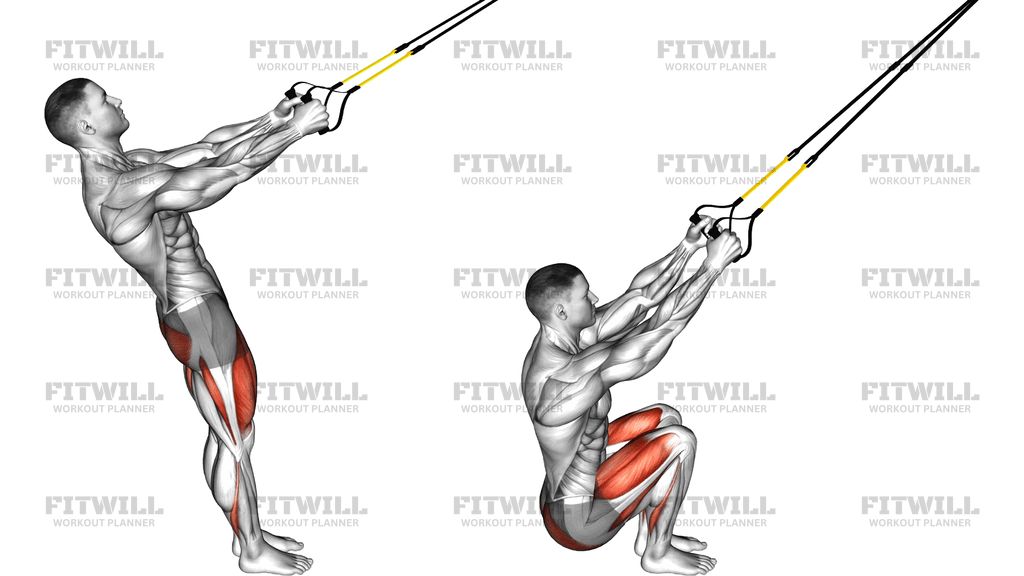
Suspension Side Lunge
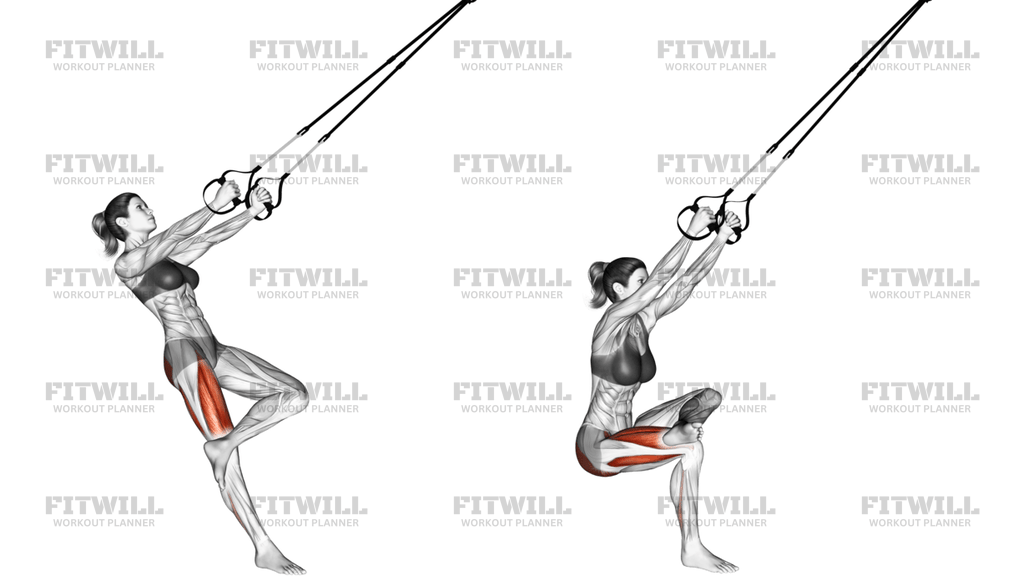
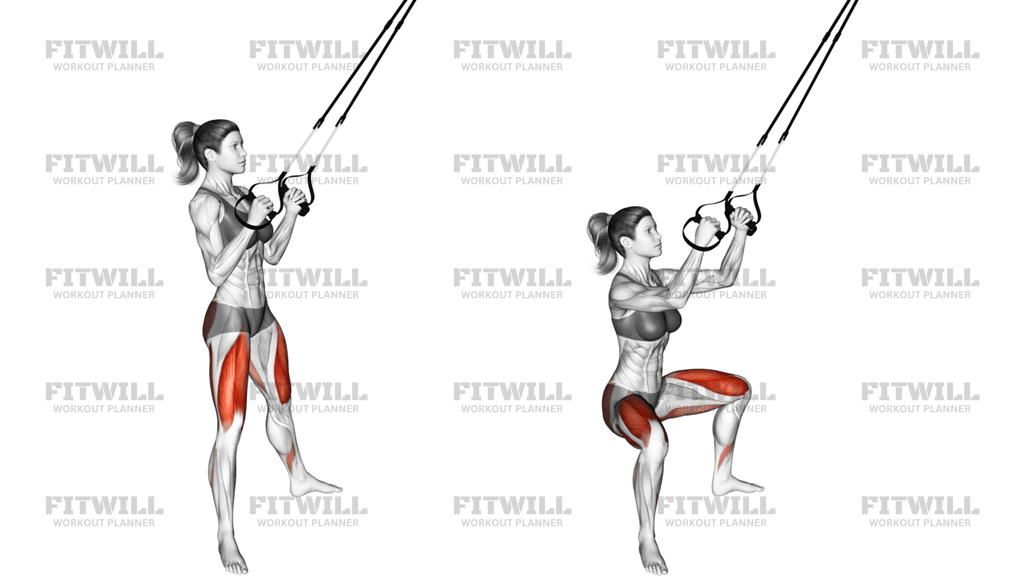
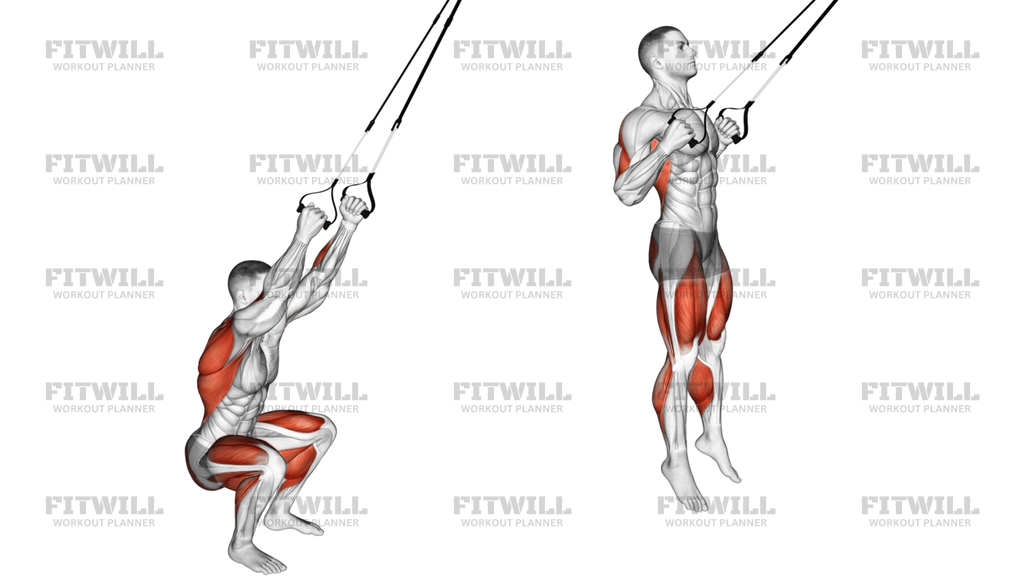
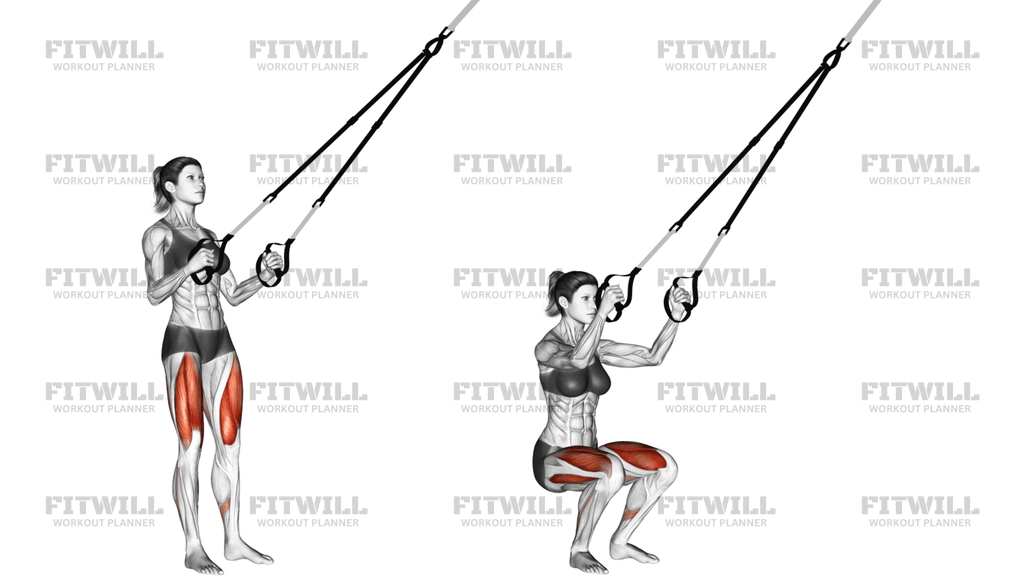
Suspension Side Lunge is a suspension-assisted lateral squat pattern that trains the thighs, hips, and trunk while giving you a stable handhold for balance. The straps do not do the work for you; they let you sit into the side lunge with cleaner posture, a smoother shift of body weight, and less risk of losing position on the way down.
The exercise is most useful when you want to build strength through a lateral range of motion and practice controlling the knee, hip, and foot together. The working leg should stay grounded and organized while the other leg stays long and supportive. That combination makes the movement valuable for quad loading, adductor involvement, glute support, and general lower-body coordination.
Setup matters because the straps can either help your mechanics or pull you out of position. Stand far enough from the anchor that your arms are long but not overreaching, and keep enough tension in the handles to stay upright without hanging back. From there, sit the hips toward one side, keep the chest tall, and let the bent knee track in line with the toes instead of collapsing inward.
Each repetition should feel like a controlled shift from one side to the other, not a quick drop into the bottom. Lower under control, pause briefly when the thigh is loaded, then drive through the planted foot to return to standing. Exhale as you stand, inhale on the way down, and reset your stance before the next rep if the straps start to swing or your torso starts to twist.
This movement fits well in lower-body strength work, warmups, unilateral accessory blocks, and athletic conditioning sessions where balance and hip control matter. Keep the range pain-free, especially at the inner thigh and knee, and shorten the step if the motion turns into a reach instead of a lunge. Clean positioning is the priority: the straps are there to steady the pattern, not to replace good leg drive.
[ Workout Log & Planner ]
Put your next workout in Fitwill
Keep your plan and training log ready when you are.


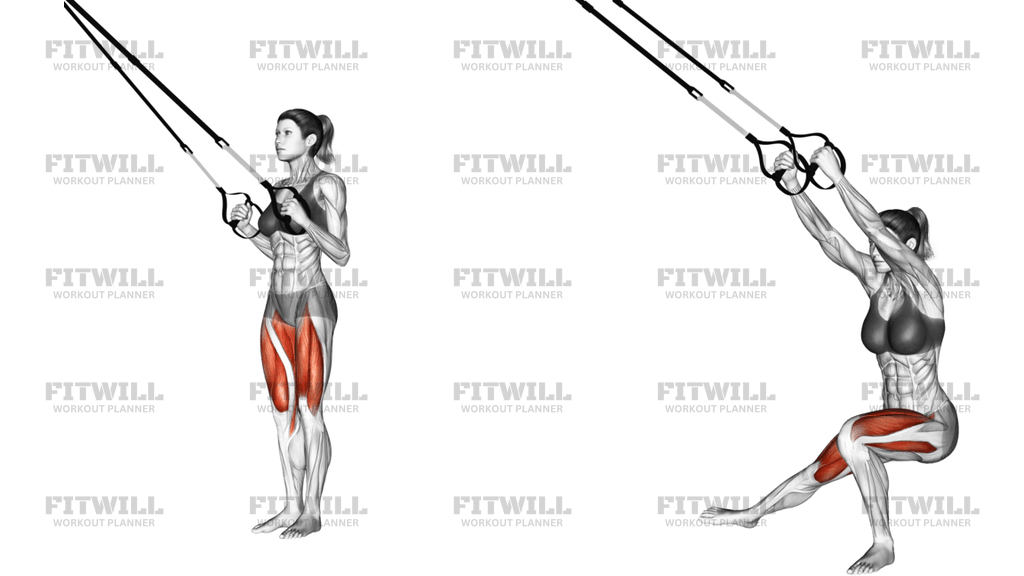
Instructions
- Hold the suspension handles and stand facing the anchor with your feet about hip to shoulder width apart.
- Take a small step back until the straps are taut, your arms are long, and your torso can stay tall without leaning on the handles.
- Brace your torso, keep your shoulders down, and set one foot out to the side to begin the lunge.
- Sit your hips toward the stepped-out leg while keeping the opposite leg straight and the planted foot flat.
- Let the knee of the working leg track over the toes as you lower, and keep the chest lifted instead of folding forward.
- Descend until the outer hip and inner thigh feel loaded, but stop before the knee caves inward or the heel lifts.
- Press through the working heel and midfoot to return to standing while keeping steady tension in the straps.
- Reset your stance, breathe in on the lowering phase, breathe out as you stand, and repeat to the other side if required.
Tips & Tricks
- Keep the handles as a balance aid, not a pulling aid; if your arms are doing the work, you are too far from the anchor or leaning too hard.
- Take a shorter side step if the working knee drifts inward or the trailing foot starts to skid.
- Let the hips move back and across, not just down, so the loaded leg and inner thigh actually have to produce force.
- Keep the standing leg foot tripod planted with pressure under the big toe, little toe, and heel.
- If the straps swing at the bottom, slow the descent and pause for a moment before driving back up.
- Do not let the chest collapse toward the floor; a tall torso keeps the lunge on the thighs instead of turning it into a hinge.
- Use a controlled tempo on the way down so the adductors and quads are loaded instead of bounced through the bottom.
- Stop the set when the working knee starts to cave inward or the ankle rolls in, because that is usually the first sign the reps are getting sloppy.
Frequently Asked Questions
What muscle does Suspension Side Lunge target most?
The quads are the primary target, with strong help from the glutes, inner thigh, and stabilizers.
Can beginners perform this exercise?
Yes. The suspension straps make it easier to balance, so beginners can learn the side-lunge pattern with a shorter step and smaller range.
Where should I hold the handles during the rep?
Hold the handles at about chest height with enough tension to stay upright, but not so much that you are hanging back on the straps.
What is a common mistake with the side step?
A common error is stepping too far and turning the lunge into a collapse. Keep the step short enough that you can control the knee and keep the heel down.
Should my trailing leg stay bent or straight?
Keep the non-working leg long and mostly straight so the working side carries the load instead of bouncing between both legs.
What should I feel at the bottom of the rep?
You should feel the working thigh, inner thigh, and outer hip loading without pinching the knee or losing balance through the straps.
How deep should I go?
Go only as deep as you can keep the planted foot flat, the torso tall, and the working knee aligned with the toes.
How do I make this exercise harder?
Increase the side step slightly, slow the lowering phase, or reduce how much you rely on the straps for balance while keeping the same clean line of movement.