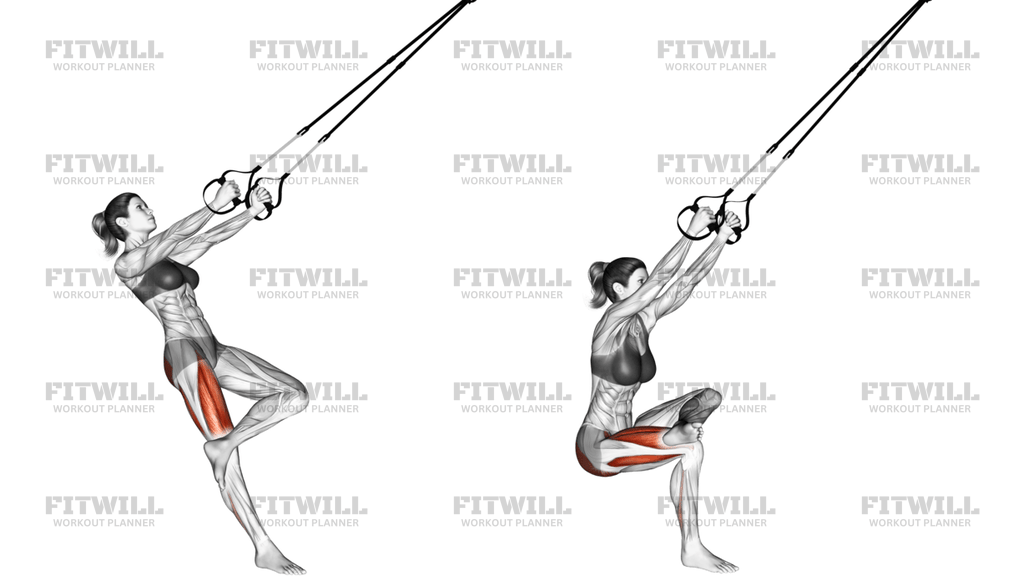
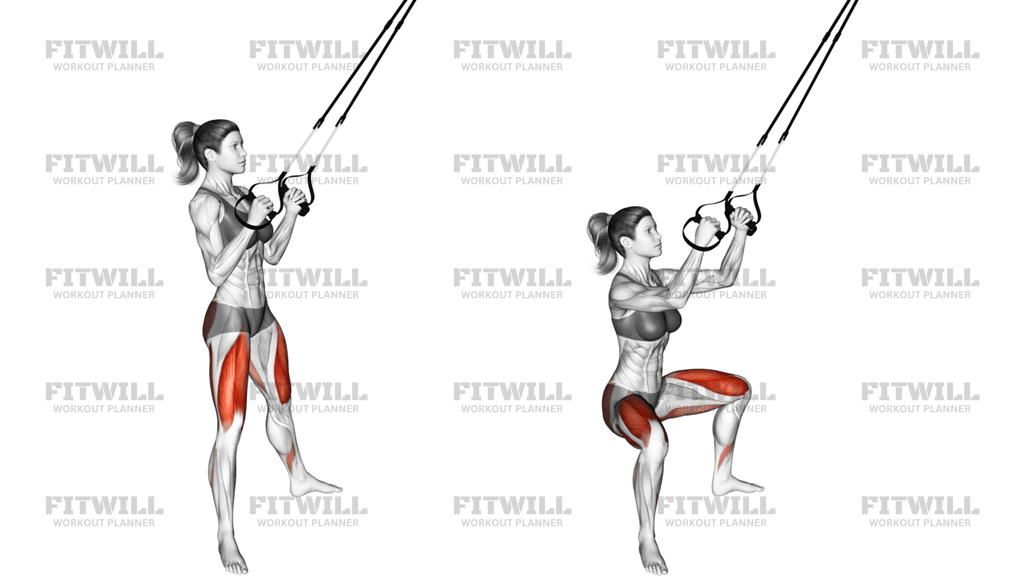
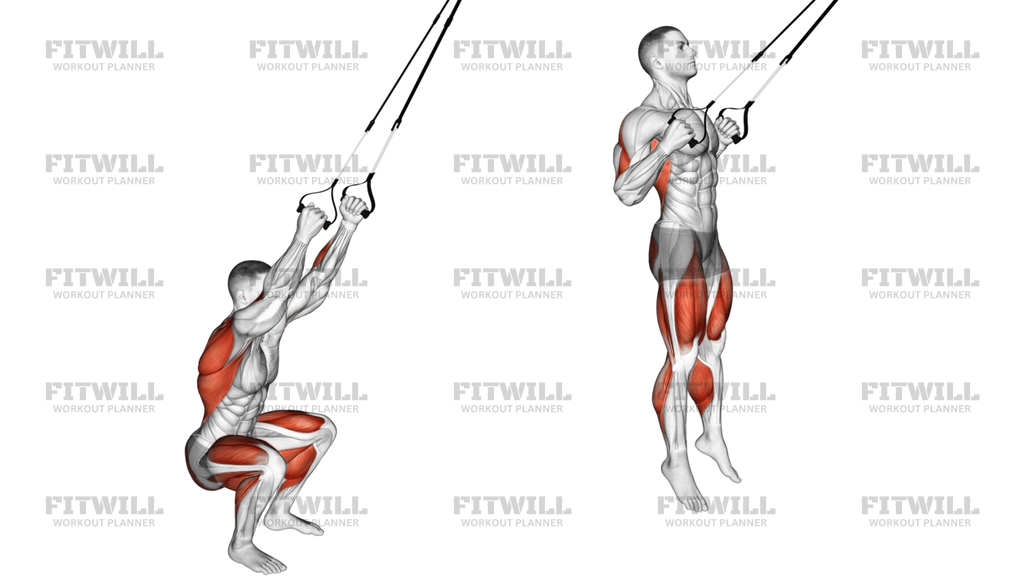
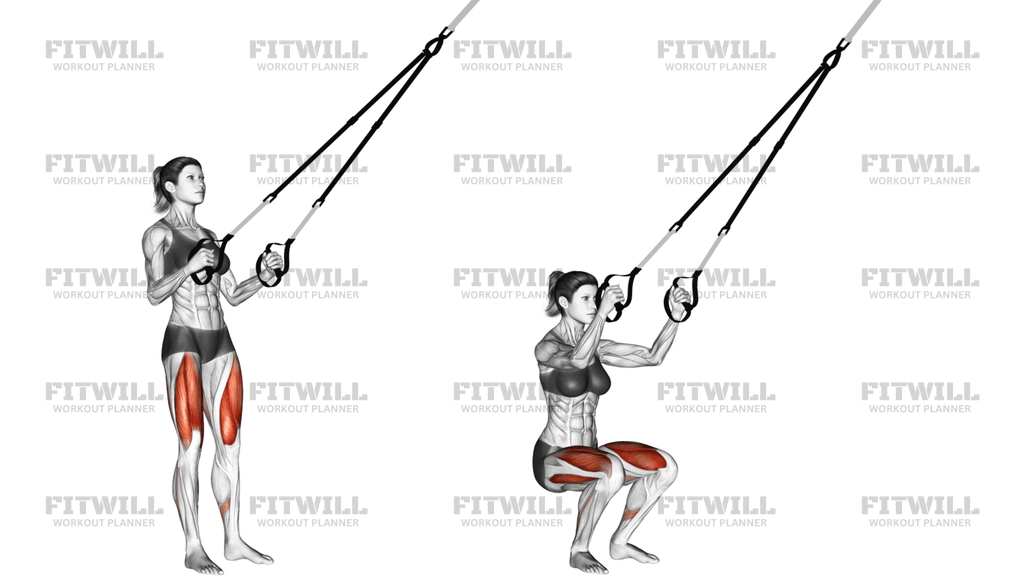
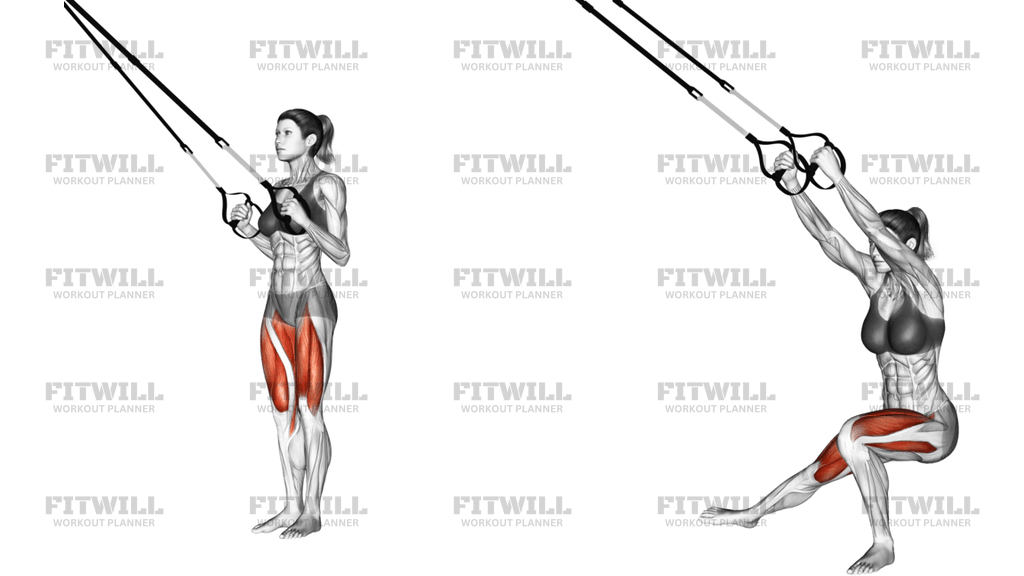
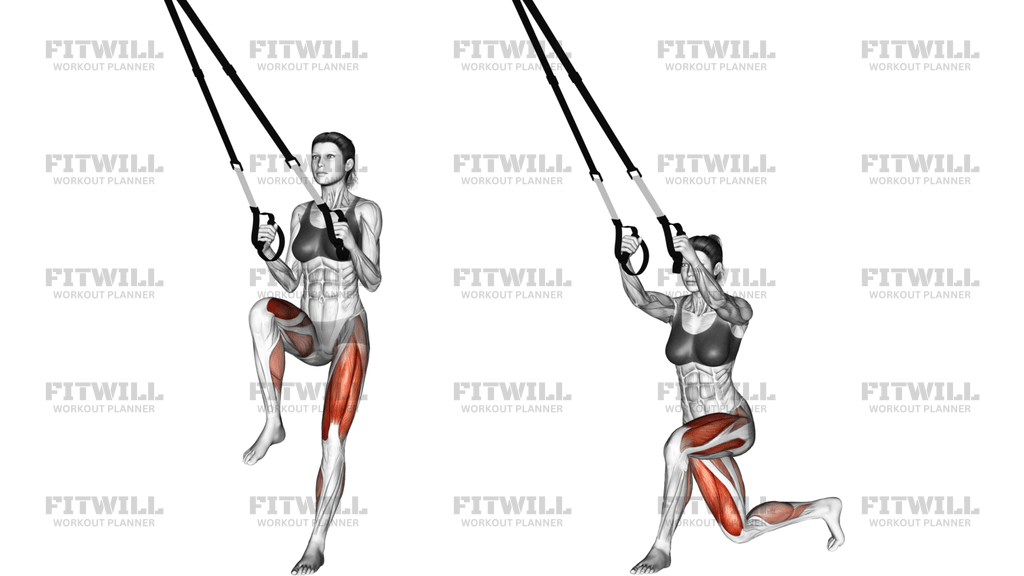
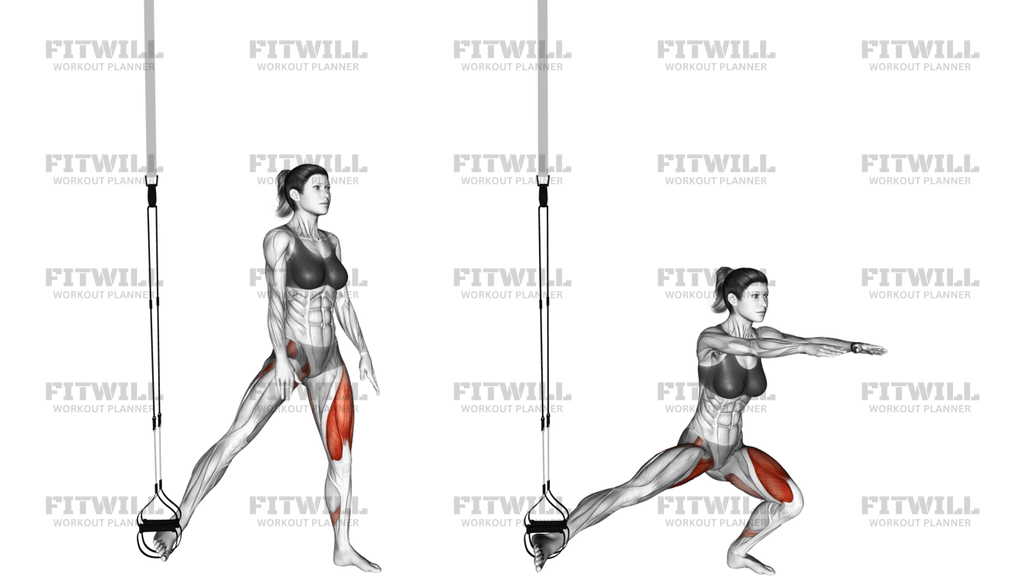
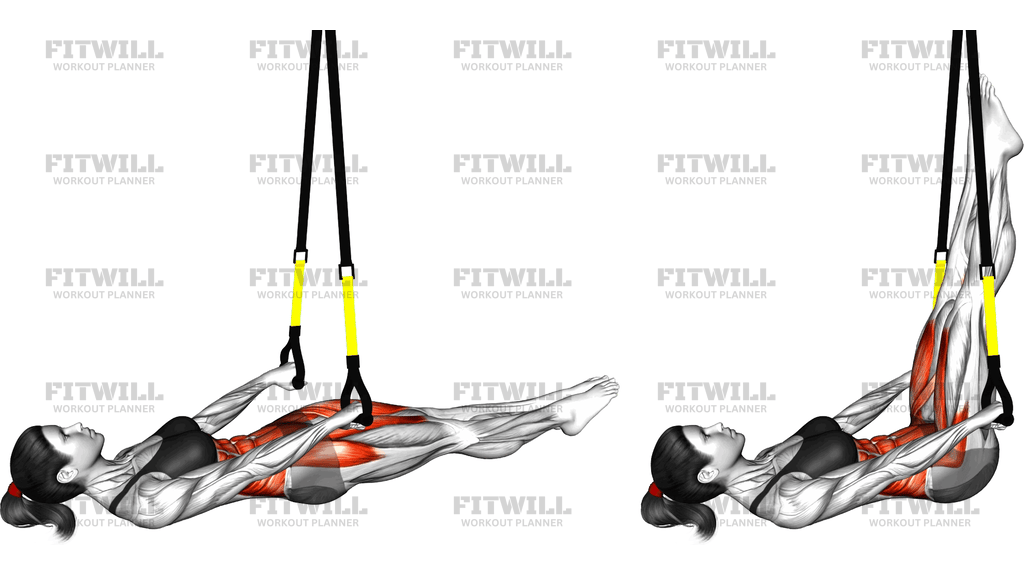
Suspension Side Stretch
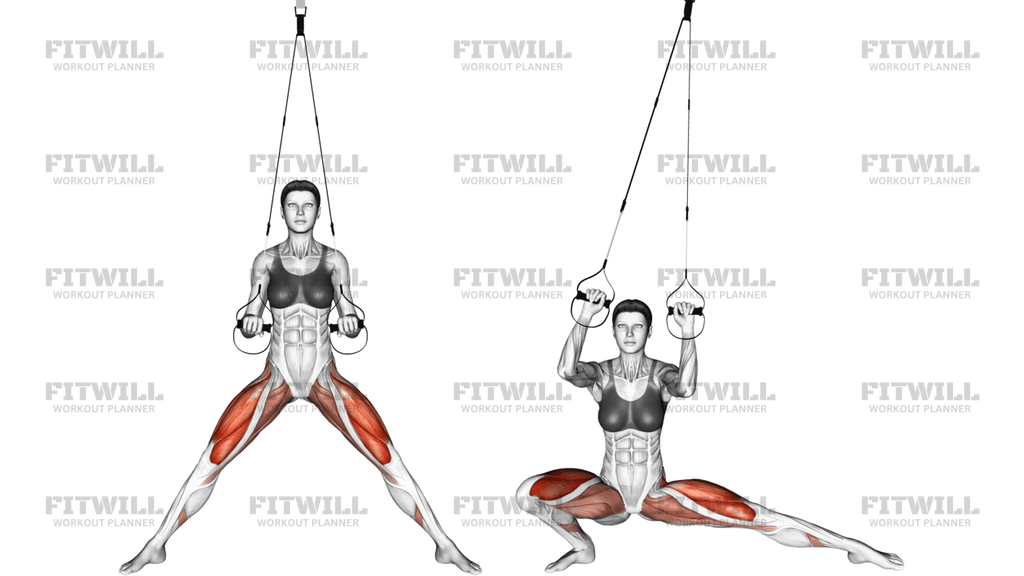
Suspension Side Stretch is a suspension-trainer mobility exercise for the side body. It uses the straps to help you lengthen through the ribs, obliques, lats, and the muscles that support side-bending control while the legs stay planted and lightly active for balance. The movement is simple, but the setup matters: the strap height, foot placement, and amount of lean all change where the stretch lands and how much support you get from the straps.
This exercise is most useful when you want to open the torso without collapsing into the lower back or dumping all the work into the shoulders. The suspension system adds just enough instability to make the position active, so you are not just hanging passively at end range. Instead, you are keeping the trunk long, the pelvis organized, and the shoulders away from the ears while you create a smooth lateral arc through the body.
The cleanest version starts with a steady stance and a light pull on the straps before you lean. From there, you shift the hips slightly, reach the arm or arms overhead, and lengthen away from the anchor point rather than cranking the body into a sharp bend. A good repetition feels like a line of opening from the hip through the waist and into the underside of the arm, with the neck staying long and the chest not rotating open.
Because this is a stretch with an active support demand, it fits well in a warm-up, cool-down, or mobility block where you want controlled range and a calm breathing rhythm. Keep the motion smooth, pause in the end position only as long as you can maintain shape, and come back with the same control you used to enter the stretch. If the straps feel unstable or the shoulder starts to shrug, reduce the lean or shorten the range before continuing.
[ Workout Log & Planner ]
Put your next workout in Fitwill
Keep your plan and training log ready when you are.


Instructions
- Set the suspension straps to about chest or waist height and stand facing the anchor point on a mat.
- Hold the handles or straps with both hands and step back until you feel a light, even pull.
- Place your feet about hip-width apart, soften your knees, and stack your ribs over your pelvis.
- Brace gently and keep your shoulders down before you start to lean.
- Shift your hips slightly to one side and let the torso arc the opposite way, keeping the chest square to the front.
- Reach through the outside arm and lengthen the whole side of the body without twisting forward or backward.
- Breathe into the stretched side for a short hold, then return to center under control.
- Repeat on the other side with the same strap tension, range, and posture.
Tips & Tricks
- Lower strap height usually makes the stretch easier to control; a higher anchor often increases the shoulder demand.
- Keep the neck long and the top shoulder away from the ear so the stretch stays in the torso instead of the upper trap.
- If you feel a pinch in the front of the shoulder, shorten the reach and keep more bend in the elbows.
- The goal is length through the rib cage, not a hard side crunch, so do not collapse the waist.
- Let the hips travel a little, but keep them from drifting far behind the feet.
- Exhale as you lean away from the anchor to help the ribs soften and the side body open.
- Keep both feet planted; stepping or rotating the feet turns it into a different stretch.
- Use a smaller range if the suspension line pulls you off balance, then build the hold time first.
Frequently Asked Questions
What does Suspension Side Stretch train the most?
It mainly targets the side body, especially the obliques, lats, intercostals, and the muscles that control side-bending.
Do I hold one handle or both handles?
Most versions use both handles at first for support, then you lean away from the anchor while keeping the torso long. If your setup is asymmetric, keep the same idea: use the straps to guide the stretch, not to hang on them.
How far should I lean into the suspension side stretch?
Lean only until you feel a clean line of stretch along the ribs and waist. If the lower back compresses or the shoulders shrug, you have gone too far.
Can beginners use the suspension straps for this stretch?
Yes. Start with a small lean, light strap tension, and short holds so you can learn the balance point before chasing more range.
What is the most common mistake with the handles?
People often pull hard with the arms instead of letting the straps provide light support. That usually turns the movement into a shoulder shrug or an uneven twist.
Should my chest rotate while I stretch?
No. Keep the chest mostly facing forward so the stretch stays in the side torso instead of becoming a twisting drill.
Where should I feel the stretch?
You should feel it along the side of the ribs, waist, and possibly into the lat or outer hip line, depending on how high the straps are set.
When should I use this exercise in a workout?
It works best in a warm-up, mobility block, or cool-down when you want controlled side-body opening and steadier breathing.