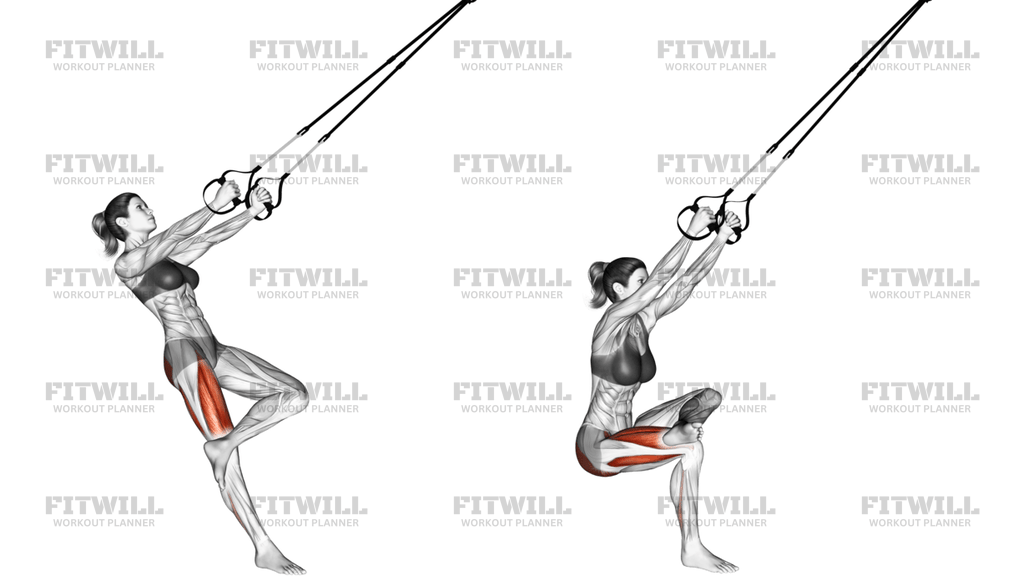
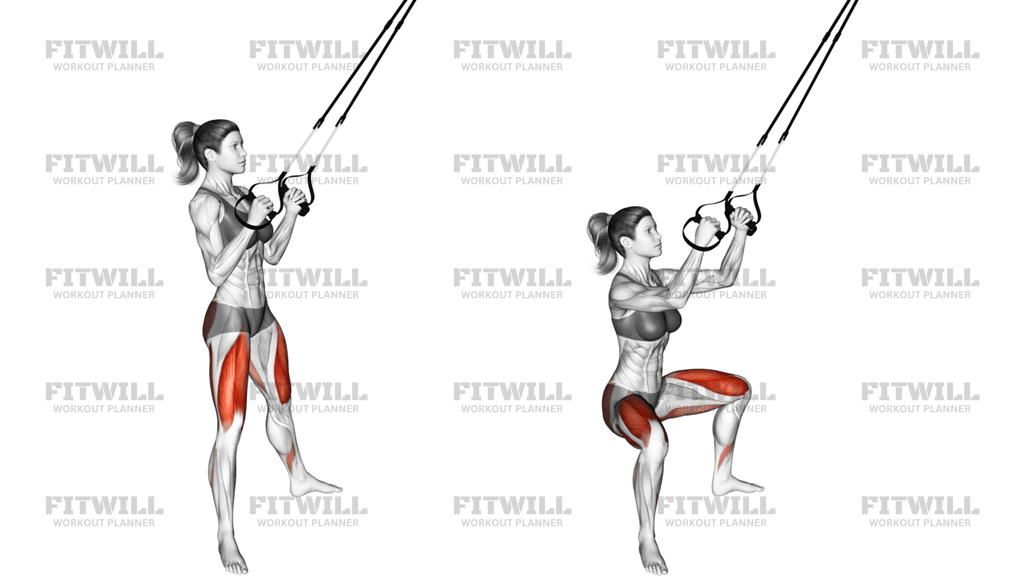
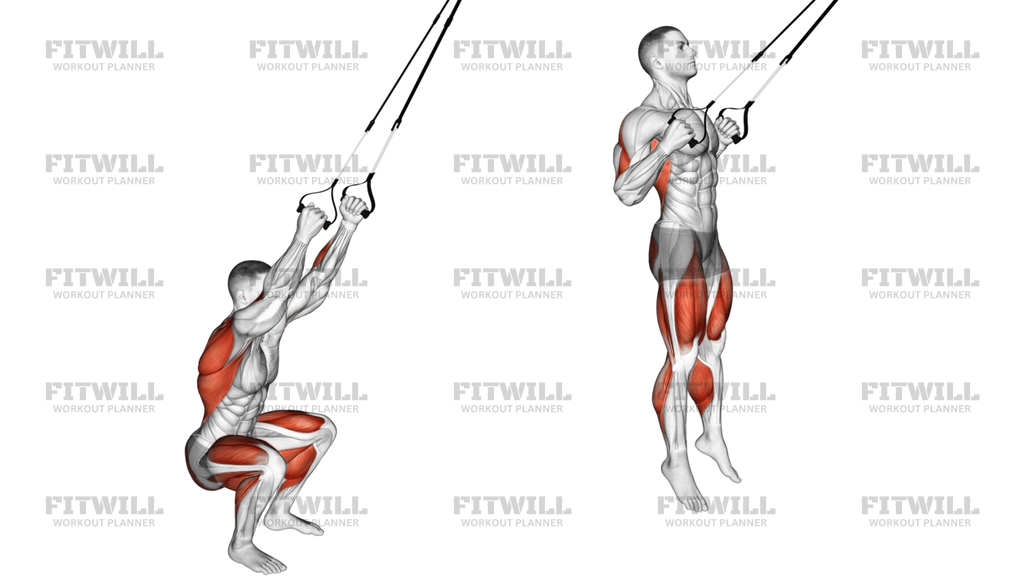
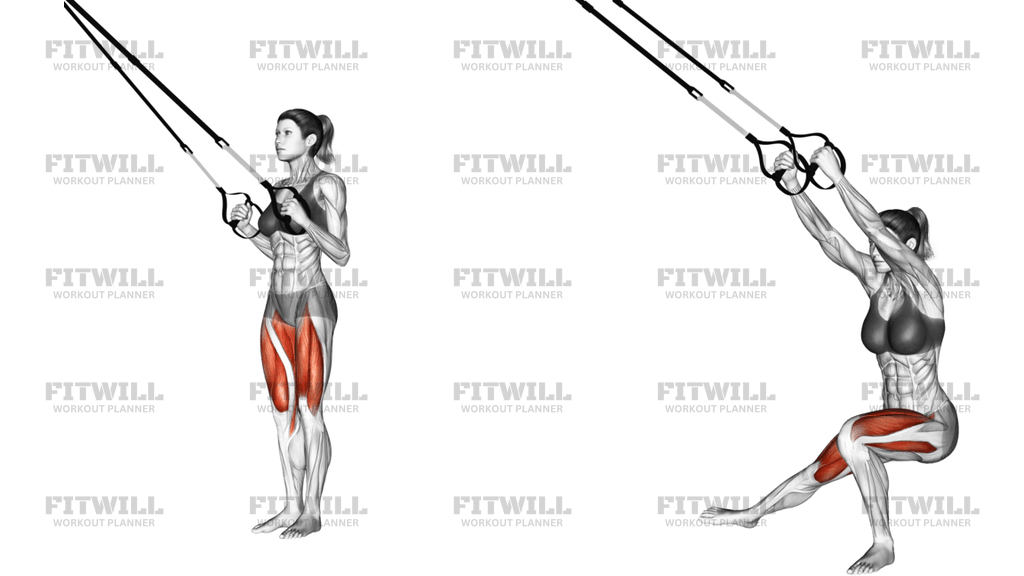
Suspension Squat
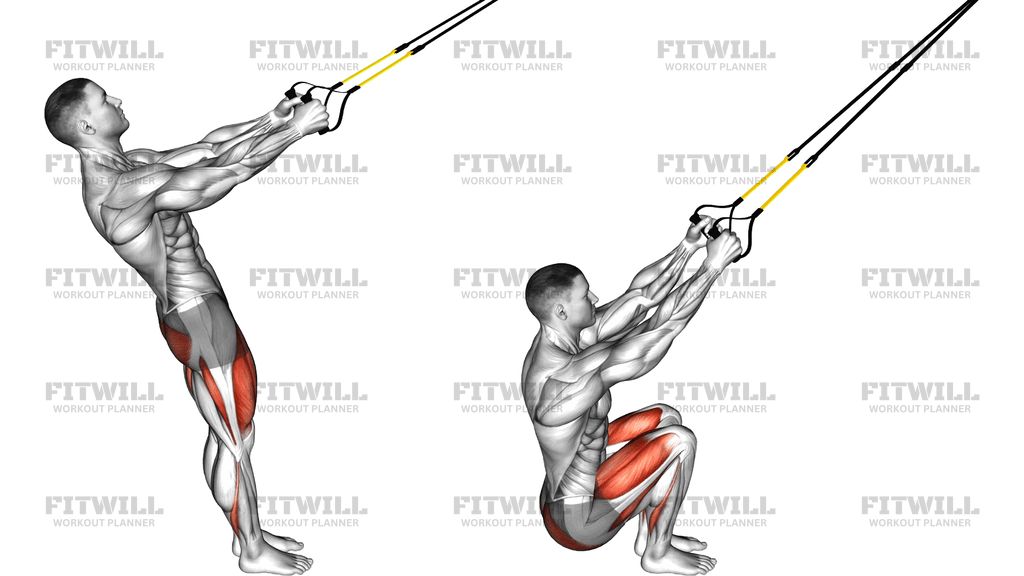
Suspension Squat is a counterbalanced squat pattern that uses suspension straps to help you stay balanced while you train the thighs. It is especially useful when you want to groove squat mechanics, build quad strength, and keep the torso upright without fighting a heavy external load. The straps do not replace the legs; they simply give you a stable reference so you can sit down and stand up with cleaner control.
The main work comes from the quads, with the glutes, adductors, and core helping you control the descent and stand back up. Because the handles reduce balance demands, Suspension Squat is a useful bridge between bodyweight squats and more demanding loaded variations. It also gives beginners a way to practice depth and knee tracking without having to brace against a bar or hold a weight in front of the body.
The setup matters more here than people expect. Hold one handle in each hand, step back until the straps are taut, and stand with your feet about shoulder-width apart and your toes turned out slightly. Keep the handles at chest height, the elbows soft, the ribs stacked over the pelvis, and the chest lifted so the straps support balance without pulling you forward.
Start the rep by sitting the hips back and down while the knees bend and travel naturally over the toes. Keep the whole foot planted, let the straps help you stay centered, and lower only as far as you can keep the heels down and the spine neutral. In the bottom position, the thighs should be near parallel or deeper if your mobility allows it without losing position.
Drive back up by pressing through the heels and midfoot, extending the hips and knees together while you exhale. The handles should stay steady instead of being yanked or swung, and the torso should rise as one piece rather than folding at the waist. If the movement turns into a pull with the arms or a forward collapse of the chest, shorten the straps, reduce depth, or slow the tempo.
Suspension Squat works well as a warm-up, accessory lift, or technique drill on days when you want quality reps instead of max loading. It can be a beginner-friendly squat variation, but it still needs intent: each rep should look smooth, repeatable, and controlled from the first setup through the final reset. When the stance, strap length, and depth are right, it becomes a simple way to train the legs hard without losing the clean squat pattern.
[ Workout Log & Planner ]
Put your next workout in Fitwill
Keep your plan and training log ready when you are.


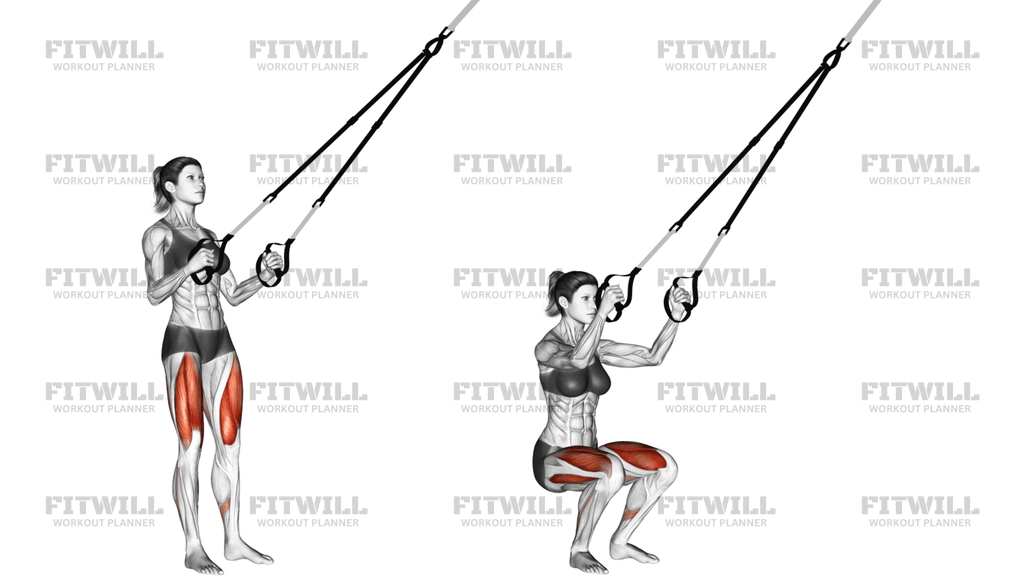
Instructions
- Hold one suspension handle in each hand and step back until the straps are taut at chest height.
- Set your feet about shoulder-width apart with your toes slightly turned out and your weight spread across the whole foot.
- Keep your elbows soft, your chest lifted, and your ribs stacked over your pelvis before you start the descent.
- Sit your hips back and down while bending your knees and letting them track over your toes.
- Keep your heels planted and let the straps help you stay balanced instead of pulling yourself through the rep.
- Lower until your thighs are near parallel to the floor or as deep as you can keep a neutral spine and full foot contact.
- Drive through your heels and midfoot to stand, extending your knees and hips together as you exhale.
- Finish tall with the straps still under tension, then step forward carefully to release the handles and end the set.
Tips & Tricks
- Shorten the straps if you need more support; longer straps make the bottom position harder to control.
- Keep the handles near chest height. If they drift overhead, your shoulders will take over the movement.
- Let your knees travel forward naturally instead of turning the squat into a hip hinge.
- Keep pressure on the tripod of the foot: big toe, little toe, and heel.
- If your heels lift, reduce the depth before you widen the stance or chase more range.
- Use the straps for balance, not momentum. If you are pulling hard on the handles, the legs are not doing enough work.
- Pause only if you can stay tall in the torso and keep the feet flat at the bottom.
- A slower descent usually makes Suspension Squat feel cleaner and more quad-focused than bouncing out of the hole.
Frequently Asked Questions
What muscles does Suspension Squat work most?
Suspension Squat mainly targets the quads, with the glutes, adductors, and core helping you control the lowering and standing phases.
Is Suspension Squat good for beginners?
Yes. The straps make it easier to balance and practice squat depth, which makes it a good entry-level squat pattern.
How low should I go in Suspension Squat?
Go as low as you can while keeping your heels down, your chest lifted, and your lower back neutral. For many people, that means thighs near parallel.
Should I lean back into the straps during Suspension Squat?
A slight lean is normal, but do not hang back on the straps. Keep your torso tall and let the handles help with balance, not with lifting the rep.
Why do my shoulders get tired before my legs?
That usually means you are pulling on the handles too much or starting too far back. Step in a little, keep the elbows soft, and let the legs do the work.
What is the most common mistake in Suspension Squat?
The most common mistake is losing foot contact and rising onto the toes. Keep the whole foot planted and control the descent.
Can Suspension Squat replace a barbell squat?
It can build squat pattern quality and leg endurance, but it is usually better as a complementary exercise rather than a direct replacement for heavy barbell squats.
How can I make Suspension Squat harder?
Use longer straps, slower eccentrics, deeper reps, or more total volume. Any of those increases the challenge without changing the movement pattern.