Barbell Srtict Curl
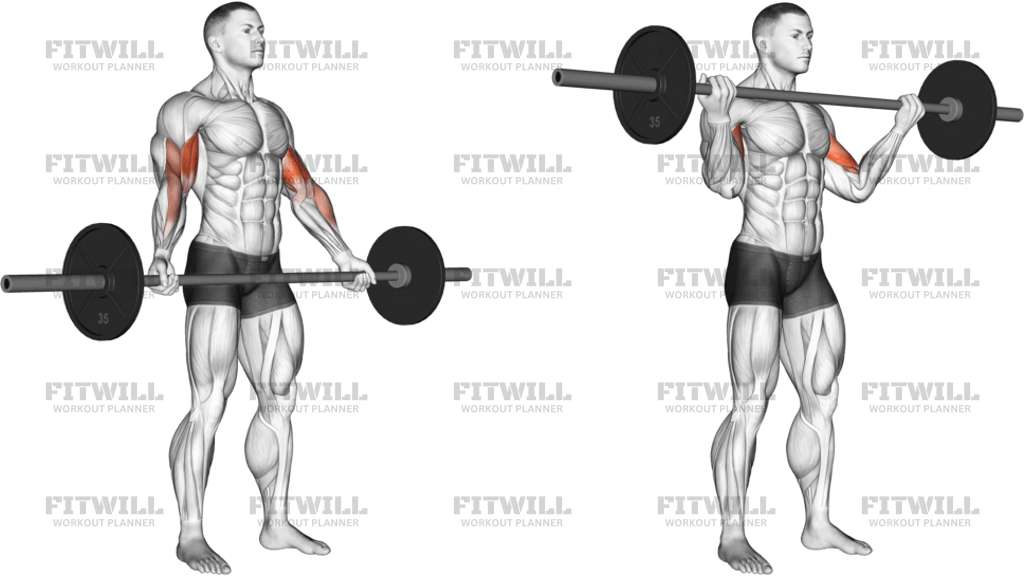
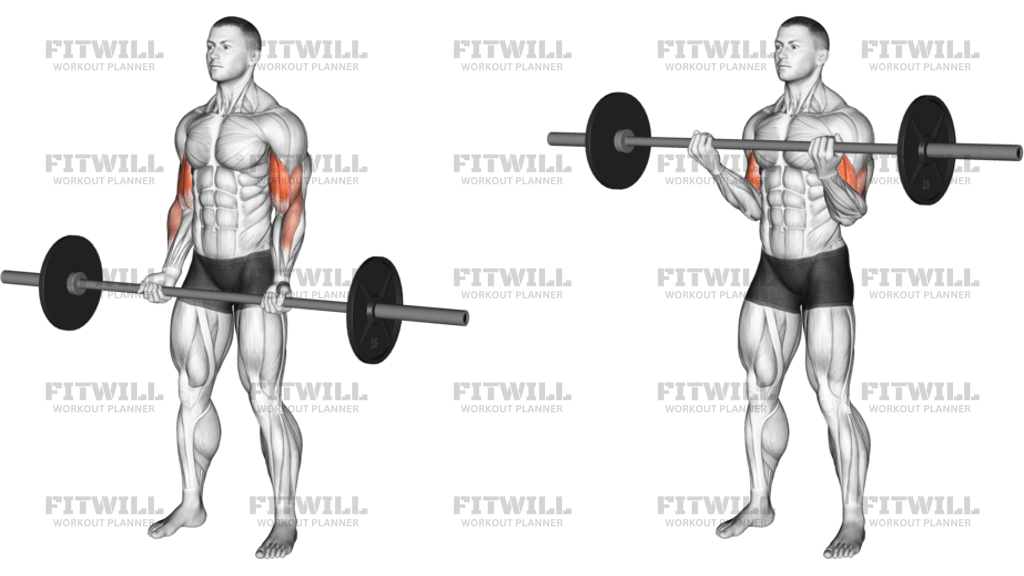
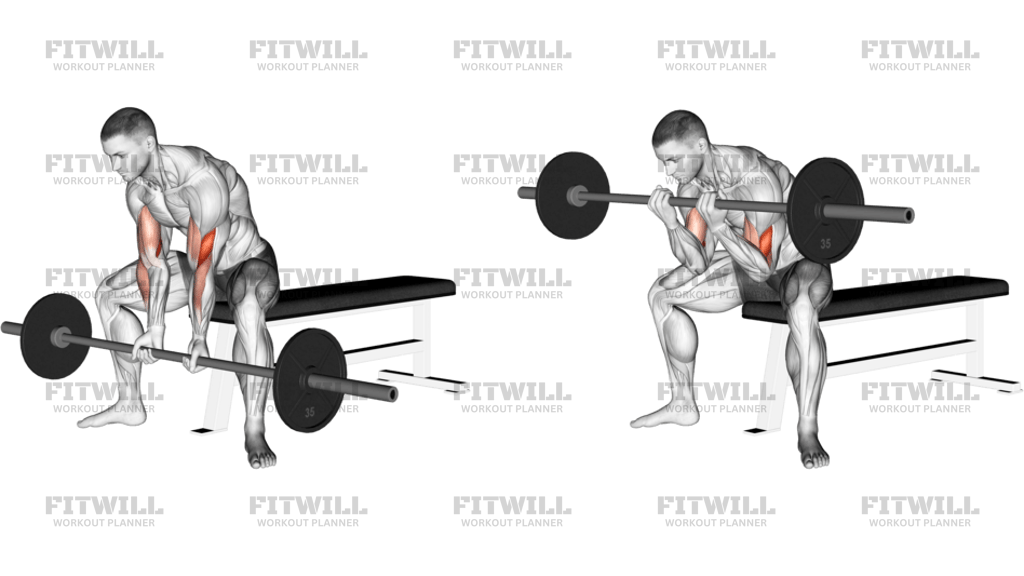
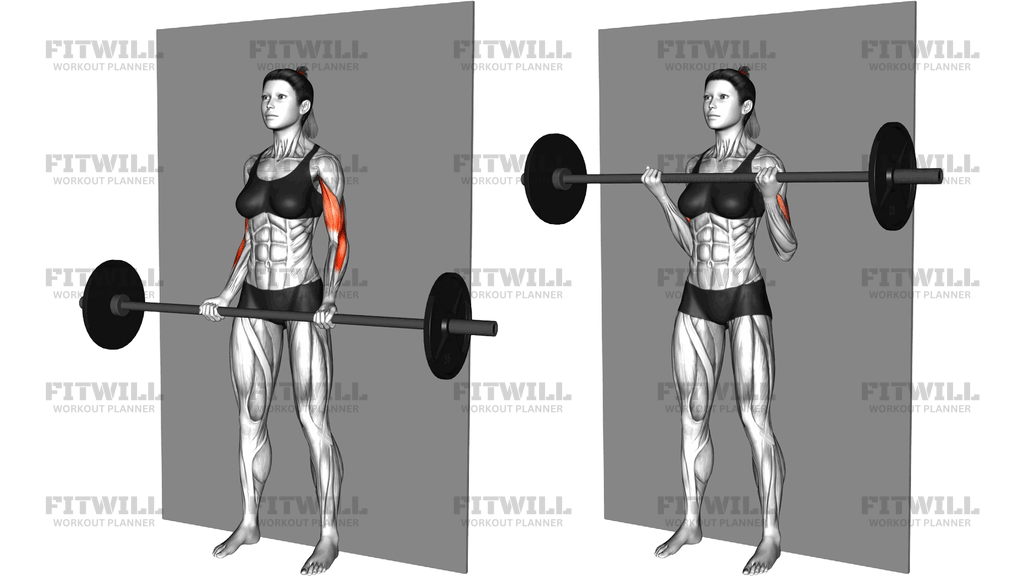
The Barbell Strict Curl is a standing biceps exercise performed with a straight barbell held at shoulder width using an underhand grip. The word strict is the key: your torso stays upright and still, your elbows stay pinned to your sides, and the only joints that move are the elbows themselves. The bar travels from a dead hang at thigh level up to the front of your shoulders, then lowers back under full control without any body English.
This movement is one of the most direct ways to load the biceps brachii, along with the brachialis underneath it and the forearm flexors that work to hold the bar. Because both arms share a single bar, the stronger side cannot quietly take over the way it can with two dumbbells, which makes the barbell version useful for keeping left and right development even. Lifters who want bigger arms, people rehabbing general pulling strength, and anyone doing a push-pull-legs or upper body split will all find a slot for it.
The setup matters more than most lifters realize. Standing with feet about hip width apart, a braced core, and shoulders pulled gently back gives your elbows a stable anchor point. If your stance is too narrow or your torso leans forward, the bar drifts away from your body and your shoulders start stealing the work. A light squeeze of the glutes and a big breath before the first rep sets the foundation for every rep that follows.
Execution comes down to an arc, not a straight line. Curl the bar up by bending the elbows while keeping the upper arms vertical, letting the bar track close to your torso until it reaches the front of your shoulders or upper chest. At the top, squeeze without shrugging. Lower the bar slowly along the same path, resisting gravity rather than dropping it, and stop just short of a full hang so tension stays on the biceps.
The most common fault is swinging the hips or snapping the knees forward to heave a bar that is too heavy. A strict curl done with an honest weight builds more arm over time than a sloppy curl done with twenty extra pounds. Start with an empty bar or a light load, master the arc and the pause at the top, and add weight only when every rep looks like the first one.
[ Workout Log & Planner ]
Put your next workout in Fitwill
Keep your plan and training log ready when you are.


Instructions
- Stand with your feet about hip width apart and load the barbell with a weight you can curl for all planned reps without leaning back.
- Hold the bar with an underhand grip, hands roughly shoulder width, arms fully extended so the bar rests against the front of your thighs.
- Pull your shoulders back and down, brace your core, and squeeze your glutes lightly so your torso cannot swing during the set.
- Keep your elbows tucked at your sides and your upper arms vertical throughout the entire set.
- Exhale as you curl the bar up in an arc, bending only at the elbows, letting the bar travel close to your body toward the front of your shoulders.
- At the top, when the bar reaches chest or shoulder height, squeeze your biceps hard for a beat without shrugging or raising the elbows forward.
- Inhale as you lower the bar along the same arced path, taking two to three seconds to return it to the starting position near your thighs.
- Stop just short of fully locking out at the bottom so tension remains on the biceps, then begin the next rep.
- If you catch yourself leaning back or swinging the bar, rack it, reduce the weight, and reset your posture before continuing.
Tips & Tricks
- If your wrists ache at the top, your grip is likely too narrow for your shoulder structure; widen your hands an inch or two on the bar.
- Swinging the torso is the number one fault on this lift. Fix it by imagining your shoulder blades glued to a wall behind you for the whole set.
- Do not let your elbows drift forward as you curl. When the elbows travel up, the shoulders take over and the biceps lose tension at the top, exactly where they should be working hardest.
- A controlled three second lowering phase does more for arm growth than an extra plate on the bar, because the biceps are strongest during the lowering portion of the curl.
- If you feel it more in your forearms than your biceps, slow the first third of the rep down and focus on driving the movement from the elbow joint.
- Use a lighter weight than you think you need for the first two or three sessions; strict curls expose how much momentum was hiding in your previous arm work.
- Chalk or a secure grip matters here because a barbell with plates can slip out of sweaty hands mid rep; wrap your thumbs fully around the bar.
- Standing with one foot slightly staggered can add stability if you find yourself rocking side to side with heavier loads.
- Stop the set the moment your lower back starts absorbing the work; pushing through that fatigue teaches bad patterns and does little for the arms.
Frequently Asked Questions
Which muscles does the Barbell Strict Curl work?
The primary muscle is the biceps brachii, with the brachialis and brachioradialis assisting, and the forearm flexors working hard to hold the bar. Your core and upper back work statically to keep the torso upright and still.
How is the Barbell Strict Curl different from a regular barbell curl?
The strict version removes momentum entirely: the torso stays upright, the elbows stay pinned at the sides, and the elbows are the only moving joints. A regular curl often allows some hip and shoulder swing, which shifts effort away from the biceps.
Is the Barbell Strict Curl good for beginners?
Yes, as long as beginners start with an empty bar or light weight and prioritize the elbow path over the load. It teaches excellent habits early because there is nowhere to hide poor form.
Why do my shoulders rise when I curl the bar?
Shrugging at the top means the load is too heavy or the elbows are drifting forward. Deliberately pull your shoulder blades down before the set and cut the weight until the shrug disappears.
What can I use instead of a straight barbell if my wrists bother me?
An EZ barbell places your hands at a slight angle and is much friendlier to the wrists, and dumbbells let you rotate your grip naturally. Both train the same muscles with a similar strict standing setup.
How wide should my grip be on the bar?
Start with your hands about shoulder width apart. A narrower grip shifts some emphasis toward the outer biceps and forearms but can strain the wrists, while a wider grip feels easier on the joints for most people.
How many reps and sets should I do?
Strict curls respond well to 3 or 4 sets of 8 to 12 reps with a weight you can control on every rep. Heavier low-rep work is possible, but form breakdown appears quickly, so most lifters get more from moderate loads.
Should I fully straighten my arms at the bottom of each rep?
Lower until your arms are nearly straight but stop just short of a complete hang so the biceps stay loaded. Going to a fully relaxed dead stop every rep is fine too, just be aware it makes each rep harder and requires more care with the elbow joint.
Is it safe to lean against a wall while doing this exercise?
Some lifters use a wall to guarantee a strict torso position, and that is a legitimate way to train. Just keep your shoulder blades and hips lightly touching the wall rather than pressing your head or lower back hard against it.