Ez Bar Incline Pronated Grip Front Raise
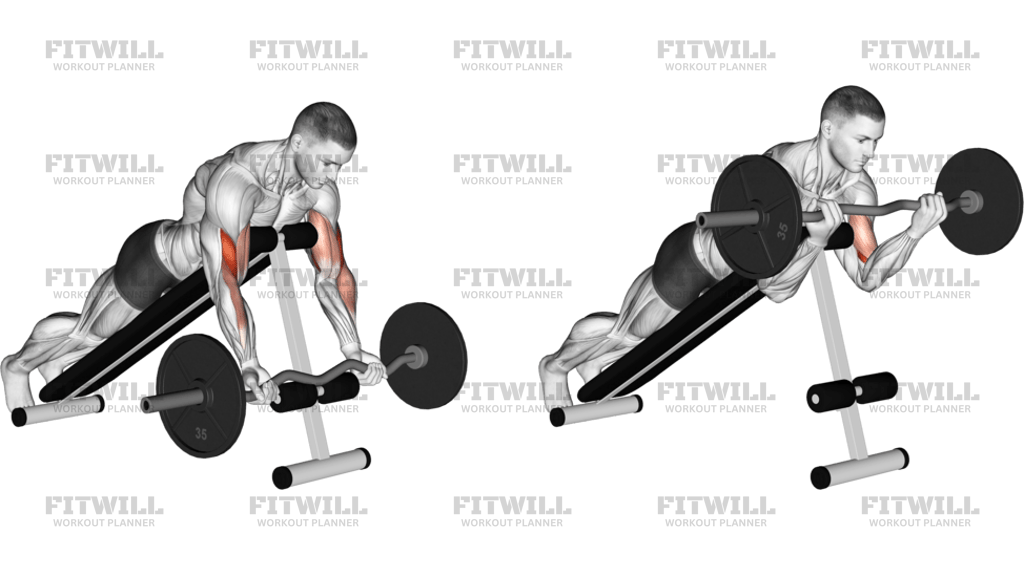
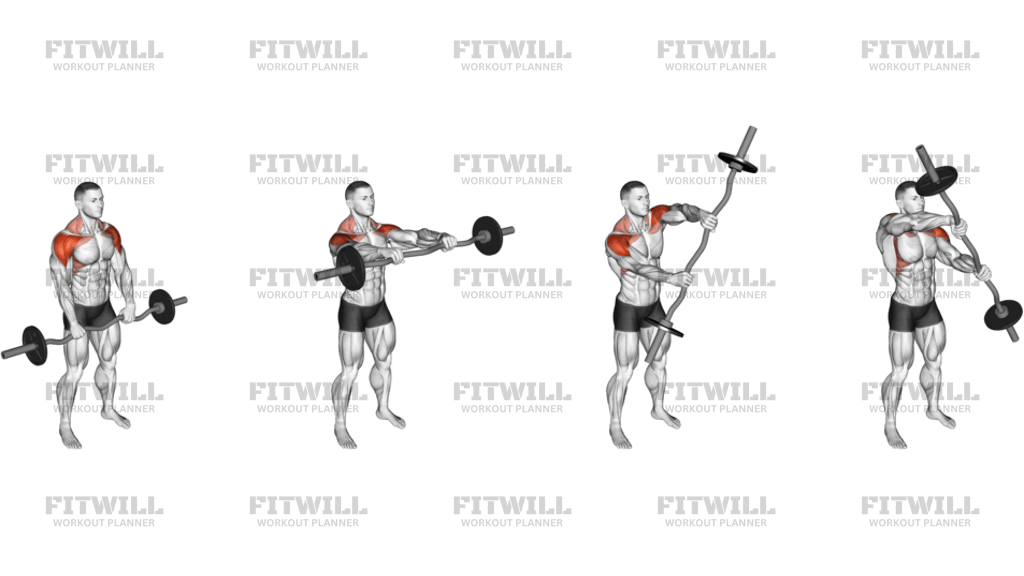
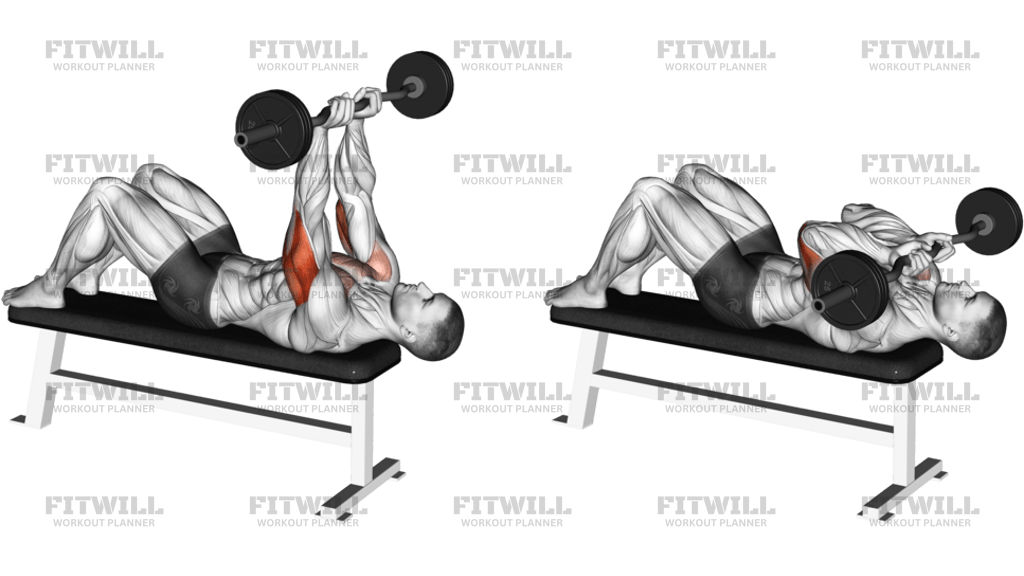
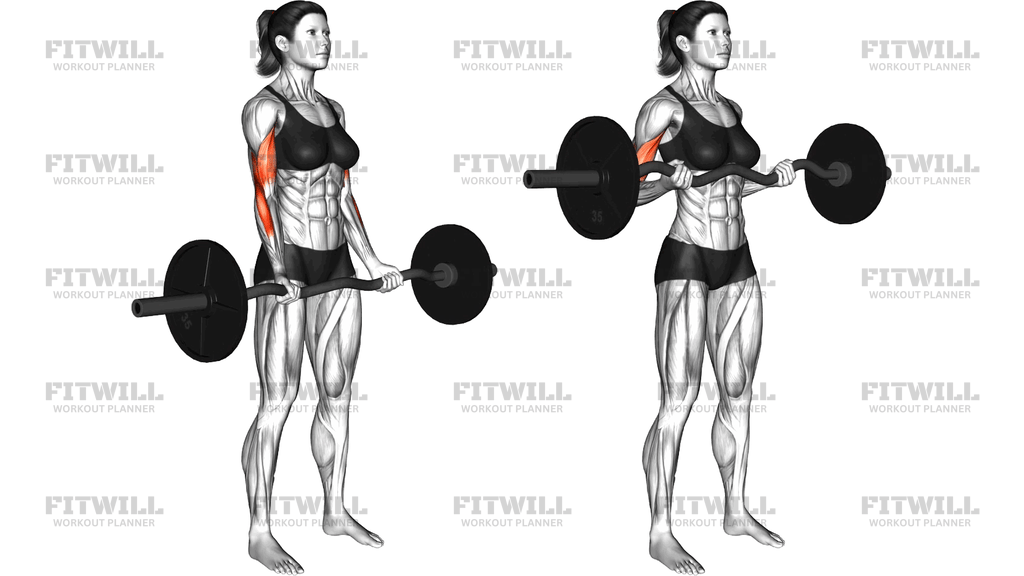
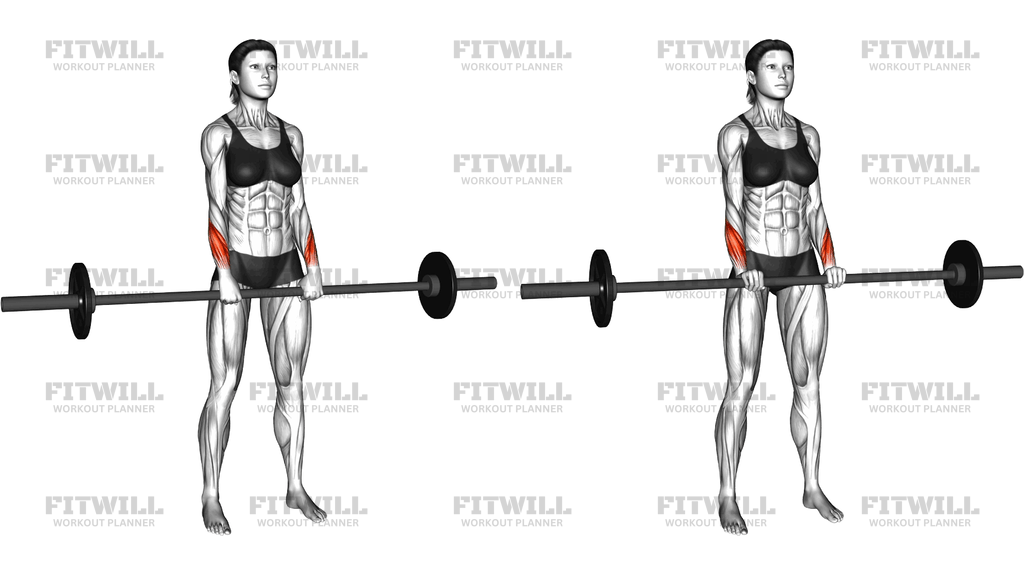
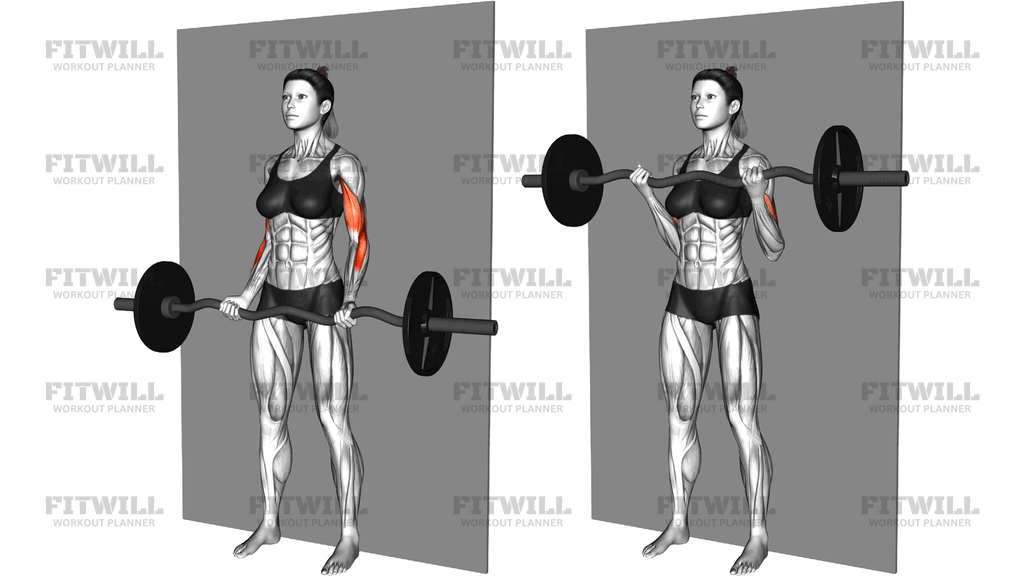
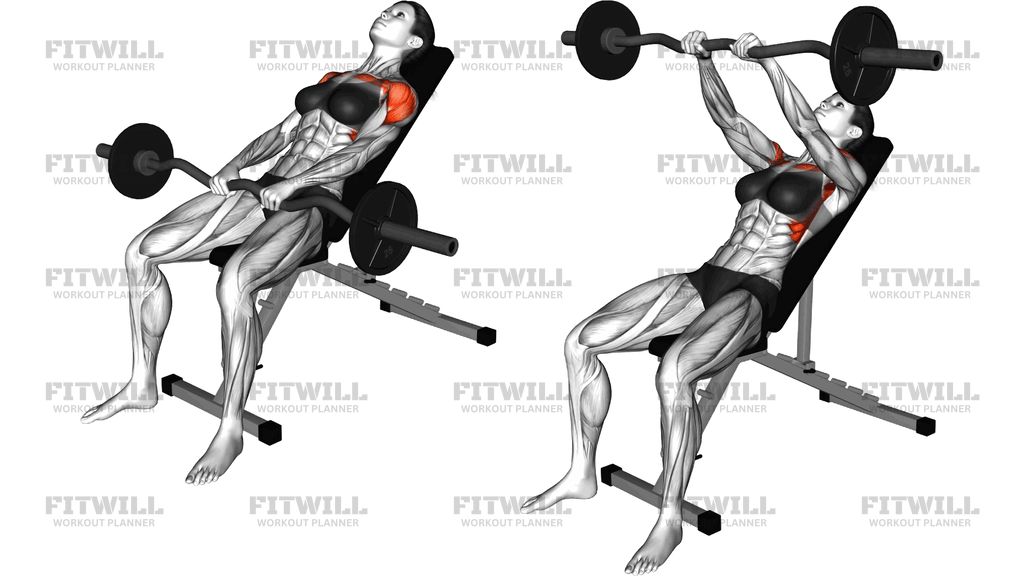
The Ez Bar Incline Pronated Grip Front Raise is a shoulder isolation movement performed while lying back on an incline bench. You hold an EZ bar with an overhand, pronated grip roughly shoulder-width apart, let your arms hang straight down toward the floor, then raise the bar forward and up until it is directly above your upper chest or face level before lowering it back down under control. The incline position is what makes this variation distinct: because your torso is angled backward instead of standing upright, the front deltoids work through a longer starting range, and gravity pulls on the arms from a different angle than in a standard standing front raise.
This exercise primarily targets the anterior deltoids, the front portion of the shoulder muscles responsible for lifting the arms forward. Because the bench supports your back and your arms hang behind the line of your torso at the start, the clavicular head of the chest and the side delts assist as the bar travels up, and the upper traps help stabilize the shoulder girdle. The EZ bar's angled grip sections place your hands in a slightly more neutral position than a straight barbell, which many lifters find gentler on the wrists and forearms during the raise.
The back support is the main reason to choose this setup over a standing version. When you raise a bar in front of you while standing, it is easy to swing the hips, lean back, or cheat the weight up with momentum. Anchored against an incline bench, your torso cannot lean or rotate, so the delts have to do the work on their own. That makes this a useful movement for lifters whose front raises turn into standing barbell curls with body English, and for anyone who wants to bias the front delts through a longer range of motion.
To perform it well, keep the movement an arc, not a straight pull. From the hang position, the bar travels forward and up in a smooth curve, ending above your shoulders with arms extended but elbows not locked hard. The descent should mirror that arc. Keep your head and upper back in contact with the bench throughout, ribs down, and avoid shrugging the bar up with your traps in the last third of the lift.
This exercise fits well as an accessory after pressing work on shoulder or upper body days. Because the front delts already assist in overhead pressing and incline pressing, most lifters do best with moderate loads in the 10 to 15 rep range rather than maximal weights. Use light plates or no plates at first, and prioritize a strict arc and controlled tempo over adding load, since the shoulder works at its most mechanically disadvantaged point right at the start of the raise.
[ Workout Log & Planner ]
Put your next workout in Fitwill
Keep your plan and training log ready when you are.


Instructions
- Set an incline bench to roughly 30 to 45 degrees and sit back against it so your head, shoulders, and upper back stay in contact with the pad.
- Take an overhand, pronated grip on the EZ bar on the inner angled handles, about shoulder-width apart, and let your arms hang straight down toward the floor on either side of the bench.
- Plant your feet flat on the floor, brace your core lightly, and press your lower back toward the pad so your ribs are not flared upward.
- Exhale and raise the bar forward and up in a smooth arc until your arms are extended above your upper chest or roughly face level.
- At the top, keep your elbows slightly soft rather than locked, and stop before you feel yourself shrugging your shoulders toward your ears.
- Pause briefly at the top, then inhale as you lower the bar back along the same arc until your arms hang fully down without touching the bench.
- Let the front delts take the load at the bottom before starting the next rep rather than bouncing out of the stretch.
- Keep your wrists straight over the bar throughout; if they bend backward, lighten the load or shift your grip slightly wider on the EZ bar's angles.
- Complete your reps, then sit up carefully and set the bar on the floor or a rack rather than dropping it from the hang position.
Tips & Tricks
- The hardest point of this lift is the very bottom, where your arms hang behind your torso and the front delts are stretched. Start with a lighter weight than you would use for standing front raises.
- If you feel the movement in the front of your shoulders near the collarbone rather than the deltoid itself, you are likely going too heavy or letting the chest take over; reduce the load and keep the arc strict.
- A common mistake is letting the bar drift back over the head at the top. Keep the end position above your upper chest so tension stays on the delts instead of shifting to a leverage position.
- Do not shrug the bar into the finish. If your upper traps are doing the last third of the rep, consciously keep your shoulders pressed down away from your ears.
- Keep your head resting on the pad. Craning forward to watch the bar is a sign the weight is too heavy and changes the angle your delts are working at.
- Because the EZ bar's angled grip turns your hands slightly inward, your wrists should feel neutral. If they ache, adjust which set of angles your hands sit on before blaming the weight.
- Two-second up, brief pause, three seconds down is a useful tempo here; the slow lower is where most of the front delt work happens in this incline position.
- If your grip fatigues before your shoulders, chalk up or use a slightly narrower stance on the bar rather than squeezing harder, which tends to recruit the forearms and biceps into the raise.
Frequently Asked Questions
Which muscles does the Ez Bar Incline Pronated Grip Front Raise work?
The front delts are the prime movers, with the upper chest assisting as the bar travels up. The side delts and upper traps contribute to stabilizing and finishing the top portion of the raise.
Why use an incline bench instead of doing this standing?
The bench blocks the hip drive and backward lean that turn standing front raises into a momentum exercise. It also starts your arms behind your torso, which lengthens the working range for the front delts.
Is the EZ bar better than a straight barbell for this exercise?
The angled grip of the EZ bar places your hands in a slightly turned-in position, which is usually more comfortable for the wrists and forearms. Both bars train the front delts the same way, so comfort is the main deciding factor.
What angle should the incline bench be set to?
Around 30 to 45 degrees works well. Lower angles make the start of the arc easier, while steeper angles lengthen the stretch at the bottom, so adjust based on how your shoulders feel.
Is this a good exercise for beginners?
Yes, as long as the load stays light. The bench actually makes it beginner-friendly because it removes the balance and momentum problems of the standing version, so beginners can learn what a strict front raise feels like.
Why is it so much harder at the bottom of the rep?
When your arms hang down behind the incline, the front delts are stretched and the bar has poor leverage relative to your shoulder joint. That sticking point is normal, which is why lighter weights and strict tempo matter here.
What can I substitute if I don't have an EZ bar?
A straight barbell, a pair of dumbbells, or a bar plate loaded with light plates all work on the same incline setup. Dumbbells are the easiest substitute and let each arm work independently.
How many sets and reps should I do?
Two to four sets of 10 to 15 controlled reps is a practical range. Since the front delts assist in all your pressing movements, treat this as a finishing exercise rather than a heavy strength lift.
My wrists bend backward at the top of the raise. How do I fix this?
Keep your knuckles aligned over the bar and think of pushing the bar up with your palms rather than lifting with your fingers. If that does not hold, reduce the weight or reposition your hands on the EZ bar's angled grips.
Is it safe for the shoulders if I have cranky joints?
The supported back and limited range make it shoulder-friendly for many people, but start with no weight at all to test the arc. If the bottom stretch or the overhead position causes pinching, shorten the range or skip the movement and use a front raise variant that keeps your arms in front of your torso.