Resistance Band Standing Y Raise
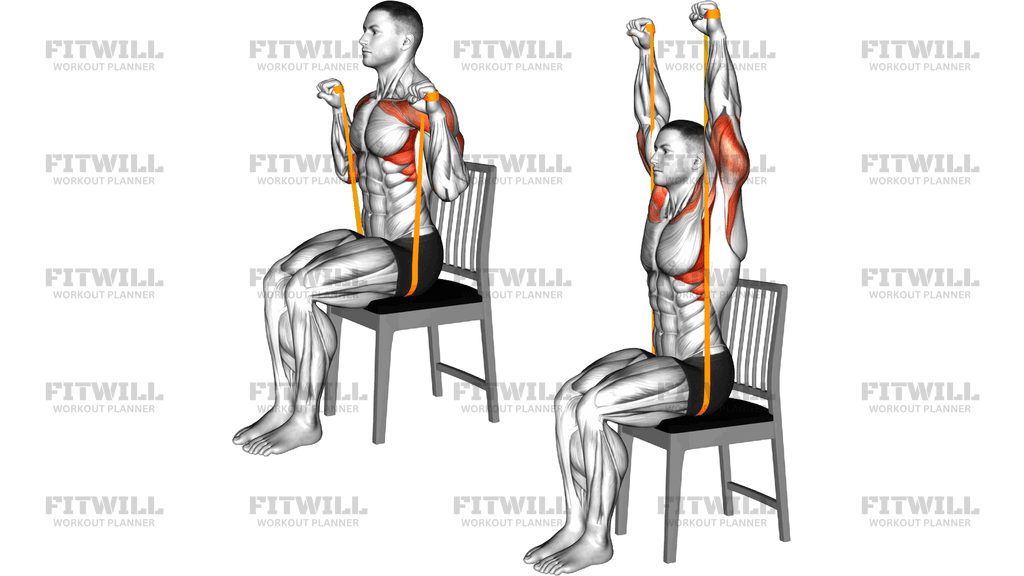
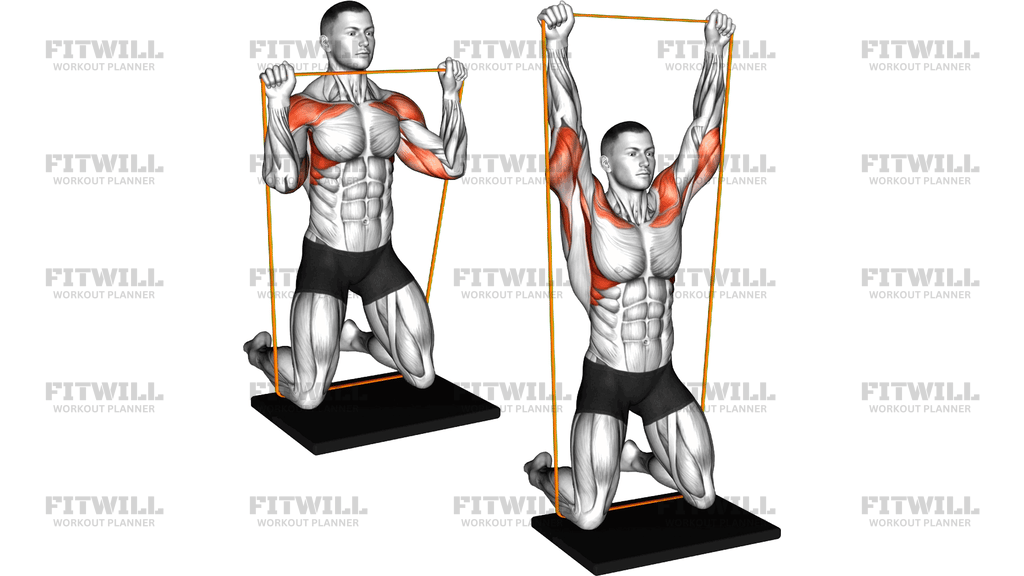
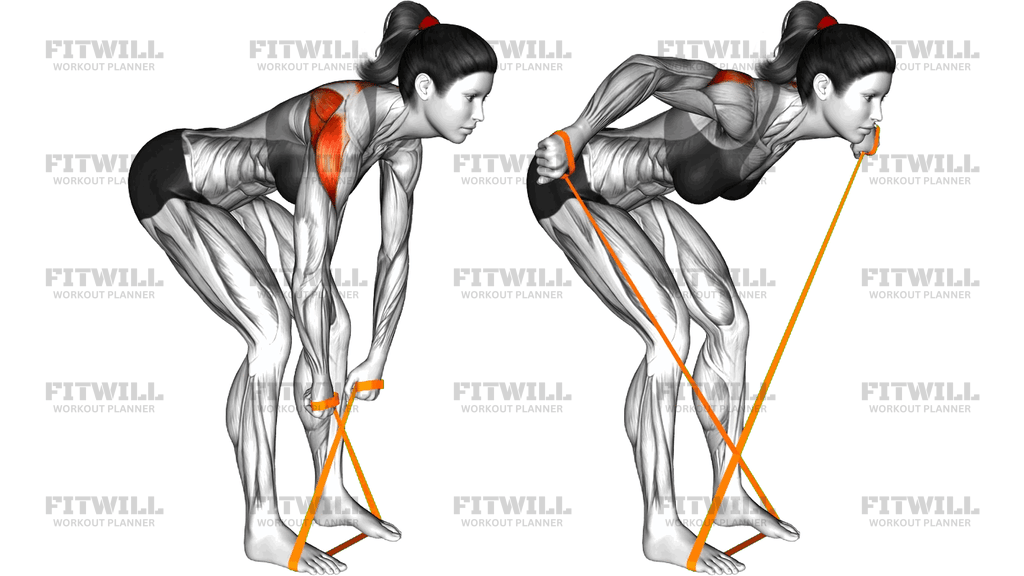
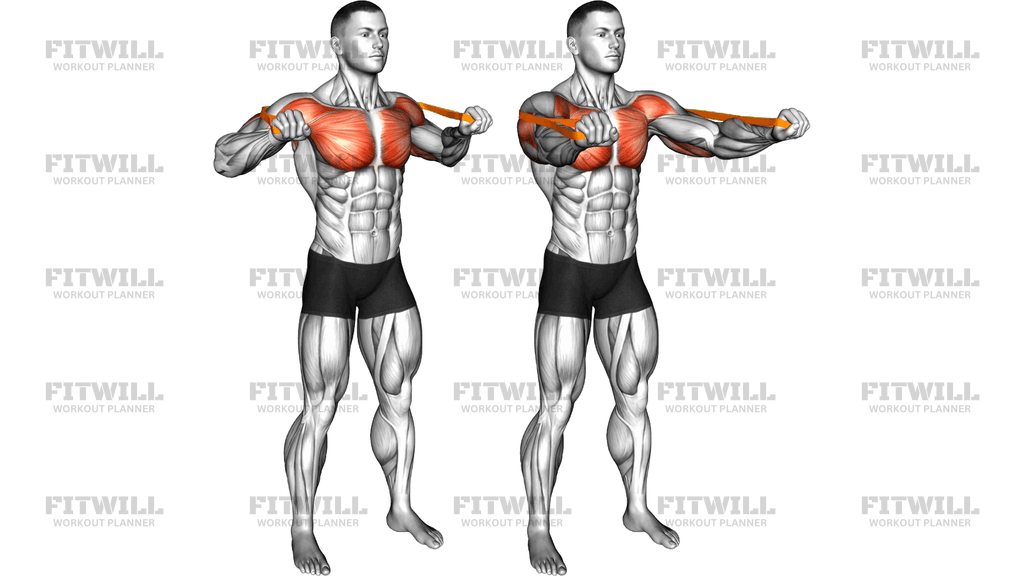
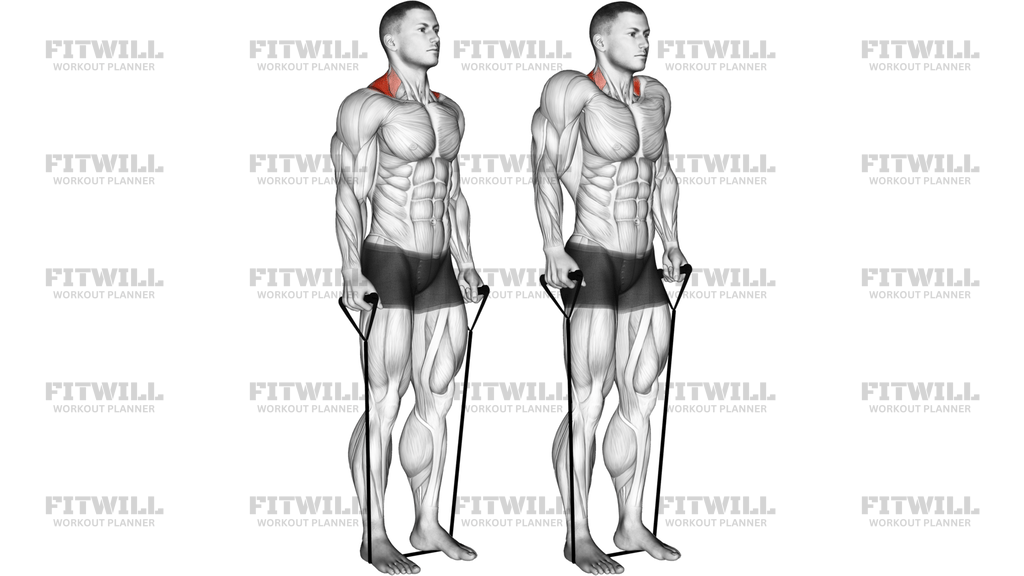
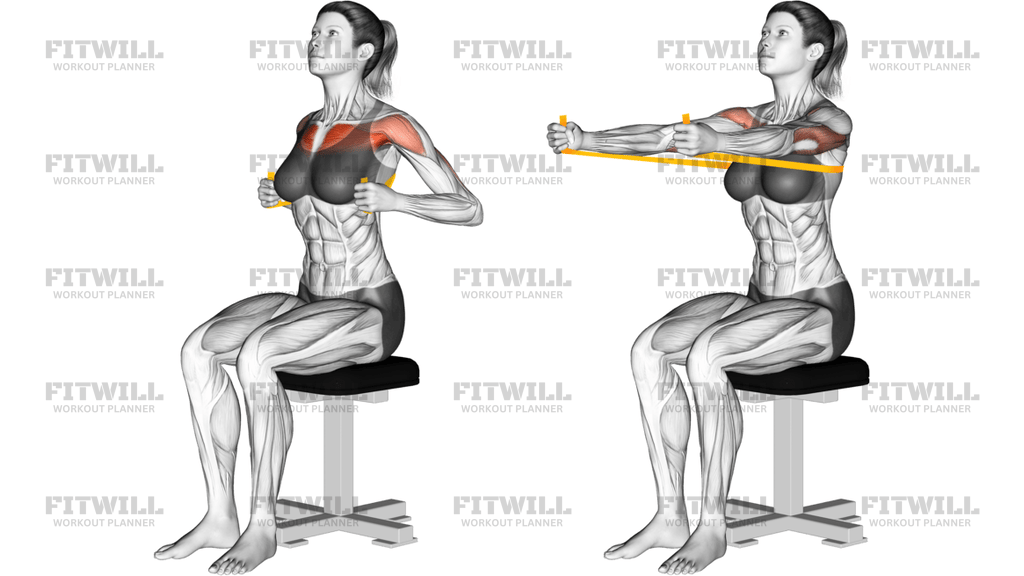
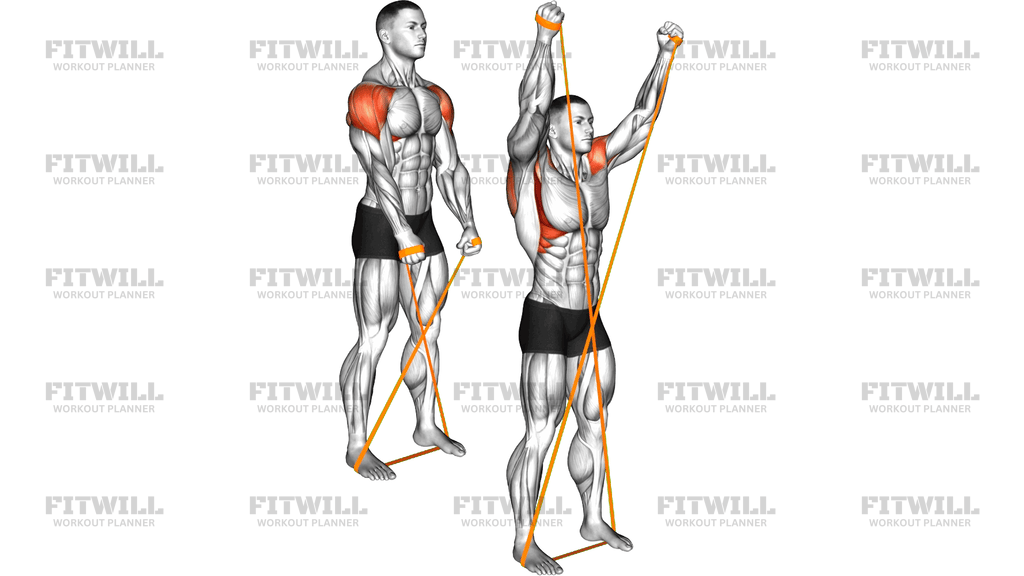
The Resistance Band Standing Y Raise is a standing shoulder exercise where you anchor a resistance band under both feet, cross the band in front of your legs, and raise your arms up and outward so they finish in a wide Y shape overhead. The crossed setup means each hand pulls against the band anchored under the opposite foot, which keeps tension running diagonally across the body and gives a smooth, increasing resistance as your arms travel upward. The highlighted work falls on the shoulders, particularly the front and side portions of the deltoids, with strong support from the upper back muscles that control the shoulder blades.
Because the arms finish overhead and slightly wide rather than straight in front, the Y position asks the shoulder blades to rotate upward, drawing in the upper and lower trapezius and the serratus anterior. That makes this movement valuable not just for building shoulder strength but for training the scapular control that supports pressing, pulling, and everyday overhead reaching. People who spend long hours sitting often find this pattern unfamiliar at first, which is exactly why it is worth practicing with a light band.
The setup matters more here than in many band exercises. The band must sit securely under the middle of both feet, and the cross in front of your legs needs to stay centered so tension is even between the left and right sides. If your stance is too narrow the band will feel loose at the bottom; too wide and it becomes hard to start the lift without jerking. A hip-width stance with a modest amount of slack at the sides is the sweet spot.
To perform it well, stand tall with your ribs stacked over your pelvis and your core braced, then lead the raise with your hands, keeping your elbows nearly straight but not locked. The arms travel diagonally out to the sides, not straight forward, so your body forms a Y at the top. Avoid shrugging your shoulders toward your ears before your arms have finished moving, and resist the band on the way down instead of letting it snap you back.
This exercise fits well as a warm-up activation before overhead pressing, as a higher-rep finisher on shoulder days, or as a low-equipment option for home training. Because band resistance grows as the band stretches, the top of the Y is the hardest point, so choose a band you can control at full overhead extension, not just at the start position.
[ Workout Log & Planner ]
Put your next workout in Fitwill
Keep your plan and training log ready when you are.


Instructions
- Anchor a resistance band under the middle of both feet with a hip-width stance, letting the band ends cross in front of your shins so each hand holds the side anchored under the opposite foot.
- Grip one band end in each hand at hip height with a neutral grip, palms facing inward, and adjust your grip or stance until the tension feels equal on both sides.
- Stand tall, soften your knees slightly, brace your core, and pull your shoulder blades down and back to set your posture before moving.
- Exhale and raise both arms diagonally out to the sides and upward, keeping the elbows nearly straight, so your arms form a wide Y above your head.
- At the top, reach slightly upward through the hands without shrugging your shoulders toward your ears, and pause for a moment in the Y position.
- Inhale and lower your arms slowly back down along the same diagonal path, resisting the band's pull rather than letting it drop your arms.
- Keep your torso upright throughout; do not lean back or arch your lower back to help the arms overhead.
- Stop the set if you feel the movement shifting into your neck or if your form breaks down at the top of the raise.
- Reset your stance and grip tension between sets so the band stays secure under your feet before starting the next rep set.
Tips & Tricks
- If the band feels slack at the bottom of each rep, widen your stance slightly or choke up on the band; slack turns the hardest part of the Y Raise into the only part with tension.
- The most common error is turning this into a shrug: if your shoulders ride up toward your ears early, lower the weight of the band and focus on the blades moving down as the arms go up.
- Bending the elbows turns the Y Raise into a lateral raise variation; if you see your arms bending as they pass shoulder height, reduce the band tension and lift with straighter arms.
- Leaning back as the arms go overhead shifts work to the lower back; brace your core and imagine your ribs staying stacked over your hips from start to finish.
- Because the band is crossed, tension pulls slightly inward across your body, so actively press your hands outward as you lift to keep the Y wide.
- A band that is too heavy usually shows up as a jerky start off the thighs; switch to a lighter band rather than swinging the arms to build momentum.
- Keep your wrists neutral and hands in line with your forearms; cocked wrists at the top of the raise waste tension and can strain them over time.
- Use a slow three-second lowering phase to get more from a light band, since the descent is where the crossed setup gives you the most control work.
- If one side feels stronger, check that the band is centered under both feet before assuming an imbalance, since an off-center anchor is the usual culprit.
Frequently Asked Questions
What muscles does the Resistance Band Standing Y Raise work?
The primary work is in the shoulders, especially the front and side deltoids, with the upper and lower trapezius and serratus anterior assisting as the shoulder blades rotate upward. Your core also works isometrically to keep your torso upright against the band's pull.
Why is the band crossed under my feet for this exercise?
The cross anchors each hand to the opposite foot, which stabilizes the band, keeps tension even across both sides of the body, and pulls the hands slightly inward so you must actively press outward to maintain the wide Y path.
Is the Resistance Band Standing Y Raise good for beginners?
Yes, provided you start with a light band and focus on the arm path rather than resistance. Beginners often benefit from practicing in front of a mirror to confirm the arms finish in a true Y rather than drifting forward.
How is a Y Raise different from a lateral raise?
A lateral raise stops at shoulder height directly out to the sides, while the Y Raise continues diagonally upward and slightly forward so the arms finish overhead in a Y shape. That extra range adds shoulder blade upward rotation and more upper trap and serratus involvement.
Can I do the Resistance Band Standing Y Raise every day?
With a light band and moderate reps, it is gentle enough for frequent use as an activation or warm-up drill. If you train it heavily as a strength exercise, treat it like any shoulder movement and allow recovery between demanding sessions.
What should I do if my shoulders pinch or discomfort at the top of the Y?
Reduce the band tension first, then narrow the final angle slightly so the Y is less extreme. If discomfort persists, stop the exercise and have a qualified professional assess the movement before continuing.
How do I keep the band from slipping off my feet?
Place the band under the middle of each foot rather than the toes, wear shoes with a firm sole or use a flat, grippy surface, and keep tension on the band throughout the set so it never goes slack enough to slide.
Can I use dumbbells instead of a band for the Y Raise?
You can perform a similar Y pattern with light dumbbells or no weight at all, but you lose the crossed-band setup and the rising resistance near the top, which is a defining feature of the banded version.
Should my elbows be locked straight during the raise?
Keep the arms long with the elbows nearly straight but not forcefully locked. Fully stiff, locked elbows can stress the joint at the top, while overly bent elbows shorten the lever and shift the work toward a lateral raise.
Where should I feel the Resistance Band Standing Y Raise working?
You should feel effort across the tops and fronts of your shoulders and between your shoulder blades as they travel around the rib cage. Neck tension or lower back arching are signs the band is too heavy or your posture is drifting.