Resistance Band Kneeling Shoulder Press
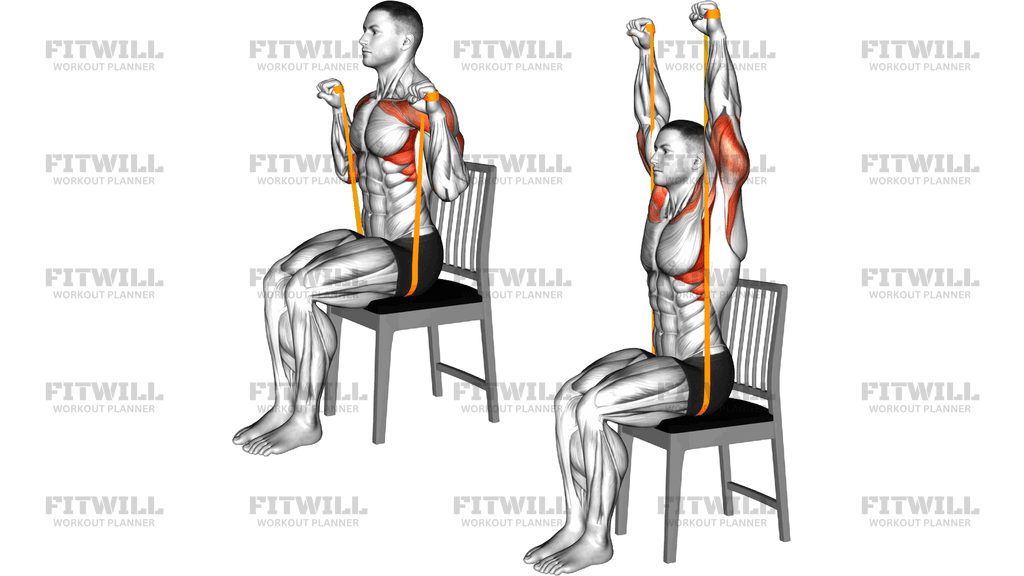
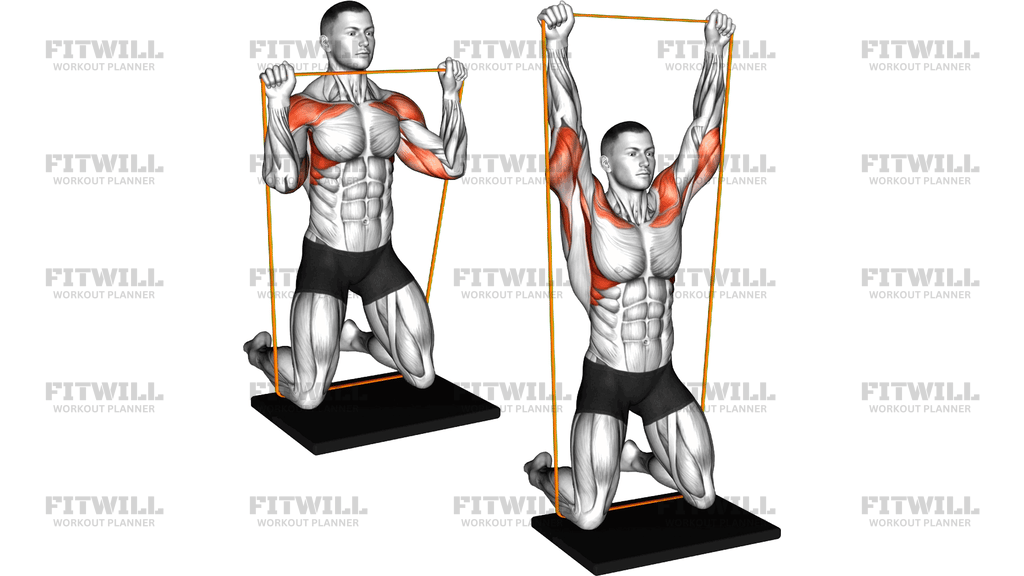
The Resistance Band Kneeling Shoulder Press is an overhead pressing movement performed from an upright kneeling position with the band anchored beneath your shins. You grip the band at roughly shoulder height, press both arms straight up until they're fully extended overhead, then lower back to the starting position with control. Because the band runs under your lower legs and up along the outside of your arms, resistance peaks as your elbows lock out overhead, which is the opposite of what you feel with a dumbbell press, where the hardest part is usually the bottom.
Kneeling rather than standing changes the character of the exercise significantly. With no feet on the floor, your legs can't help you cheat, so your trunk has to do the stabilizing. The glutes, deep core, and spinal muscles work the whole time to keep your ribcage stacked over your hips and stop you from arching your lower back as the band drives upward. If you tend to lean back or turn your overhead presses into incline presses when standing, the kneeling version makes that habit obvious and hard to hide.
The main muscles working are the front and side delts, with the triceps finishing each lockout and the upper traps assisting near the top. The upper chest contributes as your elbows move from a slightly flared position toward the overhead line. Because the band gets harder to stretch as your arms rise, the top of every rep asks the shoulders and triceps to grind through their most difficult range, which is a useful stimulus for people who struggle to finish lockouts.
Setup matters here more than with most band exercises. The band has to sit securely under your shins with even lengths on both sides, or one arm will get more tension than the other and pull you sideways. Your grip position on the band determines the starting tension: holding lower gives you a harder first rep, holding higher makes the bottom easier but shortens the band. Take a moment to center yourself before the first press, because resetting mid-set while kneeling is awkward.
This movement suits lifters who train at home or travel, anyone rehabilitating back into overhead work after a layoff, and experienced lifters who want a strict, trunk-dominant pressing variation. It also works well as a high-rep finisher after heavier barbell or dumbbell pressing, since the band's smooth resistance is easy on the joints. Keep your ribs down, squeeze your glutes, and let the kneeling position hold you honest.
[ Workout Log & Planner ]
Put your next workout in Fitwill
Keep your plan and training log ready when you are.


Instructions
- Kneel upright on an exercise mat with both knees down, shins flat on the floor, and your torso tall over your hips.
- Drape a resistance band over your shoulders and hook the bottom of the loop securely under both shins so it sits against the front of your lower legs.
- Grip the band just outside each shoulder with a pronated grip, palms facing forward, and draw your hands up to collarbone height so your elbows are bent and slightly in front of your ribs.
- Tighten your glutes and brace your abdominal wall so your ribs stack directly over your pelvis; find your balance point on your knees before pressing.
- Press both arms straight up together, allowing the band to slide along the outside of your arms as your elbows extend fully overhead.
- At the top, your biceps should end up near your ears with the band stretched tight, wrists stacked over elbows and shoulders, without your head jutting forward.
- Lower under control by bending your elbows and guiding your hands back down along the same vertical path until they return to collarbone height.
- Exhale as you press up, inhale as you lower, and avoid holding your breath through the hardest part of the lockout.
- Complete all reps in one position, then release the tension from your hands before standing up out of the kneeling position.
Tips & Tricks
- If the band slips off your shins mid-set, wrap it one extra time under your feet or switch to a shorter loop; a band that slides forward will dump tension and throw off your balance.
- The most common fault is arching the lower back as the band gets tight overhead. Squeeze your glutes hard before the first rep and keep them squeezed through the whole set.
- Adjust your grip height on the band, not your torso angle, if the first rep feels too easy or too hard. Leaning back to make the press easier defeats the purpose of kneeling.
- Keep your elbows slightly in front of your body at the bottom rather than pulled straight back behind you; pressing from behind the shoulder line irritates the joint capsule for many people.
- If one side feels heavier, check that the band length under each shin is even before you change anything else. Uneven band lengths are almost always the real culprit.
- Your knees and shins take your full weight for the whole set, so use a thick mat or folded towel underneath; discomfort there will wreck your bracing before your shoulders fatigue.
- Move slightly slower on the way down than on the way up. The band pulls your arms upward during the descent, so controlling the eccentric is where most of the shoulder stability work happens.
- If your wrists bend backward at lockout, choke up on the band so your knuckles line up over your forearms instead of flexing back under the tension.
- Start with a light band even if your standing press is strong. The kneeling position removes your leg drive and the band tension rises steeply, so the top reps are harder than they look.
Frequently Asked Questions
What muscles does the Resistance Band Kneeling Shoulder Press work?
The front and side delts do most of the pressing, with the triceps extending the elbows at lockout and the upper traps assisting near the top. Your core and glutes work continuously to keep your torso upright while kneeling.
Why press overhead from a kneeling position instead of standing?
Kneeling removes help from your legs and hips, so you cannot lean back or use momentum to finish reps. It turns the exercise into a strict shoulder and trunk stability movement, which is useful if you tend to hyperextend your lower back during standing presses.
How do I anchor the band correctly for the Resistance Band Kneeling Shoulder Press?
Sit the band over your shoulders, then hook the bottom of the loop under both shins so it presses against the front of your lower legs. Adjust your hand position on the band until the tension at collarbone height feels challenging but controllable.
Is the Resistance Band Kneeling Shoulder Press good for beginners?
Yes, provided you start with a light band and keep the range strict. The kneeling setup naturally limits how much weight you can cheat with, and the band's smooth resistance is joint-friendly. Beginners should master keeping the ribs down before adding thicker bands.
Can I replace dumbbell overhead presses with the Resistance Band Kneeling Shoulder Press?
For general shoulder strength and hypertrophy, yes, especially at home. The main difference is that the band is hardest at lockout while a dumbbell is hardest at the bottom, so combining both across a training block covers the range better than either alone.
Why does my lower back ache during this exercise?
That usually means your ribcage is flaring and your lumbar spine is extending as the band pulls upward. Squeeze your glutes, tuck your ribs, and reduce the band tension; if discomfort continues, switch to a lighter band or a supported half-kneeling variation.
Where should my elbows be at the bottom of the press?
Bent to roughly 90 degrees and slightly in front of your ribcage, with your hands at about collarbone height. Letting the elbows drift far behind your torso shifts stress onto the shoulder joint and reduces your ability to press straight up.
What band resistance should I use for the Resistance Band Kneeling Shoulder Press?
Pick a band you can press for 8 to 15 reps while keeping your torso completely upright. Because kneeling removes leg drive and tension climbs steeply near lockout, most people need one band lighter than they use for standing band presses.
How can I stop the band from slipping off my shins during the set?
Make sure the band sits against the front of your shins with your weight settled back over your heels, and choose a loop short enough that it stays snug even when your knees shift slightly. A band that is too long will slide forward and lose tension on every rep.
Is it safe for my shoulders if I have had previous shoulder issues?
Band resistance is generally smooth and joint-friendly, but only press through a pain-free range and keep the band light at first. If any position recreates your symptoms, stop and get clearance from a qualified professional before continuing.