Dumbbell Suitcase Carry
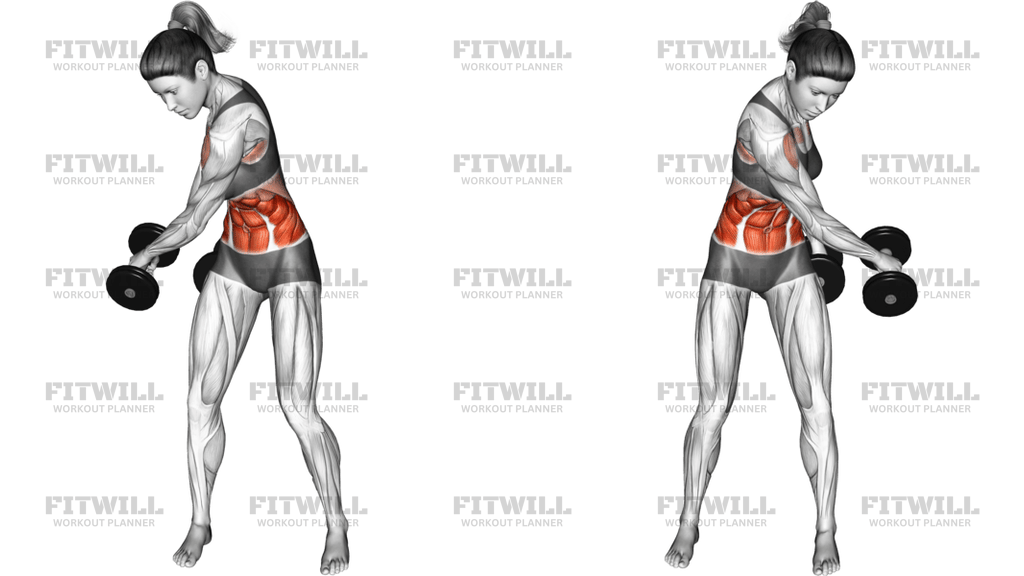
The Dumbbell Suitcase Carry is exactly what it sounds like: you pick up a dumbbell in one hand, hold it at your side like a suitcase, and walk with it. That single-sided load is the whole point. Because the weight sits on only one side of your body, your trunk has to work continuously to keep you upright and level, which makes this one of the most practical anti-lateral-flexion exercises you can do.
The primary job falls to the obliques and the deep trunk muscles on the side opposite the dumbbell, which fight to stop your torso from bending toward the weight. Your grip and forearms work to hold the dumbbell securely, your upper trap on the loaded side keeps the shoulder packed down, and your legs and hips handle the walking itself. The glute on the unloaded side also plays a big role in keeping your pelvis level, something many lifters only discover once they try this movement.
This carry carries over to real life better than almost any trunk drill. Lugging groceries, hauling a duffel bag, carrying a suitcase through an airport — all of these are one-sided loads. Training that pattern directly helps you handle daily tasks with a more stable spine. It is also a favorite in rehab-adjacent strength work because it loads the trunk heavily without requiring spinal flexion or extension.
Setup matters more than most people expect. A dumbbell that is too light turns the carry into a casual stroll with no training effect, while one that is too heavy pulls your shoulder down and tips your posture before you take a step. Pick a weight you can hold with a tall, level body for the full distance, and keep the dumbbell a few inches away from your thigh rather than resting against it.
Execution is simple but demanding: stand tall, brace your trunk as if bracing for a nudge to the side, then walk with controlled, deliberate steps. Keep your shoulders level, your gaze forward, and your ribcage stacked over your pelvis. If you notice yourself leaning away from or into the weight, shrugging the loaded shoulder, or swinging the dumbbell, the weight is probably too heavy or you have stopped bracing.
The Dumbbell Suitcase Carry fits well at the end of a strength session as a finisher, in a circuit for conditioning, or as a standalone core block two or three times per week. Start with 20 to 40 meters per side using a moderate dumbbell, rest briefly, then match the distance or time on the other side so both sides of your body get equal work.
[ Workout Log & Planner ]
Put your next workout in Fitwill
Keep your plan and training log ready when you are.


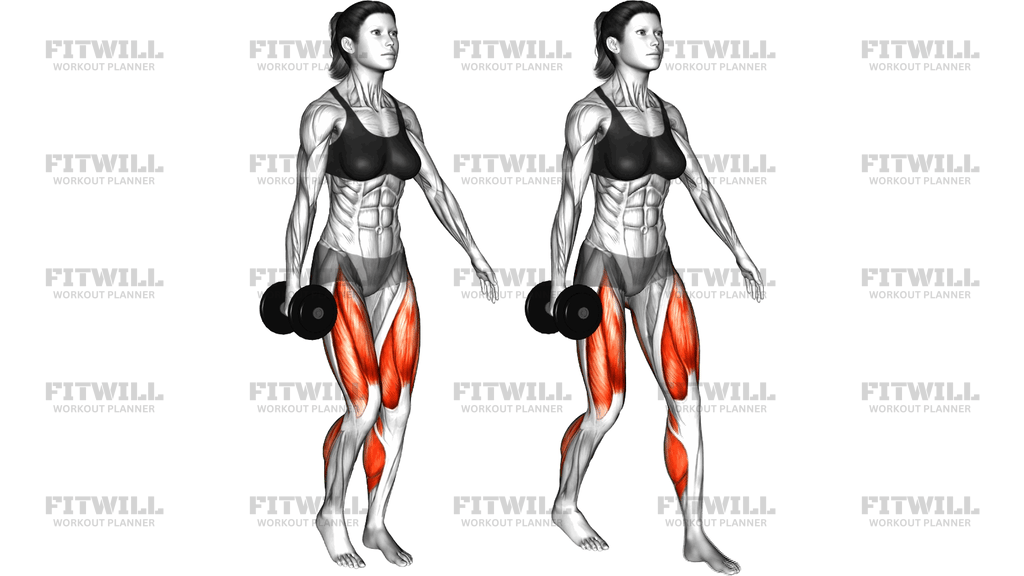
Instructions
- Place a dumbbell on the floor next to the outside of your right foot and stand facing the direction you plan to walk, with feet about hip-width apart.
- Hinge at the hips with a flat back, grip the dumbbell handle firmly in your right hand with your palm facing your body, and stand up by driving through your legs.
- Stand fully upright and adjust your stance so your shoulders are level and your head, ribcage, and pelvis are stacked in one vertical line.
- Brace your trunk firmly, as if tightening your midsection to resist a sideways push, and let your free left arm hang relaxed at your side.
- Hold the dumbbell slightly away from your thigh, keeping your right shoulder pulled down away from your ear rather than shrugged up.
- Walk forward with controlled, even steps, letting your legs move naturally while your torso stays tall and square to the direction of travel.
- Keep your gaze forward and breathe in a steady rhythm — inhale through the nose, exhale through the mouth — without letting the brace collapse.
- Walk your target distance, usually 20 to 40 meters, then stop with feet together and lower the dumbbell to the floor by hinging at the hips with a flat back.
- Pick the dumbbell up with your left hand and repeat the same distance so both sides of your body do equal work.
- Reset your posture and brace before starting each new set rather than starting the walk already leaning or twisted.
Tips & Tricks
- The most common failure is letting the loaded shoulder droop toward the floor as grip fatigue sets in — if you catch your posture sinking, set the dumbbell down and rest instead of grinding through a sloppy set.
- Keep the dumbbell an inch or two off your thigh; letting it rest against your leg removes tension from the grip and gives your trunk a false sense of stability.
- If you lean sideways away from the weight, the load is too heavy for your obliques; drop 10-20 percent of the weight and rebuild the distance.
- Count steps instead of pacing out meters when you train at home — 20 to 30 steps per side is a practical starting target.
- Take shorter steps than you think you need; long strides make the pelvis sway and give you extra side-to-side wobble to fight for no benefit.
- Use a chalked or textured handle if sweat makes the dumbbell slippery — a re-gripping hand mid-set usually means an untidy lower of the weight, which is where backs get strained.
- Do not twist to look around or check your phone mid-carry; rotation under a one-sided load defeats the anti-rotation and anti-lateral-flexion purpose of the exercise.
- Alternate which hand you start with across sessions; always starting with your dominant side tends to leave the weaker side undertrained.
- If your forearms give out long before your trunk feels worked, try a kettlebell instead — its handle sits higher and often lets the trunk stay the limiting factor.
Frequently Asked Questions
Which muscles does the Dumbbell Suitcase Carry work the most?
The obliques and deep trunk muscles on the side opposite the dumbbell work hardest to keep your torso from bending toward the weight. Your grip, forearms, upper trap on the loaded side, and the hip stabilizers that keep your pelvis level all contribute substantially.
How heavy should the dumbbell be for the Dumbbell Suitcase Carry?
Choose a weight you can carry for your target distance with level shoulders and a tall posture, but heavy enough that the last quarter of the walk feels genuinely challenging. If you finish the set without feeling your trunk work, go heavier; if your shoulder shrugs or you lean, go lighter.
How is the Dumbbell Suitcase Carry different from a regular farmer's carry?
A farmer's carry loads both hands equally, so each side of the trunk shares the work. The suitcase carry loads only one side, forcing the obliques and hip stabilizers to resist sideways bending, which makes it far more demanding on lateral trunk control.
Can beginners do the Dumbbell Suitcase Carry?
Yes, and it is actually one of the friendliest loaded carries to learn because there is no complex movement pattern. Beginners should start with a light to moderate dumbbell, walk 15 to 20 meters per side, and focus entirely on staying tall and level before adding weight.
Should the dumbbell touch my leg during the carry?
No. Keep the dumbbell a couple of inches away from your thigh so your grip and trunk stay engaged. Resting the weight against your leg reduces the anti-lateral-flexion demand and can also encourage you to lean into the load.
Why does my hip or lower back ache during the Dumbbell Suitcase Carry?
Mild trunk fatigue is normal, but sharp discomfort usually means the weight is pulling you out of alignment or your pelvis is dropping on the unloaded side. Reduce the load, shorten the distance, and focus on keeping your shoulders and hips level throughout the walk.
Can I use a kettlebell instead of a dumbbell for the Suitcase Carry?
Absolutely. A kettlebell's handle sits slightly higher and centers the mass closer to your hand, which some people find more comfortable on the grip. The trunk demand is essentially the same, so use whichever implement is available.
How far and how long should I walk with the dumbbell?
A practical starting point is 20 to 40 meters or 20 to 30 steps per side, resting 45 to 90 seconds between sides. You can also carry for time, starting with 20 to 30 seconds per hand and progressing the duration or weight as your grip and trunk adapt.
Where should I put the Dumbbell Suitcase Carry in my workout?
It works well as a finisher after lower body or trunk training, or as a standalone core block. Because it does not create much muscle soreness or interference, you can also pair it with the start of a session as a grip and trunk warm-up with a lighter bell.
Is it safe to do the Dumbbell Suitcase Carry if I have lower back issues?
The carry loads the spine in an upright, neutral position, which many people tolerate well, but you should get clearance from a qualified professional first. If cleared, start with a light weight, short distances, and stop any set where your posture breaks down or discomfort appears.