Kettlebell Lying Triceps Extension Skull Crusher
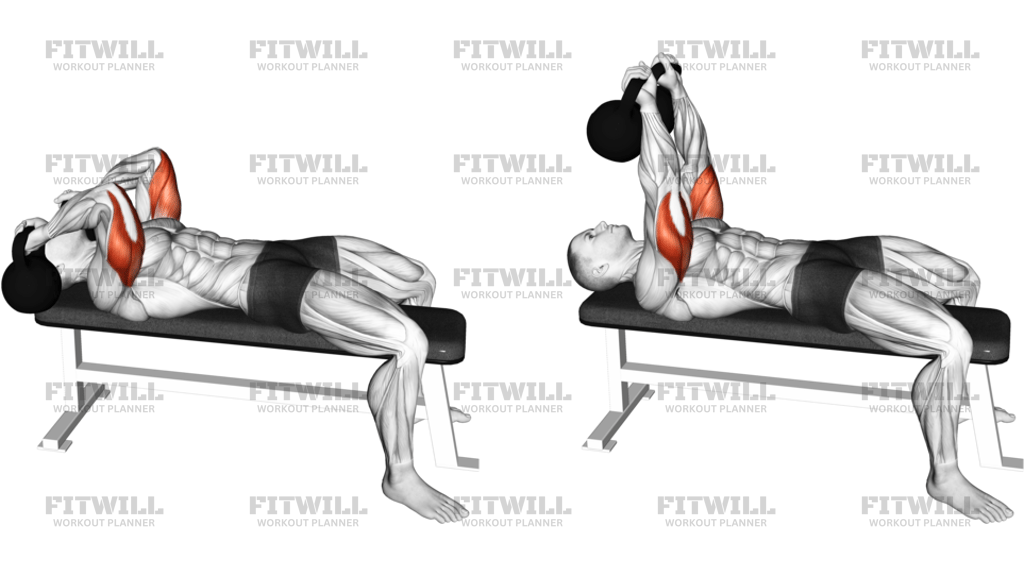
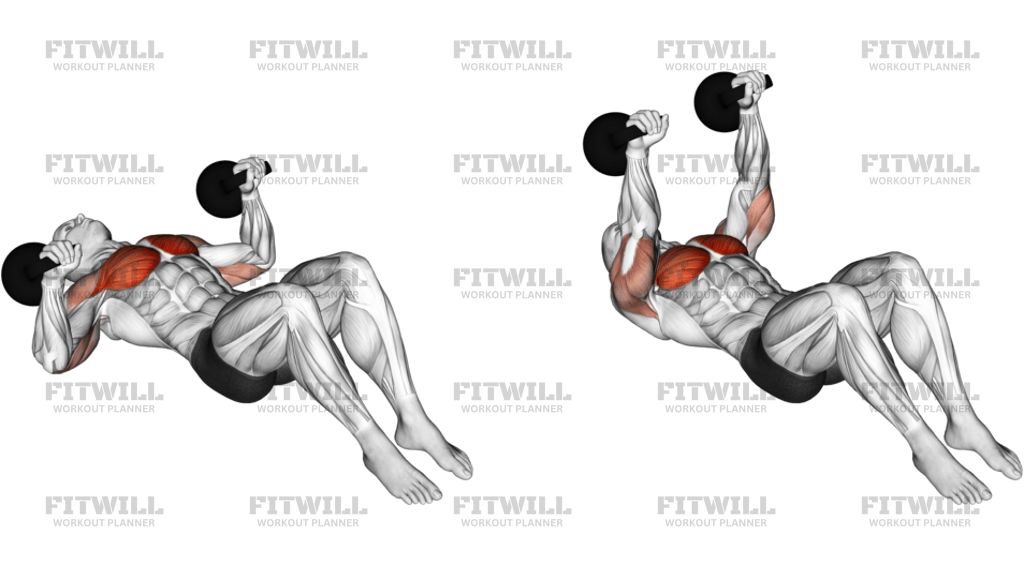
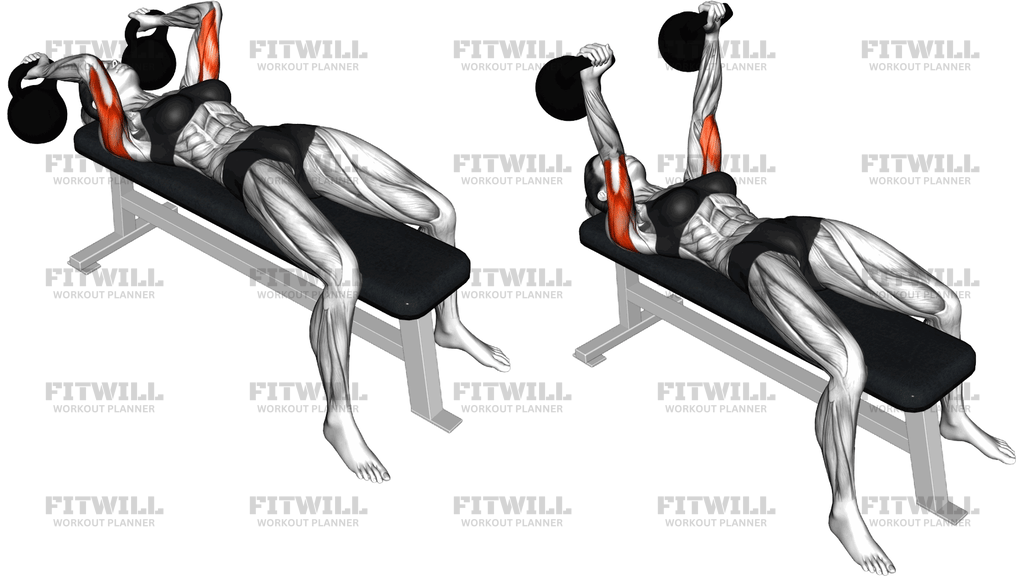
The Kettlebell Lying Triceps Extension Skull Crusher is a free-weight isolation movement for the back of the upper arms. You lie on a flat bench, hold a kettlebell in each hand directly over your shoulders, and bend at the elbows to lower the weights down toward the sides of your head before pressing them back to full extension. Because the upper arms stay pointed at the ceiling while only the elbows move, the triceps do the work almost entirely on their own.
This exercise suits lifters who want direct triceps volume without a barbell or dumbbells. Kettlebells change the feel of the classic skull crusher in a useful way: the mass sits below and behind the handle, so the load hangs slightly off your wrist and demands a bit more grip and forearm control to keep the bell stable. Many people also find the rounded handle more comfortable on the wrists than a fixed straight bar.
The primary muscles worked are the triceps, including the long head, which is stretched as the weights travel down past your head. Your forearms and grip work to keep the kettlebells steady, and your shoulder stabilizers hold the upper-arm position. The chest and shoulders contribute very little here, which is exactly the point of the movement.
Setup matters because your elbow position decides whether the exercise hits the triceps or drifts into a sloppy press. Lie with your head supported on the bench, feet planted on the floor, and start with the kettlebells stacked directly over your shoulders, not over your chest. Keep your elbows roughly shoulder-width and let them travel down and slightly back as the weights descend toward the top of the bench beside your ears.
To execute well, think of the elbows as hinges pinned in space. Lower under control until you feel a firm stretch across the back of the arms, then extend without letting the elbows flare wide or drift toward your knees. Exhale on the press, keep the kettlebell horns settled in your palms, and stop each rep with the arms straight but not locked harshly. Two to four sets of eight to fifteen reps works well for most lifters.
The most common safety concern is the descending path itself: the weights move past your face, so control is non-negotiable. Start with lighter bells than you would use for a barbell skull crusher until the hanging offset feels natural, and rack the weights by walking them back over your shoulders before sitting up rather than dropping them from the locked-out position.
[ Workout Log & Planner ]
Put your next workout in Fitwill
Keep your plan and training log ready when you are.


Instructions
- Place a flat bench on a stable surface and sit on it with two kettlebells of matched weight resting on your thighs.
- Lie back, use your thighs to help kick the kettlebells up, and press them to full extension directly over your shoulders, gripping the handles with your knuckles facing up.
- Set your feet flat on the floor on either side of the bench and brace your core so your ribs stay down and your lower back stays neutral.
- Draw your shoulder blades together and keep your upper arms vertical and roughly shoulder-width apart, elbows pointing at the ceiling.
- Inhale and bend only at the elbows, letting the kettlebells arc down past your head toward the top of the bench, keeping the bells clear of your face.
- Stop when your forearms approach or touch the bench beside your head and you feel a solid stretch in the triceps, without letting your elbows spread wide.
- Exhale and extend your elbows to press the kettlebells back up in the same arc until your arms are straight over your shoulders.
- Squeeze the triceps briefly at the top without snapping the elbows into a hard lockout, then begin the next rep.
- After your final rep, bend your elbows slightly and walk the kettlebells back over your chest, then sit up with the weights resting on your thighs before setting them on the floor.
Tips & Tricks
- Choose kettlebells lighter than your usual barbell or dumbbell skull crusher load; the bell hangs below the handle and wobbles, so your grip and wrist stabilizers fatigue before your triceps do.
- If the bells drift outward as you lower, consciously pull your elbows slightly inward at the start of each descent instead of letting the arms follow the weight.
- Keep your head in contact with the bench. Lifting the head to watch the weights rounds the neck and shortens the triceps stretch.
- If your elbows travel toward your knees as you press, the set has become a press; cue yourself to keep the upper arms fixed at the angle they started at.
- Control the eccentric for two to three seconds. Because the kettlebells descend past your face, momentum here is both a stimulus problem and a safety problem.
- Rest the kettlebell horns across the base of your palms rather than hooking your fingers deep, so the bell does not roll forward onto your knuckles at the bottom.
- If your shoulders feel pinched at full extension, tilt your arms a few degrees toward your hips rather than straight vertical; the triceps still stay under load.
- On the final rep, resist the urge to roll sideways and drop the bells. Lower them to your chest, then sit up, which protects your shoulders and the bench.
Frequently Asked Questions
Which muscles does the Kettlebell Lying Triceps Extension Skull Crusher work?
The triceps are the prime mover, with the long head working hard as the weights lower past your head. Your forearms, grip, and shoulder stabilizers assist by keeping the kettlebells controlled throughout the arc.
Why use kettlebells instead of a barbell or dumbbells for skull crushers?
The kettlebell's mass sits below the handle, so the load hangs slightly off-axis and challenges your wrist and grip more than a dumbbell does. Some lifters also find the handle gentler on the wrists than a fixed straight bar.
Is the Kettlebell Lying Triceps Extension Skull Crusher safe for beginners?
Yes, provided you start light and learn the path before loading up. Because the weights travel past your face, beginners should master the controlled descent with a single modest kettlebell or light pair first.
How far down should I lower the kettlebells?
Lower until your forearms are roughly parallel to the floor or the bells reach the top of the bench beside your head, whichever you reach first. Going deeper only helps if you can keep your elbows narrow and your shoulders comfortable.
Why do my elbows flare out during the movement?
Flaring usually happens when the weight is too heavy or when you press the bells straight up instead of following the arc back over your shoulders. Slow the descent and cue your upper arms to stay vertical throughout each rep.
Can I do this exercise with one kettlebell instead of two?
Yes, holding a single kettlebell with both hands on the horns works well and makes the setup easier to manage. The trade-off is slightly less control of each arm's individual path.
What should I do if the kettlebells feel unstable at the top of the rep?
Check that your arms finish stacked over your shoulders, not drifting toward your chest, and rest the horns in the base of your palms. If instability persists, the weight is likely too heavy for your grip.
How does this exercise differ from a lying triceps extension with an EZ bar?
The mechanics are very similar, but the kettlebells are two independent loads with an offset center of mass, so each arm must stabilize on its own. This can expose and correct side-to-side strength differences.
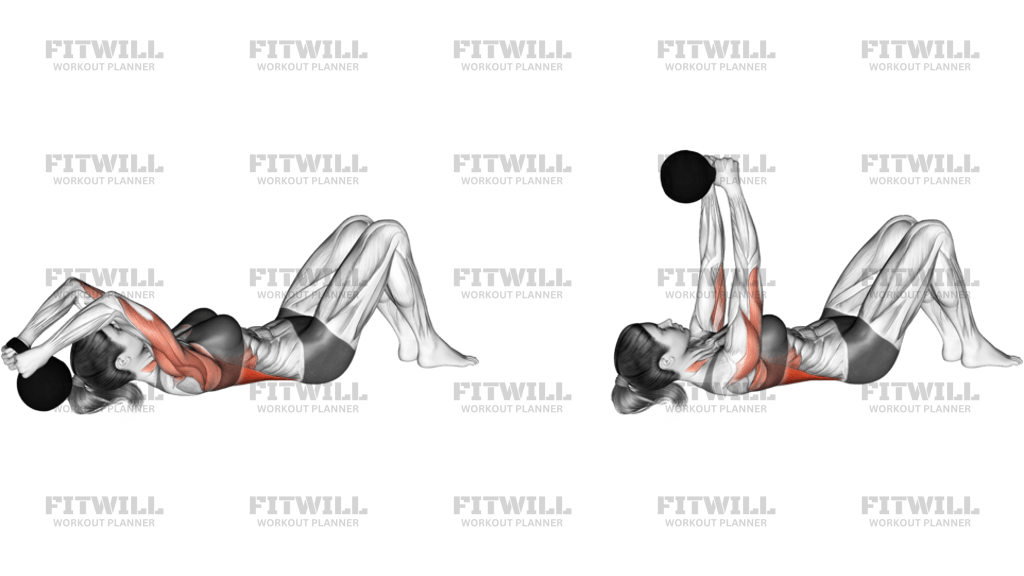
Can I perform the Kettlebell Lying Triceps Extension Skull Crusher on the floor instead of a bench?
You can, and it is a safer option for beginners since the floor stops the weights before they travel far past your head. The floor version shortens the range of motion, so expect a slightly less intense stretch at the bottom.