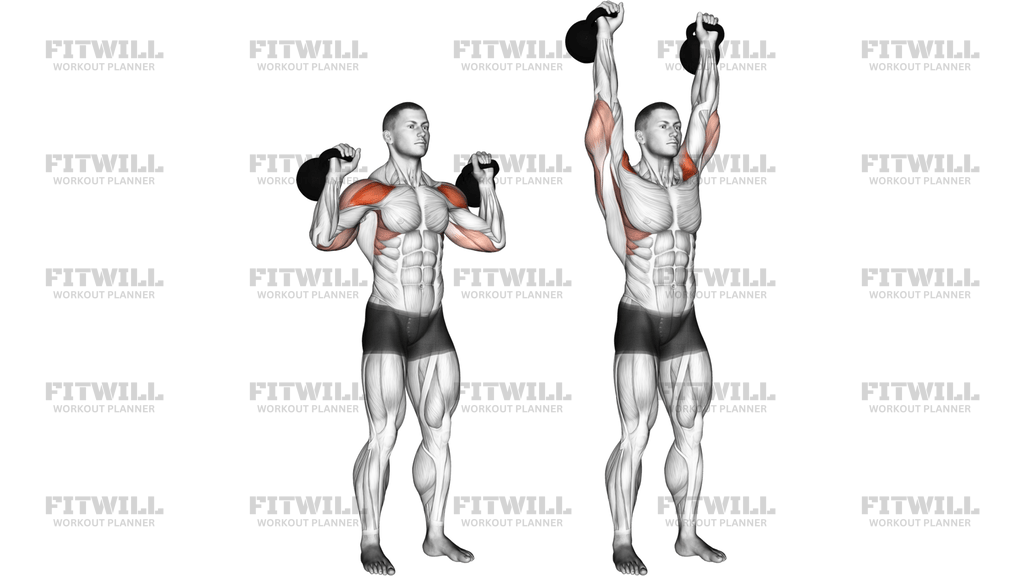
Kettlebell Standing Bottoms Up One-Arm Shoulder Press
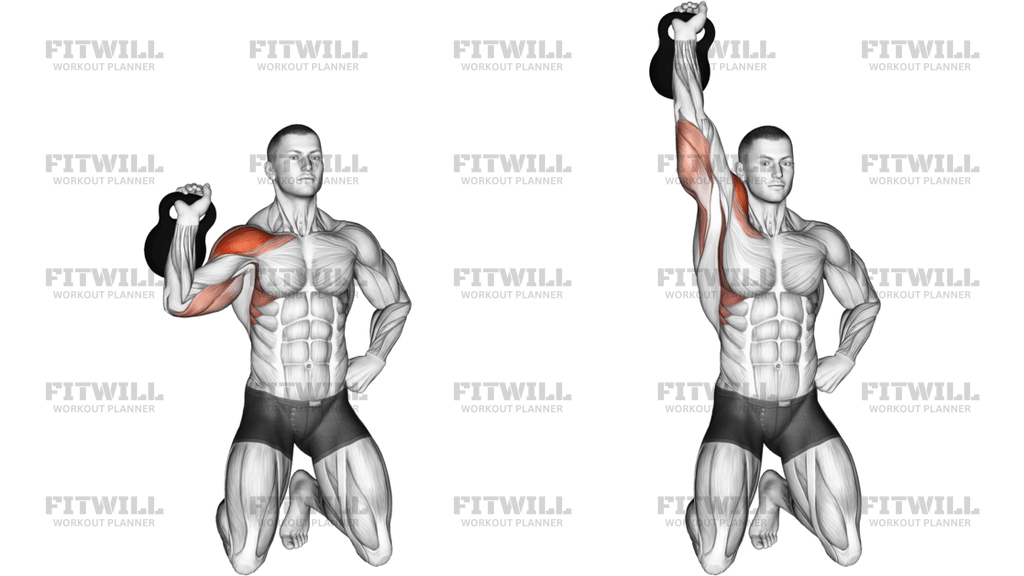
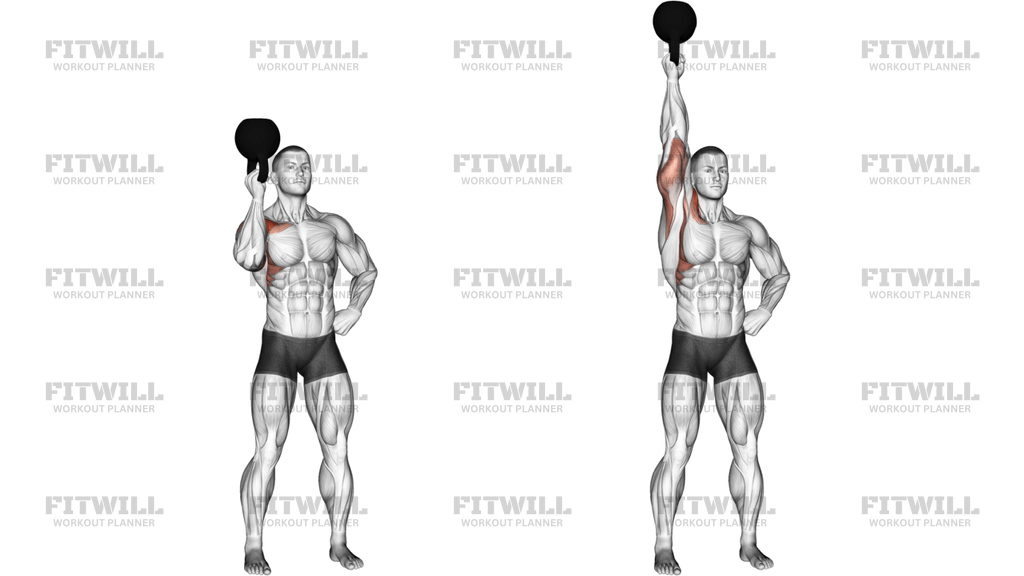
Kettlebell Standing Bottoms Up One-Arm Shoulder Press is a standing unilateral overhead press that turns a simple shoulder movement into a balance and control drill. Holding the kettlebell upside down makes the load less forgiving, so every rep demands clean wrist alignment, steady pressure through the hand, and a torso that stays stacked instead of swaying to help the lift.
The main training target is the front and middle shoulder, with the triceps, upper traps, and upper back helping guide the kettlebell into a stable overhead finish. The bottoms-up position also asks more from the forearm, grip, and smaller stabilizers around the shoulder than a standard press, which is why this variation is often used to build control rather than to chase heavy loading.
Setup matters more here than in a regular press. Stand tall with the feet planted, bring the kettlebell to the same-side shoulder, and keep the elbow under the bell so the forearm stays vertical before the rep starts. The bell should feel stacked over the wrist rather than drifting forward, and the ribs should stay down so the lower back does not take over when the kettlebell leaves the shoulder.
Press the kettlebell in a straight line overhead and finish with the arm fully extended or softly locked out beside the ear. The bell should stay inverted the whole way, with the wrist staying neutral and the elbow finishing under the load instead of flaring away from it. On the way down, lower slowly back to the shoulder and re-set the rack before the next rep so each repetition starts from a controlled position.
This exercise fits well in warmups, shoulder-stability work, accessory pressing, and unilateral strength sessions where quality matters more than load. It is a strong choice when you want overhead pressing without a lot of cheating from the torso, but it should stay light enough that the kettlebell does not wobble or tip. If the shoulder feels pinched or the bell becomes difficult to keep vertical, shorten the range, reduce the load, or switch to a standard single-arm press until control improves.
[ Workout Log & Planner ]
Put your next workout in Fitwill
Keep your plan and training log ready when you are.


Instructions
- Stand with your feet about hip-width apart and bring the kettlebell to the same-side shoulder in a bottoms-up rack position, with the bell upside down, the handle pointing down, and your forearm vertical.
- Keep your wrist stacked straight under the handle, your elbow slightly in front of your ribcage, and your free hand resting at your side or on your hip so the torso stays quiet.
- Squeeze the glute on the pressing side, keep your ribs down, and brace your midsection before the kettlebell leaves the shoulder.
- Press the kettlebell straight up in one smooth line, letting the elbow extend while the forearm stays nearly vertical.
- Keep the bell inverted as it travels overhead and avoid leaning your torso or letting the weight drift in front of your face.
- Finish with the arm by your ear, the shoulder packed, and the wrist still neutral under the handle.
- Pause briefly overhead, then lower the kettlebell slowly back to the shoulder without letting the bell wobble or tilt.
- Reset the rack position before the next rep or safely lower the kettlebell to the floor when the set is done.
Tips & Tricks
- The kettlebell should sit over your knuckles, not hang forward in front of the wrist, or the press will feel unstable before it even starts.
- Use a much lighter kettlebell than you would for a normal single-arm press; the grip and shoulder stability are the limiting factors here.
- Keep the free hand on your hip or thigh so you notice immediately if the torso starts to rotate toward the working side.
- Press with the bell close to your face on the way up, then finish beside the ear instead of reaching straight out in front.
- If the bell starts to wobble in the top half, slow the rep down and reduce the load until the inversion stays clean.
- Do not let the ribs flare to buy extra range; a small arch usually means the shoulder has stopped doing the work.
- A controlled three-second lowering phase is useful here because it exposes weak points in the shoulder and grip.
- Stop the set as soon as the kettlebell starts tipping or the wrist bends back, because both are signs the rack position has broken down.
Frequently Asked Questions
What muscle does Kettlebell Standing Bottoms Up One Arm Shoulder Press target most?
The front and middle shoulders do most of the work, with the triceps, upper traps, and smaller shoulder stabilizers helping keep the kettlebell steady overhead.
Why is the Kettlebell Standing Bottoms Up One-Arm Shoulder Press harder than a normal press?
The upside-down kettlebell is less stable, so your grip, wrist, and shoulder have to control the bell instead of just moving it overhead. That makes it much more demanding even with a light weight.
Can beginners do the Kettlebell Standing Bottoms Up One-Arm Shoulder Press?
Yes, but only with a very light kettlebell and strict control. Many beginners should practice the bottoms-up rack hold first before trying full reps overhead.
How do I hold the kettlebell in the bottoms-up rack position?
Keep the bell upside down at shoulder height with your forearm vertical and your wrist stacked straight under the handle. If the bell drifts forward, the press becomes much harder to control.
What is the most common mistake in this press?
Letting the wrist bend back or letting the torso lean to help the kettlebell up. Both usually mean the load is too heavy for a clean bottoms-up press.
Should the kettlebell travel straight up or slightly forward?
It should travel mostly straight up while staying close to your face and finishing beside your ear. If it swings forward, the shoulder loses a stable pressing path.
How heavy should I use for the Kettlebell Standing Bottoms Up One-Arm Shoulder Press?
Much lighter than your standard overhead press. Choose a kettlebell that lets you keep the bell vertical, the wrist neutral, and the torso still for every rep.
What if my shoulder feels uncomfortable overhead?
Shorten the range, lower the weight, or switch to a standard one-arm press until the overhead position feels smooth. A painful shoulder should not be forced through the bottoms-up variation.
Can I use the Kettlebell Standing Bottoms Up One-Arm Shoulder Press for stability work?
Yes. It is often used for shoulder stability, wrist control, and anti-rotation work because the unstable bell exposes small technique leaks very quickly.