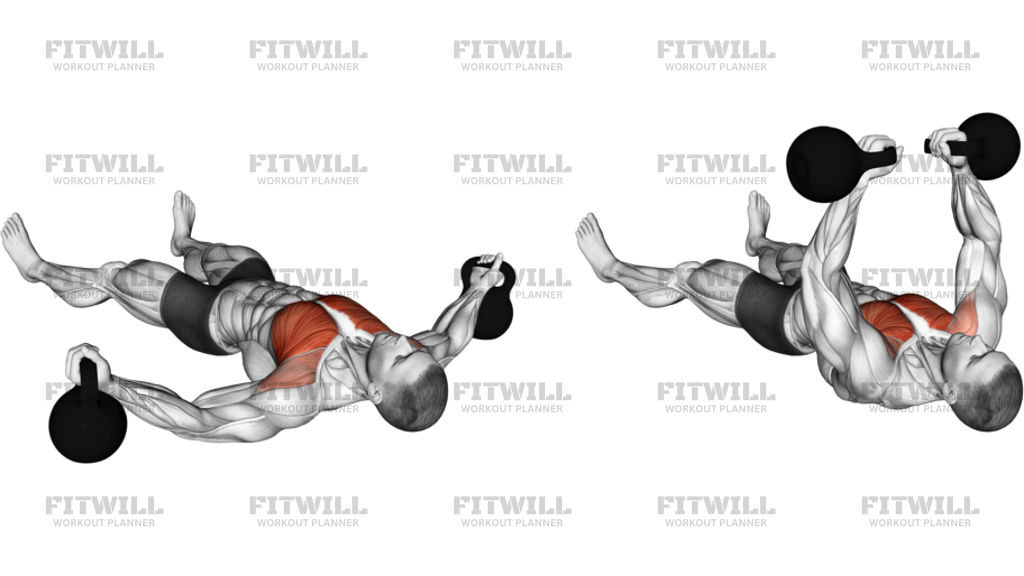
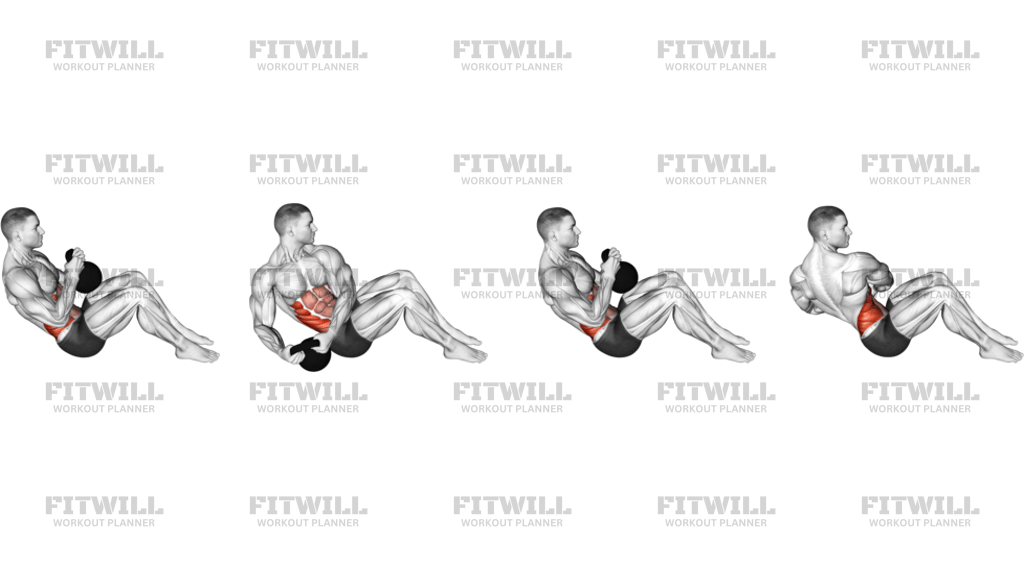
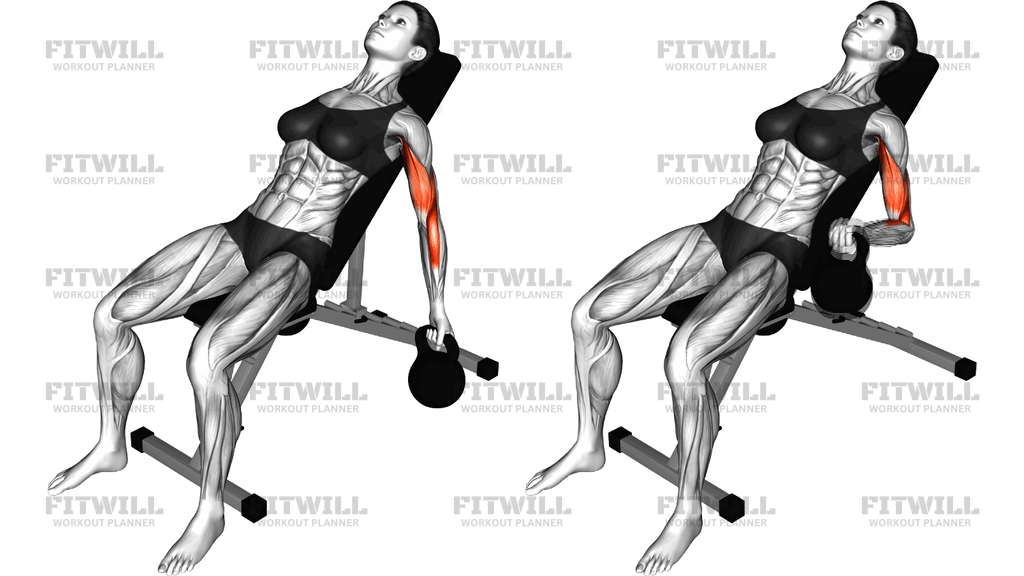
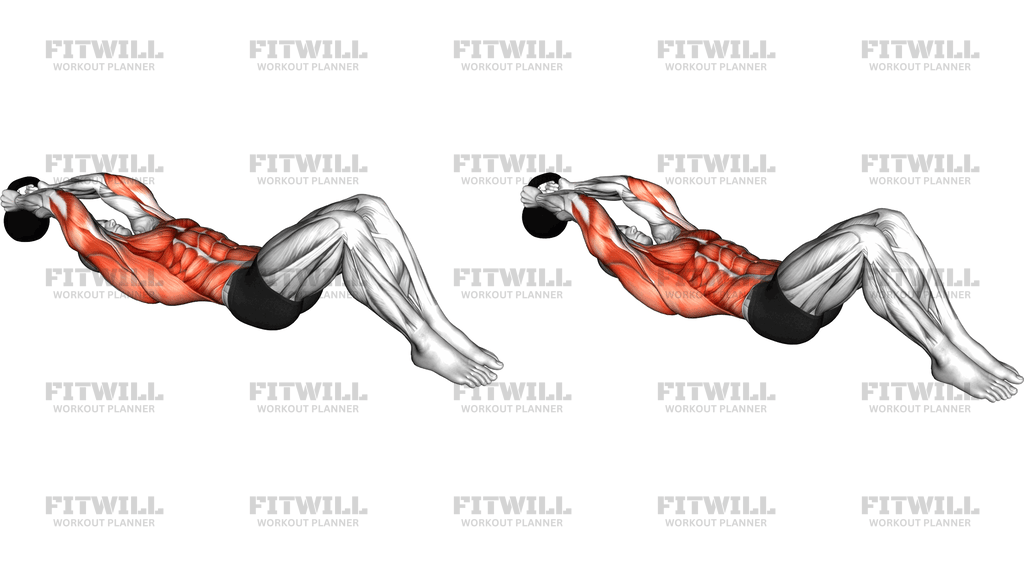
Kettlebell Lying Triceps Extension Skull Crusher
Kettlebell Lying Triceps Extension Skull Crusher is a lying elbow-extension exercise that puts most of the work on the triceps while asking the shoulders and upper back to keep the upper arms steady. The kettlebell changes the feel of the lift because the handle and bell sit below the hands, so the load wants to drift and rotate a little instead of staying perfectly centered like a bar. That makes setup and elbow position especially important.
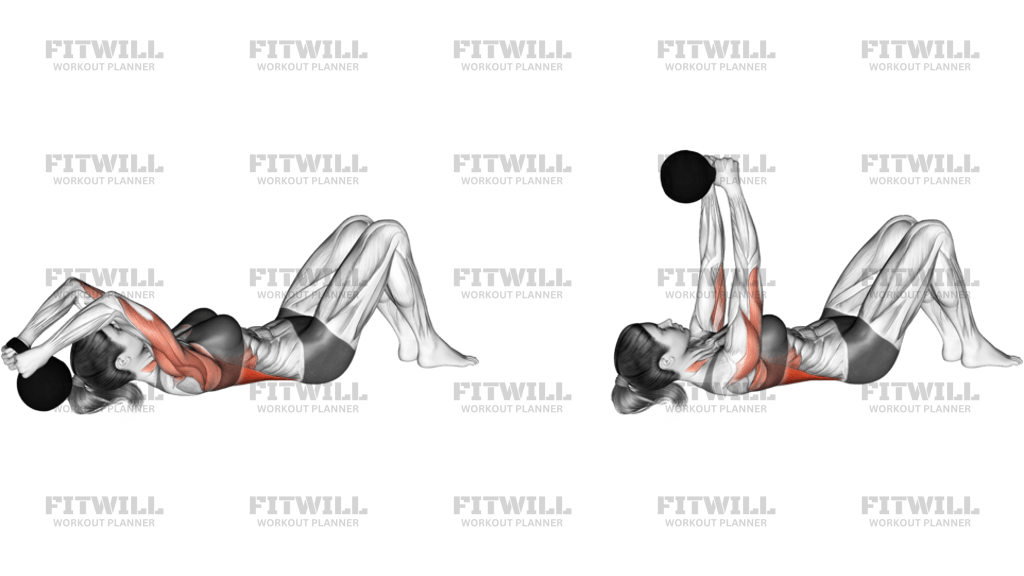
The exercise is usually done on a flat bench with both hands around one kettlebell, arms extended above the chest. From there, the elbows bend to lower the kettlebell toward the forehead or just behind it, then the triceps extend the elbows to bring the bell back to the start. The movement should happen at the elbow joint, not by turning it into a press or by letting the shoulders roll forward.
Because the load sits in the hands rather than hanging from a fixed attachment, control matters more than weight. A clean rep keeps the upper arms mostly still, the wrists stacked, and the forearms tracking in a path that feels smooth and repeatable. If the kettlebell drifts too far behind the head, the shoulders take over and the triceps lose tension; if the elbows flare hard, the line of force gets sloppy and the set turns into a shoulder exercise.
This lift is useful as direct arm work in strength or hypertrophy training, especially when you want a triceps-focused accessory after pressing or overhead work. It can also be a practical option for lifters who like the feel of a single implement held with both hands. The key is to keep the range honest, avoid using momentum from the torso, and stop the set before elbow position or wrist control breaks down.
Done well, the kettlebell skull crusher is a precise triceps builder with a simple setup and a clear training payoff. Treat it as a controlled extension pattern: stable shoulders, quiet torso, elbows hinge, triceps finish the rep. If you cannot keep the bell path smooth or the elbows fixed, reduce the load before adding more reps.
[ Workout Log & Planner ]
Put your next workout in Fitwill
Keep your plan and training log ready when you are.


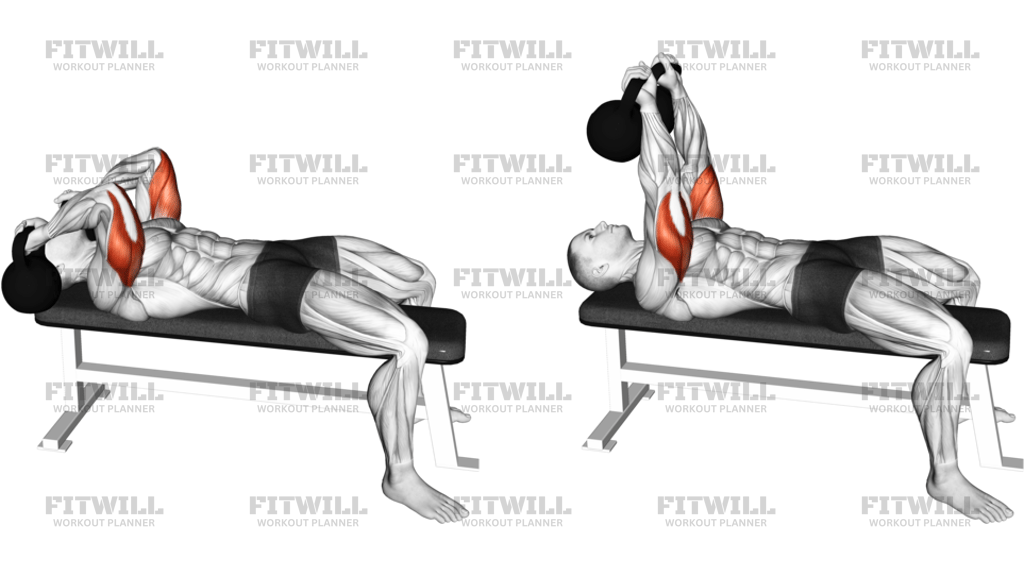
Instructions
- Lie on a flat bench with your feet planted and hold one kettlebell with both hands above your chest, gripping the horns so the handle sits centered in your palms.
- Straighten your arms and stack the kettlebell over your shoulders, then pull your shoulder blades gently down into the bench and keep your ribs from flaring.
- Keep your upper arms mostly vertical and bend only at the elbows as you lower the kettlebell toward your forehead or just behind it.
- Let the forearms travel in a controlled arc while the elbows stay pointed up and close instead of drifting wide.
- Pause briefly when the kettlebell reaches the deepest point you can control without the shoulders rolling forward.
- Exhale and extend the elbows to press the kettlebell back to the start until the arms are straight but not slammed into lockout.
- Keep the wrists neutral and the bell steady at the top before starting the next rep.
- Lower the kettlebell again with the same tempo and repeat for the planned set, then bring it down carefully when finished.
Tips & Tricks
- Hold the kettlebell by the horns so the bell hangs naturally and does not twist your wrists during the lowering phase.
- Keep your upper arms fixed in space; if they start moving toward your face, the set is becoming a press instead of a triceps extension.
- Lower until the triceps are loaded but the shoulders stay quiet. A shorter range with clean tension is better than forcing the bell deep behind your head.
- Use a light-to-moderate load first. The kettlebell makes the exercise feel unstable sooner than a dumbbell, so chasing weight usually ruins elbow control.
- Keep your elbows pointed roughly toward the ceiling. When they flare outward, the rep loses its direct line and the shoulder takes over more work.
- Let the lowering phase take a little longer than the lift so the triceps stay under tension instead of bouncing off the bottom.
- If your wrists bend back, rotate your hands slightly so the handle sits deeper in the palms and the load stays stacked over the forearms.
- On a bench, keep your head supported and your rib cage down; arching hard to create room for the kettlebell usually shifts the stress away from the triceps.
Frequently Asked Questions
What muscles does the kettlebell skull crusher work?
It primarily targets the triceps, especially during the elbow extension phase. The shoulders and upper back help stabilize the arms while the wrists and grip keep the kettlebell steady.
Why use a kettlebell instead of a dumbbell for lying triceps extensions?
A kettlebell changes the balance of the movement because the load hangs below the handle. That can make the exercise feel more awkward and more triceps-focused if you keep the elbows steady.
Should I do this on a flat bench or the floor?
A flat bench gives the most common skull-crusher range because the kettlebell can travel beside or slightly behind the head. A floor version shortens the range and is useful if you want a more conservative setup.
How close should the kettlebell come to my head?
Lower it until you feel the triceps load without the shoulders rolling forward. For most lifters that means the bell reaches the forehead line or slightly behind it, not crashing toward the face.
What is the most common form mistake?
Letting the elbows flare and the upper arms drift during the lowering phase is the biggest one. That usually turns the exercise into a sloppy press and reduces tension on the triceps.
Is this exercise good for beginners?
Yes, as long as the load is light and the range stays controlled. Beginners should focus on keeping the elbows pointed up and the wrists stacked before adding weight.
How heavy should the kettlebell be?
Choose a weight you can lower slowly and press back up without the bell wobbling or your elbows drifting. If the handle starts rotating in your hands, the load is probably too heavy.
What should I do if I feel it in my shoulders more than my triceps?
Shorten the range slightly, keep the upper arms more vertical, and stop letting the kettlebell drift too far behind your head. If the shoulders still dominate, reduce the weight and slow the lowering phase.