Kettlebell Bent Arm Pullover With Knees Bent
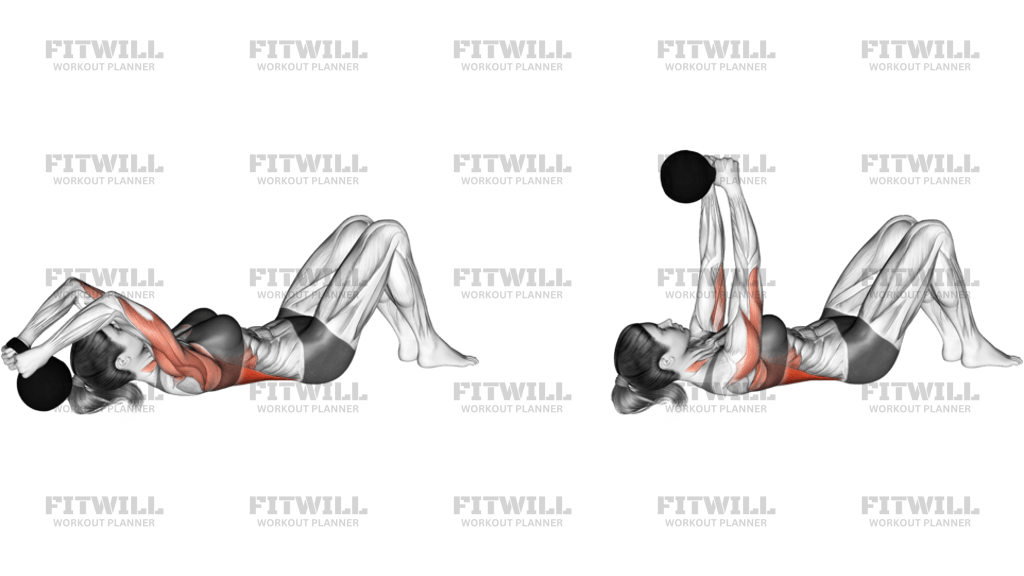
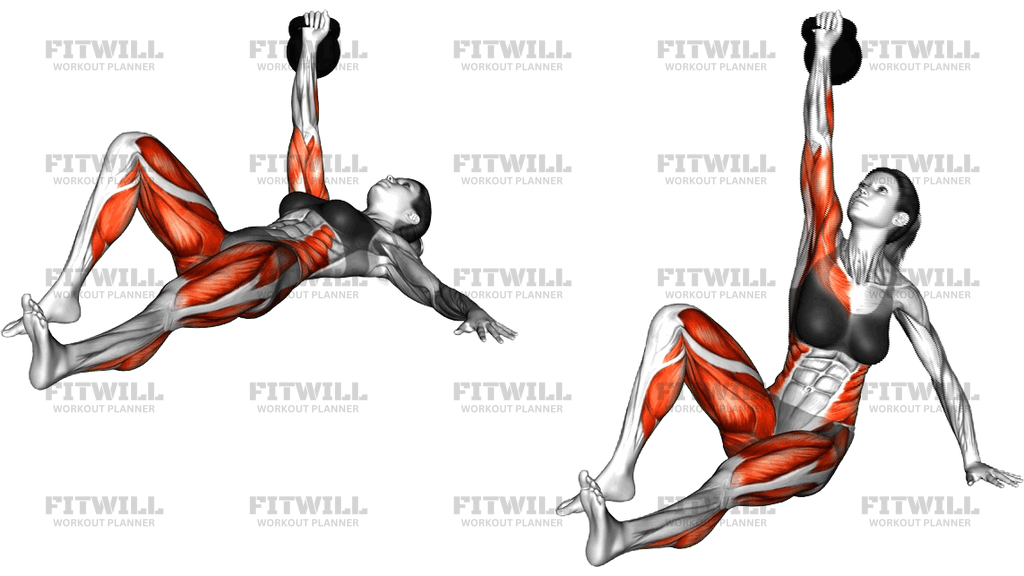
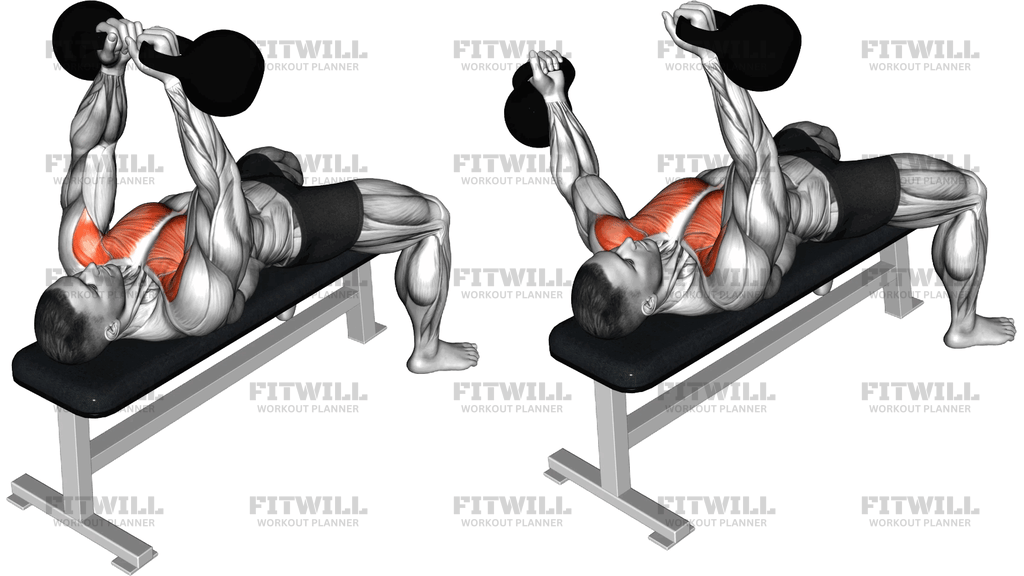
Kettlebell Bent Arm Pullover With Knees Bent is a floor-based pullover that trains shoulder control, ribcage position, and upper-body strength while your knees stay bent and your low back stays anchored. In the setup shown in the image, you lie on your back, bend your knees, and hold a single kettlebell with both hands so the bell travels in a smooth arc from above your chest to behind your head and back again.
This exercise is most useful when you want to build pulling control without standing load or aggressive momentum. The bent-knee position reduces lower-back arching and makes it easier to keep the torso quiet while the shoulders do the work. That turns the rep into a controlled strength drill for the lats, chest, triceps, and shoulder stabilizers, with the core helping to keep the ribs down as the kettlebell moves.
The setup matters more than the range of motion. Keep the feet planted, knees bent, and pelvis steady before the first rep. Hold the kettlebell with a soft elbow bend rather than locking the arms straight, and keep the bell centered over the chest before lowering it. If the ribs flare, the bell drifts too far, or the low back arches off the floor, shorten the arc and make the rep cleaner.
Each repetition should feel like a controlled sweep, not a throw. Lower the kettlebell behind the head until the upper arms are near the floor or until the shoulders start to lose position, then pull it back to the start using the same path. A steady exhale on the way back up helps keep the trunk braced, while a calm inhale on the descent helps you stay organized instead of rushing through the stretch.
Use this movement as accessory work, a chest-and-back bridge exercise, or a core-stability drill in a technique-focused session. It works best with moderate or light loading and a tempo you can repeat cleanly. If the shoulders feel pinchy or the lower back wants to arch, reduce the range, lighten the bell, and keep the knees bent so the position stays stable from the first rep to the last.
[ Workout Log & Planner ]
Put your next workout in Fitwill
Keep your plan and training log ready when you are.


Instructions
- Lie on your back with your knees bent, feet flat, and the kettlebell held above the middle of your chest with both hands.
- Keep a soft bend in the elbows, set your shoulders down, and stack your ribs so your low back stays in contact with the floor.
- Start with the bell vertical over the sternum and your wrists neutral, not cocked back.
- Inhale as you lower the kettlebell in a smooth arc behind your head, keeping the upper arms quiet and the elbows from flaring wide.
- Stop the descent when the shoulders start to lose position or the upper arms approach the floor.
- Exhale and sweep the kettlebell back over your chest along the same arc without shrugging or jerking.
- Pause briefly at the top with the bell steady above the chest before beginning the next rep.
- Repeat for the planned reps, then bring the bell down to the floor beside you with control.
Tips & Tricks
- Keep your knees bent and feet planted so your pelvis stays heavy and the low back does not arch when the bell moves overhead.
- Think about moving the kettlebell with your shoulders and lats, not by straightening the arms or throwing the ribcage upward.
- If the bell drifts toward your face instead of staying over the sternum, the shoulder angle is usually getting too open.
- A slower lowering phase makes the stretch easier to control and keeps the rep from turning into a swing.
- Do not lock the elbows; the bent-arm version is meant to keep tension in the upper body and reduce joint strain.
- Choose a lighter bell than you would for a floor press, because the lever gets harder as the kettlebell moves behind your head.
- Keep the neck relaxed and your chin slightly tucked so you do not crane forward as the bell returns.
- Shorten the range if your shoulders feel pinchy or if your ribs start to flare before the bell reaches the floor behind you.
Frequently Asked Questions
What muscles does the kettlebell bent arm pullover with knees bent work?
It mainly challenges the lats, chest, triceps, and shoulder stabilizers, while the core keeps the ribs from flaring as the bell moves.
Why are the knees bent in this version?
Bent knees help keep the pelvis and low back steady, which makes it easier to control the pullover without turning it into a back arch.
How should I hold the kettlebell?
Hold it with both hands on the horns or handle, keep a soft bend in the elbows, and keep the bell centered over the chest before you lower it.
How far should the kettlebell go behind my head?
Only lower it as far as you can while keeping the ribs down and the shoulders organized; the upper arms do not need to hit the floor.
What is the most common mistake with this pullover?
The biggest issue is letting the low back arch and the ribs pop up as the bell goes overhead, which takes tension away from the target muscles.
Is this a beginner-friendly exercise?
Yes, if you start with a light kettlebell and a shorter range of motion that you can control smoothly from start to finish.
Should my elbows stay bent the whole time?
Yes, keep a soft bend and maintain that angle so the rep stays in the bent-arm pullover pattern instead of turning into a straight-arm swing.
What should I do if my shoulders feel tight or pinchy?
Reduce the range, slow the lowering phase, and use a lighter bell; if the pinch stays, skip the movement and choose a more comfortable upper-body drill.