Barbell Decline Wide Grip Press
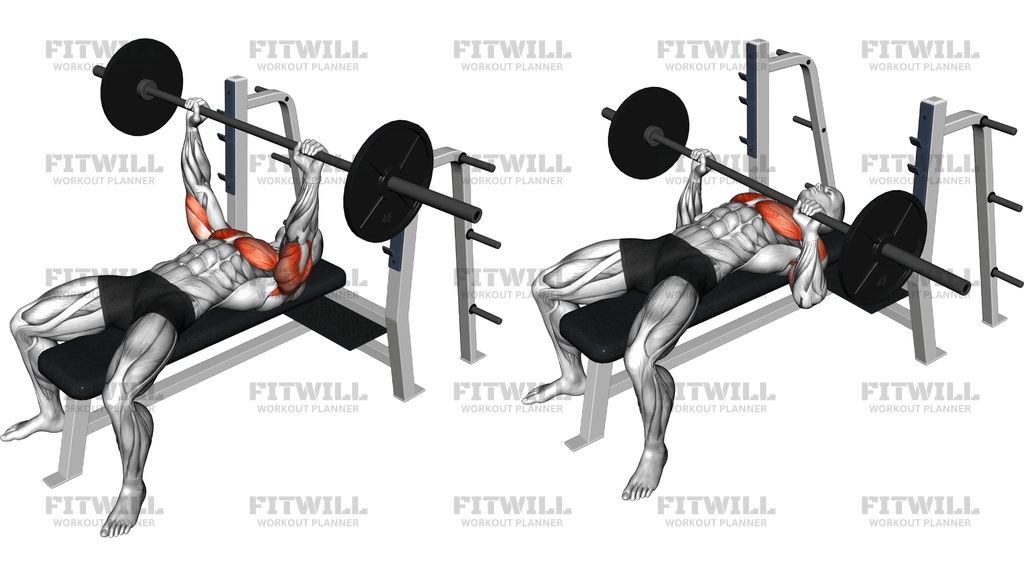
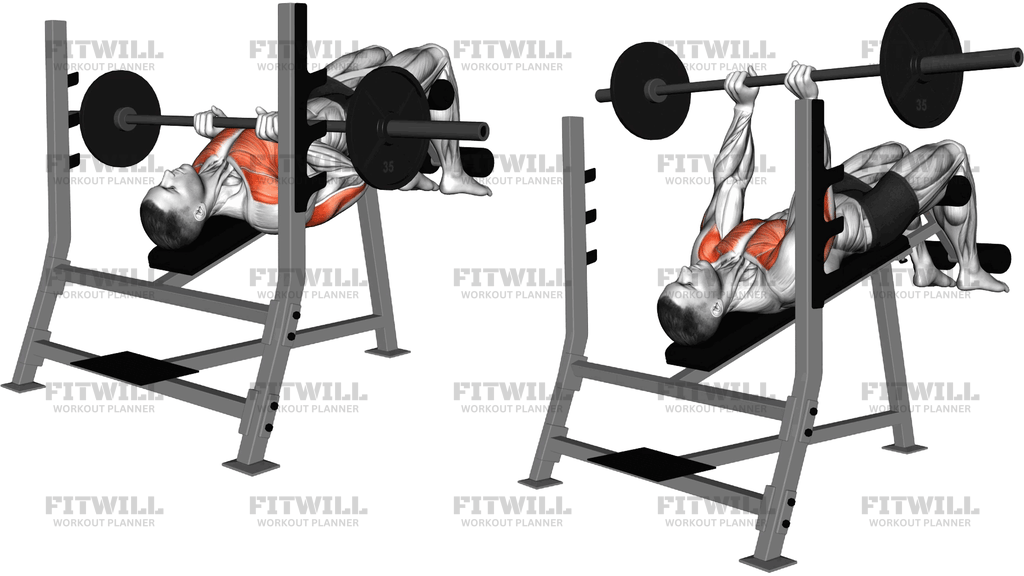
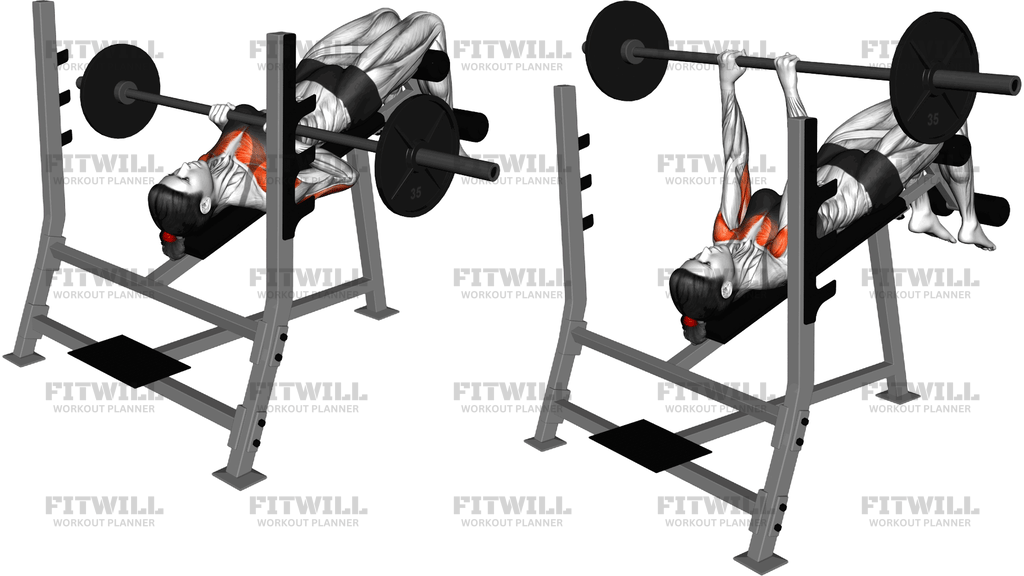
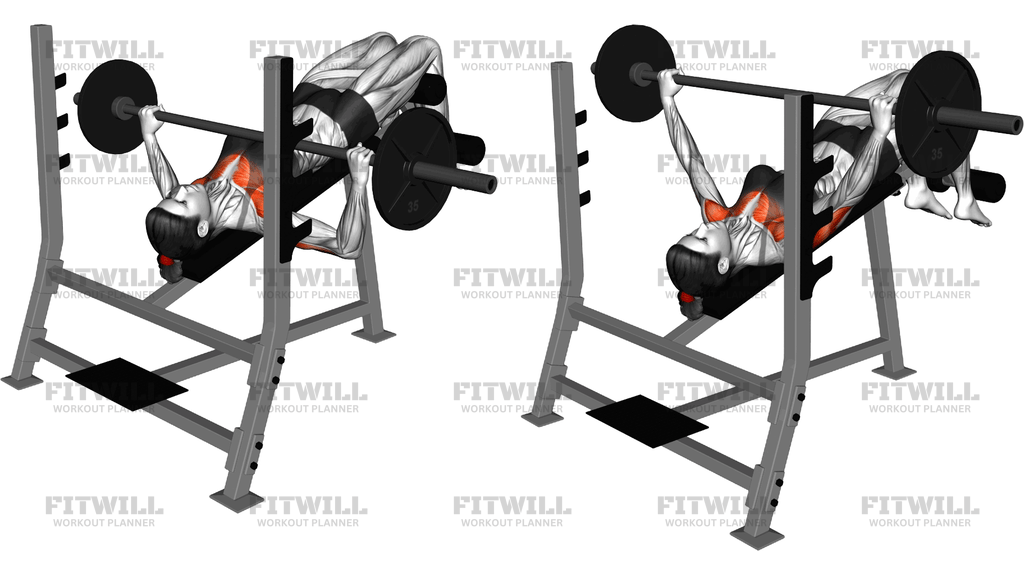
The Barbell Decline Wide Grip Press is a barbell bench press performed on a decline bench, with your head lower than your hips and your feet secured under the leg rollers. The wide hand placement shifts more of the work onto the outer and lower portions of the chest, and the decline angle naturally shortens the bar's path so you can emphasize the sternal fibers of the pectorals in a way a flat press does not.
This variation is a solid choice once you are comfortable with a standard barbell bench press. It suits lifters who want to bring up the lower chest, people who find flat or incline pressing hard on the shoulders because the decline angle puts the shoulder in a more comfortable pressing line, and anyone programming pressing variety across angles. Because the range of motion is slightly shorter than on a flat bench, many lifters can handle a bit more load here than they expect.
The wide grip matters as much as the angle. Taking the bar noticeably wider than shoulder width flares the elbows during the press, which lengthens the outer pecs and reduces how much the triceps contribute. The trade-off is that the wide grip also shortens the stroke, so control at the bottom matters more, not less. Rushing the descent with a heavy bar is the most common way this exercise goes wrong.
Setup deserves real attention. Lie back on the decline bench, hook your feet or shins firmly under the padded rollers, and only then reach up to take your grip. Once your feet are locked in, you cannot slide down the bench to correct a poor grip, so set your hands and check the bar before you commit. Your head, upper back, and hips should stay in contact with the pad for the whole set.
To execute it well, take the bar out of the uprights, hold it directly over your lower chest, and let it descend along a slightly arced path until it touches just below your nipple line. Press back up and slightly toward your head until your arms are extended without your elbows locking hard. Breathe in as the bar lowers, brace lightly, and exhale through the sticking point as you press.
In practice, this movement sits well as a main press on a chest day or as a secondary angle after flat pressing. Because getting pinned is awkward on a decline bench, use a spotter for heavy sets or work inside a rack with safety pins, and always rerack deliberately rather than reaching the bar back by feel.
[ Workout Log & Planner ]
Put your next workout in Fitwill
Keep your plan and training log ready when you are.


Instructions
- Set a decline bench so the padded leg rollers are secure, and load the barbell with an appropriate weight on the uprights at the head end of the bench.
- Sit on the low end of the bench, hook your feet or shins under the leg rollers, then lie back so your head, upper back, and hips rest fully on the pad.
- Grip the bar slightly wider than shoulder width, wrap your thumbs around the bar, and squeeze it firmly before lifting it out of the uprights.
- Bring the bar out to a stable hold directly over your lower chest with your arms straight, and pull your shoulder blades gently down and together.
- Inhale and brace your core lightly as you lower the bar along a slight arc toward just below your nipple line, keeping your elbows flared around 45 to 60 degrees from your torso.
- Touch the bar lightly to your lower chest without bouncing it or letting it sink into your ribcage.
- Press the bar back up and slightly toward your head, exhaling through the hardest part of the rep until your arms are extended.
- Keep your feet locked under the rollers and your hips and shoulders on the bench throughout the set; do not lift your hips to shorten the press.
- After your final rep, guide the bar back to the uprights with control, confirm both ends are racked, then unhook your feet before sitting up.
- Use a spotter or safety pins for heavy sets, since unhooking your feet to escape a stuck bar is not safe on a decline bench.
Tips & Tricks
- Set your grip before your feet. Once your legs are hooked under the rollers, you cannot slide down the bench to adjust, so check hand placement while you are still seated upright.
- A common mistake is lowering the bar to mid-chest as if on a flat bench. On the decline angle, the bar should come to the lower chest; touching too high turns it into a shoulder-dominant press.
- Wide does not mean widest. Gripping the collars strains the shoulders and wrists and shortens the press into a partial; a hand position a few inches past shoulder width is enough to shift work to the outer chest.
- Do not let the bar drift toward your neck on the way down. If the bar path wanders on heavy reps, reduce the weight and film one set from the side to check the line.
- Bouncing the bar off the lower chest is tempting because the decline stroke is short. A light, deliberate touch keeps tension on the pecs and protects the ribs.
- If your shoulders feel pinched at the bottom, narrow your grip slightly and stop the descent an inch above the chest rather than forcing a deep touch.
- Keep your upper back in contact with the pad. Arching up from the hips to cheat the angle defeats the decline position and can let you slide toward the head of the bench.
- Because you are angled head-down, blood pressure in the head runs higher on this press. Pause longer between heavy sets than you would on a flat bench and stand up slowly.
- Never try to self-rescue by pulling your feet out of the rollers with a loaded bar over you. Walk the weight down or ask for a handoff and spot instead.
Frequently Asked Questions
Which muscles does the Barbell Decline Wide Grip Press work?
It primarily targets the lower and outer fibers of the chest, specifically the sternal portion of the pectoralis major. The front shoulders and triceps assist, and the lats help stabilize the bar on the way down.
How does the wide grip change the decline press?
The wider hand placement lets the elbows flare more, which increases stretch on the outer pecs and shortens the range of motion. It reduces triceps involvement compared with a shoulder-width decline grip.
Can beginners do the Barbell Decline Wide Grip Press?
Yes, but it is better after you can control a flat barbell bench press, because the decline position makes getting out from under a stuck bar harder. Start light, use a spotter, and learn the bar path with an empty bar first.
Why does the bar touch the lower chest instead of the middle?
On a decline bench your torso is angled head-down, so a straight vertical press line from your shoulder joints lands below the nipple line. Touching higher means the bar is drifting toward your neck and the shoulders take over.
How do I get the bar off the rack safely on a decline bench?
Hook your feet under the rollers first, lie back, take your grip, and pull the bar out with control before settling it over your lower chest. Have a spotter give you a handoff on heavy sets rather than lifting it out alone.
What is the most common mistake in this exercise?
Bouncing the bar off the chest and letting the hips lift off the pad. Both shorten the work the lower chest does, and lifting the hips can let you slide up the bench mid-set.
What can I use instead of the Barbell Decline Wide Grip Press?
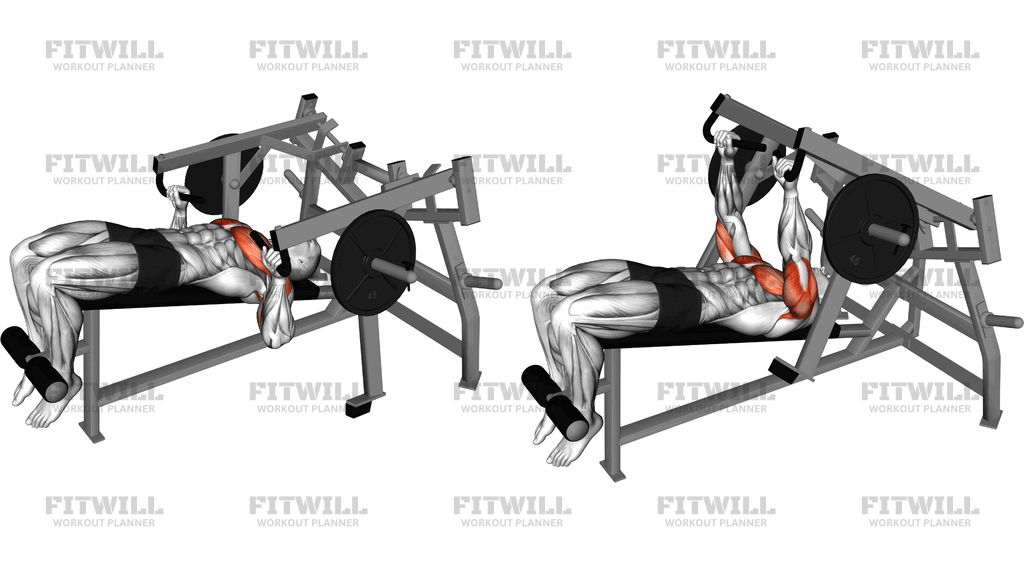
Decline dumbbell presses, dips leaning slightly forward, or a decline press on a machine all hit the lower chest with similar intent. Dumbbells are easier to bail from if you train without a spotter.
Is it normal to use more weight on the decline than on the flat bench?
Often yes, because the decline angle shortens the press stroke and reduces demand on the shoulders. The jump is usually modest, and form should stay identical whether the load is heavier or not.
Should my elbows be fully locked out at the top?
Extend to straight arms but avoid slamming the elbows into a hard lock, which shifts load to the joints. Keep the pecs under tension by finishing the press with intent rather than just holding the bar up.