Dumbbell Seated Single Arm Front Raise
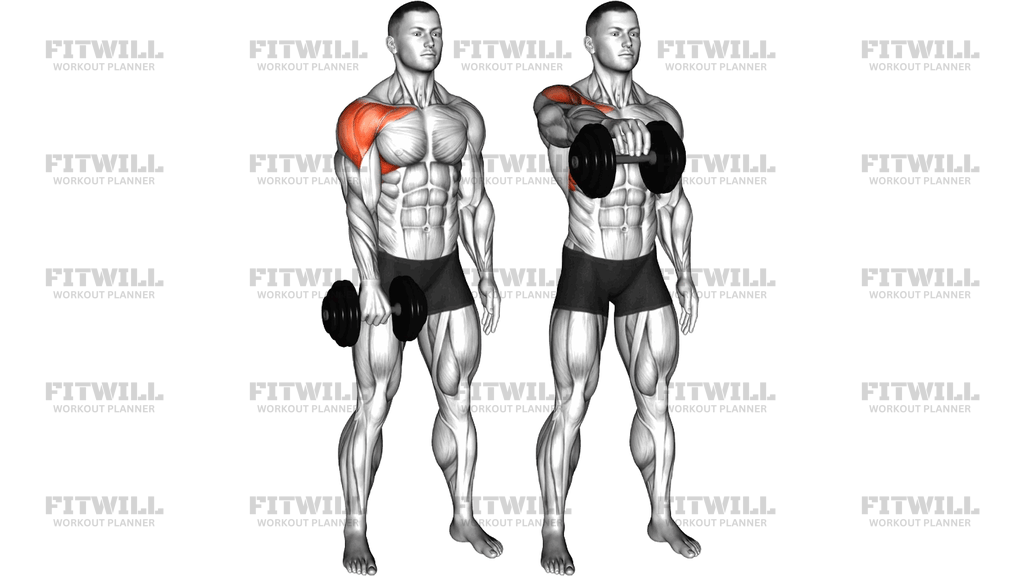
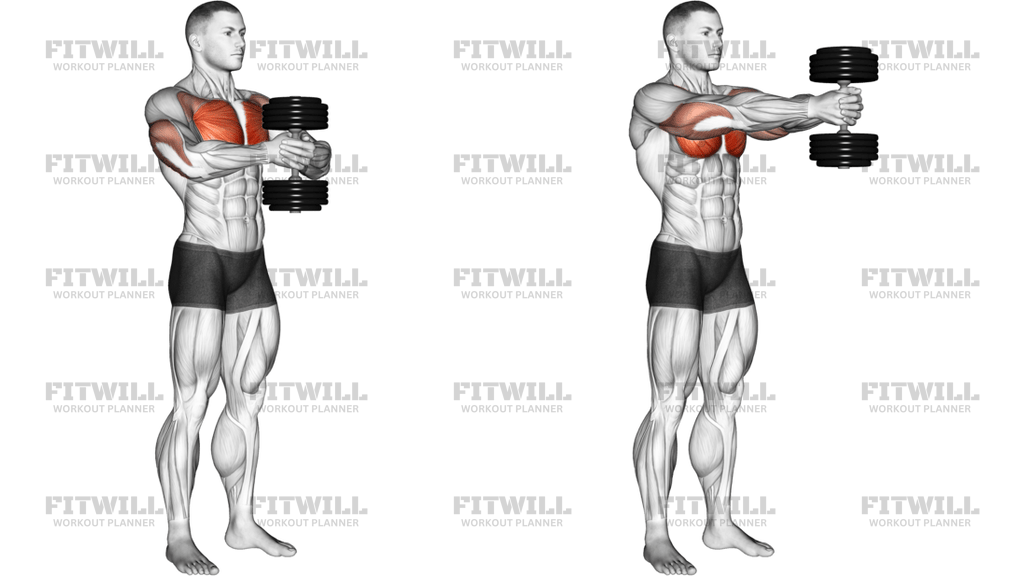
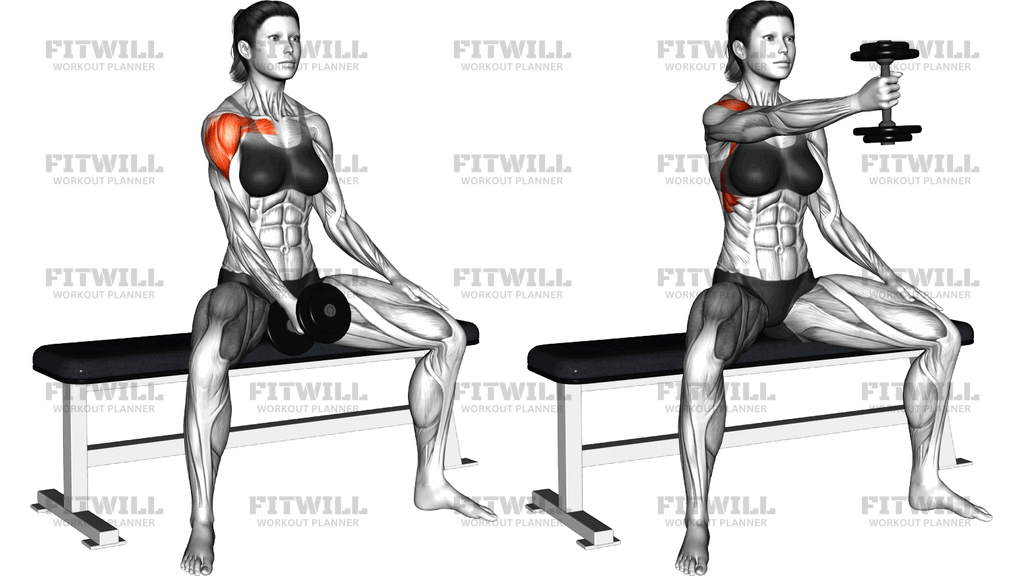
The Dumbbell Seated Single Arm Front Raise is an isolation exercise for the front of the shoulder, performed one arm at a time from a seated position on a flat bench. You hold a single dumbbell in one hand with your arm hanging straight down by your side, then lift it forward and upward to roughly shoulder height with a straight elbow, before lowering it back down under control. The seated position and the unused hand resting on the opposite thigh give you a stable base that removes most of the body English you could get away with while standing.
The main muscle worked is the anterior deltoid, the front portion of the shoulder that flexes the arm forward. The side deltoid assists as the arm rises, and the upper traps help once the dumbbell climbs near the top of the range. Because you work one side at a time, you can also spot and correct left-to-right strength differences, which is something two-arm raises tend to hide.
Sitting down matters more than it might seem. When you stand and swing a weight up in front of you, the hips and lower back contribute a lot of hidden momentum. With your feet planted wide on either side of the bench and your free hand braced lightly on the opposite thigh, your torso has far fewer ways to cheat, so the shoulder has to do the actual work. That makes this version a good choice for beginners learning what a front raise should feel like, and for lifters who want stricter shoulder work without loading the lower back.
Execution is simple but easy to rush. Keep the wrist straight and neutral, the elbow locked out but not strained, and think about leading with the hand rather than letting the elbow bend and turn the movement into a half curl. Raise to about shoulder height, pause briefly, and lower over two or three seconds instead of dropping the arm.
This movement fits well as a secondary shoulder exercise after pressing work, or as part of a targeted deltoid day paired with lateral raises and rear delt work. Because each set trains only one arm, keep the weight modest, and expect your stabilizing muscles around the shoulder blade to work harder than they would in a two-arm version.
[ Workout Log & Planner ]
Put your next workout in Fitwill
Keep your plan and training log ready when you are.


Instructions
- Sit on a flat bench with your feet flat on the floor, positioned wider than hip width so your legs straddle the bench slightly.
- Hold one dumbbell in your right hand with a neutral grip, palm facing your body, and let your arm hang straight down between or slightly outside your thighs.
- Rest your left hand lightly on your left thigh and sit tall with your chest up, shoulders back, and head in a neutral position.
- Brace your abdominal muscles lightly and keep your torso still so you have a stable base before lifting.
- With your elbow straight and your wrist firm, raise the dumbbell forward and upward in a smooth arc directly in front of your body, leading with your hand.
- Stop when the dumbbell reaches about shoulder height and your arm is roughly parallel to the floor, then hold for a brief pause without shrugging.
- Lower the dumbbell back to the starting position by your side over two to three seconds, resisting the weight rather than letting it drop.
- Exhale as you raise the dumbbell and inhale as you lower it, keeping your breathing steady throughout.
- Complete all planned repetitions on one arm, then switch the dumbbell to the other hand and repeat with the left arm.
Tips & Tricks
- A common mistake is bending the elbow as the arm rises, which turns the front raise into a half front curl and shifts effort away from the shoulder. Keep the arm long throughout the lift.
- If you feel your torso leaning back at the top of each rep, the weight is too heavy. Switch to a lighter dumbbell so your free hand on the thigh can actually keep you upright.
- Avoid raising the arm above shoulder height; going higher mainly recruits the traps and shrugs the shoulder rather than adding useful delt work.
- Keep the dumbbell traveling in a straight line in front of your body. Letting it drift out to the side turns the movement into a diagonal raise and changes which part of the delt works.
- Lower the weight slowly every rep. The eccentric portion is where much of the muscle stimulus sits, and fast drops turn the set into a momentum exercise.
- Keep your wrist in line with your forearm. A cocked or bent-back wrist at the top of the raise puts unnecessary strain on the joint.
- Pause for one second at shoulder height instead of bouncing at the top; the pause forces the deltoid to hold the load and highlights any shrugging.
- Start with your weaker arm first and match the repetitions with your stronger arm so the two sides develop evenly.
- If your bench feels low and your shoulder pinch at the bottom, sit slightly toward the edge with an upright spine so the arm can hang fully straight before each rep.
Frequently Asked Questions
Which muscles does the Dumbbell Seated Single Arm Front Raise work?
The primary muscle is the anterior deltoid at the front of the shoulder, with the side deltoid and upper traps assisting as the arm rises. The muscles around the shoulder blade and your grip also work to stabilize the dumbbell.
Why perform the front raise seated and one arm at a time instead of standing?
Seated removes momentum from the hips and reduces strain on the lower back, while the single-arm version lets you focus on one shoulder at a time. Your free hand braced on the opposite thigh locks the torso in place, making it harder to cheat.
How high should I raise the dumbbell?
Raise until your arm is about parallel to the floor, roughly shoulder height. Lifting higher adds little for the front delt and mostly shifts work to the upper traps while encouraging shoulder shrugging.
Can beginners do the Dumbbell Seated Single Arm Front Raise?
Yes, it is a good beginner front raise variation because the seated position is stable and easy to control. Start with a light dumbbell, something you can lift for 10 to 12 strict repetitions without your torso rocking.
Should my elbow be bent or straight during the movement?
Keep the elbow straight but relaxed, not locked and jammed. Bending the elbow changes the exercise into a front curl and takes tension off the shoulder, which defeats the purpose of the movement.
What grip should I use on the dumbbell?
Use a neutral grip with your palm facing your thigh and your wrist straight, in line with the forearm. This keeps the shoulder in a comfortable position and avoids wrist strain at the top of the raise.
What is the most common mistake with this exercise?
The most common error is swinging the dumbbell up by leaning the torso back or shrugging the shoulder, usually because the weight is too heavy. Reduce the load, keep your free hand on your thigh, and lift with the shoulder doing all the work.
What can I substitute if I do not have a dumbbell and bench?
You can perform a standing single arm front raise with a cable handle or a resistance band, or a two-arm front raise with a barbell or plate. The dumbbell seated version is simply the strictest and most stable option.
How do I set up my legs and posture on the bench?
Sit with your feet flat and spread wider than your hips so you straddle the bench, your spine upright, and your free hand resting on the opposite thigh. This stance gives you a wide, stable base and keeps the torso from rotating as the arm lifts.
Is the Dumbbell Seated Single Arm Front Raise safe for the shoulders?
When performed with a moderate weight, controlled tempo, and no lifting above shoulder height, it is generally well tolerated. If you have a current shoulder injury or feel pinching during the lift, reduce the range or consult a qualified professional before continuing.