Cable Leaning Lateral Raise
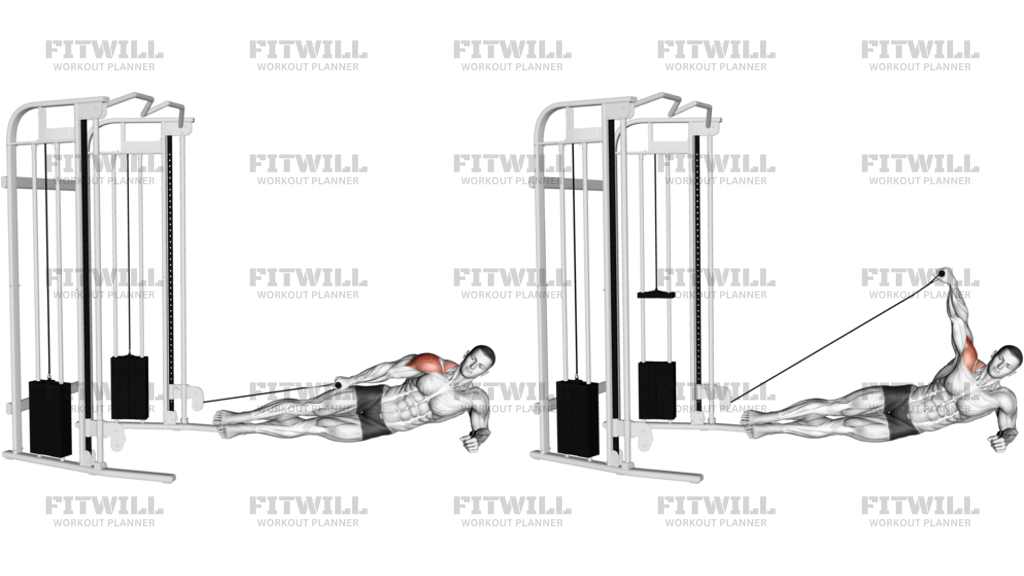
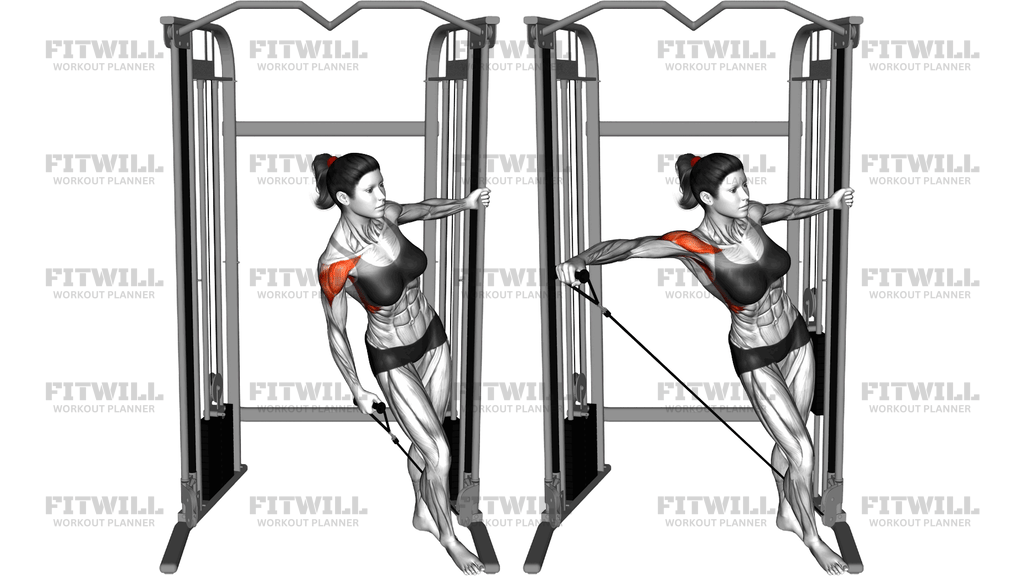
The Cable Leaning Lateral Raise is a single-arm shoulder exercise performed on a cable machine with the handle set at a low pulley. Instead of standing upright as in a normal lateral raise, you lean your torso sideways and away from the pulley, holding the frame or an upright with your free hand for support. This side lean puts the working arm on the far side of your body at the start, so the cable pulls down and across behind you, and the resistance angle shifts as you lift. The highlighted muscle in the movement is the side deltoid, which has to raise the arm against tension from the very first inch.
That leaning setup is what separates this variation from a standard dumbbell lateral raise. Because your torso is angled away from the cable, the side delt stays under load through the whole range instead of losing tension at the top, which is a common complaint with dumbbells. The cable also pulls at a slight diagonal, so you get a small amount of resistance pulling the arm back and down, forcing you to own the end position rather than coast through it.
This movement suits lifters who want to build wider, rounder shoulders with more constant tension, and it is especially useful for people whose dumbbell lateral raises stall in the bottom half. Because it trains one side at a time with the free hand braced, it is also friendlier to the lower back than heavy two-arm standing raises, since the lean is supported and you are not fighting to stay upright under load.
To execute it well, set the pulley at the lowest position, stand side-on to the machine, and grab the handle with the hand closer to the pulley. Lean away from the machine, letting the cable run behind your legs, and place your free hand on the frame or upright for balance. From there, raise the working arm out to the side in a smooth arc until it reaches about shoulder height, keep a soft elbow, and lower the handle back down under control before the next rep.
A few practical points matter here. Keep the lean consistent from rep to rep, because straightening up mid-set turns this into a different, easier exercise. Avoid shrugging the working shoulder toward your ear; the upper traps will happily take over if you let them. And choose a lighter weight than you would use for dumbbell lateral raises, since the cable's constant tension makes the same load feel considerably harder, particularly in the stretched position at the bottom.
[ Workout Log & Planner ]
Put your next workout in Fitwill
Keep your plan and training log ready when you are.


Instructions
- Attach a single handle to the lowest pulley of a cable machine and select a light to moderate weight.
- Stand with your side facing the machine, feet about hip-width apart, and take the handle in the hand nearest the pulley with a neutral grip, palm facing your thigh.
- Lean your torso sideways and away from the machine until you feel steady tension on the cable, which should run down behind your legs to the low pulley.
- Place your free hand on the machine frame or upright to support your upper body and hold the lean.
- Brace your core lightly and let the working arm hang down and slightly across your body toward the pulley as the starting position.
- Exhale and raise the arm out to the side in a wide arc, leading with the elbow and keeping a soft bend at the elbow, until your hand reaches roughly shoulder height.
- Pause briefly at the top with the arm level with your shoulder, feeling the side deltoid holding the cable's tension.
- Inhale and lower the handle slowly along the same arc until the arm is back down and slightly across the body, without letting the weight stack slam down.
- Complete all reps on one side, then switch sides, re-set the lean, and repeat with the other arm.
- Keep your head neutral and your neck relaxed throughout, looking forward rather than craning toward the working arm.
Tips & Tricks
- Pick a weight noticeably lighter than your dumbbell lateral raise load; the cable's constant tension makes the bottom half of each rep far harder than most people expect.
- If you feel the handle pulling your shoulder toward the floor before each rep starts, shorten the rest between reps slightly so the side delt never fully relaxes under the stretched tension.
- A frequent mistake is straightening the torso as the arm rises, which cheats the lean away. Cue yourself to press the free hand into the frame for the entire set.
- Stop the lift at shoulder height. Pulling the handle higher than that hands most of the work to the upper traps and turns the finish into a shrug.
- Lead with the elbow, not the hand. Lifting with a straight, locked arm shifts stress toward the elbow joint and reduces control of the arc.
- If the cable rubs against your thigh or leg during the raise, adjust your stance slightly so the cable runs cleanly behind you rather than across your hip.
- Control the descent for two to three seconds. The lowering phase is where the leaning angle really loads the side delt, and dropping the handle wastes it.
- Keep both feet flat and your weight over the outside leg; wobbling at the hips usually means the weight is too heavy or the lean is too extreme.
- Do your weaker arm first and match its rep count with the stronger side to keep development even.
Frequently Asked Questions
Which muscles does the Cable Leaning Lateral Raise work?
The primary muscle is the side deltoid, which lifts the arm out to your side. The upper traps assist near the top of the range, and the front shoulders and supporting muscles around the shoulder blade help stabilize the arm.
Why lean away from the cable machine instead of standing upright?
Leaning away changes the angle so the side deltoid works against tension from the very start of the lift, including the bottom position where dumbbell lateral raises lose most of their resistance. It also lets you brace with the free hand, which supports your lower back.
Is the Cable Leaning Lateral Raise suitable for beginners?
Yes, as long as the weight is kept light and the lean is modest at first. Beginners often benefit from starting almost upright and increasing the lean gradually as they learn to feel the side deltoid working.
How high should I raise my arm in the Cable Leaning Lateral Raise?
Raise the arm to about shoulder height and no higher. Going above that point shifts the workload to the upper traps and reduces the emphasis on the side deltoid.
Why does my shoulder shrug during this exercise?
The upper traps take over when the weight is too heavy or when you lift by hiking the shoulder rather than moving the arm. Lower the load and focus on keeping the shoulder blade still while the arm travels in its arc.
Can I substitute dumbbell lateral raises for the Cable Leaning Lateral Raise?
You can, but the tension profile is different. Dumbbells load the top of the range heavily and the bottom barely at all, while the leaning cable setup keeps the side deltoid under load throughout, so the two are complements rather than exact swaps.
How should I set the pulley height for this movement?
Set the handle on the lowest pulley position. The cable should run down behind your legs from your working hand to the floor-level attachment while you lean away from the machine.
Is it safe to lean to one side while holding a cable?
With a sensible weight and your free hand braced on the frame, the position is well supported. Avoid very heavy loads and extreme leans, keep your neck neutral, and stop if you feel strain in your lower back rather than your shoulder.
How many reps and sets should I do for the Cable Leaning Lateral Raise?
Because the constant cable tension makes each rep demanding, moderate rep ranges of roughly 10 to 15 per side work well for 2 to 4 sets. Choose a weight you can lower slowly on every rep without the weight stack slamming.