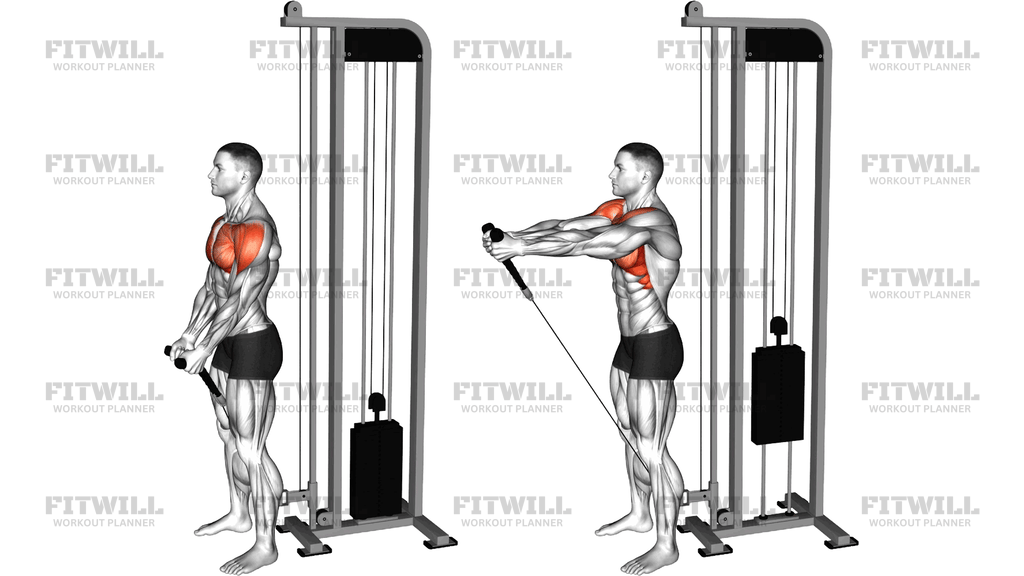
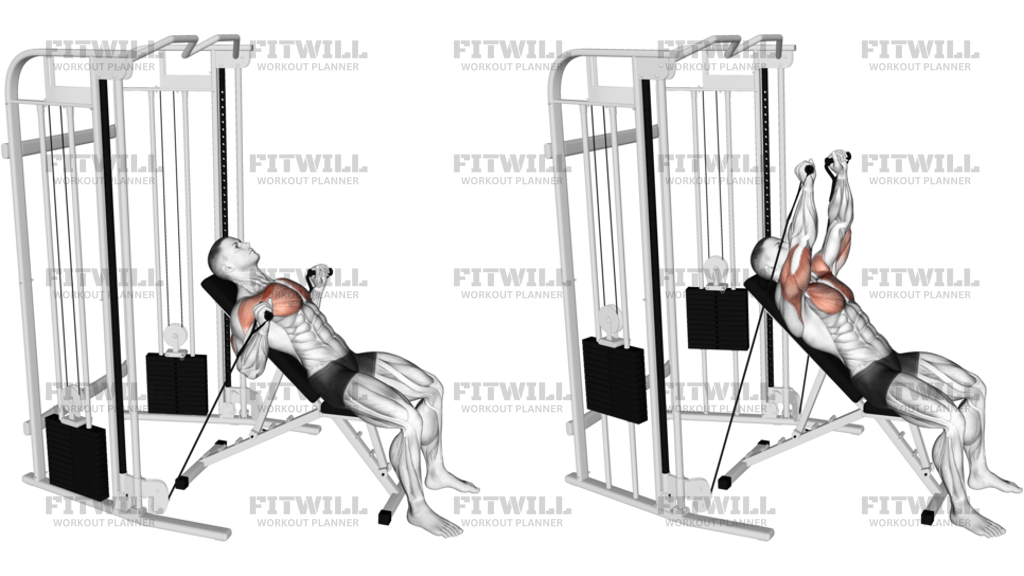
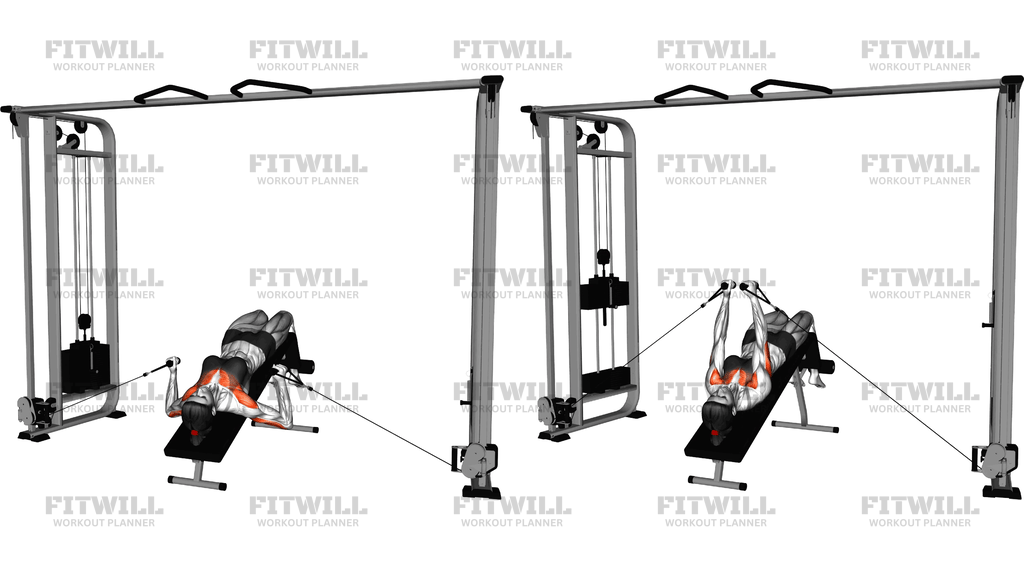
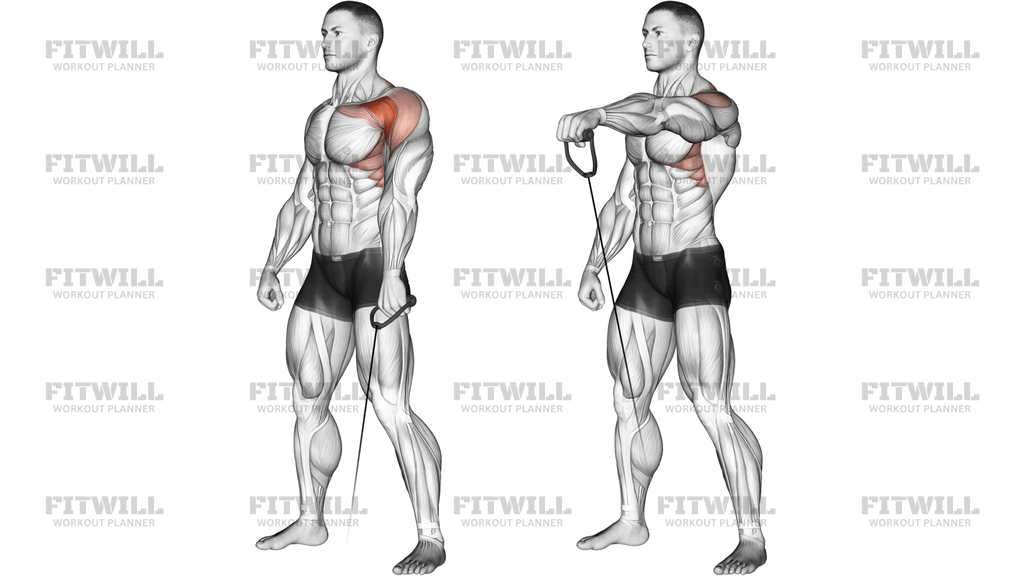
Cable Seated Front Press
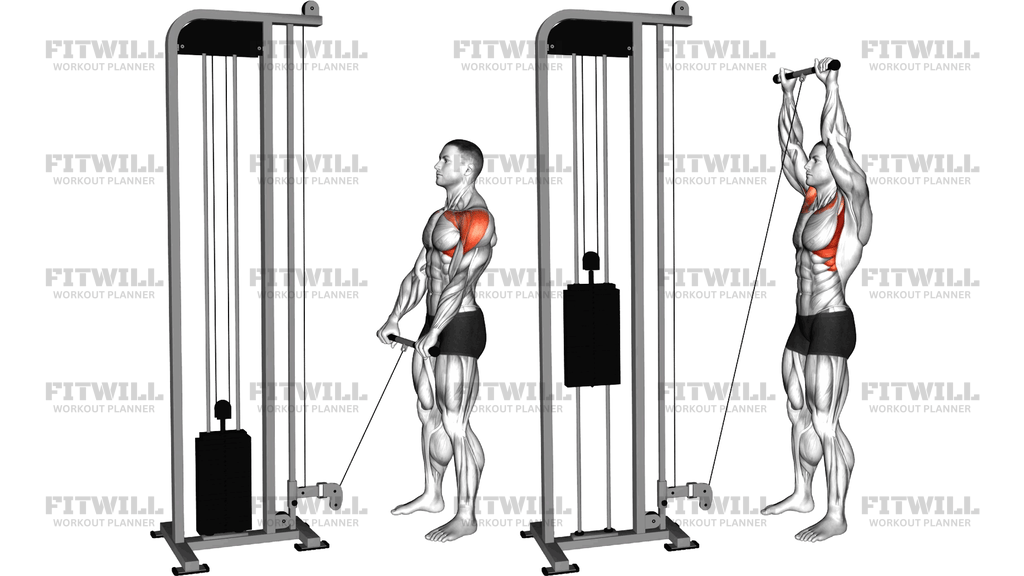
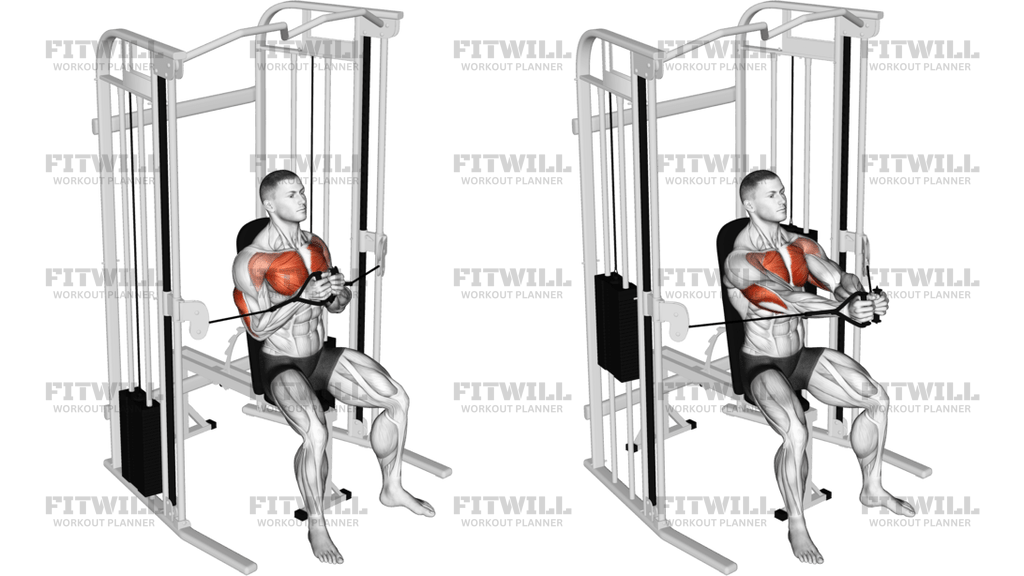
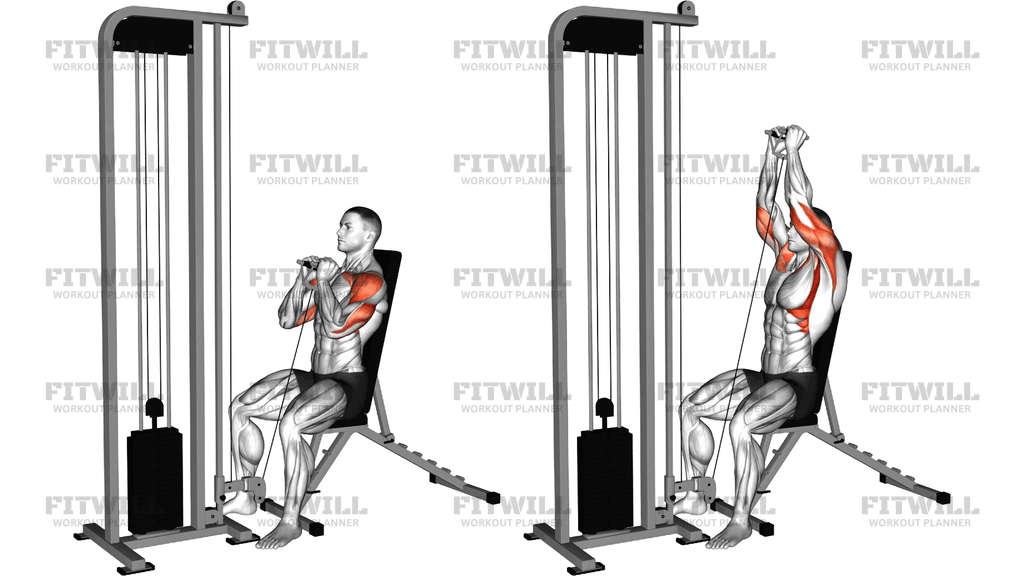
The Cable Seated Front Press is an overhead pressing variation performed on a cable machine with the resistance coming from a low pulley behind you. You sit on a bench with your back supported, hold a handle attachment at shoulder height, and press straight up until your arms are extended overhead, then lower the handle back to your shoulders under control. Because the cable pulls downward and slightly behind your torso, the tension on your shoulders behaves differently than it does with a barbell or dumbbells: it stays relatively constant through the whole range instead of easing off at the top.
This movement primarily trains the front shoulders, with strong involvement from the triceps as they lock out each press and from the upper chest as it assists in driving the handle upward. The seated position with back support removes most of the balance and lower back demands of a standing press, which lets you focus entirely on driving with your delts. The side-lying stabilizers and upper back also work to keep the handle traveling in a straight vertical line as the cable angle changes.
The setup matters more here than with free weights because the cable's line of pull defines the resistance path. Sitting too close to the machine lets the weight stack rest or pulls you backward; sitting too far away adds forward drag on your torso. Position the bench so the cable runs close along your sides, brace your torso against the backward pull, and keep your wrists stacked over your elbows throughout the press.
To execute it well, keep your ribs down and your lower back from arching excessively as the handle goes overhead. Press until your elbows are fully extended but not jammed, pause briefly, and lower with the same control you used on the way up. Common use cases include shoulder hypertrophy work as a substitute or complement to machine and dumbbell presses, breaking through sticking points thanks to the smooth cable resistance, and training overhead strength when barbells feel uncomfortable on the shoulder joints.
Practically, this exercise fits well as a main shoulder press on upper body days, or as a finishing movement after heavier pressing. Because the cable provides a controlled path and adjustable resistance in small increments, it's approachable for lifters who find free-weight overhead pressing awkward, while the constant tension still makes it demanding enough for experienced trainees.
[ Workout Log & Planner ]
Put your next workout in Fitwill
Keep your plan and training log ready when you are.


Instructions
- Set an upright bench facing away from a cable machine and attach a single handle to the low pulley.
- Sit down and grip the handle with both hands at shoulder height, palms facing forward or slightly inward, elbows bent and tucked slightly in front of your torso.
- Position the bench so the cable runs close along your sides behind you, then plant your feet flat on the floor about hip-width apart.
- Brace your core, pull your ribs down, and press your upper back lightly into the bench so the stack can't pull you backward.
- Press the handle straight up in front of your face, keeping your wrists stacked over your elbows as your arms extend overhead.
- At the top, straighten your elbows fully without locking them hard, and hold for a brief moment with your biceps near your ears.
- Lower the handle back to shoulder height in a slow, controlled descent, letting your elbows bend back to the starting position.
- Exhale as you press up and inhale as you lower the handle back down.
- Complete your reps without letting the weight stack slam down, then release the handle carefully and stand up only after the tension is off.
Tips & Tricks
- A common mistake is arching the lower back to help press the handle up — keep your back against the bench and reduce the weight if your hips roll forward on each rep.
- If the cable drags you backward or the stack won't settle, you're sitting too far from the machine; slide the bench closer until the cable runs nearly vertical beside you.
- Keep the handle in line with your face and the front of your head, not out in front of your chest — pressing too far forward turns this into a different movement and strains the shoulders.
- Don't let your elbows flare wide at the bottom; keeping them slightly forward keeps the front shoulders loaded and protects the shoulder joint at the stretched position.
- Avoid bouncing out of the bottom. The cable keeps tension there, so a fast rebound robs the front shoulders of the hardest part of the rep.
- If your wrists bend backward at the top, choke up on the handle or switch to a neutral grip so your forearm and hand stay in a straight line.
- The cable pulls down and behind you, so your core works harder than in a machine press — expect your torso to fatigue before your shoulders on heavier sets.
- Start lighter than your dumbbell press weight; the constant tension of the low pulley makes the same load feel harder, especially at lockout.
- Keep your neck neutral by looking straight ahead rather than craning up to watch your hands overhead.
Frequently Asked Questions
Which muscles does the Cable Seated Front Press work the most?
The front shoulders are the primary movers, with the triceps working hard through lockout and the upper chest assisting off the chest. The core and upper back stabilize your torso against the backward pull of the low pulley.
How is the Cable Seated Front Press different from a dumbbell shoulder press?
The cable pulls from behind at a fixed angle, so tension stays high through the entire range instead of peaking only where gravity acts hardest. It also removes the balance demands of holding two independent dumbbells overhead.
Is the Cable Seated Front Press good for beginners?
Yes. The guided cable path, back-supported seat, and small weight increments make it easier to learn overhead pressing safely than with a barbell. Beginners should start light and focus on a straight vertical pressing path.
Why does the cable pull me backward when I press?
The resistance comes from a low pulley behind you, so it drags your torso rearward as you press up. Move the bench closer to the machine, sit tall, and brace your core so your upper back stays against the pad.
How far apart should my hands be on the handle?
Grip the handle at roughly shoulder width or slightly narrower, with your wrists stacked directly over your elbows at the bottom. A grip that's too wide shifts stress away from the front shoulders and irritates the shoulder joints.
Should I lock out my elbows at the top?
Extend fully so the triceps complete their job, but don't snap or hyperextend the joint. A brief controlled pause at the top with straight arms is enough.
What can I substitute if my gym has no low pulley bench setup?
A seated dumbbell shoulder press or a fixed machine shoulder press covers the same pattern. A standing cable press from a low pulley works too, though it demands more from your core and lower back.
How many sets and reps should I do?
For muscle growth, 3 to 4 sets of 8 to 15 reps works well, since the constant cable tension makes moderate loads effective. Go heavier in the 6 to 10 range only once your torso can stay braced against the pull.
Is it safe to do the Cable Seated Front Press with shoulder pain?
Mild discomfort during overhead work is a signal to reduce the range, lighten the load, or switch to a neutral grip. Stop the exercise and have persistent or sharp shoulder pain assessed before continuing.