Cable Lying Upright Row (Sz Bar)
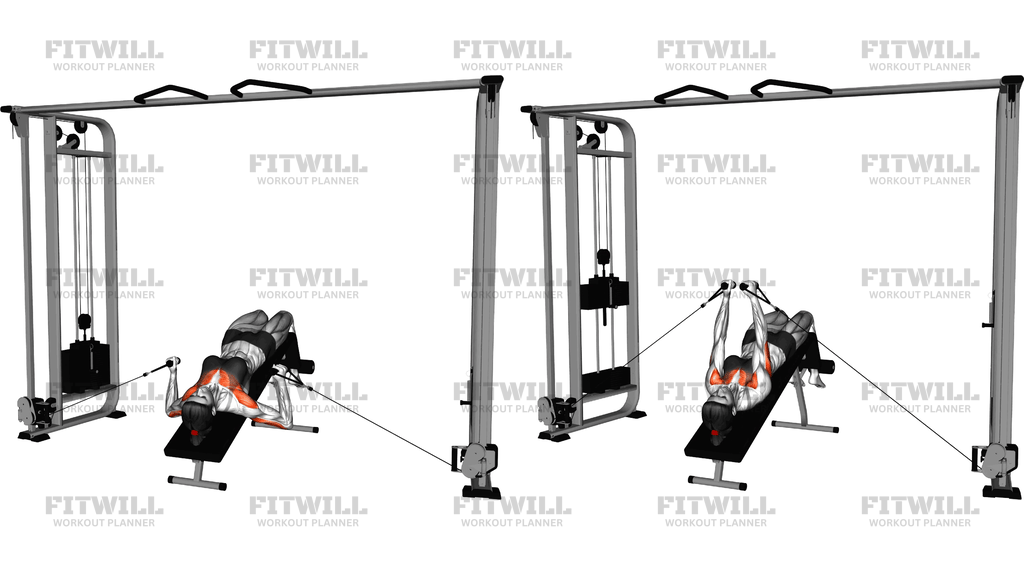
The Cable Lying Upright Row (Sz Bar) is a supine variation of the traditional upright row, performed on a flat bench with a straight bar attached to a low cable pulley. Instead of standing and pulling the weight against gravity, you lie face up with the cable running over your lower body, and row the bar from hip level up toward your chest along the front of your torso. The cable provides constant tension through the entire arc, including the top of the movement where a barbell version often goes slack.
This setup changes the feel of the upright row considerably. Because you are lying down, your torso is fully supported and cannot lean or swing to help the bar along, which forces the shoulders and upper back to do the work on their own. The primary work falls on the front delts, with the upper traps and side delts assisting as the elbows drive up and out, and the biceps contributing as elbow flexors.
The supine position also tends to be friendlier to the shoulder joint than a standing upright row. Lying down naturally limits how high you can pull and keeps the bar closer to the body, which discourages the aggressive high pull with internally rotated elbows that gives upright rows their reputation for shoulder discomfort. If standard upright rows bother your shoulders, this version is often a useful way to keep the pulling pattern in your program with less joint stress.
Setup matters more here than in the standing version. The bench needs to be positioned so the cable runs cleanly over your hips or upper thighs without rubbing, and your grip on the bar should be roughly shoulder-width. If the pulley is too far away or the bar drags across your legs, the resistance path gets messy and the shoulders lose tension at the bottom.
Execution is straightforward once positioned: pull the bar up your torso by leading with the elbows, stop around lower-chest height, then lower under control until the arms extend. It fits well as an accessory movement on shoulder days, as a trap and delt builder for lifters who want constant tension, or as a regression for anyone building up the strength and control needed for standing pulls. Keep the weight moderate; this is a small-muscle movement that rewards clean reps, not grinding.
[ Workout Log & Planner ]
Put your next workout in Fitwill
Keep your plan and training log ready when you are.


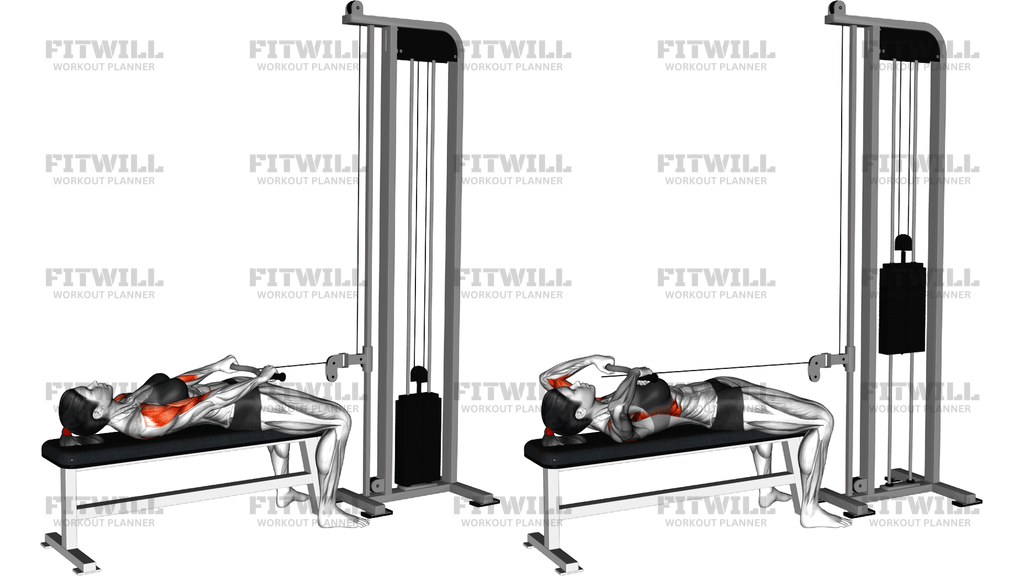
Instructions
- Place a flat bench lengthwise in front of a cable machine and clip a straight bar to the low pulley.
- Lie face up on the bench with your head resting on the bench and your feet flat on the floor on either side, knees bent.
- Reach down or have the bar handed to you, and take an overhand grip roughly shoulder-width apart, letting the cable run over your hips.
- Start with your arms extended toward your hips and take up the slack in the cable so there is light tension before the first rep.
- Brace your core and press your upper back and shoulders firmly into the bench so your torso stays fixed throughout the set.
- Pull the bar up along the front of your body by driving your elbows up and out to the sides, keeping the bar close to your torso.
- Stop when the bar reaches your lower chest and your elbows are at or slightly above shoulder height, without letting your shoulders roll forward.
- Pause briefly at the top, then lower the bar slowly along the same path until your arms are fully extended back toward your hips.
- Exhale as you pull up, inhale as you lower the bar, and keep breathing steadily through the set.
- Finish all reps, then set the bar down on your hips or on the floor beside the bench before letting go of the handle.
Tips & Tricks
- If the cable drags across your thighs, slide the bench slightly closer to or farther from the pulley until the line of pull clears your legs smoothly.
- Stop the pull at lower-chest height. Pulling the bar toward your chin while lying down is unnecessary and tends to shrug the shoulders into an awkward internally rotated position.
- Keep the bar within a few centimeters of your torso the whole way up. Letting it drift away from the body converts the movement into something closer to a pec fly and loads the shoulder capsule.
- Wrist position is a common failure point: if your wrists fold back under the bar, shift your grip so the bar sits in the heel of your hand and your knuckles face forward.
- Do not lift your head or chest off the bench to chase extra range. The extra motion comes from your torso, not your delts, and it degrades the pulling path.
- Use a thumb-around grip rather than a false grip so the bar cannot slip out of your hands while the cable is under tension above you.
- Because your torso cannot assist, expect to use noticeably less weight than a standing upright row. Start around half your standing working weight and build from there.
- If your elbows drop below your wrists at the top, the weight is too heavy and your traps and forearms are taking over the rep.
- Set the bar down completely between sets rather than holding it with tension on the cable while you rest.
Frequently Asked Questions
What muscles does the Cable Lying Upright Row (Sz Bar) work?
The front delts do most of the work, with the upper traps and side delts assisting as the elbows rise. The biceps help bend the elbows, and the upper back stabilizes the shoulder blades throughout.
Why do this upright row lying down instead of standing?
Lying on the bench removes all torso momentum and leans, so the shoulders and traps have to produce every rep. The supine position also naturally caps how high you pull, which reduces the shoulder impingement risk associated with very high standing pulls.
Is the Cable Lying Upright Row (Sz Bar) suitable for beginners?
Yes, it is actually one of the more beginner-friendly upright row variations because the bench supports the torso and limits range of motion. Start with a light weight and focus on leading with the elbows rather than the hands.
How far up should I pull the bar?
Pull until the bar reaches around your lower chest and your elbows are at or just above shoulder height. Going higher adds little for the delts and pushes the shoulder into a compressed, internally rotated position.
How wide should my grip be on the straight bar?
A shoulder-width overhand grip is the standard starting point. A wider grip shortens the range and shifts a bit more work to the side delts, while a narrower grip increases trap involvement but can be harsher on the wrists and shoulders.
Why does the cable rub against my thighs during the movement?
The bench is likely too far from the pulley, so the cable angle cuts into your legs. Reposition the bench so the cable clears your hips, or rest the bar slightly higher on your hips at the start of each rep.
What can I use instead if my gym has no low cable pulley free?
A barbell or dumbbell upright row trains a similar pattern standing, and a cable face pull or side lateral raise covers much of the same deltoid work. The lying cable version is unique mainly in its constant tension and supported torso.
Is this exercise safe for people with shoulder issues?
The supine position and shortened range make it gentler than a standing upright row for many people, but anyone with a current shoulder injury should clear it with a qualified professional first. Keep the pull at chest height and stop immediately if you feel pinching at the front of the shoulder.
How many sets and reps should I do?
Two to four sets of 10 to 15 reps works well as a shoulder or trap accessory. Because the bench stabilizes your body, moderate weights with controlled tempo produce better results than heavy, jerky pulls.
Can I do this exercise with an EZ bar or rope attachment instead of the straight bar?
Yes, an EZ bar can be more comfortable on the wrists if a straight bar bothers them. A rope changes the grip angle and makes the top position harder to control, so the bar attachments are generally the better match for this setup.