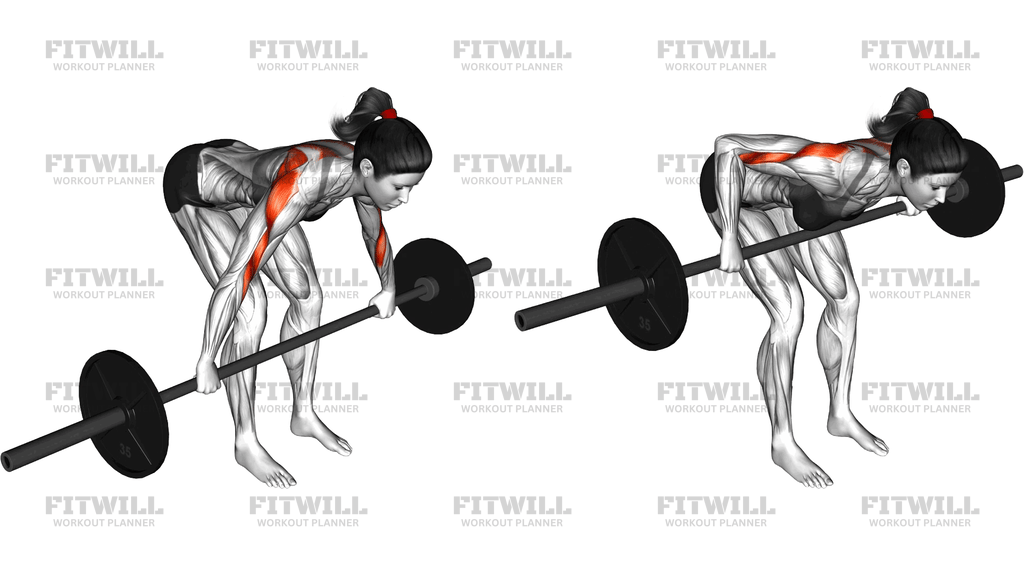
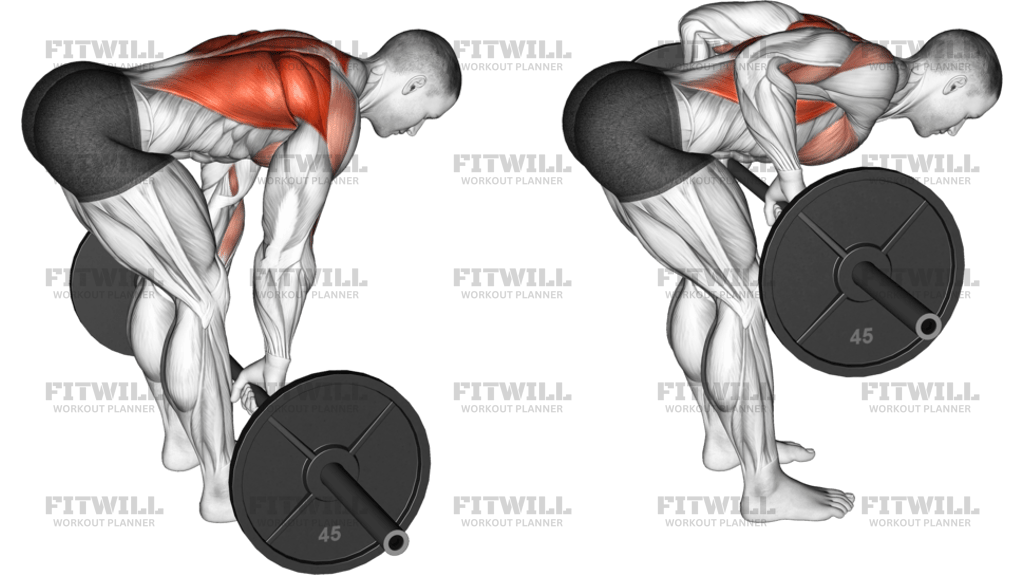
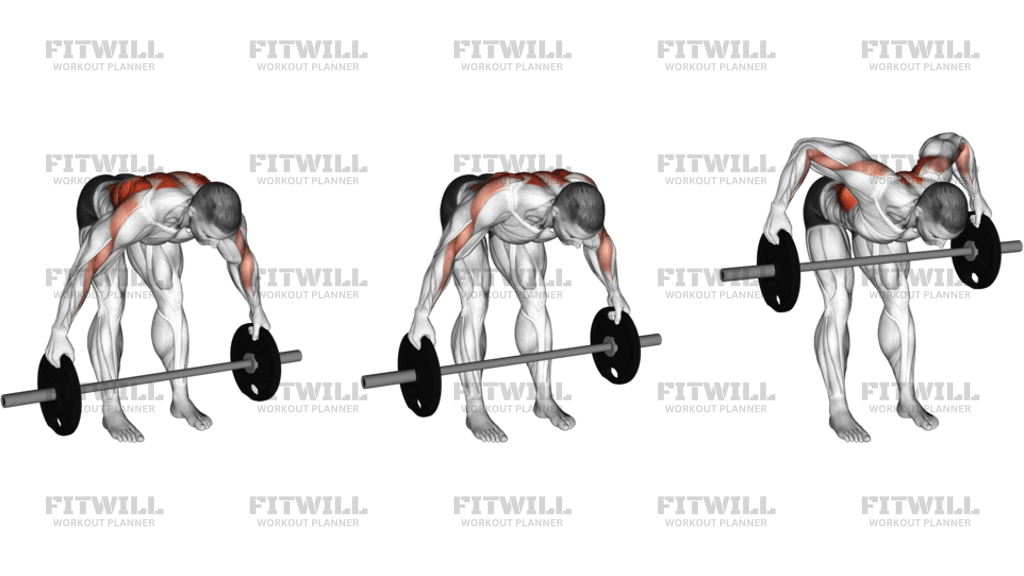
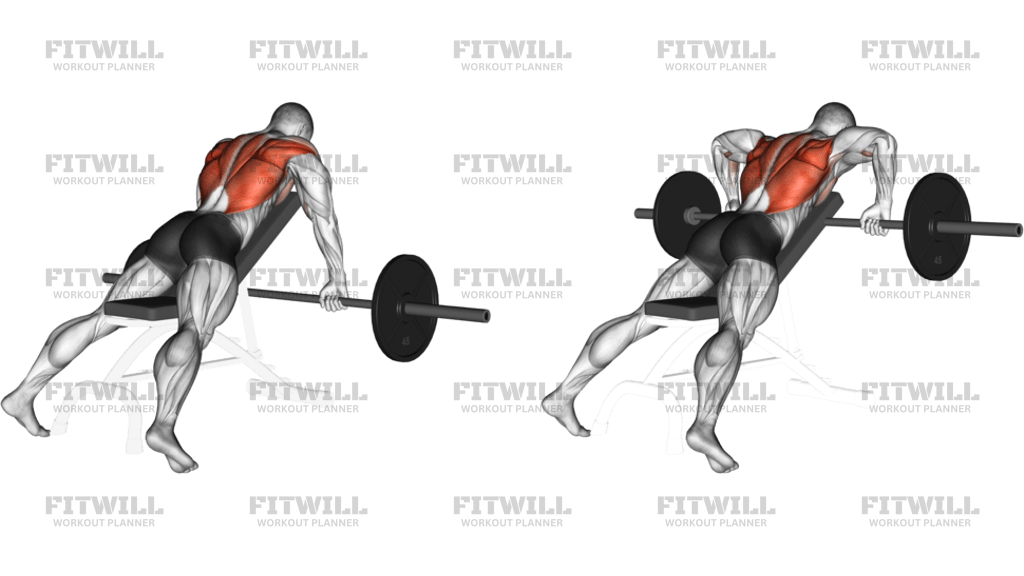
Barbell Rear Delt Row
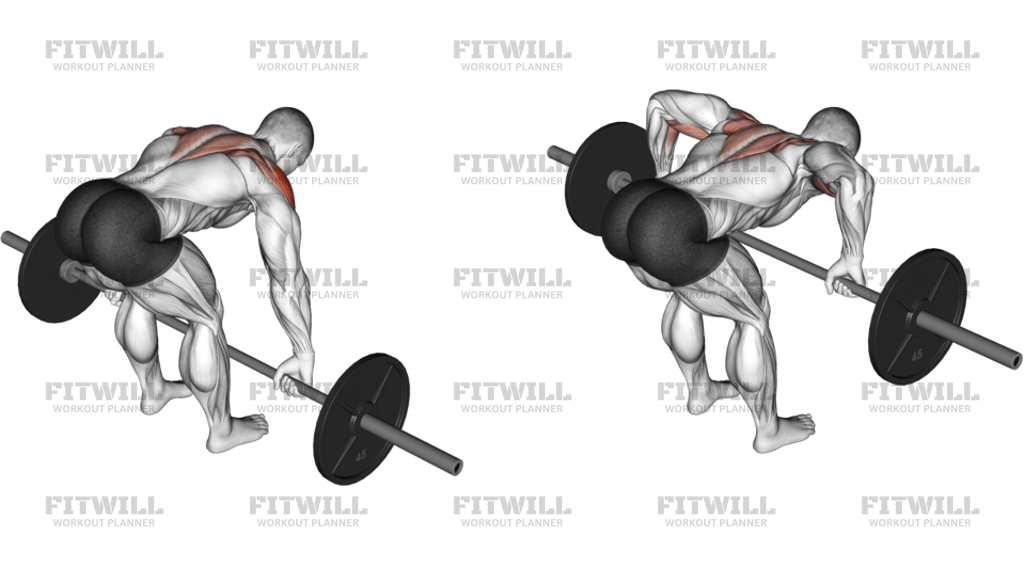
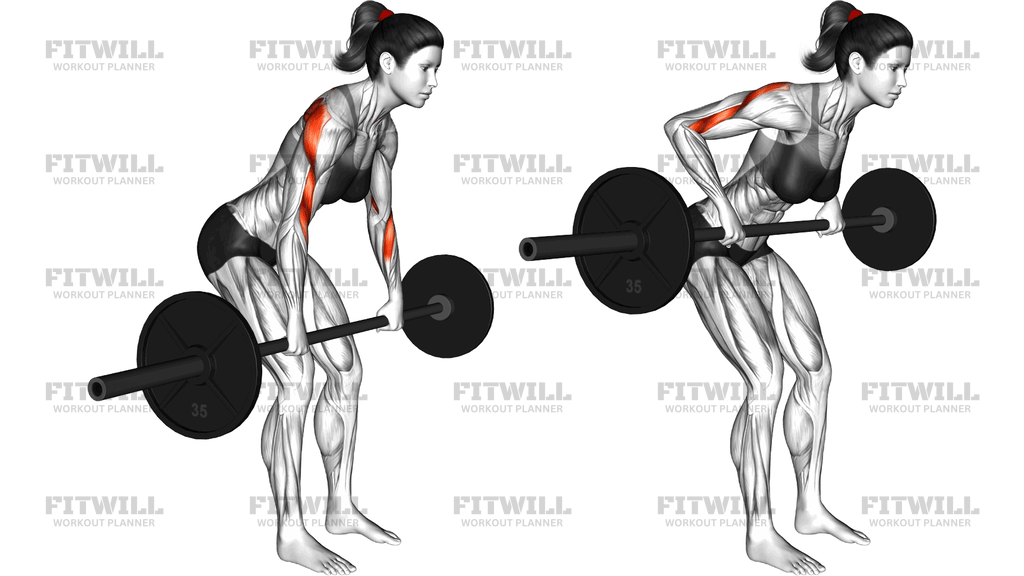
The Barbell Rear Delt Row is a bent-over row variation built specifically to target the rear delts rather than the lats. Where a standard barbell row keeps the elbows tucked close to your torso and pulls toward the belly, this version uses a wider grip and a high elbow path, pulling the bar toward the upper stomach and lower chest with the elbows flared out to the sides. That change in angle shifts the work away from the back of the arm path and onto the back of the shoulders, which is exactly what most lifters need more of.
The rear delts are chronically underdeveloped because pressing, desk work, and daily posture all favor the front of the shoulder. If your shoulders roll forward, or if your side and front delts look noticeably bigger than the back of your shoulders, this movement is one of the most efficient ways to fix that imbalance. Because you are standing and bent over, you also get isometric work through the hamstrings, glutes, and lower back to hold your torso position, so you build posterior chain endurance at the same time.
Setup matters a lot here. Your torso angle dictates where the bar travels and which muscles dominate. Hinge forward until your chest is angled somewhere between 45 degrees and nearly parallel to the floor, and keep that angle fixed for the whole set. If you creep upright as the set gets hard, the pull drifts toward the lats and the rear delt stimulus fades. Grip the bar a bit wider than shoulder width with an overhand grip so your elbows can naturally flare during the pull.
To execute it well, think of the movement as an elbow-driven pull, not a hand pull. Lead with your elbows out to the sides and let the bar travel up toward your upper stomach, then squeeze your shoulder blades together at the top for a beat before lowering under control. Keep your wrists neutral and your neck in line with your spine. The weight should be moderate: rear delt work responds better to strict reps than to heavy, sloppy ones.
This exercise fits well on shoulder days, upper body days, or as a finisher after heavier back rows when the rear delts need direct work. It also pairs nicely with face pulls and rear delt flyes. Because it loads the bent-over position with a barbell, treat it like a hinge movement: warm up your hips, brace your core before every rep, and choose a load you can control without rounding your back or using a jerking pull from the hips.
[ Workout Log & Planner ]
Put your next workout in Fitwill
Keep your plan and training log ready when you are.


Instructions
- Load a barbell on the floor or set it at about knee height, then grip it with an overhand grip slightly wider than shoulder width.
- Hinge at the hips and push them back until your torso is angled between 45 degrees and near-parallel to the floor, with a slight bend in the knees and the bar hanging at arm's length below your shoulders.
- Pull your shoulder blades down and back, brace your core, and lock in this bent-over position before the first rep.
- Exhale and pull the bar up toward your upper stomach and lower chest, driving your elbows out to the sides rather than back toward your hips.
- Keep your wrists straight and let the bar path stay close to your body as the elbows rise above the level of your torso.
- Pause briefly at the top and squeeze your rear delts and shoulder blades together.
- Inhale and lower the bar slowly and fully until your arms are extended, keeping the torso angle unchanged.
- Reset your brace between reps if you feel your back position slipping, and stop the set as soon as your torso starts to lift or swing.
- When finished, lower the bar back to the floor or rack with a flat back, keeping the hinge position until the weight is set down.
Tips & Tricks
- If you feel this mostly in your biceps, lighten the load and focus on spreading your elbows apart instead of flexing your arms — the rear delts only get loaded when the elbows flare.
- A common mistake is standing up as the set progresses. Check your torso angle in a mirror each rep; once it changes, the set is over.
- Keep the bar path short and close to your legs. Letting the bar drift away from your body multiplies the load on your lower back without adding rear delt work.
- Avoid shrugging the bar up with your upper traps. If your shoulders end up next to your ears at the top, drop the weight and think elbows out and down.
- Use a thumb-around grip rather than a false grip so the bar stays secure when your grip fatigues in the bent-over position.
- Chalk or lifting straps are worth using here; a failing grip often causes a rounded back long before the rear delts are worked.
- Slightly less than parallel is usually enough. The deeper you hinge, the more lower back endurance the set demands, so pick the depth you can hold without rounding.
- Tempo matters: try a one-second pull, one-second squeeze, and two-second lower. Fast reps hide the rear delt contraction behind momentum.
Frequently Asked Questions
What muscles does the Barbell Rear Delt Row work?
The rear delts are the prime movers, supported by the rhomboids, mid traps, and the rest of the upper back. The biceps assist on every pull, and your glutes, hamstrings, and lower back work isometrically to hold the bent-over position.
How is the Barbell Rear Delt Row different from a regular barbell row?
A regular row uses a narrower grip with the elbows tucked and the bar pulled toward the belly, which emphasizes the lats and mid back. The rear delt row uses a wider grip with the elbows flared out and the bar pulled higher, which shifts the emphasis to the rear delts.
Is the Barbell Rear Delt Row suitable for beginners?
Yes, once you can hold a solid hip hinge without rounding your back. Beginners should start light, master the bent-over position with an empty bar or a light dumbbell version first, and prioritize strict form over load.
How far forward should I bend over for this exercise?
Anywhere from about 45 degrees to near-parallel works, but the closer you get to parallel, the more the rear delts are isolated. Choose the deepest hinge you can hold with a flat back for the entire set, and keep it constant.
Why do my elbows need to flare out on this row?
The rear delts pull the upper arm backward and outward, so a high, wide elbow path is what loads them. If the elbows stay tucked against your ribs, the lats and biceps take over and the rear delt gets very little work.
My lower back gets tired before my shoulders — what should I do?
That usually means the hinge is too deep, the load is too heavy, or the bar is drifting away from your body. Raise your torso slightly, reduce the weight, keep the bar close to your legs, or switch to a chest-supported rear delt row that removes the lower back from the equation.
Can I substitute the Barbell Rear Delt Row with something else?
Yes. Dumbbell rear delt rows, chest-supported rear delt flyes, cable face pulls, and reverse pec deck flyes all train the rear delts. The barbell version stands out because it lets you load the pattern progressively with one piece of equipment.
How wide should my grip be?
Start slightly wider than shoulder width. If your shoulders feel pinched at the top or your wrists bend back, widen your grip a little; if your elbows cannot flare freely, the grip may be too wide.
How heavy should I go on the Barbell Rear Delt Row?
Use a moderate weight you can pull strictly for 8 to 15 reps without your torso lifting or your hips jerking. The rear delts are a small muscle, and heavy, body-english rows turn the set into a lower back and biceps exercise.
Is it safe to do this exercise with existing back issues?
The bent-over position loads the lower back statically, so anyone with a current or recurring back problem should check with a qualified professional first. Chest-supported variations give a similar rear delt stimulus without holding the hinge position.