Barbell Bent-Over Row
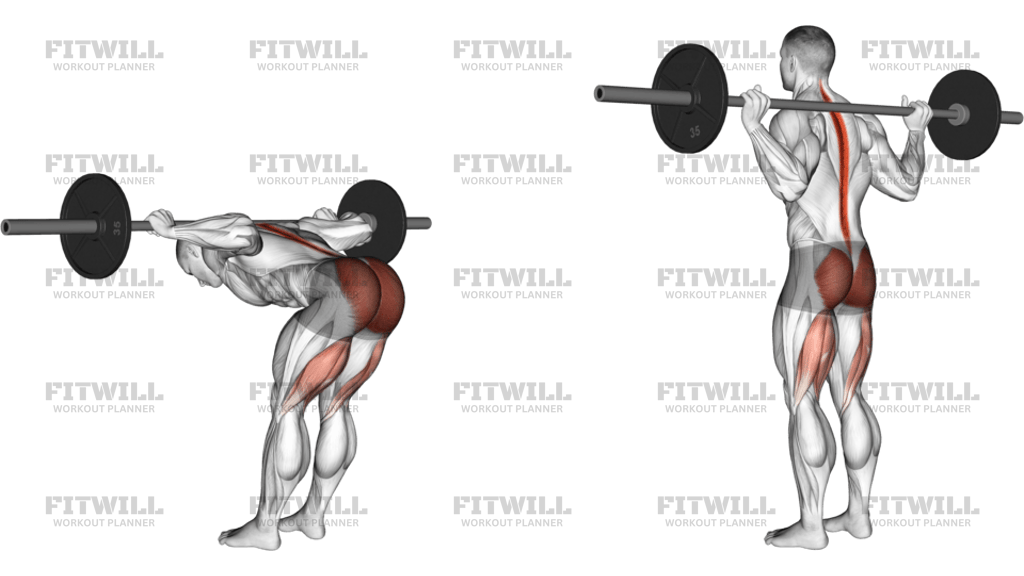
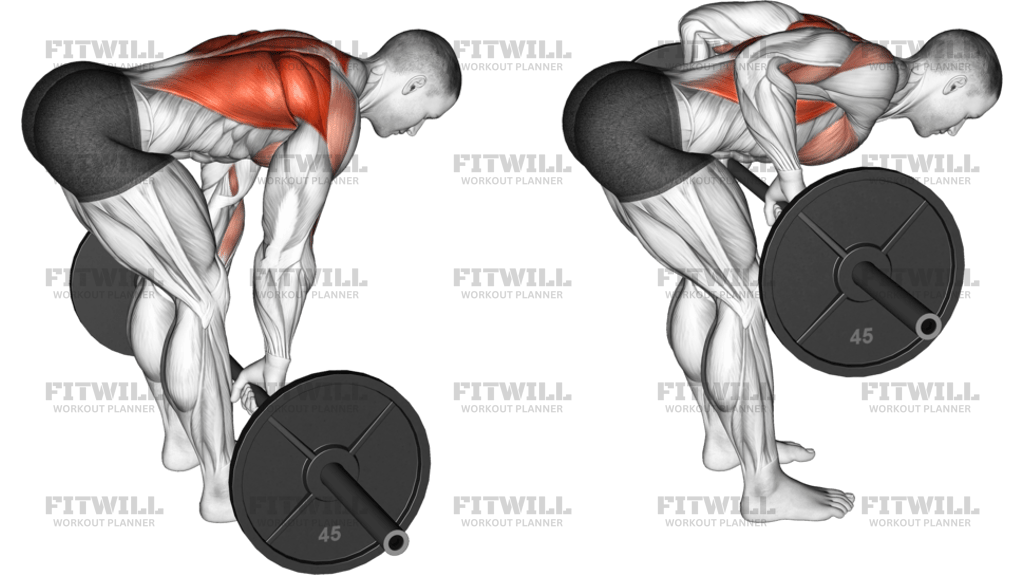
Barbell Bent-Over Row is a back exercise performed from a hip-hinged position while pulling the barbell toward the torso. The lift trains the upper back and lats while the hips, core, and spinal erectors hold the torso angle. It is a staple pulling movement because it combines back strength with the ability to maintain a strong hinge under load.
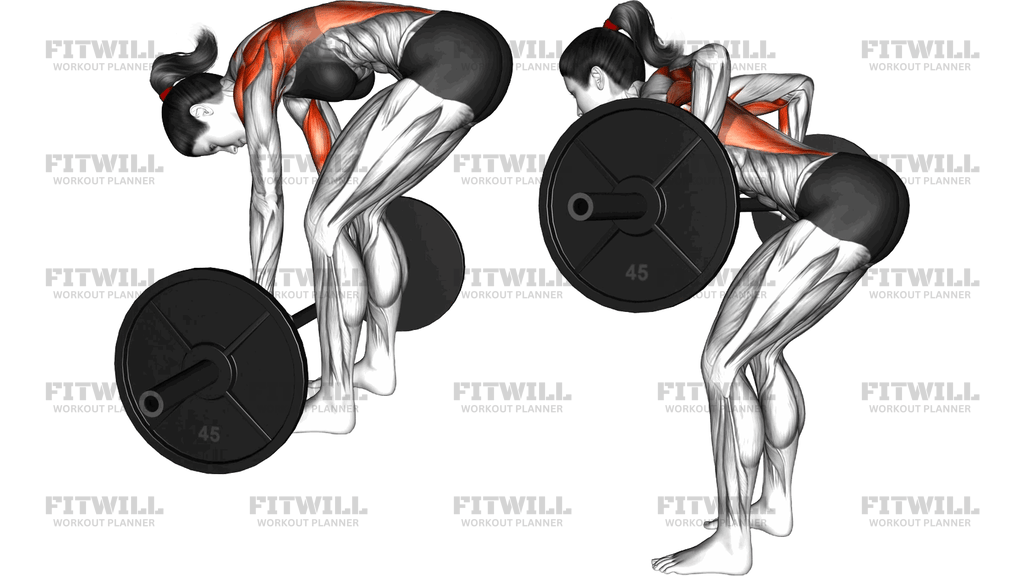
The primary emphasis is the upper back, with the lats, rear shoulders, biceps, and core assisting. Pulling the bar toward the lower ribs or upper stomach encourages the shoulder blades to move back while the elbows drive behind the body. A good rep feels like the back pulls the elbows, not like the hands curl the bar upward.
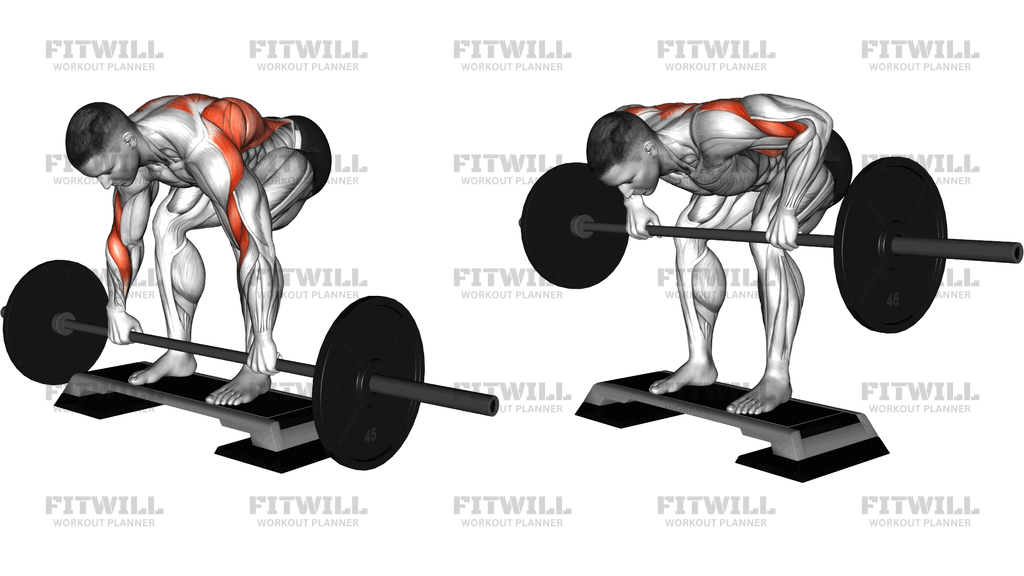
Set up with the feet about hip- to shoulder-width apart and the bar held with both hands. Hinge at the hips until the torso is angled forward, keep the spine neutral, and let the bar hang under the shoulders. Brace before each rep so the torso does not rise and fall as the bar moves.
Pull the bar close to the body, pause briefly near the torso, then lower until the arms are straight again. Keep the neck in line with the spine and the bar path close rather than drifting forward. If you cannot hold the hinge, the load is too heavy or the set has gone too long.
Barbell Bent-Over Row works well as a main back lift, an accessory to deadlifts and presses, or a strength movement for building pulling volume. It can be performed with overhand or underhand grip depending on comfort and training goal. Start with a load that lets you control the top position without jerking.
Common mistakes include rounding the back, standing up during the pull, shrugging toward the ears, or bouncing the bar with the hips. Keep the row strict enough that the target muscles do the work. If the lower back tires before the upper back, switch to a chest-supported row or reduce the weight.
[ Workout Log & Planner ]
Put your next workout in Fitwill
Keep your plan and training log ready when you are.


Instructions
- Stand with your feet about hip to shoulder width and hold the barbell with both hands.
- Hinge at your hips until your torso is angled forward, keeping your back neutral.
- Let the bar hang under your shoulders with your arms straight.
- Brace your core and keep your neck in line with your spine.
- Pull the bar toward your lower ribs or upper stomach by driving your elbows back.
- Squeeze your shoulder blades together briefly at the top.
- Lower the bar with control until your arms are straight again.
- Keep the hinge position steady for the full set.
Tips & Tricks
- Keep your back neutral and avoid rounding as the bar gets heavier.
- Think about pulling with your elbows instead of curling the bar with your hands.
- Do not jerk your torso upward to start the rep.
- Keep the bar close to your body throughout the movement.
- Use a weight that lets you pause briefly at the top with control.
- Brace your core before each rep to protect your position.
- If your lower back tires first, reduce the load or use a chest-supported row variation.
Frequently Asked Questions
What muscles does the Barbell Bent Over Row work?
It primarily works the upper back, with help from the lats, rear shoulders, biceps, and core.
How far should I bend over?
Hinge far enough to let the bar hang under your shoulders while keeping your back neutral. Many lifters use a torso angle around 30-45 degrees from the floor.
Where should I pull the bar?
Pull the bar toward the lower ribs or upper stomach. The exact point may vary with your grip and torso angle.
Is Barbell Bent Over Row safe for beginners?
It can be, but beginners should start light and learn the hip hinge first. If holding the hinge is difficult, a machine or chest-supported row may be easier.
What are common mistakes in the Barbell Bent Over Row?
Common mistakes include rounding the back, using too much body swing, shrugging the shoulders, and letting the bar drift away from the body.
Can I use an underhand grip?
Yes, an underhand grip is a common variation that may involve the biceps more. Keep the same stable torso and controlled pull.
Why does my lower back fatigue during Barbell Bent-Over Row?
Your lower back works to hold the hinge position. If it fatigues before your upper back, reduce the load, shorten the set, or use a chest-supported row.