Barbell Bent Over Wide Grip Row
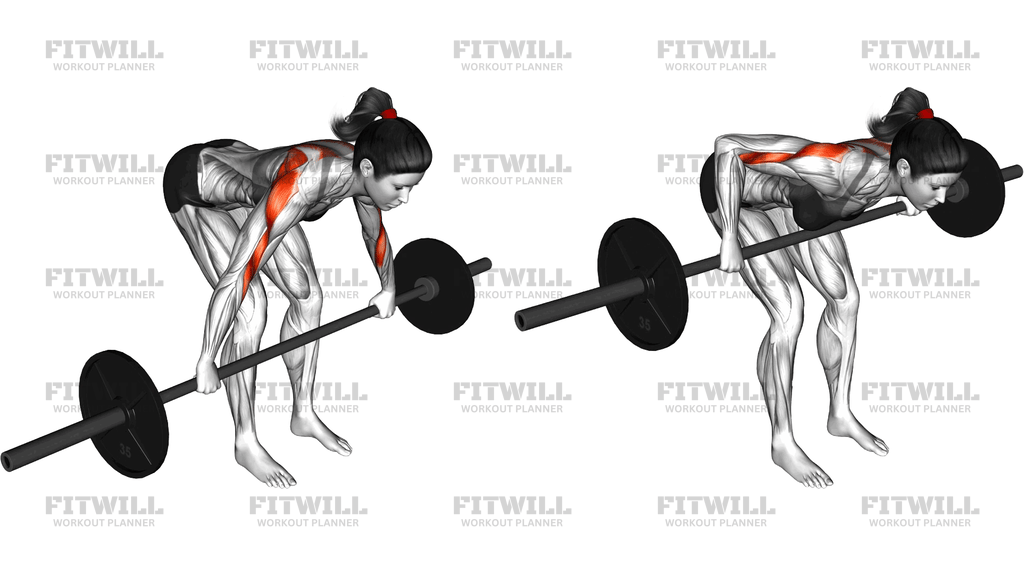
The Barbell Bent Over Wide Grip Row is a free-weight rowing movement performed standing, with the torso hinged forward and the barbell gripped noticeably wider than shoulder width. Instead of pulling with the elbows tucked close to the ribs, the wide hand position flares the elbows outward, so the bar travels up toward the lower chest and upper stomach rather than the navel. This small change in grip shifts the emphasis away from the lats and toward the upper back muscles, particularly the rhomboids, mid traps, and rear shoulders.
This variation is especially useful for lifters who want to build back thickness and improve posture. Because the elbows travel out to the sides, the muscles that pull the shoulder blades together do most of the work, which helps balance out all the pressing most people do for the chest and front shoulders. It also carries over well to pulling movements in general, since a strong, stable mid-back gives the shoulder blades a solid platform to move from.
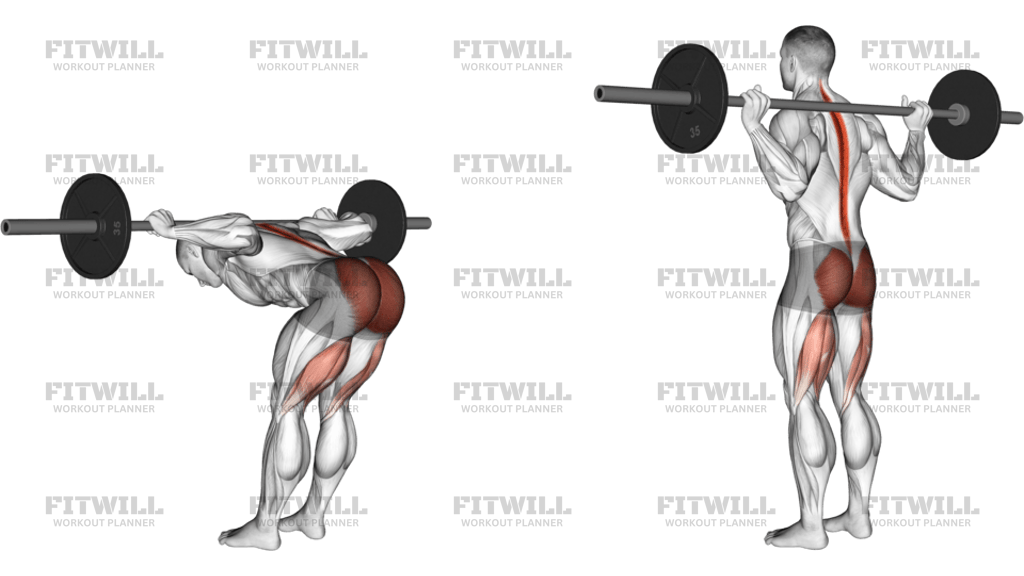
The bent-over position is what makes this exercise both effective and demanding. Hinging forward loads the hamstrings, glutes, and lower back isometrically while the arms and upper back do the rowing. That means the setup matters as much as the pull: your torso angle, brace, and grip width determine whether the work lands on the upper back or gets picked up by momentum and the lower spine.
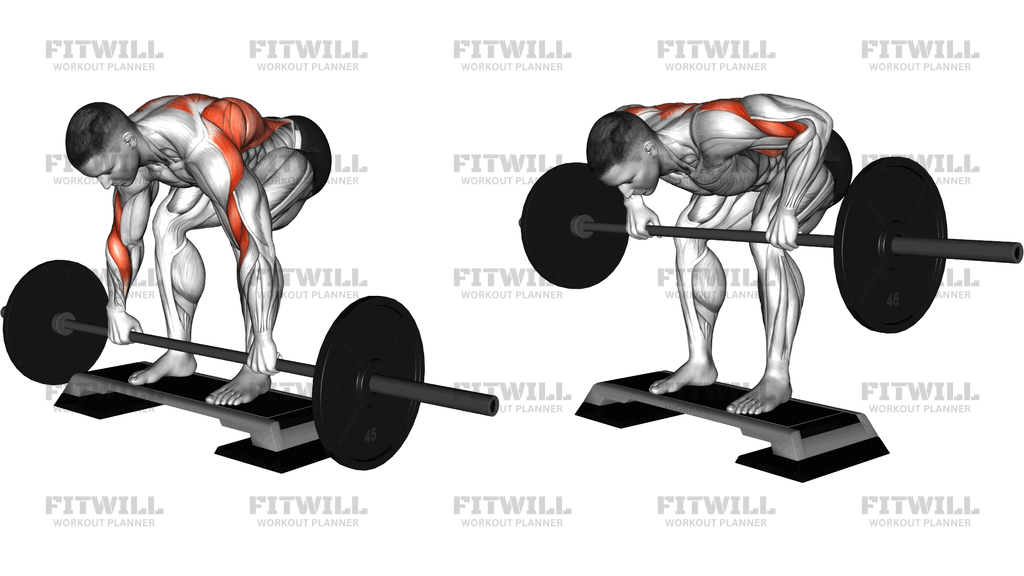
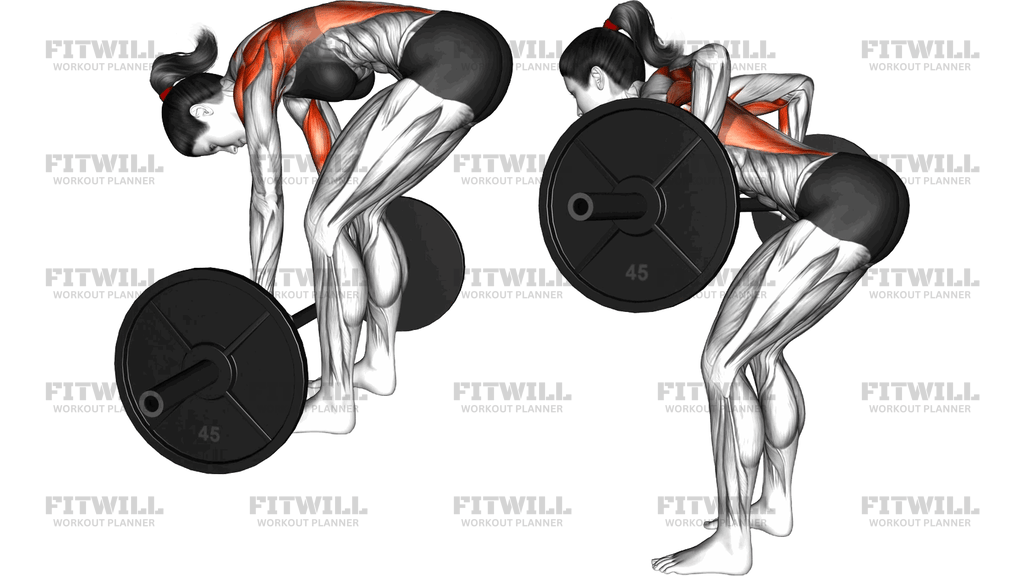
To execute it well, keep the knees softly bent, push the hips back, and bring the chest toward the floor until the torso is close to horizontal. Pull the bar to the lower chest with the elbows wide, squeeze the shoulder blades at the top, then lower it under control to a full hang without letting the torso rise or round.
You will see this movement used in back-focused hypertrophy programs, in strength routines as a supplement to deadlifts and standard rows, and by lifters correcting a narrow, lat-dominant back development. Keep the load moderate at first. The wide grip shortens the range slightly but removes a lot of leverage, and the flat-back position is the first thing to break down when the weight gets too heavy.
[ Workout Log & Planner ]
Put your next workout in Fitwill
Keep your plan and training log ready when you are.


Instructions
- Load a barbell on the floor or set it in a rack at about knee height, then stand facing it with your feet roughly hip-width apart.
- Grip the bar with an overhand (pronated) hold, hands set well outside shoulder width so your forearms will be angled outward during the pull.
- Bend the knees slightly, hinge at the hips, and push your glutes back until your torso is angled between 20 and 45 degrees above horizontal, arms hanging straight down under your shoulders.
- Brace your core as if bracing for a light punch, pull the shoulders back, and lock in a neutral spine before the bar leaves its starting position.
- Exhale and pull the bar up toward your lower chest, driving the elbows out wide to the sides rather than back along your ribs.
- Pause briefly at the top with the bar touching or nearly touching your upper stomach, and squeeze the shoulder blades together.
- Inhale and lower the bar under control until the arms are fully extended and the shoulder blades have spread apart again.
- Keep your torso angle fixed throughout the set; if your chest starts lifting with each rep, finish the set or reduce the weight.
- Complete all reps, then stand up by driving through the hips, and return the bar to the rack or floor with a flat back.
Tips & Tricks
- The most common error on this lift is shortening the hinge as the set gets hard. If your torso climbs toward upright each rep, you are turning it into a partial upright row — either lower the weight or check your torso angle in a mirror.
- Do not grip wider than feels natural. Going extremely wide can pinch the shoulder at the top of the pull; a grip just outside shoulder width is enough to shift work to the upper back.
- Let the bar travel toward the lower chest, not the belly. If the bar keeps drifting low, the elbows are tucking and the lats are taking over the rep.
- Keep a small bend in the knees at all times. Locked knees push the hinge stress into the hamstrings' end range and make a neutral spine harder to hold.
- Use a full hang at the bottom. Cutting the descent short and bouncing the bar off the stretch reflex robs the rhomboids and rear shoulders of the hardest part of the range.
- If your grip fails before your back does, use lifting straps. A wide overhand grip on a heavy bar fatigues the forearms quickly, and a slipped grip mid-rep is a real hazard in a bent-over position.
- Rounding the upper back at the start is a silent rep-killer here. Set the shoulder blades down and back before the first pull, and re-set them every couple of reps if they drift.
- Breathe in a braced rhythm: inhale and set the brace at the bottom, exhale through the pull, and never hold your breath for multiple reps in this position.
Frequently Asked Questions
Which muscles does the Barbell Bent Over Wide Grip Row work?
It primarily targets the upper back — the rhomboids and mid traps — along with the rear shoulders. The lats, biceps, and lower back assist, with the glutes and hamstrings working isometrically to hold the hinge.
How is the wide grip different from a normal Barbell Bent Over Row?
The wider hand position forces the elbows out to the sides, so the bar pulls to the lower chest instead of the stomach. That shifts emphasis from the lats to the rhomboids, mid traps, and rear deltoids.
How far should I bend over for the Barbell Bent Over Wide Grip Row?
Hinge until your torso is roughly 20 to 45 degrees above horizontal — the deeper the hinge, the more the upper back has to work. Choose the deepest angle you can hold with a flat, braced back for an entire set.
Is the Barbell Bent Over Wide Grip Row safe for beginners?
Beginners can do it, but it is wise to master the hip hinge and a shoulder-width bent-over row first. Starting with a light bar or even a broomstick while learning the position keeps the load off the lower back while coordination develops.
Why does my lower back fatigue before my upper back on this row?
That usually means the weight is too heavy, the hinge is too deep for your current strength, or the brace is breaking down. Reduce the load, re-set your torso angle each rep, and treat the isometric hold as part of the exercise.
Should I use an overhand or underhand grip for this exercise?
An overhand (pronated) grip is standard for the wide-grip version because it lets the elbows flare naturally. An underhand grip at this width forces excessive shoulder rotation and is not recommended.
What can I substitute for the Barbell Bent Over Wide Grip Row?
Wide-grip seated cable rows, chest-supported wide-grip rows on an incline bench, or bent-over dumbbell rear delt rows all train the same upper-back pattern. The chest-supported versions remove the lower-back demand if that is a limiting factor.
How heavy should I go on the Barbell Bent Over Wide Grip Row?
Use noticeably less weight than a close-grip bent over row — the wide position reduces leverage. A weight you can control for 8 to 12 strict reps without your torso rising is a good working range.
Should I pause the bar at my chest during this row?
A brief pause at the lower chest with the shoulder blades squeezed is very effective for the upper back. It prevents heaving the bar with momentum and makes each rep easier to quality-check.