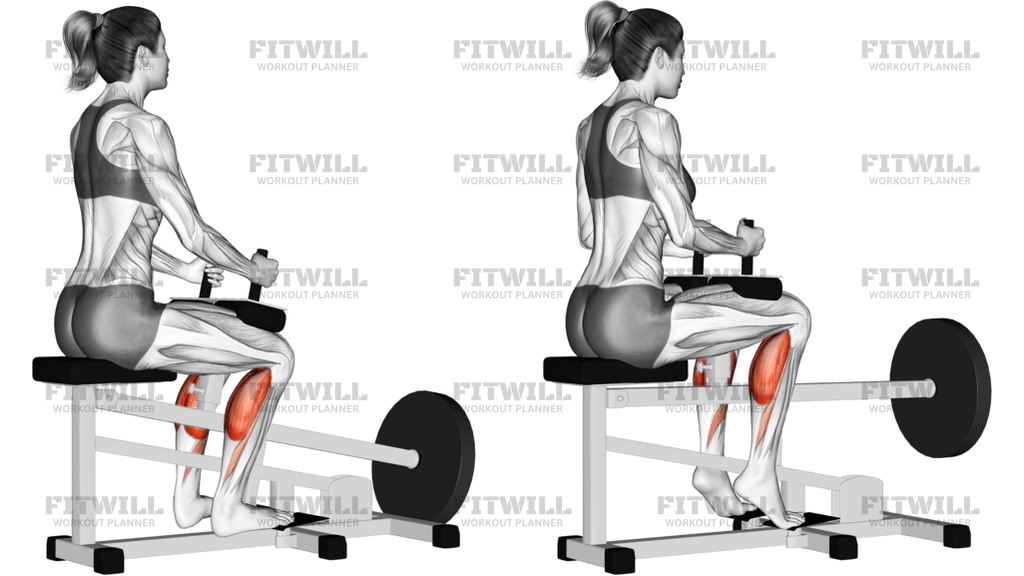
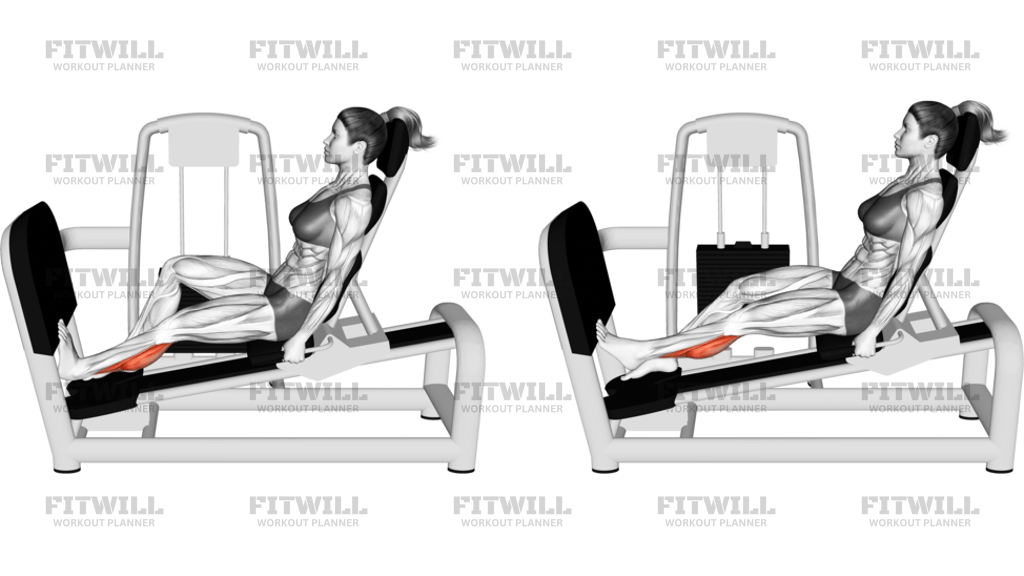
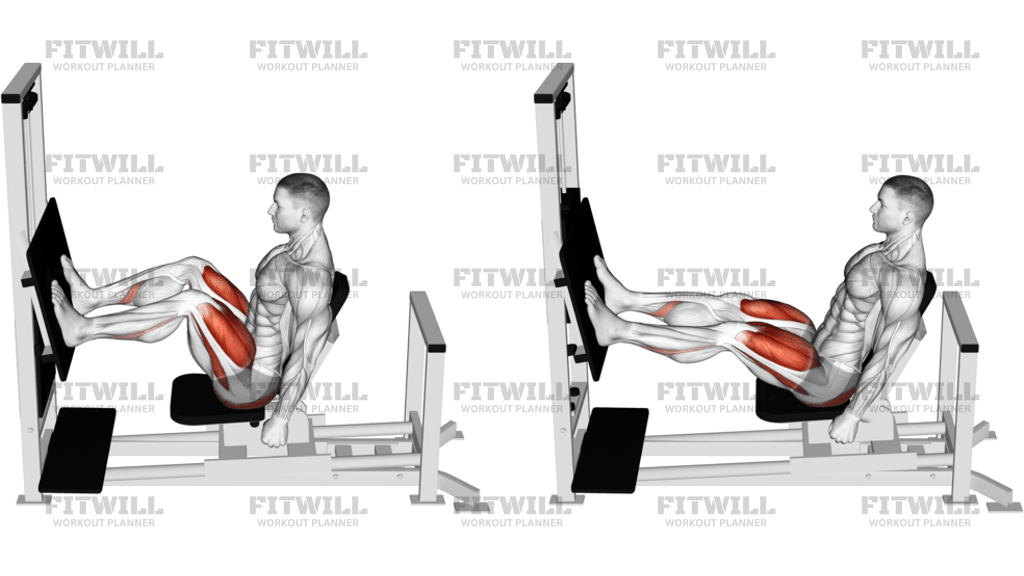
Hack Calf Raise
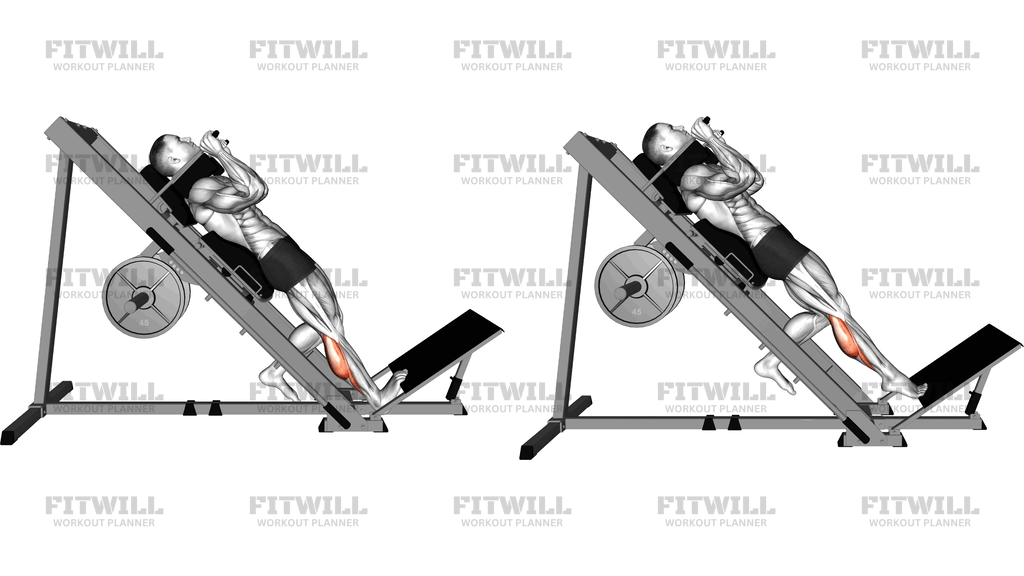
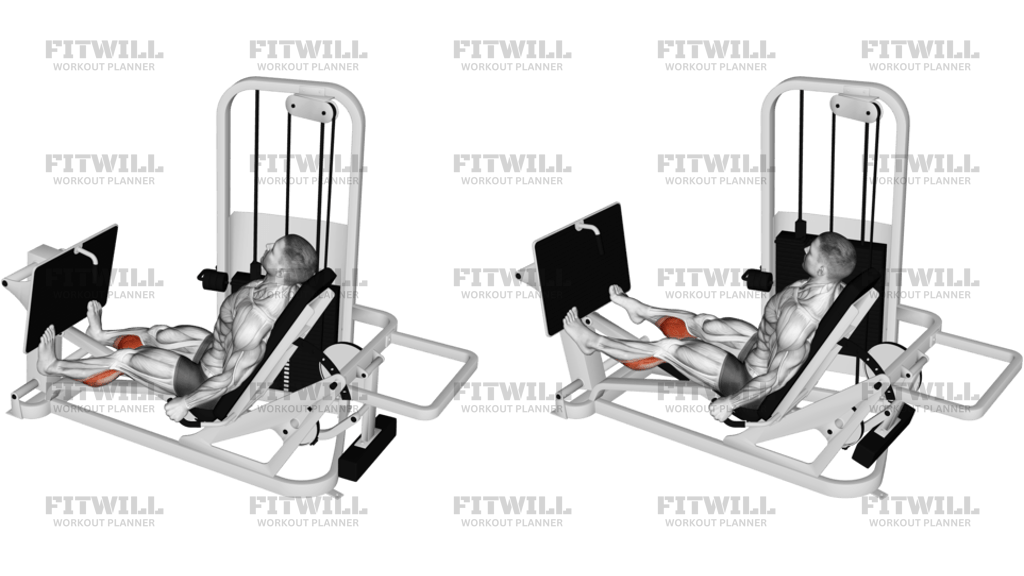
The Hack Calf Raise is performed on a 45-degree hack squat machine, using the sled as a platform for loaded calf work. Instead of squatting, you keep your legs almost straight, place the balls of your feet on the edge of the foot plate, and drive up through your ankles. Your back stays supported against the machine's back pad and your shoulders sit firmly under the pads, which means your spine is never asked to carry the load the way it is in standing barbell calf raises.
This exercise targets the calf complex, primarily the gastrocnemius and the soleus underneath it. Because your knees are held nearly straight throughout, the gastrocnemius, which crosses the knee joint, stays in a favorable position to work. The angle of the sled also puts the calves under tension through a long range, especially when you let your heels drop below the platform at the bottom of each rep.
The hack squat machine is a smart choice for people who want heavy calf training without the balance demands or lower back loading of free-weight versions. Lifters who find standing calf machines uncomfortable, or whose shoulders and traps are fatigued from upper-body training, often appreciate that the weight here rests on the skeletal structure of the body rather than on the shoulders alone. It is also easy to load in small increments, which suits the notoriously stubborn calves well.
Setup matters more than most lifters realize. Your foot placement on the plate determines both range of motion and comfort. Too little of the foot on the edge and you lose stability; too much and your heels cannot drop far enough to get a real stretch. Position the balls of the feet firmly on the lower edge of the platform with heels hanging off, keep the knees soft but not bent, and make sure the safety stop is set so the sled cannot travel below your available ankle range.
Execution is simple but demanding: press the sled up slightly to release the safety catches, lower your heels as far as your ankles comfortably allow, then press up onto your toes as high as you can. The temptation is always to bounce and rush; the lifters who grow their calves are the ones who pause at the stretch, squeeze at the top, and keep the tempo honest. Treat every rep as a deliberate ankle movement, not a leg press with extra bounce.
[ Workout Log & Planner ]
Put your next workout in Fitwill
Keep your plan and training log ready when you are.


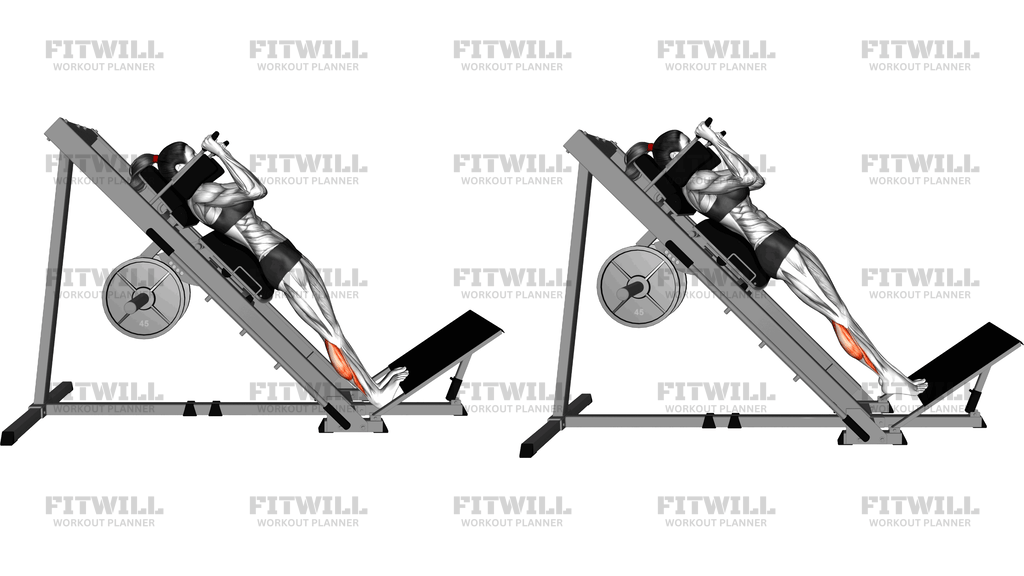
Instructions
- Load the hack squat machine with a moderate weight and set the safety stops so the sled cannot travel past your comfortable ankle range.
- Step onto the foot plate and place the balls of your feet on the lower edge, about hip-width apart, with your heels hanging off the platform.
- Settle your back flat against the pad, position both shoulders securely under the shoulder pads, and grip the handles at your sides.
- Press up slightly through the balls of your feet to unlock the sled, then engage the safety mechanism to keep it from sliding.
- Keeping your knees nearly straight and your torso still, slowly lower your heels down and back until you feel a solid stretch through your calves.
- Pause for a moment at the bottom, then press through the balls of your feet and rise as high onto your toes as you can.
- Hold the top position briefly and squeeze your calves before starting the next rep.
- Exhale as you press up, inhale as you lower your heels, and keep breathing steadily rather than holding your breath.
- Complete all reps with even tempo, then re-engage the safety stop and carefully step off the platform.
Tips & Tricks
- Adjust foot position before adding weight: a slight outward toe turn can feel more natural at the ankle, but keep the balls of the feet fully planted on the plate edge.
- The most common mistake is turning this into a mini leg press. If your knees bend and straighten during the rep, the quads are taking over, so lock your attention on the ankles only.
- Do not let the sled's momentum bounce your heels. A brief pause at the stretched position stops the rebound and forces the calves to do the work.
- Keep your head and upper back in contact with the pad. Pushing with your neck or rounding off the pad shifts tension away from the calves.
- Start lighter than you think you need. The sled angle makes the load feel different from standing calf machines, and a full stretch under heavy weight is where people get surprised.
- If your heels cramp at the bottom, reduce the range slightly for a few sessions and work back out gradually rather than forcing depth.
- Raise as high as you actually can at the top. Short, partial presses up and down cut the range in half and stall progress.
- Chronic tight calves can shift your weight forward onto the toes; if you feel pressure in the front of the ankles, check that your heels are dropping straight down, not drifting sideways.
- Set the safety stop every time, even on warm-up sets, so a missed rep cannot slide the sled below your ankle range.
Frequently Asked Questions
Which muscles does the Hack Calf Raise work?
It primarily targets the gastrocnemius, the visible two-headed muscle of the calf, with strong support from the soleus beneath it. The ankle stabilizers also work to keep your feet aligned on the platform.
Why use a hack squat machine for calves instead of a standing calf machine?
The sled supports your back and shoulders, so there is no compressive load on the spine and no need to balance under the weight. It also lets you load plates in small increments, which suits the calves' need for progressive overload.
How much of my foot should be on the platform during the Hack Calf Raise?
Only the balls of your feet and toes should rest on the lower edge of the plate, with the heels fully free to drop below it. If more than the front third of your foot is on the platform, you will lose range of motion at the ankle.
Should my knees be locked straight?
Keep the knees nearly straight but not jammed hard into lockout. Straight knees keep the gastrocnemius working through its full length, while a noticeable bend shifts effort toward the soleus.
Is the Hack Calf Raise suitable for beginners?
Yes, as long as you start with a light load and learn the foot placement first. The machine guides the path, so beginners mainly need to practice controlling the stretch and avoiding bouncing.
What is the most common mistake on this exercise?
Rushing and bouncing at the bottom so the tendon's rebound does the lifting. Slowing the lowering phase and pausing at the stretch immediately makes the weight feel heavier and the calves work harder.
Can I do the Hack Calf Raise with one leg at a time?
You can, by placing one foot centered on the plate edge and keeping the other leg clear of the sled. Use a lighter load and hold the handles firmly, since single-leg work challenges your balance on the angled platform.
How do I set the safety stops correctly?
Set them just below the lowest heel position you can reach with a comfortable calf stretch. This way, if you lose the rep or your foot slips, the sled cannot drop past your ankle range.
What can I substitute if my gym has no hack squat machine?
Standing calf raises on a machine or a Smith machine with the balls of the feet on a plate or block are the closest replacements. Both train the same muscles, though they demand more from your balance and shoulders.
How deep should I let my heels drop at the bottom?
Lower until you feel a firm but pain-free stretch through the calf. Tingling, sharp pulling, or pressure in the front of the ankle means you have gone deeper than your ankle mobility currently allows.