Band 45 Degrees One Arm Biceps Curl
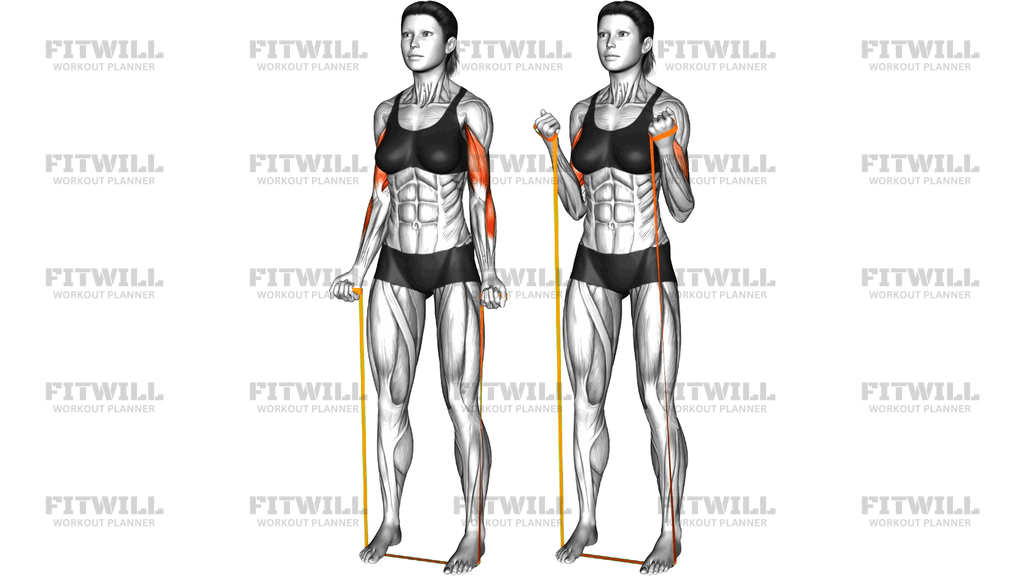
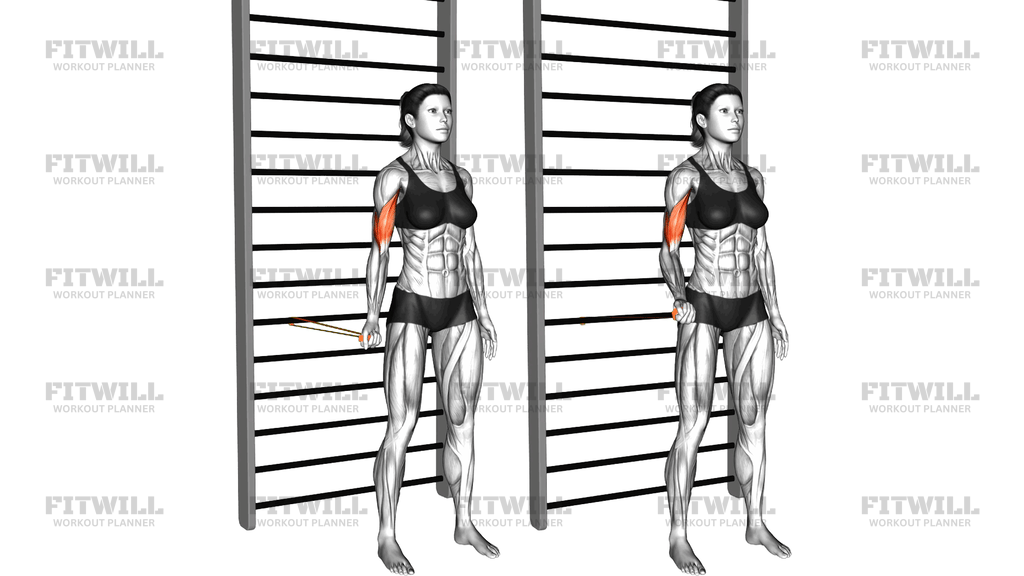
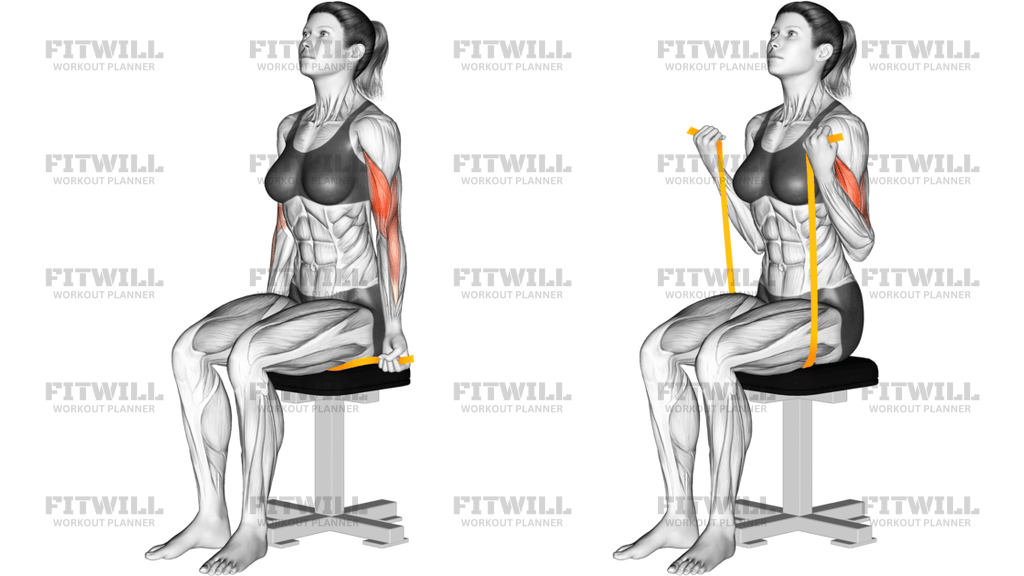
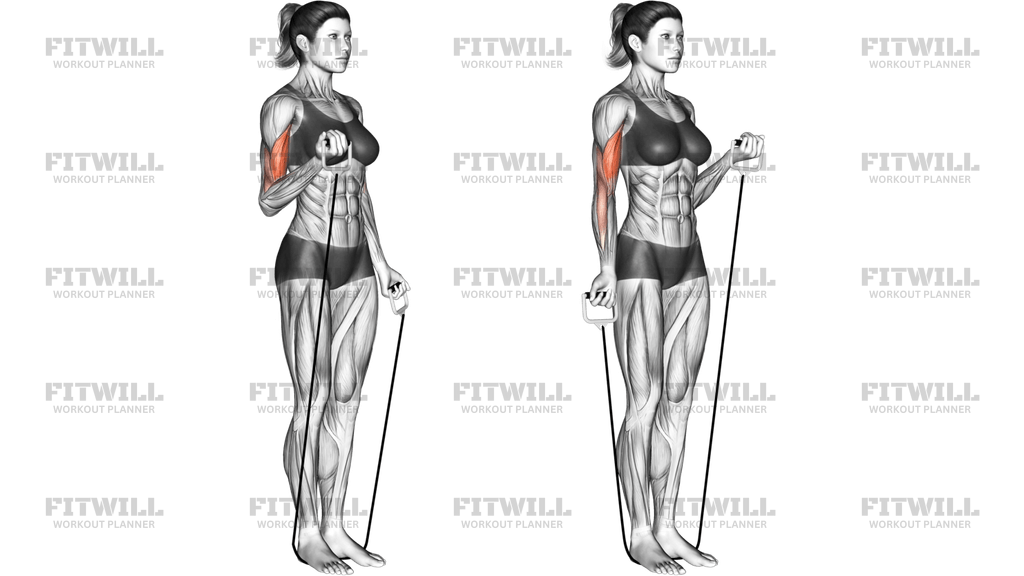
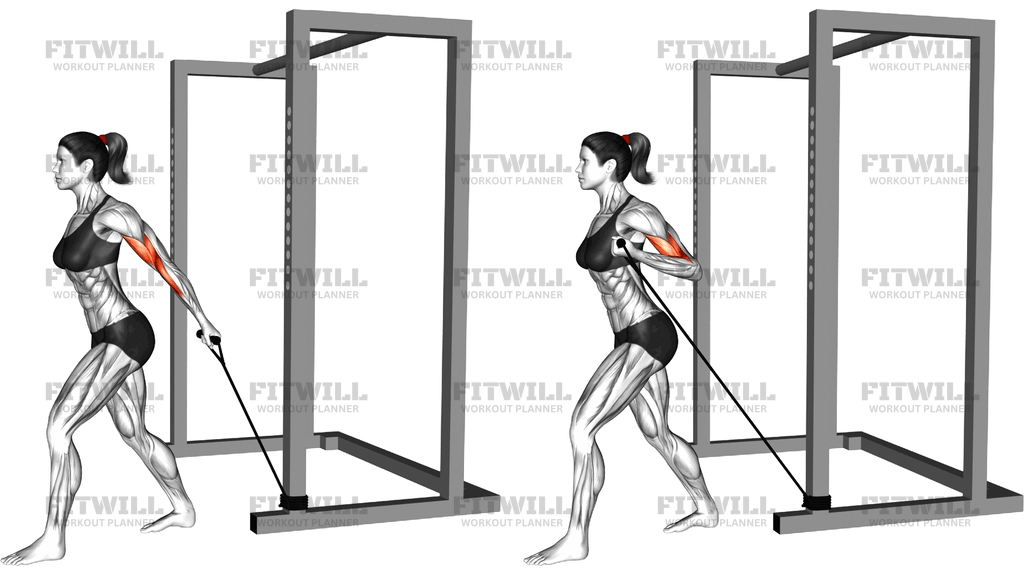
The Band 45 Degrees One Arm Biceps Curl is a single-arm curl performed with a resistance band anchored low behind you, with the working arm hanging roughly 45 degrees behind your torso rather than straight at your side. From that stretched position, you curl the handle up toward your chest while keeping the elbow fixed behind the body. This setup is the whole point of the exercise: with the arm drawn back, the biceps starts in a lengthened position, which many standard standing curls never reach.
Because the band is anchored behind you, tension pulls the handle down and back throughout the set. That means your biceps works against resistance at the very bottom of the range, where a dumbbell curl is often easiest, and the resistance actually increases as you curl the handle higher. The one-arm setup also lets you spot and fix side-to-side differences in strength and control, which is useful if one arm tends to do more of the work during barbell or dumbbell curl work.
The 45-degree arm position demands some stability from your shoulder and upper back. Your working shoulder has to resist the backward pull of the band while the elbow stays pinned in place, so you will feel supporting work in the rear shoulder area and upper arm even though the biceps is clearly the star of the movement. A staggered stance with a slight forward lean at the hips helps you counterbalance the pull and stay grounded.
This exercise suits lifters who want more challenge at the stretched end of the curl, people training at home with minimal equipment, and anyone who struggles to feel their biceps working in the bottom half of a normal curl. It is also a practical option for training through a limited dumbbell supply, since band tension can be scaled simply by adjusting your distance from the anchor point.
To execute it well, keep the movement honest: the elbow should not drift forward, the torso should not rock to help the handle up, and the curl should finish with the hand near your chest, not out in front of your shoulder. Lower the handle under control until the arm is fully extended behind you again before starting the next rep. Slow, quiet reps with steady ribs will do far more for your arms than fast, swinging ones.
[ Workout Log & Planner ]
Put your next workout in Fitwill
Keep your plan and training log ready when you are.


Instructions
- Anchor a resistance band low to a sturdy rack or post behind you and attach a handle to the free end.
- Face away from the anchor, grip the handle with one hand using an underhand grip, and step forward into a staggered stance with the opposite foot ahead so the band pulls your arm down and back at roughly a 45-degree angle behind your torso.
- Hinge slightly forward from the hips, brace your core, and let your working arm hang fully extended behind your body with the elbow soft but straight enough to feel the band pulling.
- Pull your shoulder blade back and down so the band's backward pull does not drag your shoulder forward.
- Curl the handle up and forward toward your chest by bending only at the elbow, keeping the upper arm locked in place behind your torso.
- Squeeze at the top when your hand is near your lower chest and the biceps is fully shortened.
- Lower the handle slowly back along the same arc until your arm is straight again behind you, feeling the band tension the entire way down.
- Exhale as you curl up, inhale as you lower the handle back down.
- Complete all reps on one arm, then switch stance and repeat on the other side, rechecking your distance from the anchor so both arms get equal tension.
Tips & Tricks
- If your elbow drifts forward as you curl, the set gets easier but the biceps loses its stretch. Cue yourself to keep the elbow pointing down and back for every rep.
- Do not shorten the band by shuffling toward the anchor. Distance from the anchor is your resistance adjustment, so set it before your first rep and hold that spot.
- A common mistake is standing square with feet level, which makes the backward pull tip you off balance. Use the staggered stance with the front foot on the opposite side of the working arm.
- Keep the forward lean coming from the hips, not a rounded lower back. If your torso starts pumping up and down to help the handle, the set is over.
- Because the band is hardest to control at full stretch, lower the handle over two to three seconds instead of letting it snap your arm back.
- Use a full underhand grip with your thumb wrapped around the handle. A loose fingertip grip shifts work toward the forearms and fatigues your grip early.
- If you cannot reach full extension behind you without the band going slack or pulling you backward, your starting distance is wrong. Reset before continuing.
- Switch which leg is forward when you change arms, or you will end up twisting slightly on one side and not the other.
Frequently Asked Questions
Why is the arm positioned 45 degrees behind the body in the Band 45 Degrees One Arm Biceps Curl?
Placing the arm behind the torso puts the biceps in a lengthened position before the curl begins, which is a range a regular standing curl skips. The low rear anchor also keeps tension on the biceps at full extension, where body position usually lets it relax.
What muscles does the Band 45 Degrees One Arm Biceps Curl work?
The biceps brachii is the primary mover, with the brachialis and brachioradialis assisting in the elbow flexion. The rear shoulder and upper back muscles work isometrically to hold the arm and shoulder steady against the backward pull of the band.
Is the Band 45 Degrees One Arm Biceps Curl suitable for beginners?
Yes, as long as you start with a light band and master the setup first. The one-arm nature and unusual rear anchor mean beginners should practice a few slow reps with minimal tension before committing to full sets.
How do I make the Band 45 Degrees One Arm Biceps Curl harder or easier?
Resistance comes from band tension, so stepping further forward increases it and stepping closer to the anchor decreases it. A thicker band is the other option once your distance from the anchor is maxed out.
Why does my elbow keep moving forward during this curl?
The band pulls the arm down and back, so the elbow naturally wants to travel forward as the handle rises because that is the path of least resistance. Keep the upper arm pinned behind your torso and reduce the band tension if you cannot control it.
Can I do the Band 45 Degrees One Arm Biceps Curl without a rack to anchor the band?
You need a solid low anchor point behind you, such as a heavy kettlebell, a bench leg, or a door anchor set near the floor. Never anchor to something that could tip or slide, since the band pulls steadily toward you during the set.
How is this different from a regular one-arm dumbbell curl?
A dumbbell curl has gravity pulling straight down, so tension drops off at the top and bottom of the rep. Here the band pulls diagonally behind you, keeping constant tension and loading the biceps hardest at the stretched end of the movement.
How many reps and sets should I use for the Band 45 Degrees One Arm Biceps Curl?
Because the stretched position is demanding, 10 to 15 controlled reps per arm for 2 to 3 sets works well for most people. Match the work evenly between arms and rest briefly between sides.
Should my torso stay upright during this exercise?
No, a slight forward hinge from the hips is part of the setup, since it balances the backward pull of the band. Keep the lean fixed and your core braced rather than letting the torso rise to help the handle up.