Resistance Band Standing Straight Arms Pulldown
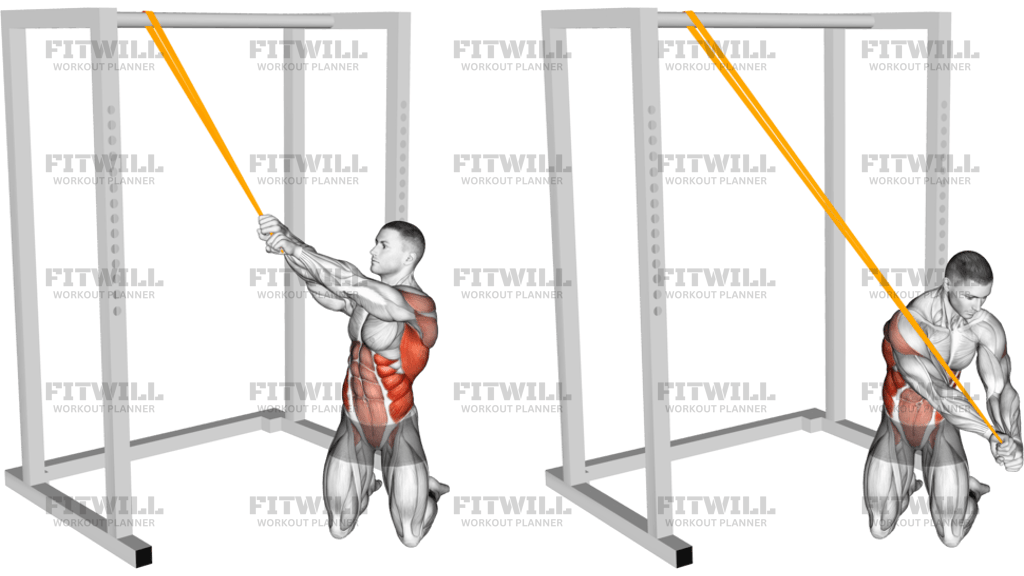
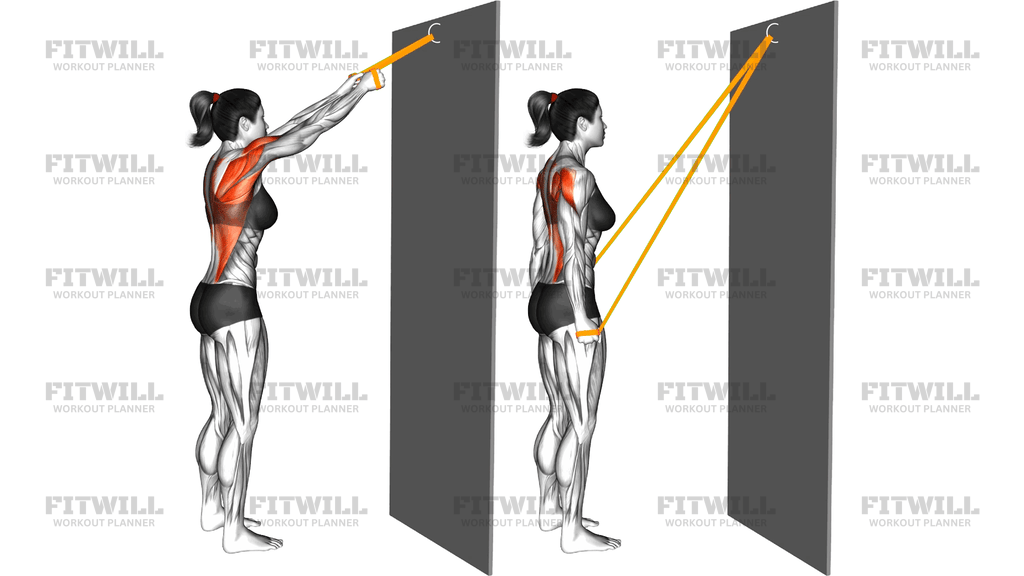
The Resistance Band Standing Straight Arms Pulldown is a vertical pulling movement performed with the elbows locked in extension from start to finish. You anchor a resistance band overhead, stand facing the anchor point, grip the band with both hands, and sweep your straight arms down in a wide arc until your hands finish beside your hips. Because the elbows never bend, the lats have to do the work of driving the upper arms down and back, which is exactly what separates this from a pulldown or pull-up where the biceps take over.
This exercise is a great fit for anyone who struggles to feel their lats during rowing or pulldown work. With the arms straight, the biceps are removed from the equation, so the mind-muscle connection to the back tends to come much faster. It is also a smart choice for home training, since all you need is a single band and a sturdy high anchor such as a door attachment, pull-up bar, or rack upright. People warming up for pull-ups, rehabbing around cranky elbows, or simply wanting extra lat volume without heavy loading will all get a lot out of it.
The primary muscles worked are the lats, with strong assistance from the teres major at the back of the armpit and the long head of the triceps, which helps extend the shoulder while staying straight at the elbow. The rear shoulders and lower traps help control the shoulder blades as the arms sweep down, and the core works isometrically to keep your torso upright and resist the upward pull of the band.
Setup matters more than most people expect. Your distance from the anchor determines how much tension you start with, so standing too close makes the top of the rep slack while standing too far makes the top position nearly impossible to reach. Facing the anchor squarely, with a slight forward lean from the hips and soft knees, gives the lats a long working range and keeps the band path clear of your body.
To execute the movement well, start with your arms overhead and slightly forward toward the anchor, then pull the band down in a smooth arc until your hands reach your hips, keeping the elbows straight the entire time. Think about driving your elbows down and slightly back rather than pulling with your hands. Pause briefly at the bottom, then let the arms travel back up under control instead of letting the band snap them overhead.
A few practical points will keep this exercise productive. Choose a band tension that lets you reach full overhead extension without losing your rib position, because arching your lower back to start the pull steals work from the lats. Keep the movement in a controlled arc in front of your torso; dragging the band behind your body turns it into a different exercise and can irritate the shoulders. Two to four sets of ten to fifteen reps works well, either as a warm-up before heavier back work or as a finishing movement at the end of a pull session.
[ Workout Log & Planner ]
Put your next workout in Fitwill
Keep your plan and training log ready when you are.


Instructions
- Anchor a resistance band securely at a point above head height, using a door anchor, rack upright, or pull-up bar, and check that it cannot slip during the set.
- Stand facing the anchor with your feet roughly hip-width apart, then walk back until the band is taut while your arms are overhead and angled slightly toward the anchor.
- Grip the band with both hands, palms facing down or slightly inward, about shoulder-width apart, and let the band run from your hands up to the anchor on either side of your head.
- Hinge forward slightly from the hips, soften your knees, brace your abdominal muscles, and pull your ribs down so your lower back is not arched before you start.
- Keeping your elbows fully straight, pull the band down and slightly back in a wide arc until your hands finish beside your hips and the band touches the front of your thighs.
- Squeeze your lats at the bottom for a moment, feeling the shoulders press down away from your ears.
- Slowly raise your straight arms back overhead along the same arc, resisting the band's pull rather than letting it yank your arms up.
- Exhale as you pull the band down to your hips and inhale as your arms return overhead.
- Complete all reps standing in the same spot, and step forward away from the anchor to release the band tension safely before letting go.
Tips & Tricks
- If you cannot reach full overhead extension without the band going slack or yanking you forward, adjust your stance rather than your arm path, since distance from the anchor sets the tension.
- Bent elbows are the most common fault here; even a small elbow bend turns the movement into a triceps and biceps exercise, so lock the arms out and reduce the band tension if you cannot keep them straight.
- Think 'elbows to hips' instead of 'hands to hips' — this cue keeps the lats driving the motion instead of the hands and forearms pulling the band.
- Avoid arching your lower back to initiate the pull; if your chest lifts and ribs flare at the start, brace your core harder or step slightly closer to reduce tension.
- Shrugging your shoulders toward your ears as you pull shifts work to the upper traps — actively press your shoulder blades down as your arms descend.
- The band should arc down in front of your torso and finish at your thighs, not travel behind your hips; pulling too far back strains the shoulder capsule.
- Move slowly on the way up for at least two to three counts, because the eccentric is where much of the lat-building stimulus lives and fast returns waste it.
- If the band digs into your palms or slips, wrap it once around each hand or loop a small towel through your grip instead of choking up so far that your wrists bend.
- Slightly wider hand spacing generally feels smoother on the shoulders than a narrow grip, so experiment within a comfortable range rather than forcing one position.
Frequently Asked Questions
Which muscles does the Resistance Band Standing Straight Arms Pulldown work?
The lats are the primary movers, supported by the teres major and the long head of the triceps. The rear shoulders, lower traps, and core also contribute to control the shoulder blades and keep the torso steady.
Why are the arms kept straight during the Resistance Band Standing Straight Arms Pulldown?
Straight arms remove the biceps from the pull, forcing the lats to drive the shoulders down through their full range. This makes it one of the best exercises for learning to feel and isolate the back.
How far should I stand from the anchor point?
Stand far enough that the band is taut with your arms overhead but you can still reach full extension without being pulled forward. If the top position feels slack, step back; if you cannot straighten your arms overhead, step closer.
Is the Resistance Band Standing Straight Arms Pulldown good for beginners?
Yes, it is very beginner-friendly because the band provides light, smooth resistance and the movement pattern is simple. Beginners should start with a light band and focus on keeping the elbows locked and the torso still.
Can this exercise help me feel my lats during pull-ups and pulldowns?
It often can. Because the biceps cannot compensate, many lifters use straight-arm pulldowns as a primer before pulldowns or pull-ups to build the lat mind-muscle connection.
What is the most common mistake in the Resistance Band Standing Straight Arms Pulldown?
Bending the elbows and turning it into a row or triceps pushdown. Other frequent faults are shrugging the shoulders, arching the lower back to start the pull, and letting the band snap the arms back overhead.
How does this standing band version differ from a cable straight-arm pulldown?
The band offers ascending resistance, meaning tension is highest at the bottom near your hips and lighter overhead, while a cable stays more constant. The band is also portable and easier on the joints, but the cable version allows finer load increments.
What can I use if I don't have a high anchor for the band?
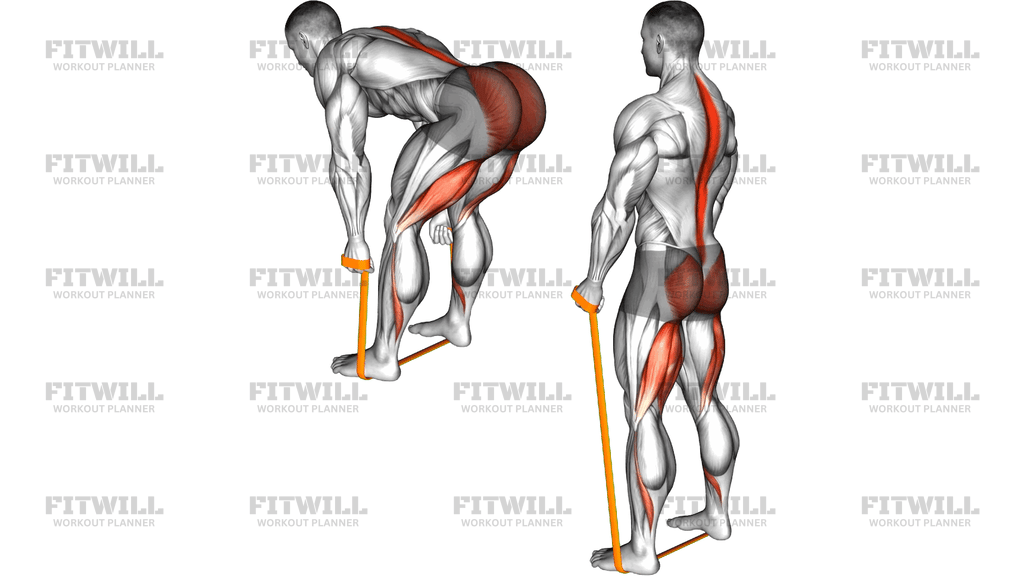
A sturdy pull-up bar, the top of a power rack, or a door-frame anchor all work. If nothing overhead is available, you can loop the band over a door top or perform the movement with the band secured under your feet while bent over, though the overhead version matches the intended pattern best.
How many reps and sets should I do?
Two to four sets of ten to fifteen controlled reps is a solid range. Use it as a warm-up before heavier pulls with a light band, or as a back finisher with a more challenging tension.
Is it safe for people with shoulder or elbow discomfort?
The straight-arm path with light band tension is generally gentle on the elbows since they stay locked and unloaded. Anyone with an active shoulder issue should keep the arc shallow and pain-free and consult a qualified professional before progressing.