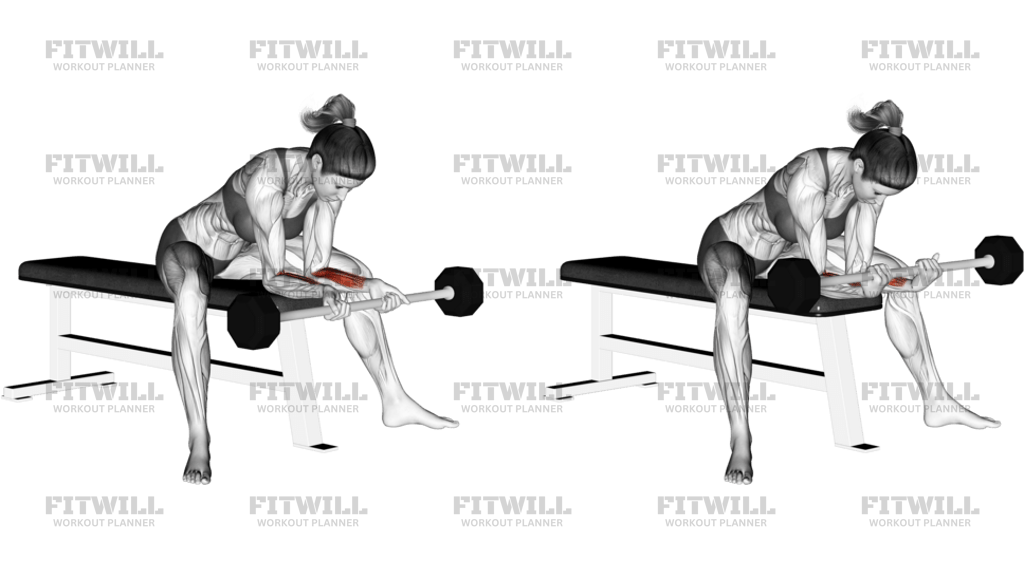
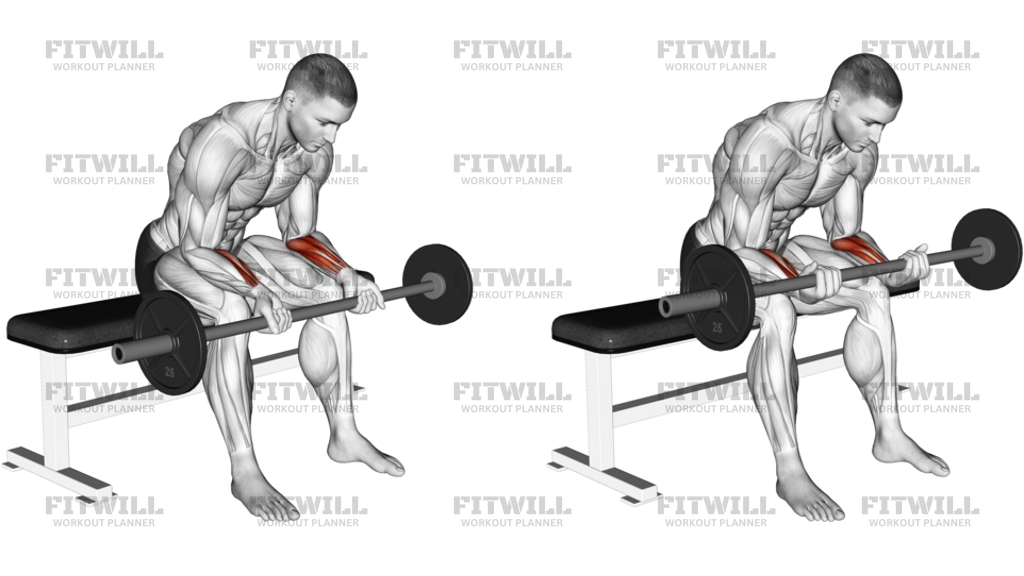
Barbell Standing Wrist Curl
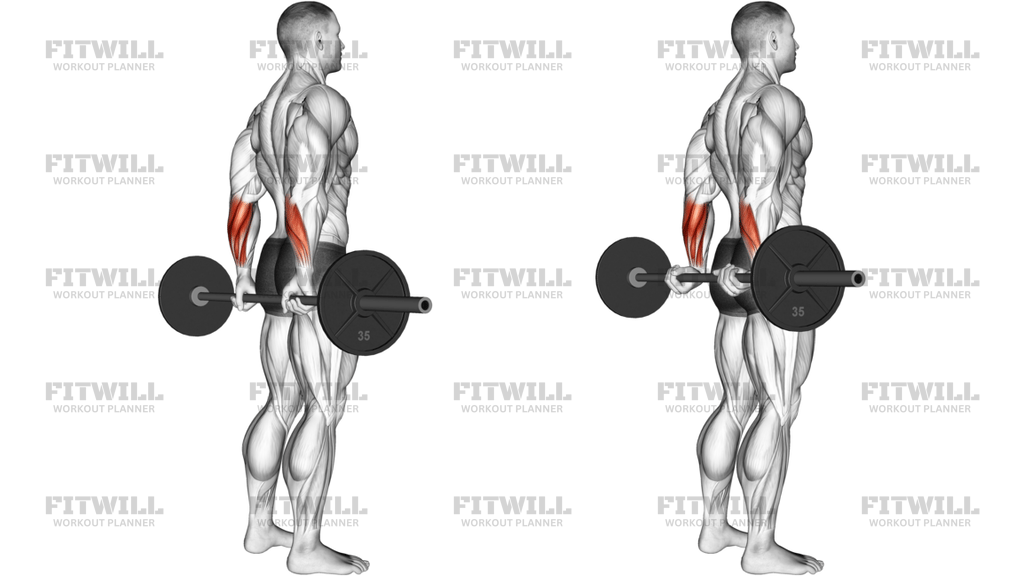
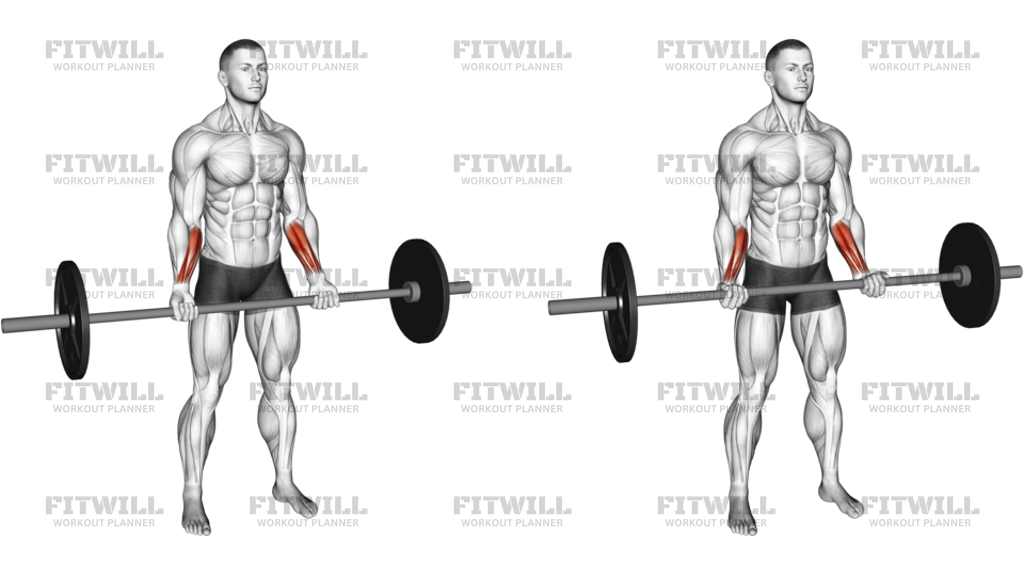
The Barbell Standing Wrist Curl is a focused forearm exercise performed standing upright with a barbell hanging at arm's length in front of your thighs. Unlike seated wrist curls that rest the forearms on a bench, this standing version keeps your arms straight and lets the wrists do all of the work, which makes it a clean and direct way to load the wrist flexors without any assistance from the elbows or shoulders.
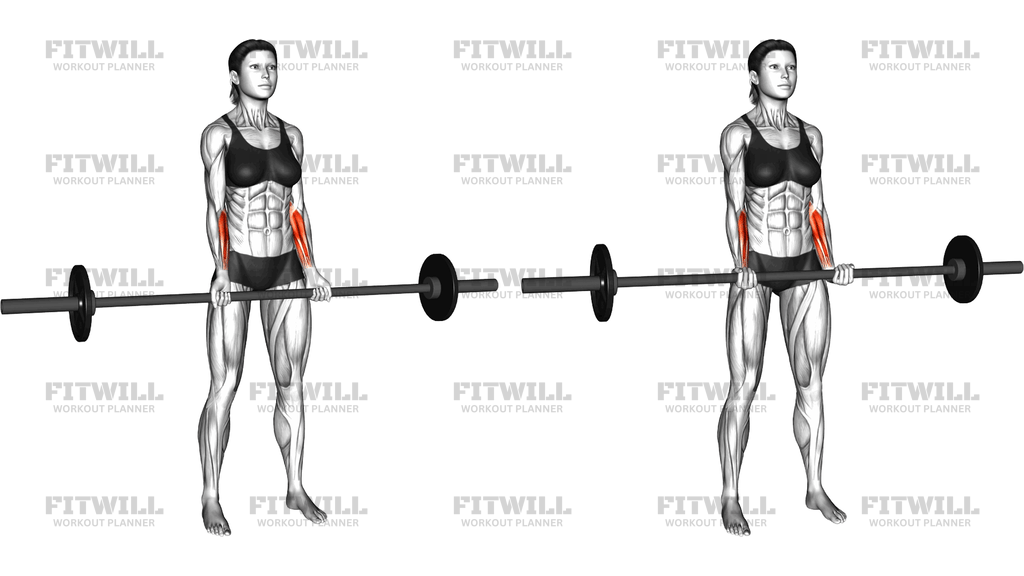
The main muscles at work are the wrist flexors on the inside of the forearm, including the flexor carpi radialis, flexor carpi ulnaris, and palmaris longus. Your grip muscles stay heavily involved throughout, since you have to keep holding the bar as the weight rolls slightly toward your fingers at the bottom of each rep. Because the forearms are highlighted as the working area while the rest of the body stays still, this is one of the most isolated wrist movements you can do with a barbell.
This lift suits anyone who wants stronger wrists and a firmer grip: lifters whose grip gives out before their back or legs do, climbers, and people whose wrists feel weak under the bar in pressing or carrying work. It also fits well at the end of an arm or pull session, when a couple of light, controlled sets are enough to finish the forearms properly.
Setup matters here. Stand with feet about hip-width apart, hold the bar with an overhand grip roughly shoulder-width, and let your arms hang fully straight so the bar rests against the front of your thighs. If your arms are bent or the bar drifts away from your body, your shoulders and biceps start stealing the work and your wrists lose the stable anchor they need. Keep your torso tall and still so the only moving joints are the wrists.
Execution is a small, deliberate motion. Let the bar roll down toward your fingertips as the wrists bend downward, then curl the wrists upward by squeezing the forearms until the backs of your hands can rise no further. Pause briefly at the top, lower slowly, and keep the movement smooth from start to finish. The range is short, so tempo and control count far more than heavy weight.
Because the wrist joint is small and the load hangs on a long lever, choose a conservative weight and build up gradually. If your wrists hurt during or after the movement, reduce the load, slow the reps, or switch to an unloaded bar until the pattern feels comfortable. Done with patience, this exercise builds durable, well-developed forearms that carry over to nearly every pulling and gripping movement you perform.
[ Workout Log & Planner ]
Put your next workout in Fitwill
Keep your plan and training log ready when you are.


Instructions
- Stand upright with your feet about hip-width apart, knees soft but not bent, and your torso tall.
- Hold a barbell with an overhand grip, hands roughly shoulder-width apart, and let your arms hang straight down so the bar rests against the front of your thighs.
- Set your shoulders down and back, brace your core lightly, and keep your elbows locked in place at your sides for the entire set.
- Inhale, then slowly let your wrists bend downward so the bar rolls toward your fingers and lowers away from your thighs.
- Exhale and curl the bar upward by flexing your wrists, pulling your knuckles back and squeezing the inside of your forearms at the top.
- Hold the top position for a brief pause of one second to feel the wrist flexors contract.
- Lower the bar under control to the fully stretched wrist position without letting it drop or swing.
- Keep the motion isolated to the wrists; if your elbows or shoulders start moving, the weight is too heavy.
- Complete your reps, then set the bar down on a rack or the floor by hinging at the hips rather than bending at the wrists while loaded.
Tips & Tricks
- Start with a very light bar, often just the bar itself. The wrists are small joints and the long bar magnifies any wobbling, so jerky reps are a sign the load is too heavy.
- The most common mistake is bending the elbows and turning it into a partial curl. Pin your elbows to your sides before the first rep and check them again on every rep.
- Do not let the bar slide out of your fingers at the bottom. Rolling to the fingertips is fine, but losing grip mid-rep means shortening the range slightly until your grip catches up.
- Keep the bar in contact with or very close to your thighs. If it drifts forward, your shoulders are leaning in to help, which takes tension off the wrist flexors.
- Move through the full wrist range on both ends: a deep stretch as the bar rolls down, and a complete curl upward. Half reps at the top are the second most common fault.
- Tempo beats load here. Try a two-second lower and a one-second squeeze at the top instead of chasing more plates.
- If your wrists complain, warm them up first with ten slow unloaded wrist circles and flexions before gripping the bar.
- Place this exercise at the end of your session, since pre-fatiguing your grip first will weaken holds on presses, rows, and deadlifts.
- Chalk or a dry towel on your hands helps more than gloves, which can add bulk between your palm and the bar and reduce your feel for the rolling motion.
Frequently Asked Questions
What muscles does the Barbell Standing Wrist Curl work?
It primarily targets the wrist flexors on the inside of the forearm, such as the flexor carpi radialis and flexor carpi ulnaris. Your grip muscles and forearms work hard the whole time to hold and control the bar.
Why do this standing instead of seated with forearms on a bench?
Standing keeps your arms hanging straight and unsupported, so the wrists handle the load entirely on their own. It also requires no bench, making it easy to do with just a barbell anywhere in the gym.
Should I use an overhand or underhand grip for this exercise?
Use an overhand grip with the bar in front of your thighs, as this setup lets the wrists curl the bar up and down through a clean vertical path. The wrist flexors remain the main movers in this position.
How heavy should I go on the Barbell Standing Wrist Curl?
Start with just the unloaded bar or a light weight and add gradually. Because the wrists are small joints and the bar creates a long lever, most people get better results with moderate weight and strict, slow reps.
My elbows keep moving during the exercise. What am I doing wrong?
Your elbows bending means the weight is too heavy or the set is too long, so your biceps and shoulders are stepping in. Lock your arms straight against your sides and reduce the load until only your wrists move.
Can beginners do this exercise?
Yes, and the unloaded bar is a fine starting point. Beginners should focus on a slow tempo, a full wrist range, and stopping the set as soon as form breaks down rather than pushing to failure.
What can I use instead of a barbell for standing wrist curls?
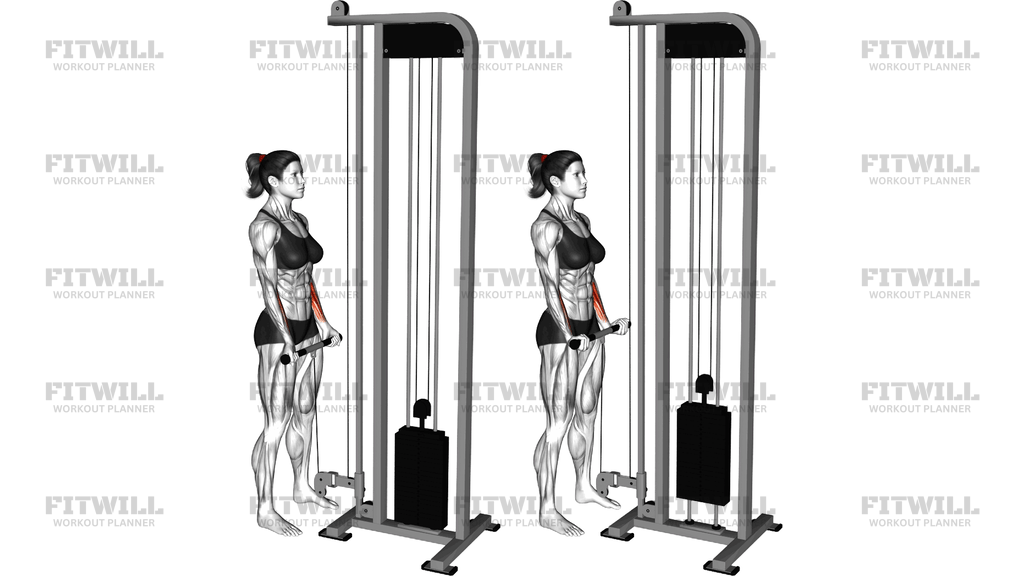
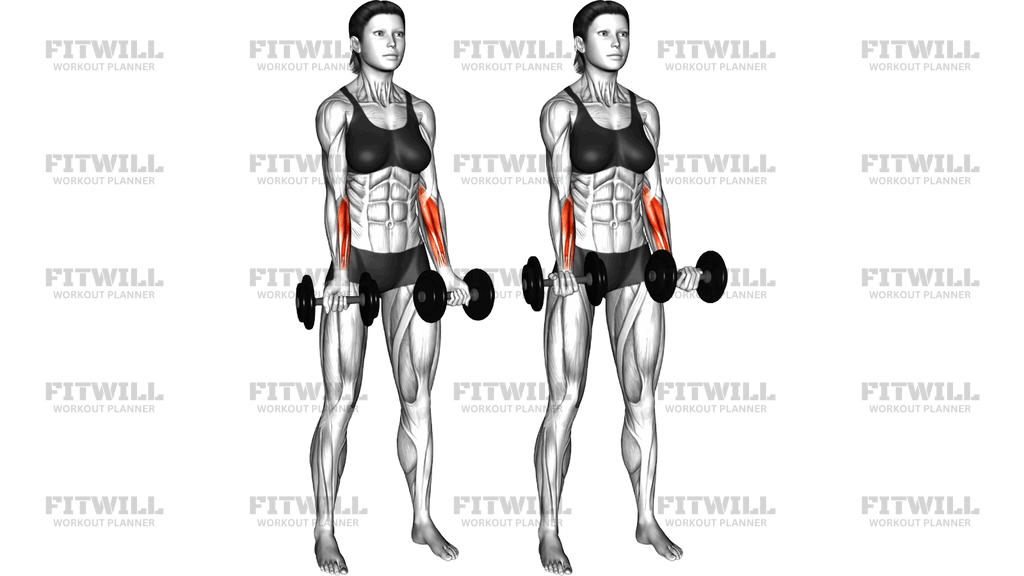
Dumbbells work well and let each wrist move independently, and a cable with a straight bar attached keeps tension on the flexors through the whole range. The standing body position and straight-arm setup stay the same.
How many reps and sets should I do?
Two to three sets of 12 to 20 reps works well, since the wrist flexors respond to controlled higher-rep work. Keep at least one or two reps in reserve and prioritize smooth tempo over load.
Is it safe if my wrists click or ache during the movement?
Mild clicking without pain is usually harmless, but any aching means you should stop and reduce the weight or range. Warm the wrists up first, and if discomfort continues, skip the barbell version and train the wrists unloaded.