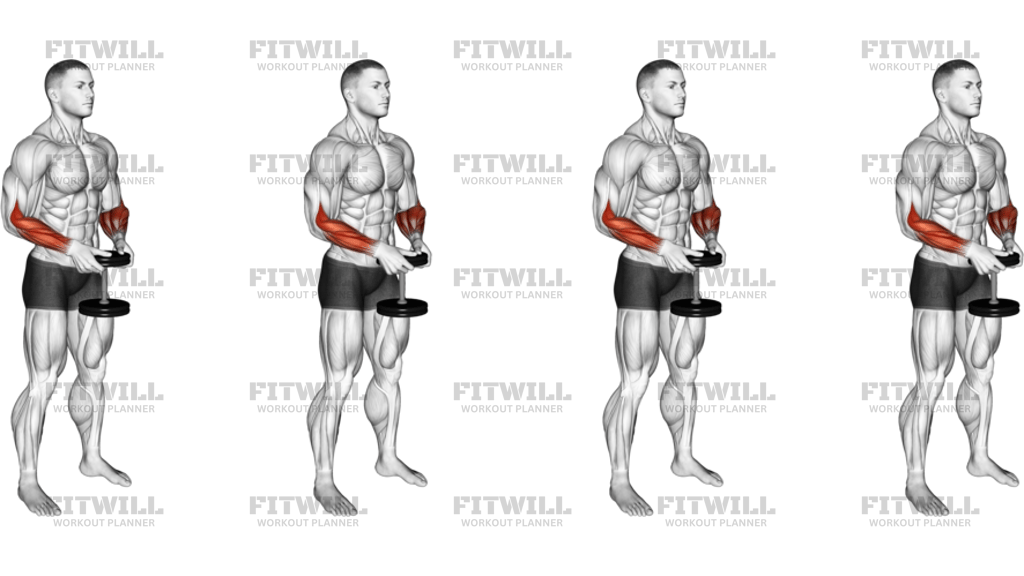
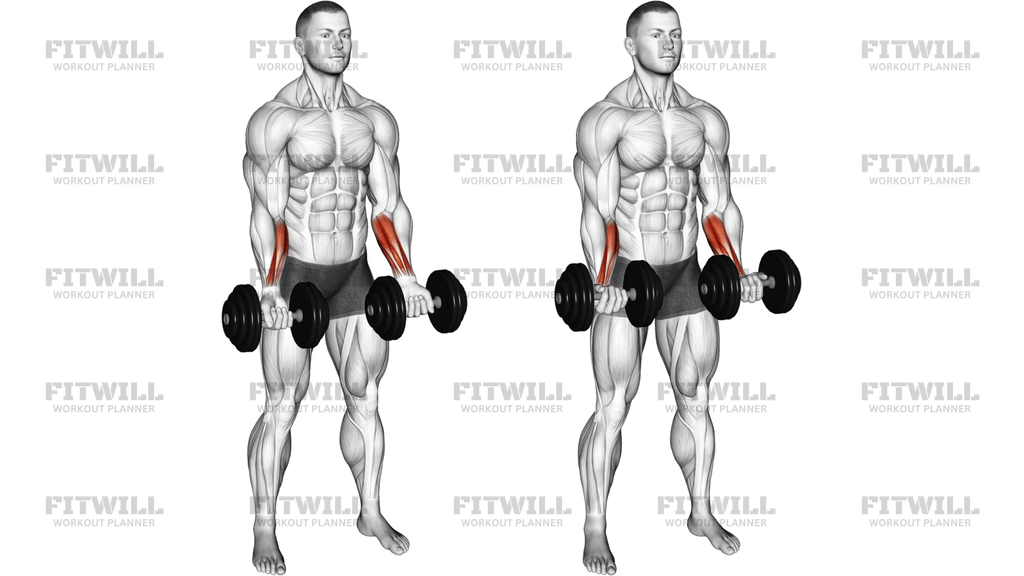
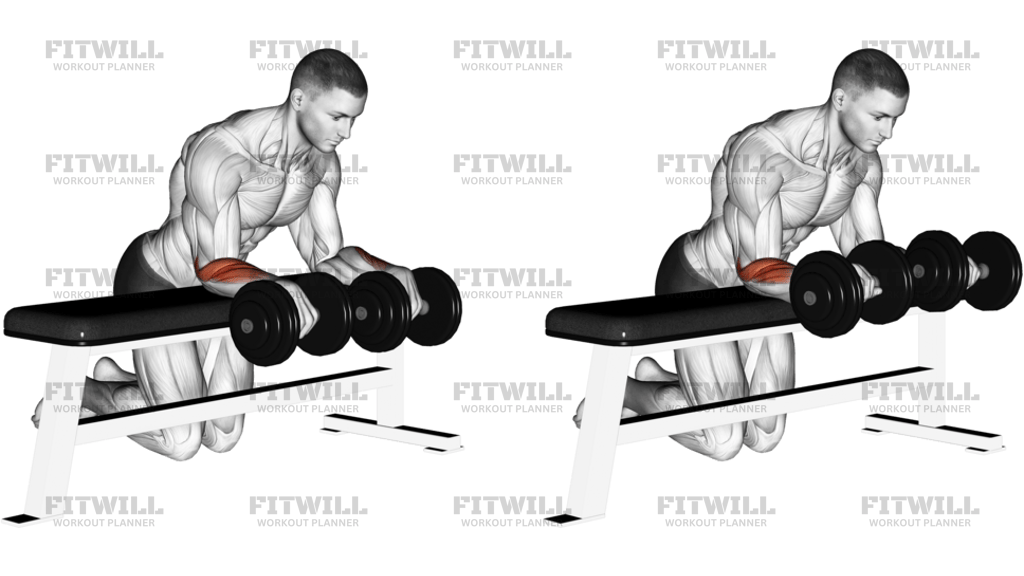
Dumbbell Standing Wrist Curl
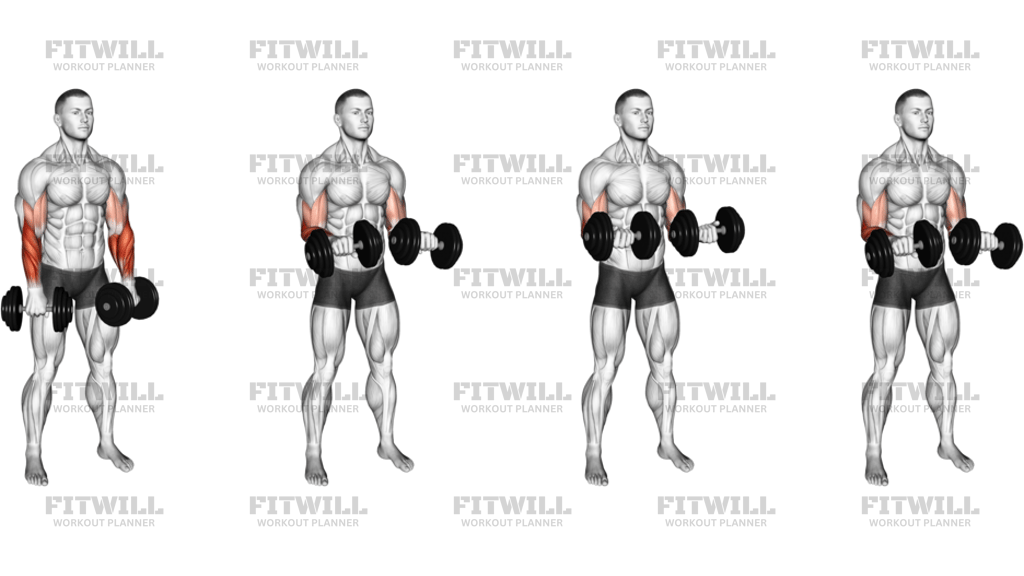
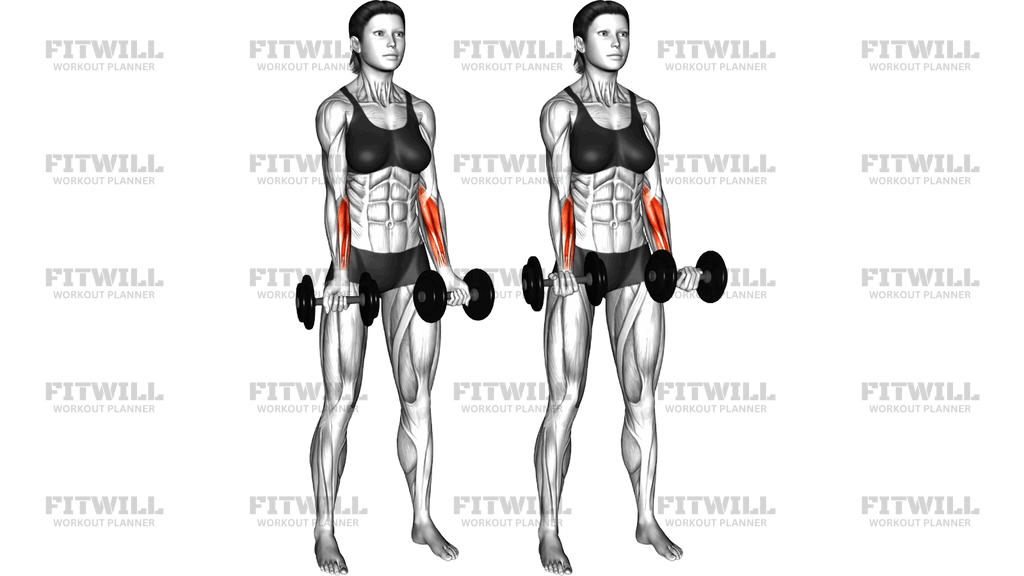
The Dumbbell Standing Wrist Curl is a direct forearm exercise performed with a dumbbell in each hand while standing upright with your arms hanging at your sides. From this position, you flex at the wrists, curling the weights upward by bending your hands toward the front of your forearms, then lower them back down under control. Unlike seated wrist curls that rest the forearms on a bench or thighs, the standing version lets the arms hang freely, so the forearms have to stabilize themselves while the wrists do the work.
The main muscles trained here are the wrist flexors on the underside of the forearm, including the flexor carpi radialis and flexor carpi ulnaris. Your grip gets constant work as well, since you have to hold onto the dumbbells for every rep without a bench or pad supporting your hands. Because the movement is small and focused, it is one of the simplest ways to load the forearms directly without needing much equipment or space.
This exercise is especially useful for lifters whose grip gives out before their back or legs do during deadlifts, rows, and carries. It also suits anyone who wants stronger, more developed forearms for climbing, racquet sports, martial arts, or everyday tasks that involve holding and carrying. Because the wrists take the load directly, it is commonly used in higher-rep sets rather than heavy low-rep work.
Setup matters more than it might seem. Stand tall with your feet about hip-width apart, hold a dumbbell in each hand, and let your arms hang naturally at your sides with your elbows close to your body. Your palms should face forward so that curling the wrists brings the dumbbells up and slightly away from your thighs. Keep your shoulders relaxed and down, because shrugging or swinging turns a precise wrist exercise into a sloppy arm movement.
Execution is deliberately small: the only joint that should move noticeably is the wrist. Curl the dumbbells up as far as your wrist range allows, pause briefly at the top when the flexors are fully shortened, then lower the weights slowly until the wrists bend back in the opposite direction. That controlled descent is where much of the muscle-building work happens, so avoid letting the dumbbells drop quickly.
As for safety, the wrists are small joints and should not be forced into large loads or bouncy reps. Start light, keep the movement smooth, and stop if you feel sharp pain in the wrist or forearm. If your grip fatigues before your forearms do, use wrist wraps or slightly lighter dumbbells and focus on quality repetitions.
[ Workout Log & Planner ]
Put your next workout in Fitwill
Keep your plan and training log ready when you are.


Instructions
- Stand upright with your feet about hip-width apart and a dumbbell in each hand, arms hanging straight down at your sides.
- Position your hands so your palms face forward, letting the dumbbells rest at thigh level with your elbows close to your torso.
- Relax your shoulders down and back, brace your core lightly, and keep your head and chest up so your torso stays still throughout the set.
- Exhale as you curl your wrists upward, bending only at the wrist joints and letting the dumbbells rise toward the front of your forearms.
- Squeeze the wrist flexors hard at the top of the curl and hold the peak contraction for a brief moment.
- Inhale as you lower the dumbbells slowly, letting your wrists extend back down until you feel a mild stretch along the underside of your forearms.
- Keep your elbows and upper arms completely fixed against your sides for the whole set; if they drift forward, the weight is too heavy.
- Complete all repetitions with a steady tempo, roughly two seconds up and two to three seconds down.
- When finished, set the dumbbells down on the floor by hinging at the hips rather than dropping them, and shake out your wrists and forearms before the next set.
Tips & Tricks
- The most common mistake is turning this into a mini biceps curl by flexing the elbows; pin your elbows to your sides so only the wrists hinge.
- Rolling the shoulders forward as fatigue sets in shifts tension away from the forearms. If you notice your shoulders creeping up, finish the set or reduce the weight.
- Choose conservative dumbbells. Wrist flexors respond well to higher reps in the 12 to 20 range, and going heavy too soon usually leads to jerky, bouncy reps.
- Let the dumbbell handle roll slightly toward your fingertips at the bottom of each rep, then curl it back into your palm as you rise. This lengthens the working range and challenges the grip.
- If your thighs get in the way of the dumbbells at the bottom, take a slightly wider stance or angle your hands a touch outward so the weights clear your legs.
- Do not hold your breath through the set; the standing position makes it tempting to brace hard, but steady breathing keeps your blood pressure and tension in check.
- A brief pause at the top of each rep does more for forearm development than rushing through extra repetitions.
- If balance or body sway is an issue, try the exercise with your back near a wall or progress later to a seated wrist curl where the forearms are supported.
- Warm the wrists up with a few slow, unloaded wrist circles and stretches before your first working set to reduce the chance of a strain.
Frequently Asked Questions
What muscles does the Dumbbell Standing Wrist Curl work?
It primarily targets the wrist flexors on the underside of the forearm, including the flexor carpi radialis and flexor carpi ulnaris. Your grip muscles work isometrically the entire time to hold onto the dumbbells.
How is the Dumbbell Standing Wrist Curl different from a seated wrist curl?
In the standing version your arms hang at your sides with no bench or thigh support, so your forearms must stabilize themselves while your wrists curl the weight. The seated version usually allows a stricter, more isolated wrist motion with heavier loads.
Should my palms face forward or backward during the Dumbbell Standing Wrist Curl?
Palms face forward so that wrist flexion curls the dumbbells up toward the front of your forearms. If your palms faced backward, the same motion would train the wrist extensors instead.
Is this exercise suitable for beginners?
Yes, it is very beginner-friendly because the range of motion is short and the equipment is simple. Start with light dumbbells, learn to keep your elbows still, and build up the reps before adding load.
Why do my biceps get tired during the Dumbbell Standing Wrist Curl?
That usually means your elbows are bending as you curl. Keep your upper arms pinned to your sides and think of your forearms as fixed levers with movement happening only at the wrists.
How heavy should the dumbbells be for this movement?
Much lighter than you would use for curls or presses, since the wrists are small joints. Pick a weight you can control for 12 to 20 smooth reps without swinging, shrugging, or bouncing at the bottom.
Can the Dumbbell Standing Wrist Curl improve my grip for deadlifts and rows?
It can help, because stronger wrist flexors and forearms support your ability to hold a bar under load. For grip-specific carryover, pair it with farmer's carries or timed hangs.
What can I use instead of dumbbells for standing wrist curls?
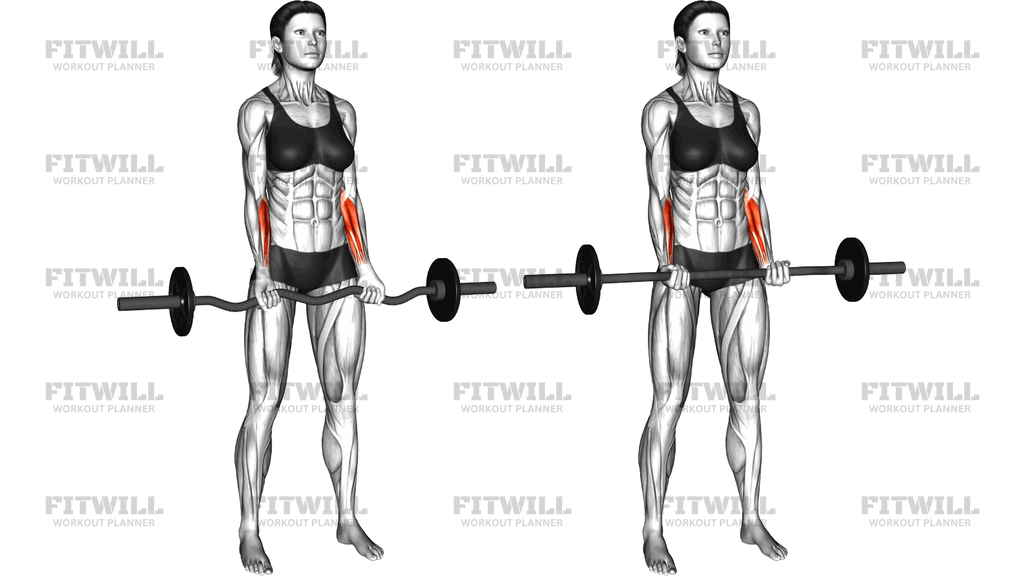
A barbell held behind the back or a cable handle with the arm fixed at your side can replicate the same wrist flexion pattern. Resistance bands looped under your feet and held in your hands also work well for higher-rep sets.
Is it safe to do the Dumbbell Standing Wrist Curl every day?
Daily training is not necessary; the forearms, like any muscle, benefit from recovery between sessions. Two to three sessions per week with adequate rest is a sensible frequency for most people.
How far should I let my wrists bend at the bottom of each rep?
Lower the dumbbells until you feel a comfortable stretch along the underside of your forearms, but do not force the wrists into an extreme extended position, especially when the weights are heavy.