Cable Standing Wrist Curl
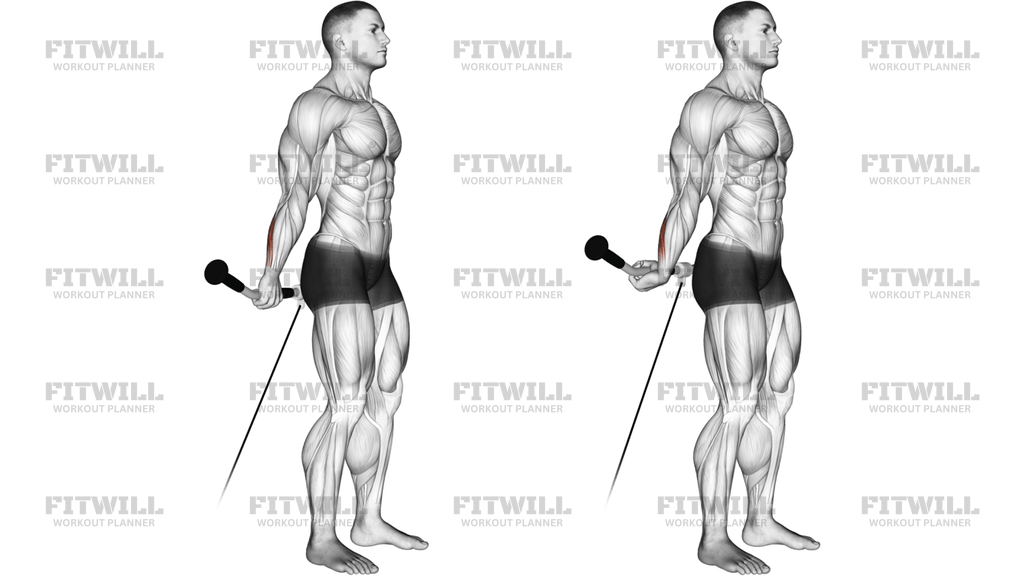
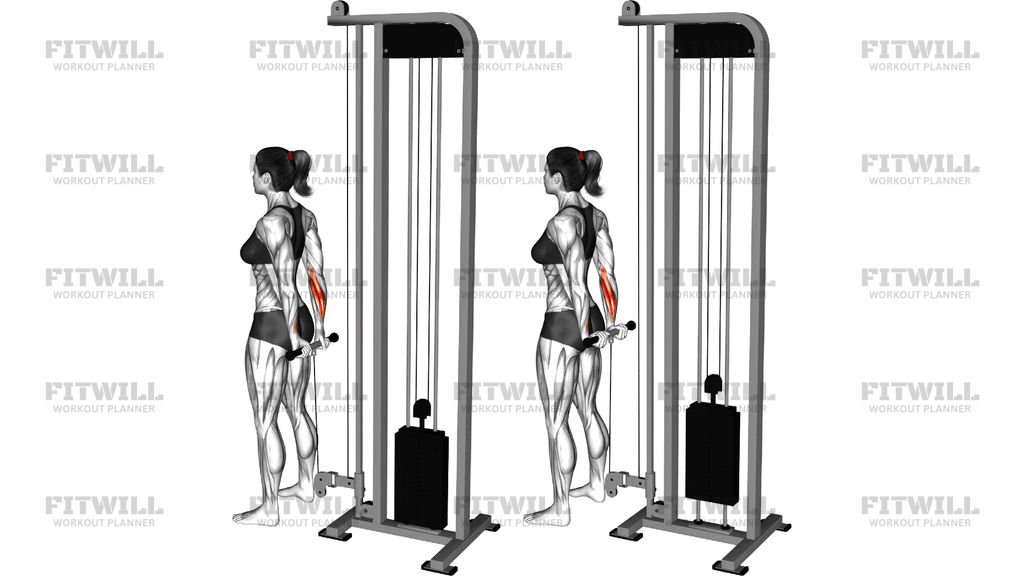
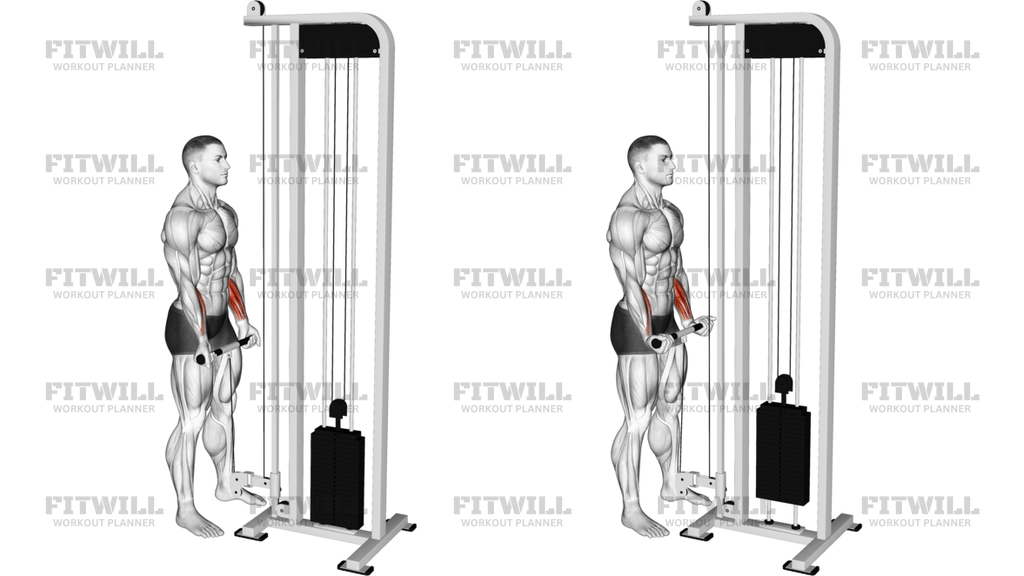
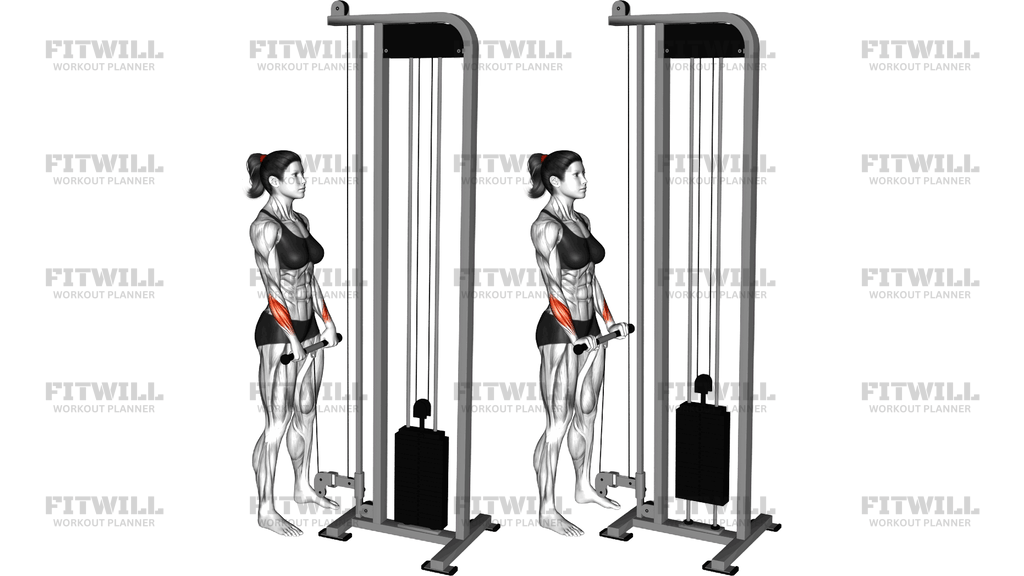
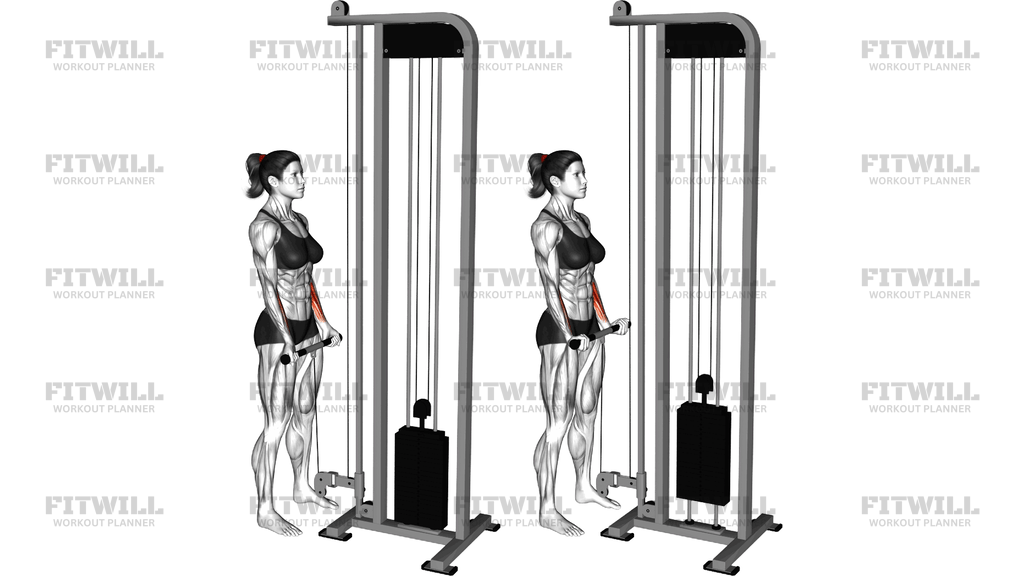
The Cable Standing Wrist Curl is a forearm isolation exercise performed with a straight bar attached to the low pulley of a cable machine. You stand with your back toward the machine, reach behind your body to take the bar with your palms facing rearward, and curl your wrists up and down through a short, controlled arc. Because the cable provides tension along the entire path, the wrist flexors stay loaded even at the very bottom of the movement, where a free-weight barbell would go slack.
This exercise targets the wrist flexor group on the underside of the forearm, with the flexor carpi radialis, flexor carpi ulnaris, and palmaris longus doing most of the work. Your grip muscles work hard just to hold onto the bar as the cable pulls it down and back, so your forearms and hands get a two-part challenge on every rep.
The behind-the-back setup is what makes this version worth learning. With your arms hanging behind your hips, the forearms stay vertical and your shoulders, elbows, and torso are all taken out of the equation, so the wrists do the moving and nothing else compensates. It also feels more comfortable for many lifters than front-facing wrist curls, since the bar never presses into your thighs and the cable runs clear of your body.
To execute it well, keep the movement small and deliberate. The working range is only a few inches: let the bar roll down toward your fingertips as your wrists extend, then curl your knuckles up and back by flexing the wrists as far as they will comfortably travel. Your arms should stay still and relaxed behind you the whole time. If you find your elbows drifting or your shoulders shrugging, the weight is probably too heavy.
This is a useful exercise for anyone whose grip gives out before their back or biceps on pulls, for climbers who want stronger finger and wrist flexors, and for lifters balancing out forearms that get plenty of extensor work from rows and deadlifts. Because the resistance comes from a stack rather than a barbell, it is also easy to make small, precise jumps in load, which suits high-rep forearm work well.
A few practical points will keep it productive. Start light and treat this as a high-rep, strict-form movement rather than a max-effort lift. Use a full but pain-free range, keep your wrists warm before loading them, and stop if you feel any pinching or sharp discomfort in the wrist joint itself. Two to three sets of twelve to twenty reps is a sensible starting point.
[ Workout Log & Planner ]
Put your next workout in Fitwill
Keep your plan and training log ready when you are.


Instructions
- Attach a straight bar to the low pulley of a cable machine and select a light weight to start.
- Stand facing away from the machine with your feet about hip-width apart, then reach behind your body and take the bar with both hands, palms facing rearward and the cable running between your legs.
- Let your arms hang straight down behind your hips with a slight bend in the elbows, and set your feet so the cable hangs clear of your body and the stack.
- Brace your core, keep your chest tall, and look straight ahead so your torso stays still throughout the set.
- Allow the bar to roll down toward your fingertips as your wrists extend, letting it travel as low as feels comfortable without losing your grip.
- Curl your wrists upward by pulling your knuckles back and your palms forward, squeezing the forearm flexors at the top of the short arc.
- Pause briefly at the top, then lower the bar with a slow, controlled motion rather than letting the stack drop it back down.
- Exhale as you curl the bar up and inhale as you lower it back to the start.
- Complete all reps with your arms locked in place behind you, then step forward carefully and release the bar before adjusting the weight.
Tips & Tricks
- The most common mistake is turning this into an arm or shoulder movement — if your elbows bend or your shoulders hike up, the weight has exceeded what your wrists can handle, so drop a plate or two.
- Keep the bar in contact with a consistent point behind your glutes and thighs; if it swings forward away from your body, the cable angle is off or you are leaning back to cheat.
- Open your fingers slightly at the bottom so the bar rolls into your fingertips, then close them as you curl — this lengthens the working range for the flexors far more than keeping a death grip.
- Do not let your torso rock backward as the rep gets hard; the moment your chest leans away from the machine, the set is over for quality purposes.
- Chalk or a dry towel on your hands helps more than wrist wraps here, since the bar wants to slip as your forearms fatigue and your grip works overtime.
- Because the cable pulls the bar down and slightly back, the bottom position stretches the flexors harder than a barbell version — shorten the range rather than muscling through a strain.
- Use a thumbs-around grip rather than a false grip; the bar hangs behind you where you cannot watch it, so a secure grip keeps it from rotating out of your hands.
- If standing feels unstable with the cable between your legs, stagger your stance slightly or place one foot a few inches forward to give the cable a clear path.
- High reps with strict tempo beat heavy singles on this exercise — the wrist joint tolerates moderate loads and controlled motion far better than grinders.
Frequently Asked Questions
Which muscles does the Cable Standing Wrist Curl work?
The primary movers are the wrist flexors on the underside of the forearm, including the flexor carpi radialis, flexor carpi ulnaris, and palmaris longus. Your grip muscles also work continuously to hold the bar against the cable's pull.
Why is the Cable Standing Wrist Curl done behind the back instead of in front of the body?
The behind-the-back position keeps your forearms vertical and your elbows, shoulders, and torso out of the movement, so only the wrists move. It also keeps the bar clear of your thighs and puts the wrist flexors in a comfortable line of pull.
Is the Cable Standing Wrist Curl suitable for beginners?
Yes, as long as the load starts very light and the range stays pain-free. Beginners often benefit from higher reps around fifteen to twenty to learn the short movement arc before adding weight.
How much weight should I use for the Cable Standing Wrist Curl?
Start with the lightest workable setting on the stack and build up gradually — your wrists are small joints and the cable tension at the stretched bottom position makes light weights feel heavier than expected. Most lifters progress in small increments at twelve to twenty reps.
What is the most common mistake on this exercise?
Turning it into a shoulder shrug or biceps pull by bending the elbows and lifting with the arms. If your elbows travel or your shoulders rise, reduce the weight and focus on moving only at the wrist joint.
Can I substitute another exercise if my gym has no low pulley free?
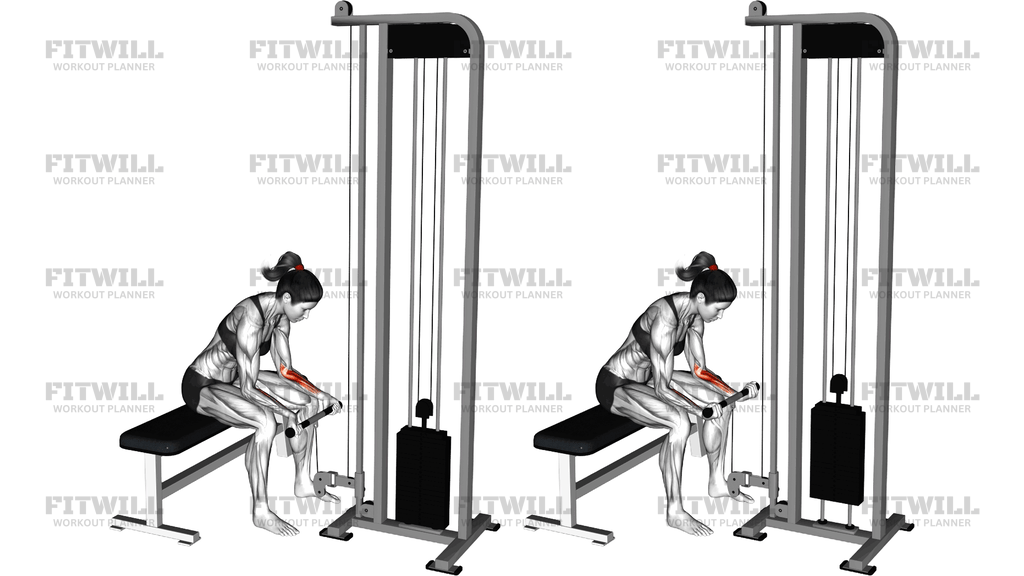
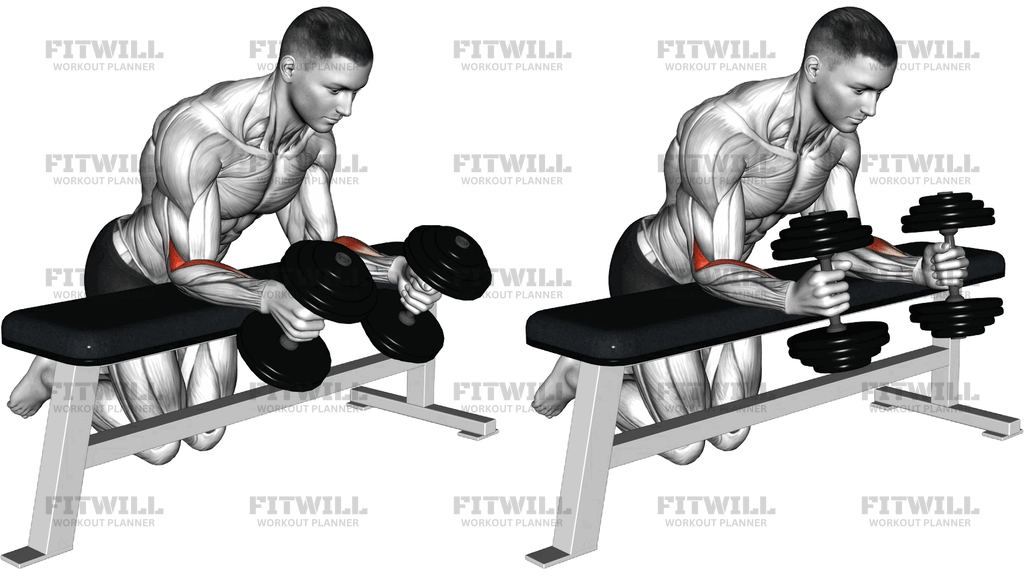
A behind-the-back barbell wrist curl is the closest match and works the same flexor group. Dumbbell wrist curls over a bench or seated wrist curls off the knees also train the wrist flexors with a similar short range.
How does the cable version differ from a barbell wrist curl?
The cable keeps constant tension through the entire range, including the fully stretched bottom position where a barbell would offer little resistance. It also allows very small load jumps, which is convenient for gradual forearm progress.
Should my wrists hurt during the Cable Standing Wrist Curl?
Muscle effort in the forearms is expected, but sharp or pinching pain inside the wrist joint is not. Shorten the range, lighten the load, and warm up the wrists first; if the discomfort persists, stop and get the wrist assessed before continuing.
How many sets and reps should I do for this exercise?
Two to four sets of twelve to twenty controlled reps works well for most lifters, since the forearms respond best to moderate loads and strict tempo. Place it at the end of a pull or arm session so grip fatigue does not affect heavier lifts.