Barbell Standing Back Wrist Curl
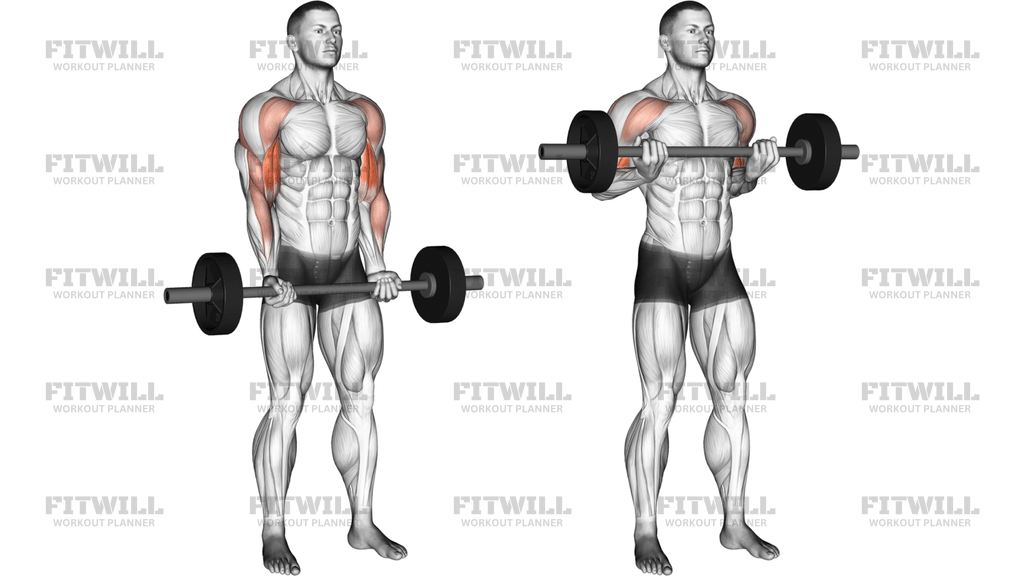
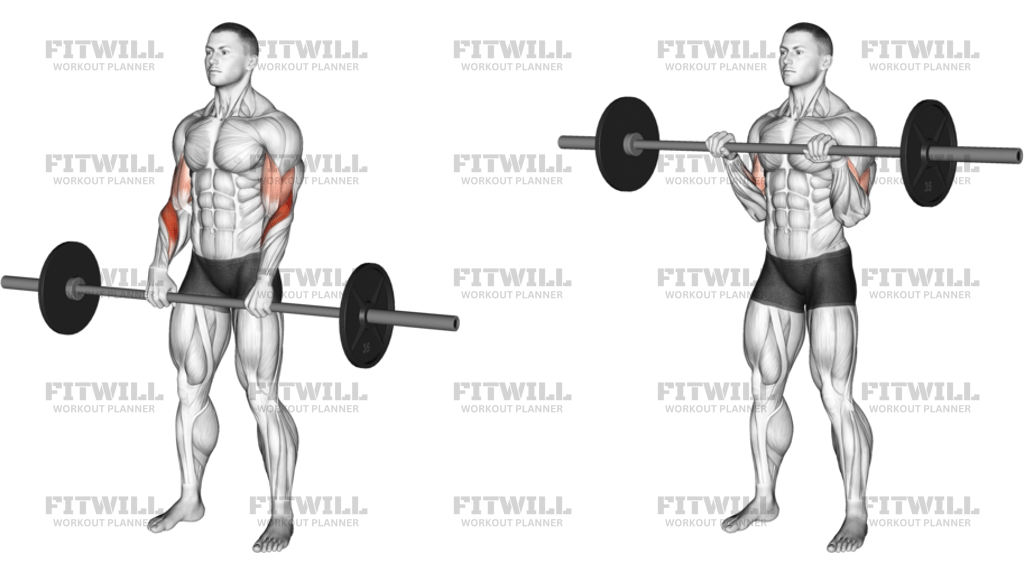
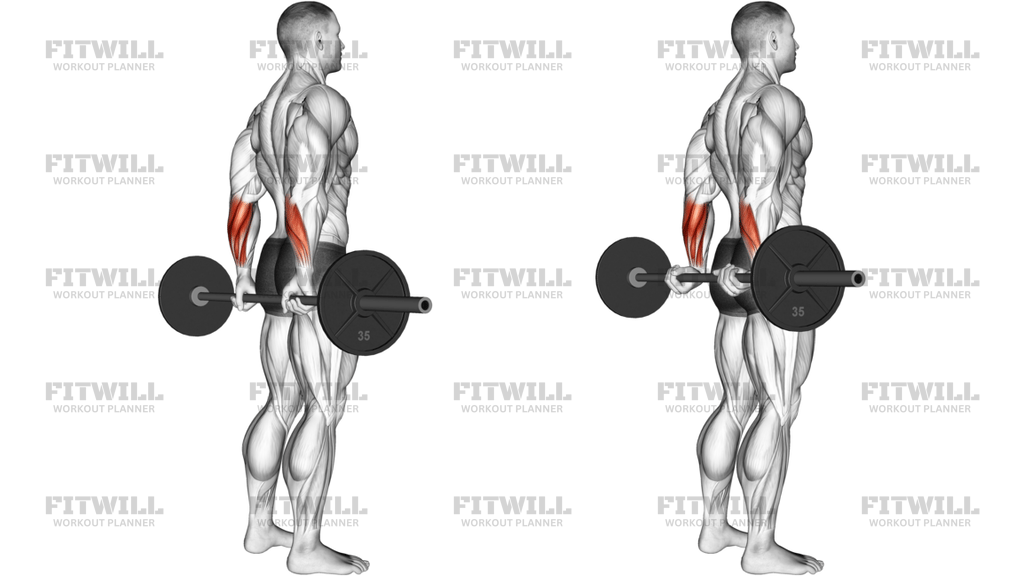
The Barbell Standing Back Wrist Curl is a forearm isolation exercise performed with the barbell held behind the body. This behind-the-back position places the wrists in a slightly extended start position, then the wrist flexors curl the bar upward through a short but focused range.
The exercise mainly trains the wrist flexors of the forearms, including the flexor carpi radialis, flexor carpi ulnaris, and related grip muscles. Because the elbows remain mostly straight and the bar stays behind the hips, the movement should come from the wrists rather than the arms, shoulders, or torso.
Set up tall with the bar behind your body and your palms facing backward. Let the bar sit close to the glutes or upper hamstrings, allow the wrists to extend slightly at the bottom, and curl the bar upward by flexing the wrists. Lower slowly until the forearms stretch again, keeping the rest of the body quiet.
Use this exercise at the end of an arm, pull, or grip-focused workout when you want direct forearm work. The range is naturally small, so control matters more than load. Stop or switch variations if the behind-the-body angle causes wrist discomfort.
[ Workout Log & Planner ]
Put your next workout in Fitwill
Keep your plan and training log ready when you are.


Instructions
- Stand tall with your feet about hip width and hold a barbell behind your body.
- Use an overhand grip behind you so your palms face backward and the bar rests near your glutes or upper hamstrings.
- Keep your elbows mostly straight and your shoulders relaxed.
- Let the wrists extend slightly so the bar lowers into a comfortable forearm stretch.
- Curl the bar upward by flexing only your wrists.
- Squeeze the forearms briefly at the top without bending the elbows.
- Lower the bar slowly until the wrists return to the stretched position.
- Repeat with a quiet torso and steady grip.
Tips & Tricks
- Use a lighter bar than you would for curls because the wrist joint has a short, sensitive range.
- Keep the elbows pointing back and mostly straight so the forearms do the work.
- Do not shrug or swing the hips to make the bar move higher.
- Let the bar roll slightly toward the fingers only if you can keep a secure grip.
- Move slowly at the bottom where the wrist flexors are stretched.
- Keep the bar close behind the body so it does not pull your shoulders into an uncomfortable position.
- Use higher reps with clean control instead of heavy, jerky reps.
- Switch to a seated wrist curl if the behind-the-back angle bothers your wrists or shoulders.
Frequently Asked Questions
What muscles does the Barbell Standing Back Wrist Curl target?
It mainly targets the wrist flexors of the forearms and also challenges grip strength.
Why hold the bar behind the body?
The behind-the-body position creates a different wrist-curl angle and keeps the forearms under tension.
Should my elbows bend?
No. Keep the arms mostly straight so the wrists do the work.
Which way should my palms face?
Your palms face backward because the bar is held behind your body with an overhand grip.
How big should the wrist curl range be?
The range is small. Curl as high as your wrists can move without elbow bend, then lower into a controlled stretch.
Can the bar roll into my fingers?
A slight controlled roll can increase the stretch, but keep the bar secure and do not let it slip.
Is this exercise for grip or forearm size?
It can help both, but the main target is the wrist flexors that add thickness and strength to the forearms.
What if the behind-the-body position hurts?
Stop and use a seated barbell wrist curl, dumbbell wrist curl, or cable wrist curl with a more comfortable angle.