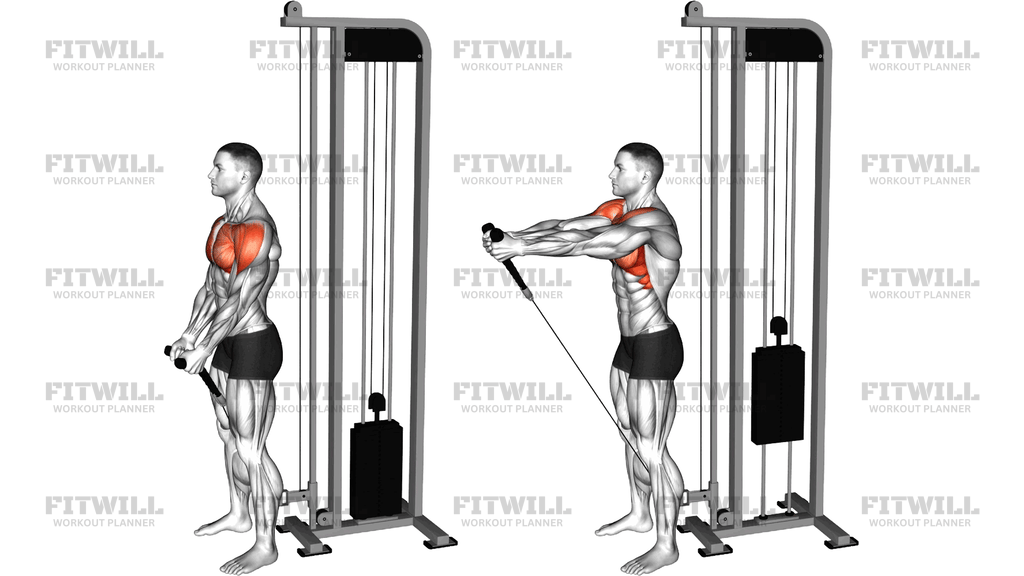
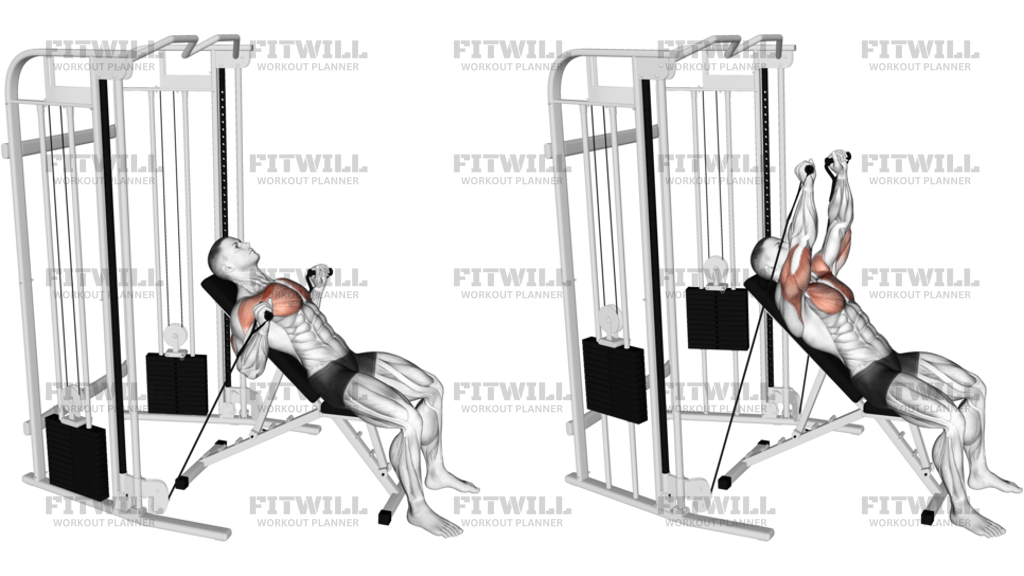
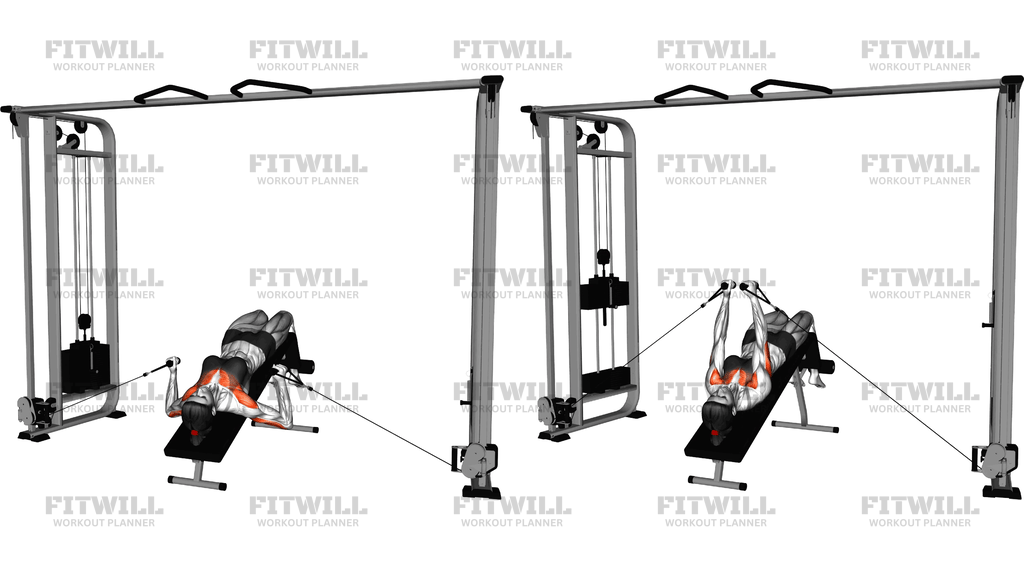
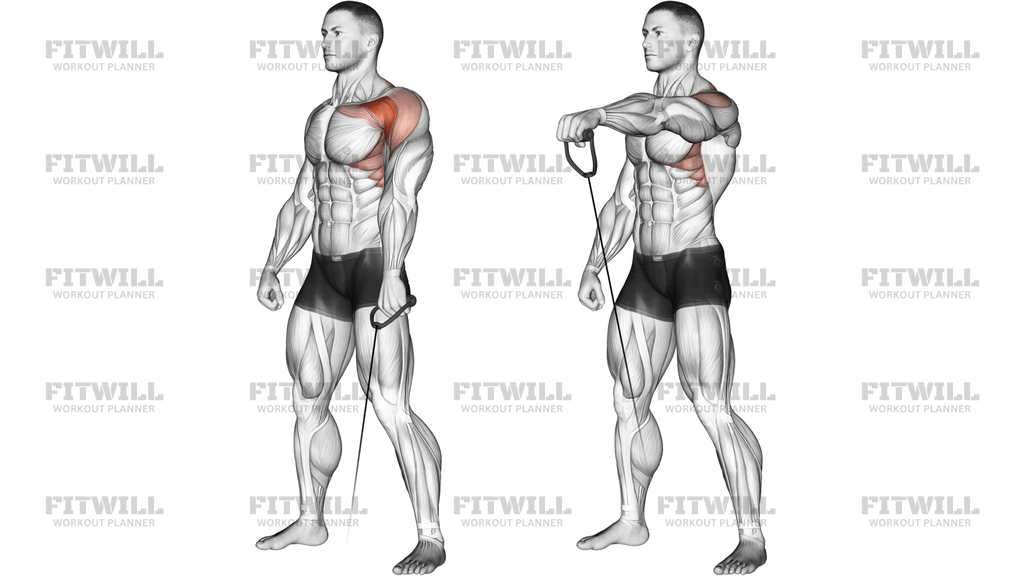
Cable Seated Shoulder Press
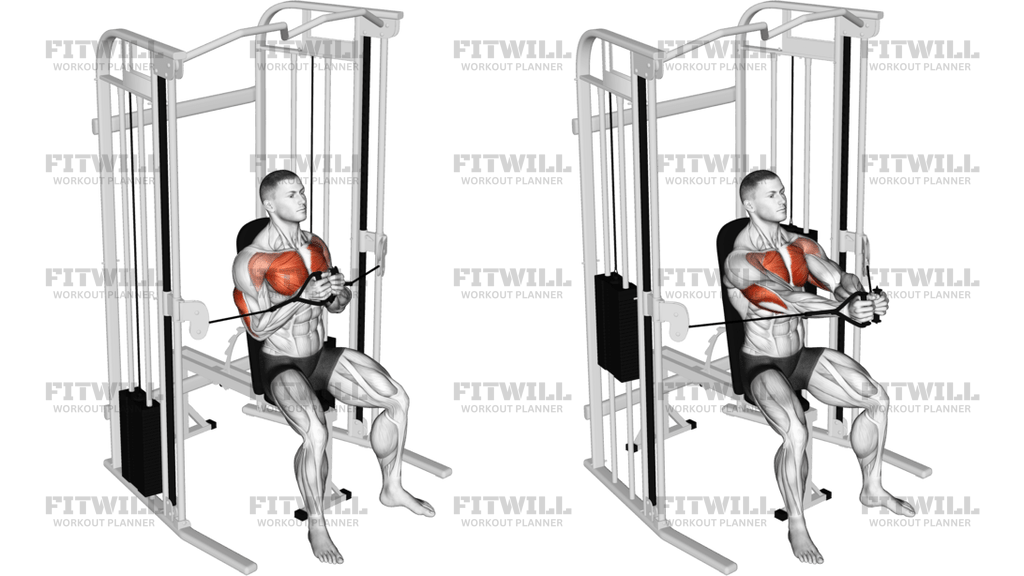
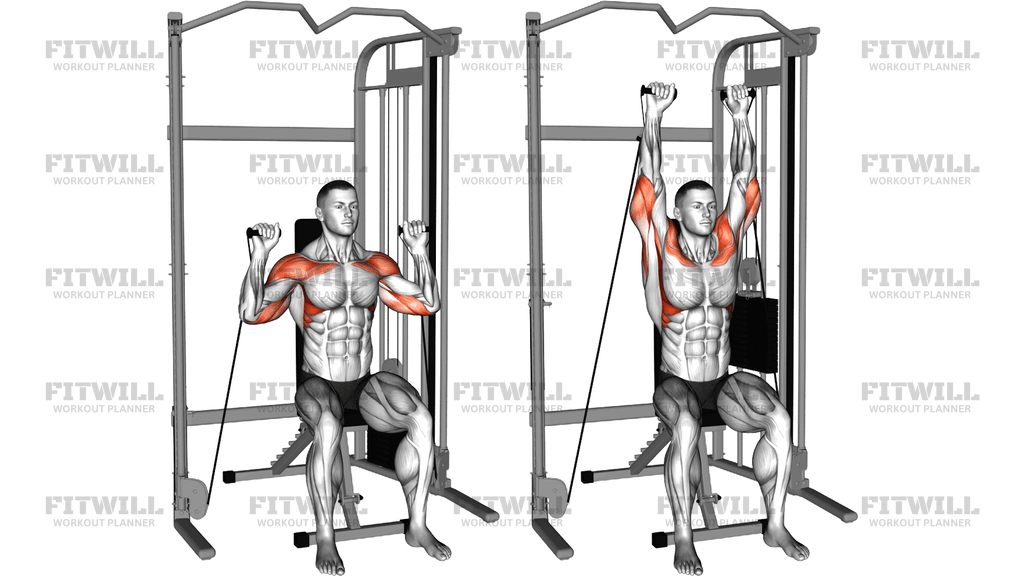
The Cable Seated Shoulder Press is an overhead pressing variation performed on a dual-pulley cable machine while seated on a bench with back support. Instead of pushing against free weights, you press two low-pulley handles from shoulder height up until your arms are extended overhead. Because the cables run from behind and slightly below you, the resistance pulls your arms down and slightly back, which keeps constant tension on the front delts through the entire range of motion — something a dumbbell press cannot do at the top of the lift.
This movement primarily builds the front delts, with strong contributions from the side delts, triceps, and upper chest as they assist with the press. The seated position with a supported back removes momentum from the hips and lower body, forcing the shoulders and arms to do the work. That makes it a good choice for lifters who want strict overhead pressing volume without the stability demands of a standing barbell press.
The setup matters more than people expect. Because the cables originate at low pulleys behind your shoulders, the pulling angle is slightly diagonal rather than straight vertical. If you sit too far forward or too close to the machine, the cables will drag your elbows backward and turn the press into more of an incline movement. Sit squarely on the bench with your back against the pad and the handles starting just outside your shoulders, and you will feel the tension load the shoulders in the correct line.
Execution is straightforward: press up along that slight diagonal until the arms are nearly straight overhead, then lower under control until the handles are level with your ears and the elbows sit just below shoulder height. Exhale on the press, inhale on the way down, and avoid letting the weights slam the stack between reps — keep the hands moving so tension stays on the delts.
This exercise fits well as a primary shoulder builder on an upper body day, as a finishing movement after heavier barbell or dumbbell pressing, or as a machine-based option for lifters managing elbow or wrist discomfort, since the handles allow the wrists to find a natural angle. Use moderate weights and controlled reps; the cable's smooth resistance rewards strict form rather than heavy grinding.
[ Workout Log & Planner ]
Put your next workout in Fitwill
Keep your plan and training log ready when you are.


Instructions
- Position a bench with back support facing away from a dual-pulley cable machine, with the low pulleys set behind and on either side of where you will sit.
- Attach a single handle to each low pulley, select the same weight on both sides, and sit down with your back flat against the pad and feet planted on the floor.
- Grip one handle in each hand with a neutral or slightly forward-facing grip, and pull them up so they rest just outside your shoulders with elbows bent and pointing down and slightly out.
- Brace your core, keep your chest up, and pull your shoulder blades down and back so the cables do not round your upper back forward.
- Press both handles up and slightly inward on a diagonal path until your arms are nearly straight overhead and the handles are above your shoulders.
- Pause briefly at the top without locking the elbows hard or shrugging the weights up with your traps.
- Lower the handles slowly back to shoulder height, letting the elbows travel down just below shoulder level until you feel a stretch across the front delts.
- Exhale as you press up and inhale as you lower the handles down, keeping the breathing rhythm steady.
- Complete your reps without letting the weight stack touch down between repetitions, then set the handles down on your thighs before releasing your grip and standing up.
Tips & Tricks
- Because the cables pull from behind, many lifters let their elbows drift backward and the press becomes an incline chest press — keep your upper arms roughly in line with your torso's side profile so the load stays on the shoulders.
- Avoid leaning your head forward to help the handles up; if your head juts or your lower back arches off the pad, the weight is too heavy.
- Do not fully relax at the bottom. Stopping when the handles are at ear level keeps the deltoids under tension and protects the shoulder capsule from being yanked at the end range.
- A neutral grip (palms facing each other) is usually friendlier to the shoulder joint than a fully rotated grip on this setup, especially at the stretched position.
- Watch the weight stacks — if one side hits down before the other, you are pressing unevenly. Keep both hands level with each other throughout the rep.
- Do not stand up while still holding the handles. The loaded cables will pull you backward; rest them on your thighs first.
- Start lighter than your dumbbell press weight. The constant cable tension makes the same load feel harder at the top of the movement.
- If your shoulders feel pinched at the top, press slightly wider along the diagonal rather than bringing the handles together overhead.
Frequently Asked Questions
Which muscles does the Cable Seated Shoulder Press work?
The front delts do most of the pressing, with the side delts, triceps, and upper chest assisting. The upper traps also engage slightly as you reach full extension overhead.
Why use cables for a shoulder press instead of dumbbells?
Cables keep tension on the deltoids at every point of the range, including the top where dumbbells lose resistance because the weight stacks over the joint. The back-pulling angle of the low pulleys also challenges the shoulders differently than vertical free-weight pressing.
Is the Cable Seated Shoulder Press suitable for beginners?
Yes. The seated position with back support removes balance demands, and the cable stack makes it easy to add small, precise jumps in load. Beginners should start light and focus on keeping the elbows from drifting behind the torso.
Why do my elbows keep pulling backward during the press?
That happens when you sit too close to the machine or let the low-pulley angle win. Sit squarely on the bench, keep your chest up, and think about pressing up and slightly inward rather than letting the cables drag your arms behind your shoulders.
How low should I lower the handles at the bottom?
Lower until the handles are around ear level and your elbows sit just below shoulder height. Going much deeper turns the stretch into passive stress on the shoulder joint without adding meaningful delt work.
What can I substitute if my gym does not have dual low pulleys?
A seated dumbbell shoulder press is the closest substitute, and a seated machine shoulder press works well too. Both train the same pressing pattern, though neither matches the constant tension of the cable version.
Should my palms face each other or forward during the Cable Seated Shoulder Press?
Either works, but a neutral grip with palms facing each other is generally more comfortable for the shoulder joint on this setup, especially since the cables pull from behind. Rotate only as far as feels clean and pain-free.
How many sets and reps should I do?
For muscle growth, 3 to 4 sets of 8 to 15 reps with a controlled tempo works well. Because the cable tension is continuous, most lifters find heavier low-rep sets unnecessary and harder to control.
Is it safe to press if my shoulders click or feel uncomfortable?
Mild, pain-free clicking is common and usually harmless, but sharp pain, pinching, or discomfort that worsens with reps is a signal to stop. Reduce the range, switch to a neutral grip, or consult a qualified professional before continuing overhead pressing.