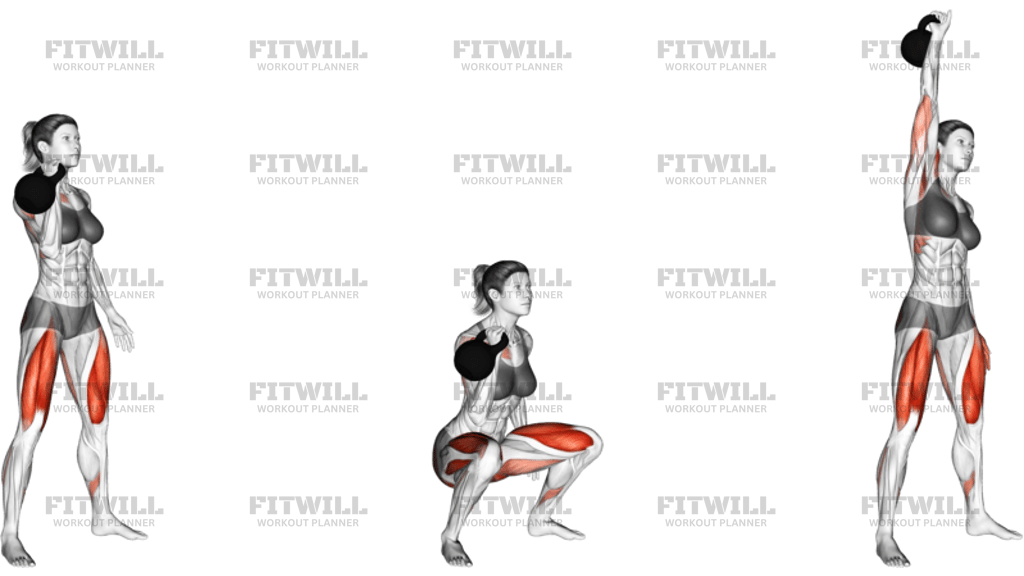
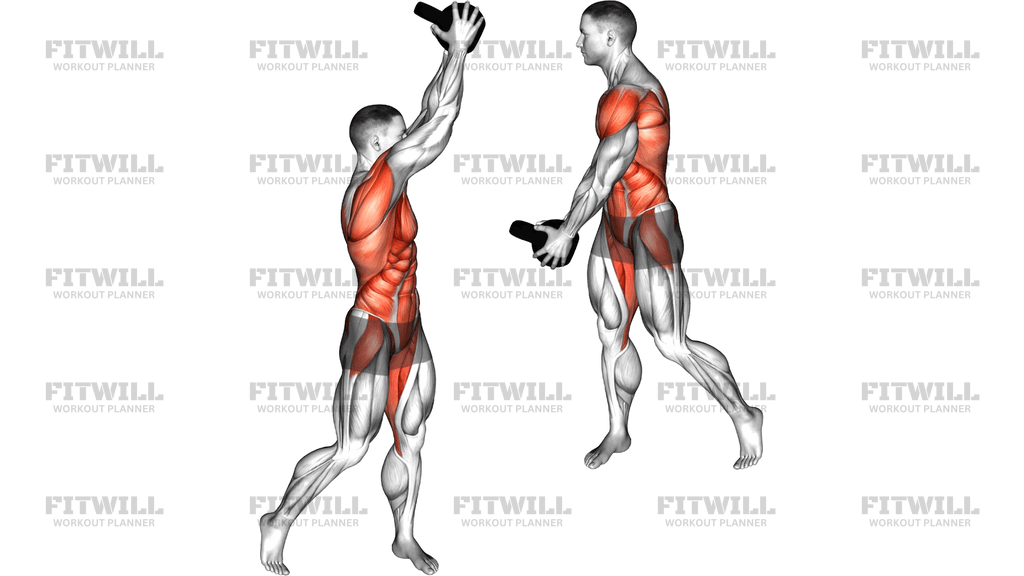
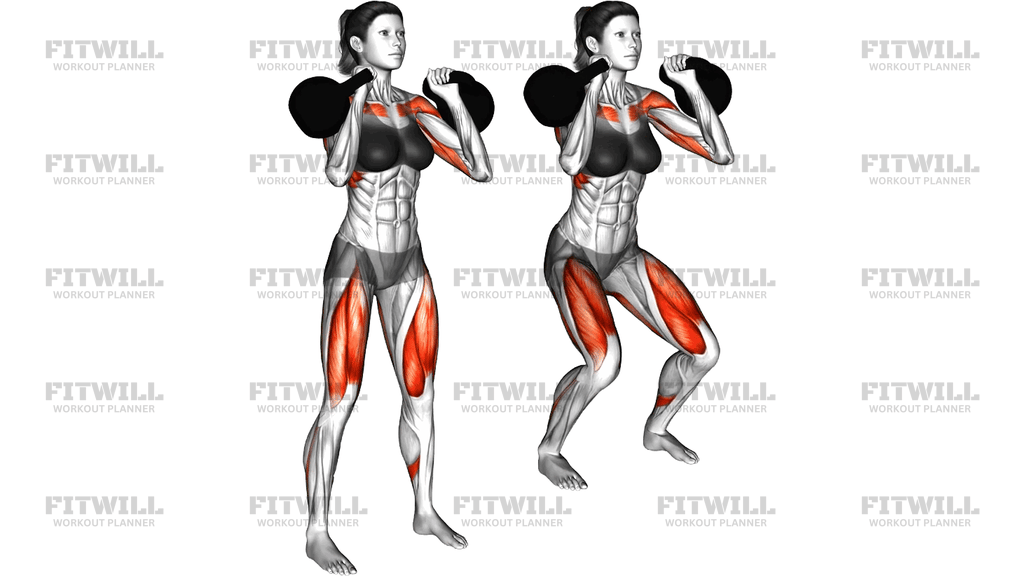
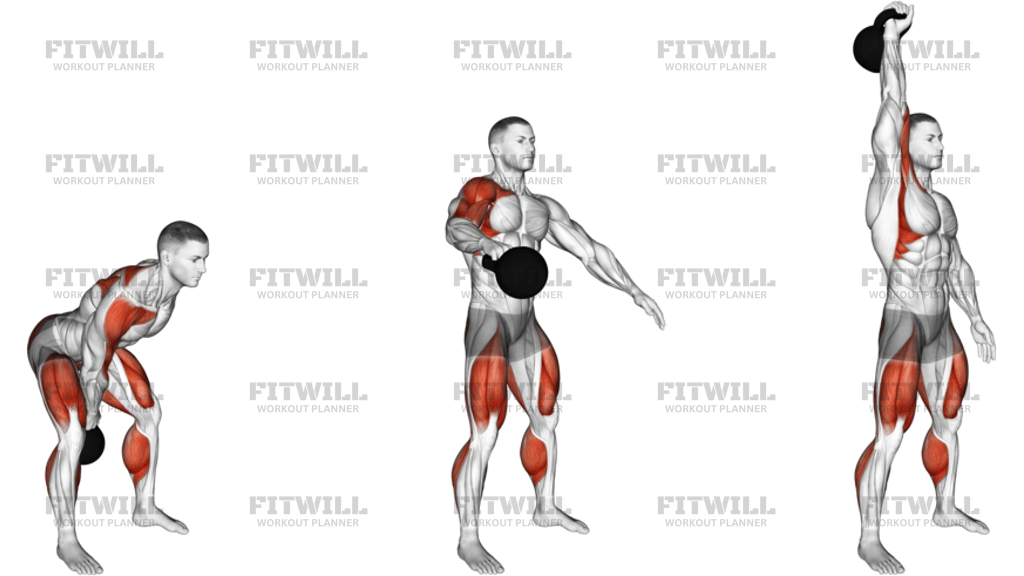
Kettlebell Power Clean
The Kettlebell Power Clean is an explosive full-body lift that takes a kettlebell from the floor to your shoulder in one fluid, powerful motion. Unlike a slow muscle clean, the power clean emphasizes speed and hip drive: you pull the bell aggressively from the ground and catch it in the rack position at your shoulder before it has time to swing or tumble. It is one of the foundational kettlebell movements because it teaches you how to generate force from the hips and absorb it safely at the shoulder.
This lift rewards athletes and general lifters for different reasons. Sprinters, jumpers, and field-sport athletes use it to train triple extension, the same ankle-knee-hip pattern behind sprinting and jumping. Everyday lifters use it as a gateway to more advanced kettlebell work, since a clean clean is the entry point for presses, front squats, and jerks. If your goals include power, conditioning, or simply moving a kettlebell from the floor to your shoulders without wasting energy, this is the movement to learn first.
The work is distributed across the whole body. The glutes and hamstrings drive the pull, the quads extend the knees off the floor, the lower back holds your trunk rigid, and the traps and shoulders receive the bell at the top. Your grip and forearms work hard too, because the handle must roll smoothly across your hand as the bell settles into the rack rather than crash onto your forearm.
Setup matters more here than in most gym lifts because the kettlebell starts on the floor between your feet. Position the bell slightly behind your heels with your weight centered over midfoot, hinge down with a flat back, and keep your shoulders above your hips. A sloppy setup, such as squatting straight down with a rounded spine or letting the bell drift forward, makes the pull awkward and puts stress on your lower back before the movement even starts.
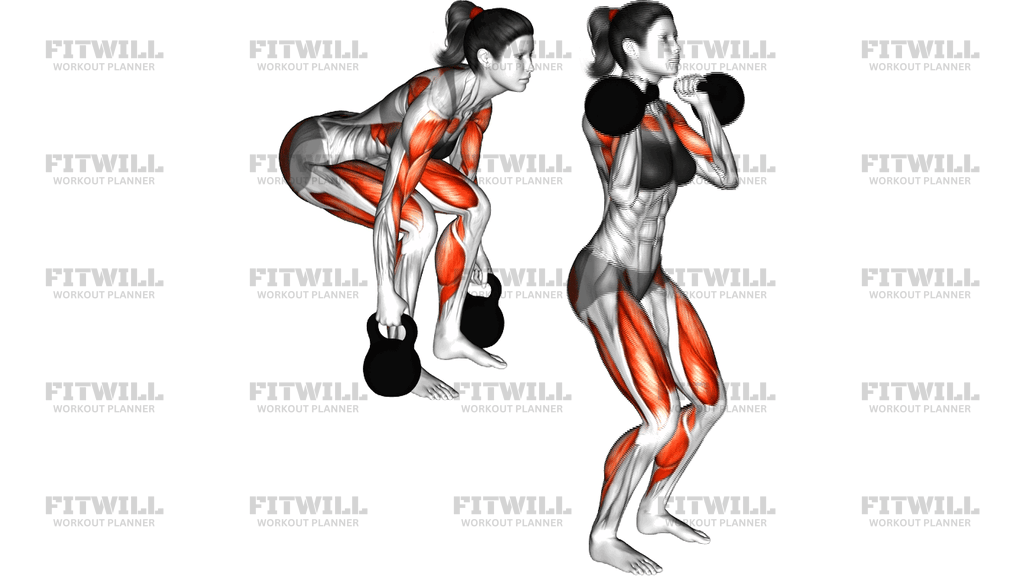
To execute it well, think of the clean as a jump that ends at your shoulder, not an arm lift. Drive the floor away with your legs, snap your hips forward, and let the kettlebell float upward while your hand simply guides it. As the bell rises, whip your elbow down and under so the handle rolls across your palm and the bell lands softly against the back of your forearm and shoulder. Reverse the pattern to return it, hinging at the hips and guiding the bell back to the floor between your feet rather than letting it drop.
A few practical points keep this lift safe and productive. Warm up your hips and shoulders with lighter, slower reps first, and start with a weight you could comfortably press overhead for several reps. Keep your wrist neutral in the rack, breathe out sharply at the catch, and reset your stance and brace between reps. If the bell bangs your forearm repeatedly, the problem is almost always hip power or elbow timing, not toughness, so reduce the load and smooth out the technique before adding weight.
[ Workout Log & Planner ]
Put your next workout in Fitwill
Keep your plan and training log ready when you are.


Instructions
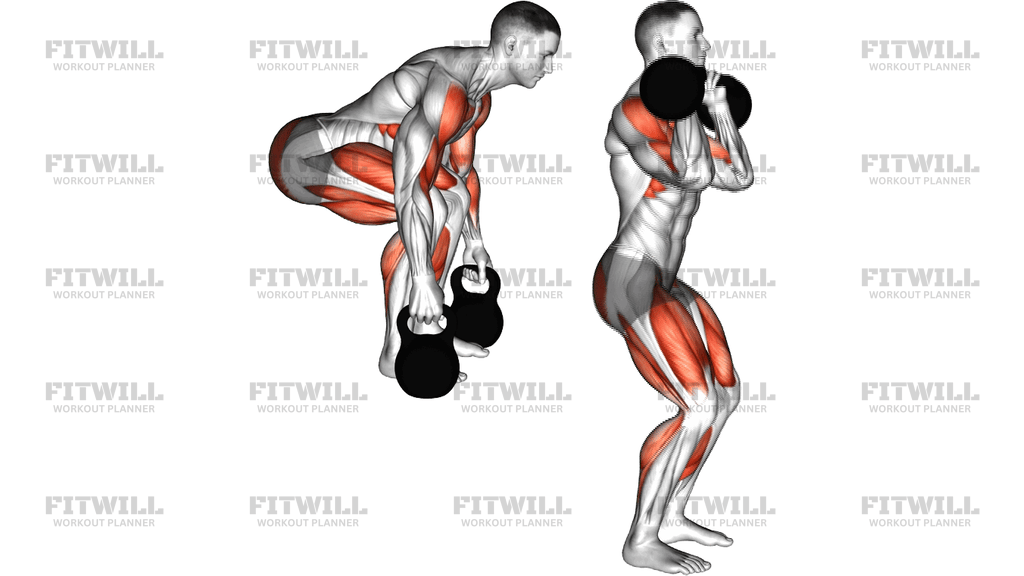
- Place a kettlebell on the floor between your feet, which are set about hip-width apart with the bell roughly under or slightly behind your ankles.
- Hinge at the hips and bend your knees to reach down, gripping the handle with one hand in an overhand grip while keeping your back flat, shoulders above hips, and chest facing the floor.
- Brace your core by tightening your midsection as if bracing for a light punch, and pull your shoulder blade back so the arm stays connected to your torso.
- Inhale, then drive your feet into the floor and extend your hips and knees explosively, keeping the arm relaxed so the kettlebell travels upward from leg drive, not arm pulling.
- As the bell rises past your waist, pull your elbow down and rotate your hand around the handle so the handle rolls to the base of your palm.
- Catch the bell in the rack position: kettlebell resting on the back of your forearm against your shoulder, elbow tucked near your ribs, wrist straight, and knees slightly softened to absorb the catch.
- Exhale sharply as the bell lands, and stand fully tall with glutes engaged before the next action.
- To return the bell, rotate your hand back around the handle, hinge at the hips, and guide the kettlebell down between your feet, letting it swing slightly back under your body before the handle reaches the floor.
- Reset your stance, spine position, and grip, then re-brace before performing the next repetition.
- Complete all reps on one side, then switch hands and repeat, keeping the weight on the floor during the switch.
Tips & Tricks
- If the kettlebell bangs down on your forearm, you are muscling it up with your arm. Push the floor harder with your legs and wait for the bell to float before pulling your elbow under.
- Do not start the pull by squatting straight down with the bell far in front of you. Keep the handle close to your ankle line so the load travels vertically rather than swinging forward.
- Keep your arm loose during the pull and tight only at the catch. A stiff arm from the floor turns the clean into a slow upright row and kills the power.
- Aim the catch so the handle sits diagonally across your palm, from the heel of the hand toward the index finger. Gripping with the handle centered in the palm forces a bent wrist in the rack.
- Keep your elbow pointing down and close to your ribs in the rack. An elbow flared out to the side makes pressing and front squats harder and strains the shoulder.
- Do not look up as you pull. Keep your neck in line with your spine so your hips and trunk stay in one connected hinge pattern.
- Lower the bell with control instead of dropping it. Hinging the bell back between your feet protects the floor, your back, and the bell itself.
- If your lower back rounds at the bottom, you have gone too deep. Bend the knees just enough to reach the handle and push your hips back instead of curling your spine.
- Reset between reps, especially when learning. Pulling consecutive cleans from a loose, unbraced start is where form usually breaks down.
- Choose a bell you can press for several reps. A weight that is fine to deadlift but too heavy to rack cleanly will expose your timing rather than build it.
Frequently Asked Questions
What muscles does the Kettlebell Power Clean work?
The main drivers are the glutes and hamstrings, with the quads extending the knees off the floor. The traps and shoulders catch and stabilize the bell, while the lower back, core, forearms, and grip support the entire pull.
Is the Kettlebell Power Clean suitable for beginners?
Yes, but learn it in stages. Practice the hip hinge, then the single-arm deadlift, then a slow high pull, and only add the catch once the bell floats smoothly to chest height. Starting light makes the timing far easier to learn.
Why does the kettlebell keep hitting my forearm during the Kettlebell Power Clean?
This almost always means the bell is being lifted with the arm instead of the hips, or the elbow is turning over too late. Drive harder with your legs, let the bell float, and pull your elbow down under it as it passes your chest.
How is the Kettlebell Power Clean different from a barbell power clean?
The kettlebell sits between your feet and finishes on one shoulder rather than across the front delts, so there is no need to catch in a deep front squat. The kettlebell version is easier on the wrists and easier to learn, though it demands more one-sided stability.
Where exactly should the kettlebell sit in the rack position?
The bell should rest on the back of your forearm against your shoulder and upper chest, with your elbow tucked down near your ribs and your wrist straight. If the bell sits out in front of your body or your wrist is bent back, re-catch with the handle rolling across your palm.
Can I do the Kettlebell Power Clean with two kettlebells at once?
Double cleans are a valid progression, but learn the single-arm version first. Two bells double the demand on your hinge, grip, and rack stability, so only move to doubles once your single-arm catch is quiet and consistent.
How should I breathe during the Kettlebell Power Clean?
Inhale and brace before the pull, then exhale sharply as the bell lands at your shoulder. Reset your breath while the bell is in the rack or on the floor between reps rather than holding it through the whole set.
What can I substitute if I do not have a kettlebell for the Kettlebell Power Clean?
A single dumbbell works reasonably well, though the center of mass sits differently and the catch is less smooth. A barbell power clean or a trap bar jump with a controlled lower also trains the same hip-drive pattern.
How heavy should the kettlebell be for the Kettlebell Power Clean?
Pick a weight you can deadlift comfortably and press for several clean reps. If the bell is so heavy that it swings you forward or crashes onto your arm, drop down until the catch is quiet and controlled.
Is it safe to drop the kettlebell to the floor after each clean?
Guiding the bell down with a hip hinge is the safer habit. Dropping it repeatedly stresses your wrists, the floor, and the bell, and it robs you of the controlled eccentric that teaches good lowering mechanics.