Kettlebell Single-Arm Thruster
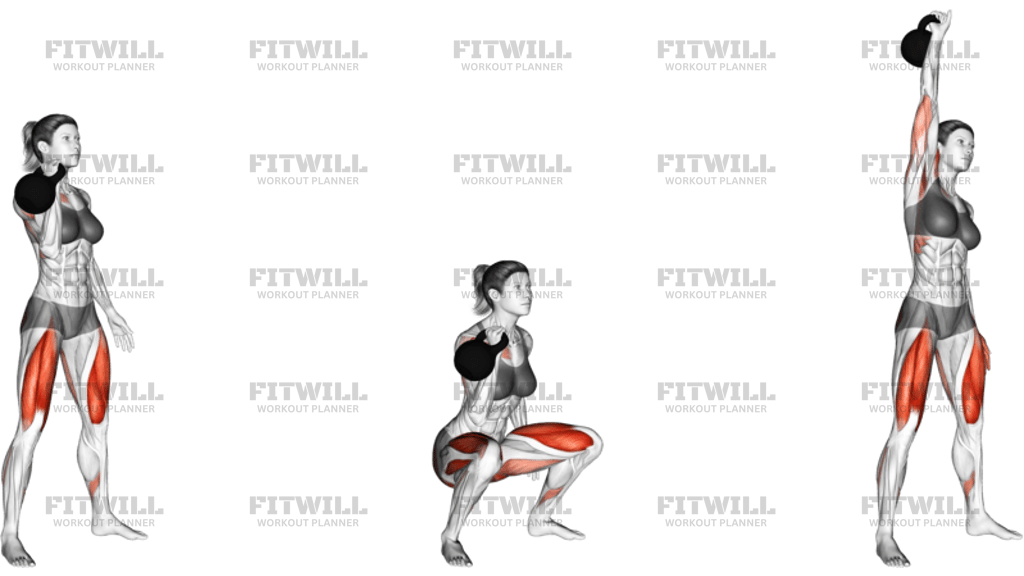
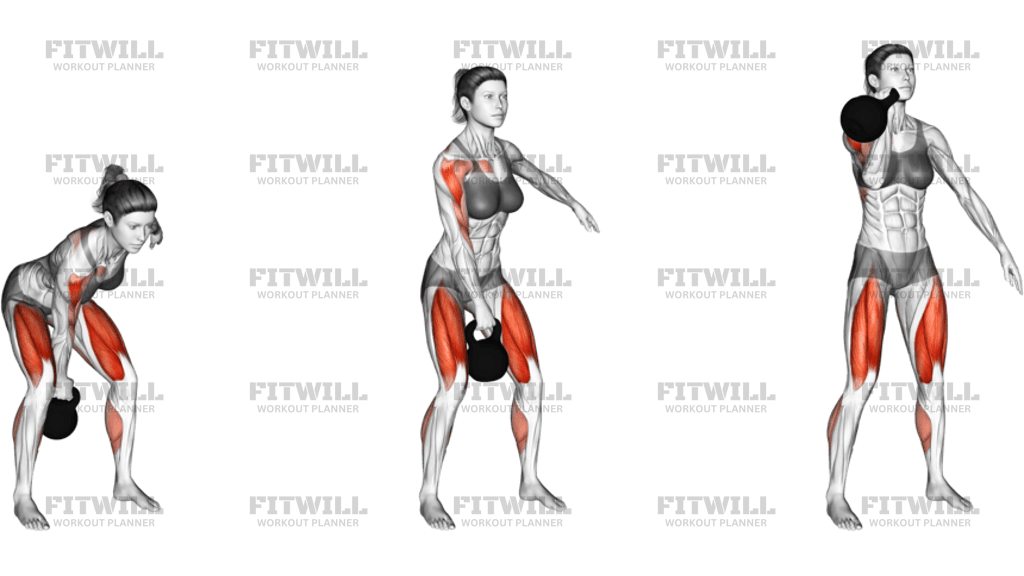
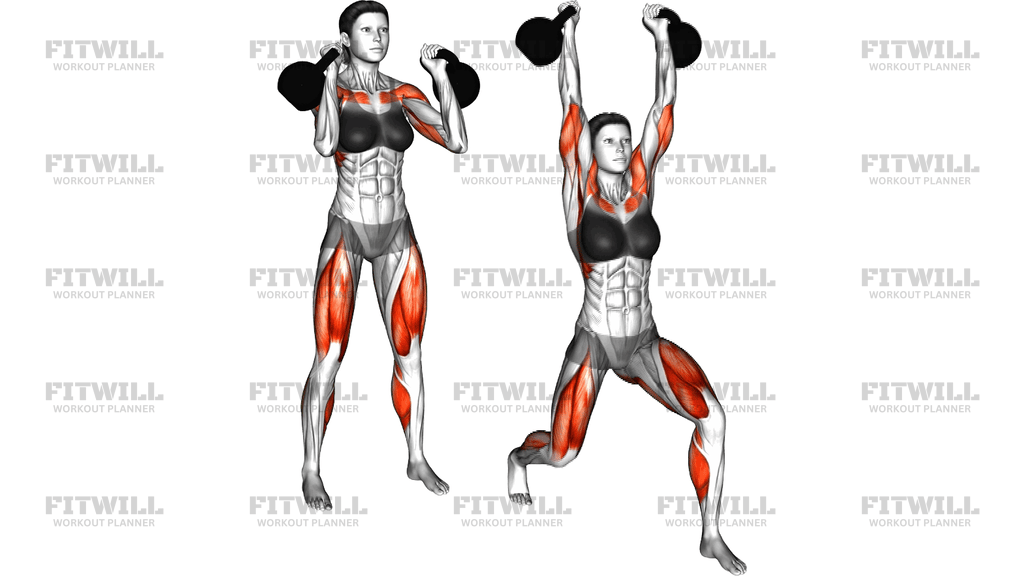
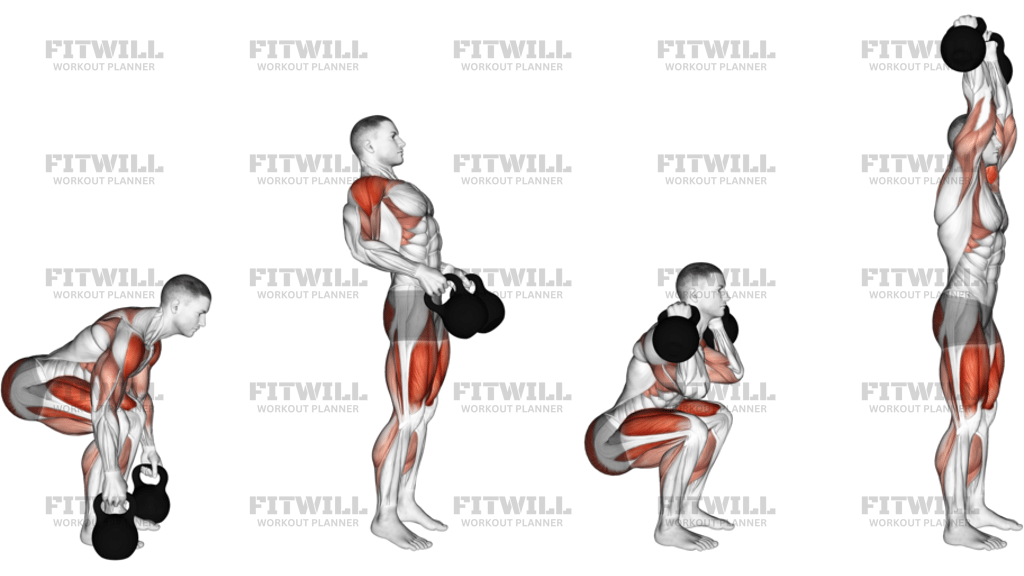
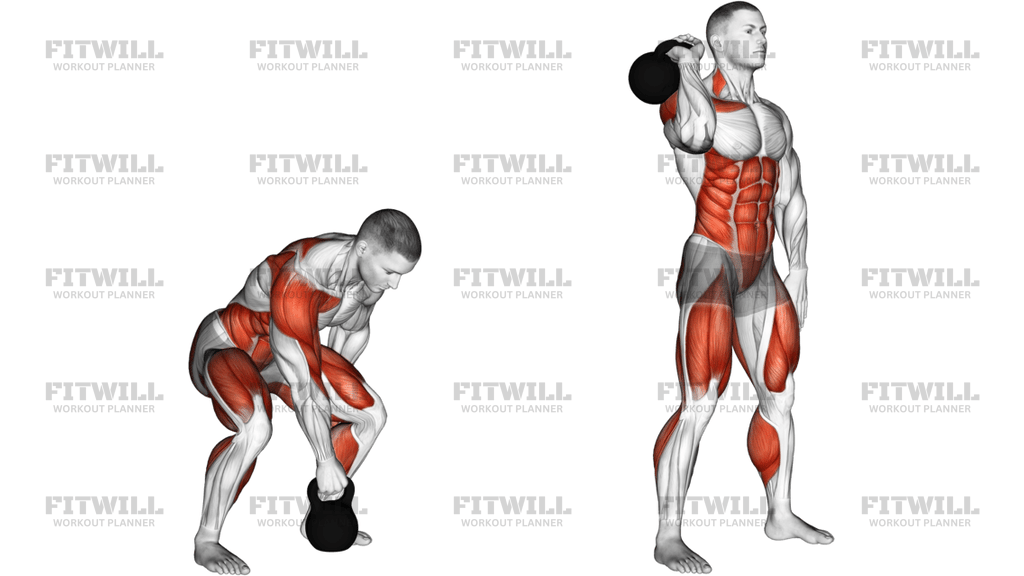
Kettlebell Single-Arm Thruster is a compound kettlebell lift that links a front squat with an overhead press on the same side. The bell sits in a front rack at one shoulder while the other arm stays free for balance, so the body has to manage load, posture, and rotation at the same time. That combination makes the exercise useful for building strength, coordination, and conditioning in a compact movement pattern.
The squat portion trains the legs to produce force from a stable base, while the press finishes the rep by driving the kettlebell straight overhead. In practice, the glutes and quads create most of the power, and the shoulder, triceps, upper back, and core help keep the bell on line. Because the weight is only on one side, the torso has to resist tipping or twisting, which is part of what makes Kettlebell Single-Arm Thruster more demanding than a two-handed version.
The setup matters because the rack position determines how smoothly the squat and press connect. Hold the kettlebell close to the chest with the forearm vertical, elbow tucked just in front of the rib cage, and the wrist stacked under the handle. Before you start, plant both feet, brace the midsection, and keep the ribs from flaring as you descend into the squat.
Each repetition should feel like one continuous drive rather than two separate actions. Drop under control into the squat, then drive up through the floor and let that leg drive carry the kettlebell into the press. Finish tall with the arm locked out overhead, biceps close to the ear, and the bell centered over the shoulder and midfoot. Lower it back to the rack with control so the next squat starts from a stable position.
Kettlebell Single-Arm Thruster is useful when you want a movement that trains strength and work capacity without needing a barbell or machine. It fits well in full-body sessions, kettlebell complexes, and conditioning blocks where clean reps matter more than maximal load. Keep the rep quality high, use a bell you can stabilize overhead, and stop the set if the torso starts leaning, the elbow drifts out of the rack, or the press turns into a shaky half-rep.
[ Workout Log & Planner ]
Put your next workout in Fitwill
Keep your plan and training log ready when you are.


Instructions
- Stand tall with your feet about shoulder-width apart and rack the kettlebell at one shoulder, keeping the bell close to your forearm and the elbow slightly in front of your ribs.
- Set the free arm slightly out from your side for balance, plant your whole foot, and stack your wrist, elbow, and shoulder before you begin.
- Take a breath, brace your midsection, and keep your chest tall without letting your ribs flare forward.
- Sit down into a squat by bending your knees and hips together, keeping your heels down and your knees tracking over your toes.
- Descend until your thighs reach a comfortable squat depth, then hold the kettlebell steady in the front rack instead of letting it drift away from your body.
- Drive up forcefully through your feet and stand out of the squat as the kettlebell starts to travel upward.
- Press the kettlebell straight overhead with the same-side arm, finishing with the elbow locked and the biceps close to your ear.
- Lower the kettlebell back to the front rack under control, absorb the next squat with soft knees, and repeat for the planned reps before switching sides.
Tips & Tricks
- Keep the kettlebell glued to your forearm in the rack; if it bangs away from the shoulder, the press becomes unstable fast.
- Let the legs start the drive and finish the press only after you begin standing, not before the squat is complete.
- If your torso leans toward the bell, lighten the load and use a slightly narrower stance so the weight stays over midfoot.
- Keep the elbow pointed down and slightly forward in the rack; a flared elbow usually makes the next squat harder to control.
- Do not turn the rep into a push press with an early arm punch; the kettlebell should rise because your legs and shoulder work together.
- Exhale as you stand and press, then reset your breath at the top before the next descent.
- Lock out overhead only if the rib cage stays stacked over the pelvis; if the low back arches, shorten the press path and reduce load.
- Use a bell that feels steady in the top position, because a shaky overhead lockout is usually the first sign the weight is too heavy.
- Switch sides after the set and treat both racks the same; a sloppy off-side setup usually shows up as a crooked squat.
Frequently Asked Questions
What muscles does Kettlebell Single-Arm Thruster work most?
It mainly trains the legs, glutes, shoulders, triceps, and core. The squat provides most of the force, and the press finishes the rep overhead.
Should the kettlebell stay in the front rack during the squat?
Yes. Keep the bell parked at the shoulder with the forearm vertical so the load stays close and the press can start cleanly from the squat.
Do I press first or stand up first in Kettlebell Single-Arm Thruster?
Stand up and press as one continuous drive, but the legs should start the movement. If the arm is doing all the work early, the rep is too heavy.
How deep should I squat in Kettlebell Single-Arm Thruster?
Squat as deep as you can while keeping the heel down, the knee tracking well, and the kettlebell steady in the rack. Depth is useful only if it stays balanced.
Can I keep the free arm anywhere I want?
Use it as a balance arm, usually slightly out to the side or forward. Letting it swing wildly adds rotation and makes the squat less stable.
Is Kettlebell Single-Arm Thruster good for beginners?
Yes, if the bell is light enough to stay stable in the rack and overhead. Beginners should master the front-rack squat and press path before loading it heavily.
Why does my torso lean to one side during this exercise?
That usually means the bell is too heavy or too far from your body. Keep the kettlebell tight to the shoulder and reduce the load until the torso stays stacked.
What is a good variation if overhead pressing bothers my shoulder?
Use a lighter kettlebell and shorten the press range, or practice the front-rack squat and single-arm press separately before combining them.