Kettlebell Split Jerk
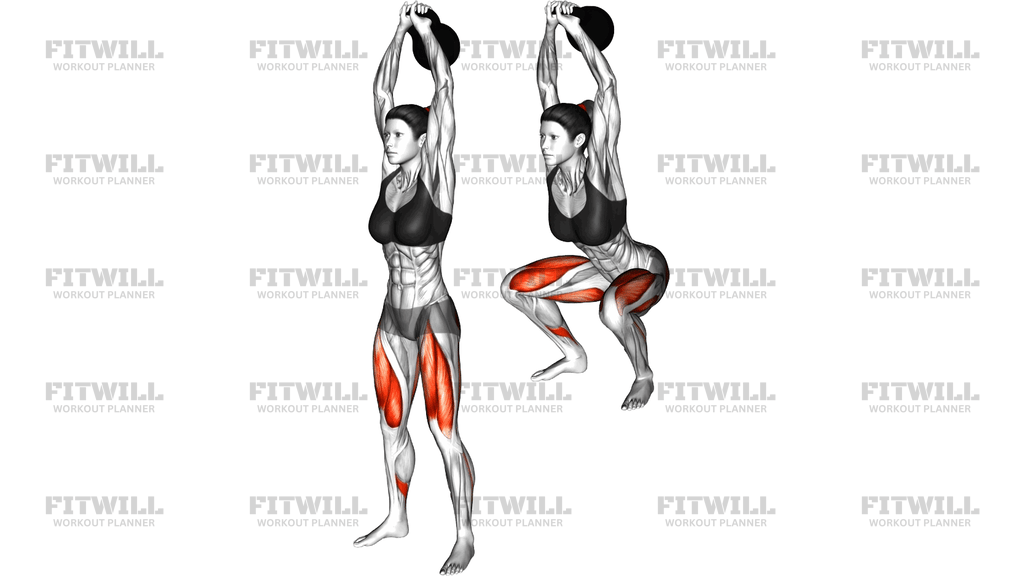
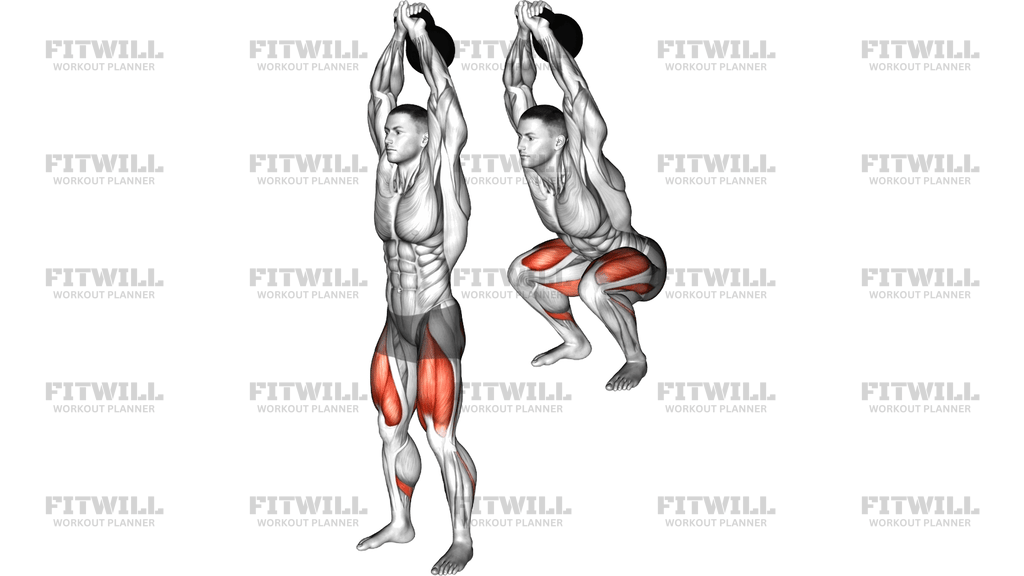
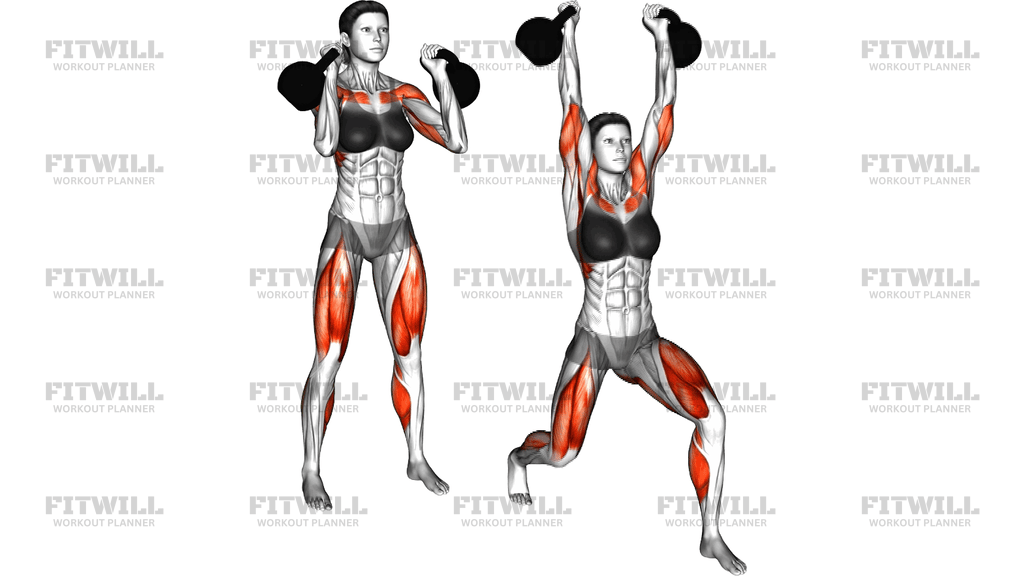
The Kettlebell Split Jerk is a full-body power lift where you drive two kettlebells from the rack position at your shoulders straight overhead, catching them with your arms locked out in a split stance — one foot stepped forward, the other back. The image shows the classic start and finish: kettlebells resting on the forearms and shoulders at the top of the first position, then both bells stacked vertically over the head with the front knee bent and the back knee tracking down toward the floor. Because the legs supply most of the force, this lift lets you put weights overhead that your shoulders alone could never press.
This is one of the most complete movements in kettlebell training. The quads, glutes, and calves generate the dip-and-drive, the core transfers that force up the body, and the shoulders, triceps, and upper back finish the job by fixing the bells overhead. Since the split catch demands balance and coordination, you also train ankle stabilizers, hip control, and timing — qualities that carry over to sports and to barbell weightlifting.
Setup matters more here than in most pressing exercises. The kettlebells should sit in the rack position with elbows tucked close to the ribs, wrists relatively straight, and the bells resting on the outside of your forearms rather than hanging off your fingers. A shallow quarter-squat dip with a vertical torso is what feeds power into the drive; dip too deep and the bells get heavy and slow, dip too shallow and you leave force on the table.
To execute well, think of it as one sharp burst: dip, drive the floor away, punch both bells up as your feet split, and lock out with the front shin roughly vertical and the back knee softly bent. Once the bells are stable overhead, bring your feet back to hip width under control, then lower the kettlebells back to the rack for the next rep or to the floor to reset. Breathe sharply in through the nose before the dip and exhale forcefully through pursed lips as you drive.
The Kettlebell Split Jerk suits lifters who already own a solid kettlebell front rack and a push press. It is a staple in kettlebell sport conditioning, general strength programs, and metabolic circuits because it trains power and breathing under load at the same time. Start with lighter bells than you think you need — the split catch, not the drive, is where most people struggle — and keep the floor around you clear of anything you could trip on if you lose balance.
[ Workout Log & Planner ]
Put your next workout in Fitwill
Keep your plan and training log ready when you are.


Instructions
- Clean two kettlebells to the rack position, letting the bells rest on the outside of your forearms with elbows tucked against your ribs and wrists straight.
- Stand with feet about hip-width apart, weight spread evenly through the whole foot, and gaze forward.
- Brace your core and pull your ribs down slightly so your torso stays tall and vertical over the hips.
- Inhale into your belly, then perform a short, quick dip by bending your knees a few inches without letting your chest drop forward.
- Drive your legs hard into the floor to stand up explosively, letting that force start to lift the kettlebells off your shoulders.
- As the bells rise, punch both arms up forcefully and split your feet — front foot stepping forward, back foot stepping back — so your head can pass between your arms.
- Lock both elbows overhead with the kettlebells stacked directly over your shoulders and hips, front shin close to vertical and back knee softly bent.
- Pause long enough to confirm balance, then step your feet back together to hip-width while keeping the bells locked out.
- Exhale sharply through pursed lips during the drive; inhale again before the next rep or after lowering.
- To finish, lower the kettlebells under control back into the rack, absorb them with a small knee bend, then take a breath and reset your rack before the next rep or return the bells to the floor.
Tips & Tricks
- Dip only a few inches — a deep dip turns the kettlebells into dead weight and makes the punch slow and forward instead of up.
- If the bells drift out in front of you at lockout, your torso leaned forward during the dip; keep your chest stacked over your hips and drive straight down through the floor.
- Split your feet the same short distance every rep — a giant front step pitches you forward onto the ball of the foot and a tiny one keeps the back knee crashing down.
- Keep the kettlebells resting on your forearms in the rack; if your wrists bend back or the bells hang off your fingers, the drive will pull you out of position.
- Punch the hands fast — the split jerk is a push up into the bells, not a catch with soft arms, so finish with elbows fully locked rather than holding them bent.
- Move the back foot first in your mind's eye: most missed jerks come from an under-stepped back leg, leaving you stacked too far over the front knee.
- Recover from the split by stepping the front foot back to hip-width first, not by dragging the back foot forward while leaning.
- Lower the bells into the rack with your elbows staying close to the body; flaring them wide on the descent slams the bells into your chest and round your upper back.
- If you cannot balance in the split, practice the footwork without weight or with one light kettlebell before jumping back to double bells.
Frequently Asked Questions
Which muscles does the Kettlebell Split Jerk work the most?
The shoulders and triceps finish the lockout, but the quads, glutes, and calves produce most of the power during the dip and drive. The core and upper back work hard to transfer force and keep the bells stable overhead.
Can beginners do the Kettlebell Split Jerk?
It is best learned after you are comfortable holding a kettlebell front rack and can perform a solid push press. Start with one light kettlebell, master the dip-drive and split footwork, then add the second bell.
Why do I use a split stance instead of just pressing the kettlebells up?
Splitting the feet lets you drop your body under the bells as they rise, so you can fix weights overhead that your arms alone could not press. It shortens the distance the bells travel and lets your legs do the heavy lifting.
How deep should the dip be in the Kettlebell Split Jerk?
Only a few inches — a shallow quarter-squat with a vertical torso. If your chest tips forward or your heels lift, the dip is too deep or too loose, and you will lose the punch upward.
Which foot should go forward in the split?
Use the split that feels most natural — many people lead with their stronger or dominant leg. The key is that the front shin stays close to vertical and the back knee bends softly rather than slamming toward the floor.
What is the most common mistake with double kettlebell jerks?
Letting the bells drift forward of the shoulders during the drive, which usually comes from a loose rack or a forward-leaning dip. Keep elbows tucked and wrists straight so the bells ride straight up over your hips.
How is the Kettlebell Split Jerk different from a push press?
A push press keeps both feet planted and relies more on the shoulders to complete the press. The split jerk uses a bigger leg drive and a foot split, dropping your body under the bells so they lock out with almost no pressing effort.
What can I substitute if the split stance feels unstable?
The Kettlebell Push Press or a power jerk — driving the bells up and dipping slightly with both feet instead of splitting — trains the same leg drive with easier balance demands before you progress to the split.
How should I breathe during the Kettlebell Split Jerk?
Inhale into your belly before the dip, exhale forcefully through tight lips as you drive and lock out, then take another quick breath with the bells overhead or in the rack between reps. Do not hold your breath through the whole movement.
How heavy should the kettlebells be for this exercise?
Choose weights you can hold comfortably in a double front rack with straight wrists — usually lighter than what you would press. The timing of the split catch limits most people before their pressing strength does.