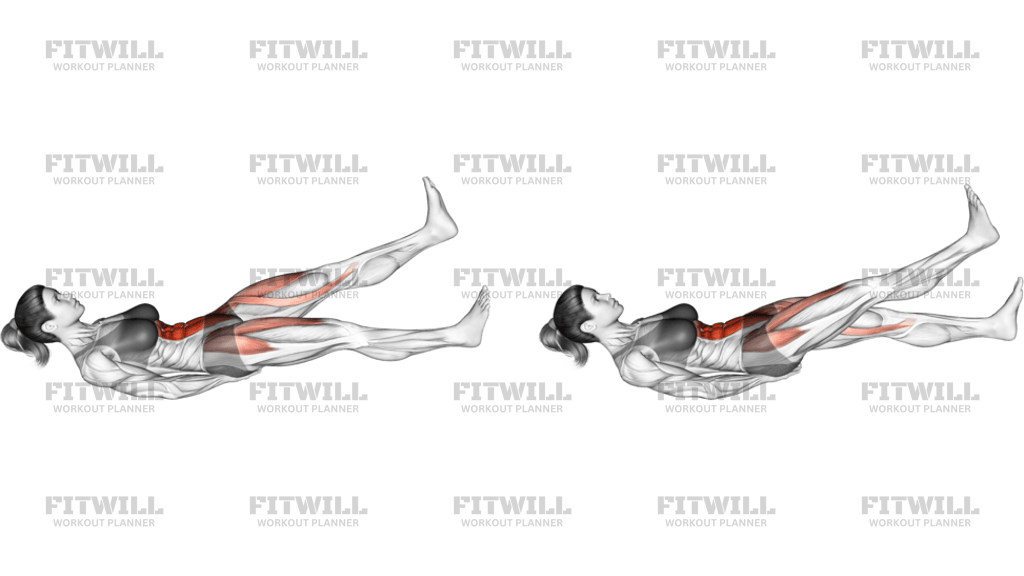
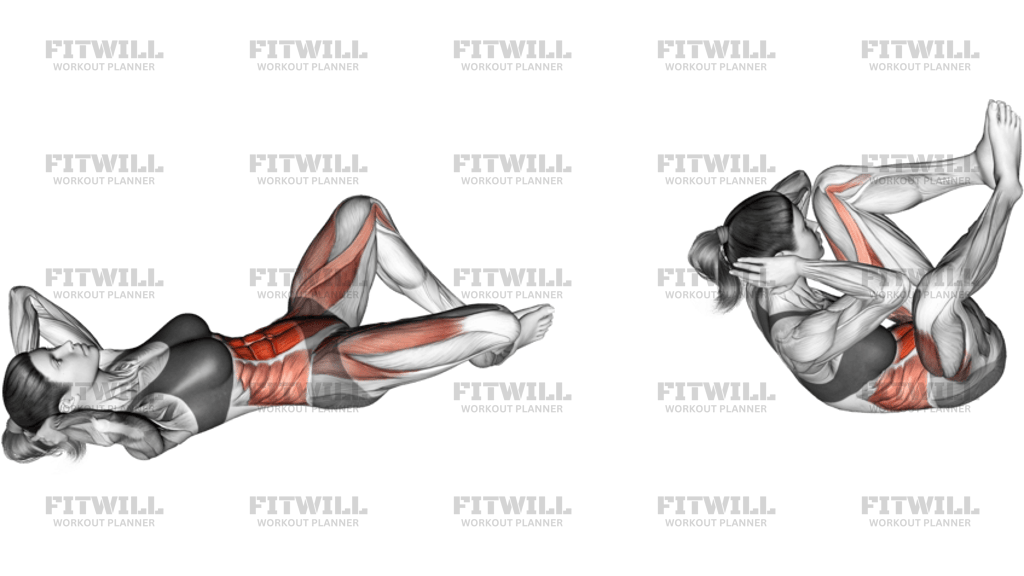
Lying Leg Raise
Lying Leg Raise is a floor-based core exercise that challenges you to keep your torso still while the legs travel through a long lever. It places the main demand on the abs, with the hip flexors and deeper core muscles helping to control the pelvis and keep the lower back from taking over. The movement looks simple, but the difference between a useful rep and a sloppy one is usually how well you keep your ribs down and your pelvis tucked.
This exercise works best when you treat the start position as part of the rep. Lie flat on the floor or a mat, keep the legs straight and together, and let the arms rest by your sides for balance. Press the lower back gently into the floor before the first lift, because that posterior pelvic tilt is what keeps the abs loaded and stops the movement from turning into a lower-back arch.
As the legs rise, lift them together with control until you reach a height you can own without the back peeling away from the floor. At the top, the pelvis should stay slightly curled rather than relaxed, and the return should be slower than the lift so the abs stay under tension. Exhale as the legs come up, then inhale on the way down without letting the torso loosen.
Lying Leg Raise is useful as accessory core work, a warm-up for bracing patterns, or a finishing drill when you want a strict bodyweight challenge. It is especially helpful for people building toward hanging leg raise variations, because it teaches the abdominal brace and pelvic control that those progressions require. If the hip flexors dominate or the low back arches, shorten the range, bend the knees slightly, or use your hands under the hips for feedback.
The safest and most productive reps are the ones that stop before the pelvis tips forward or the legs swing. Keep the movement smooth, repeatable, and centered on the abs instead of chasing a higher leg position. When the set starts to turn into momentum, reduce the range or end the set and reset before the lower back starts doing work it should not be doing.
[ Workout Log & Planner ]
Put your next workout in Fitwill
Keep your plan and training log ready when you are.


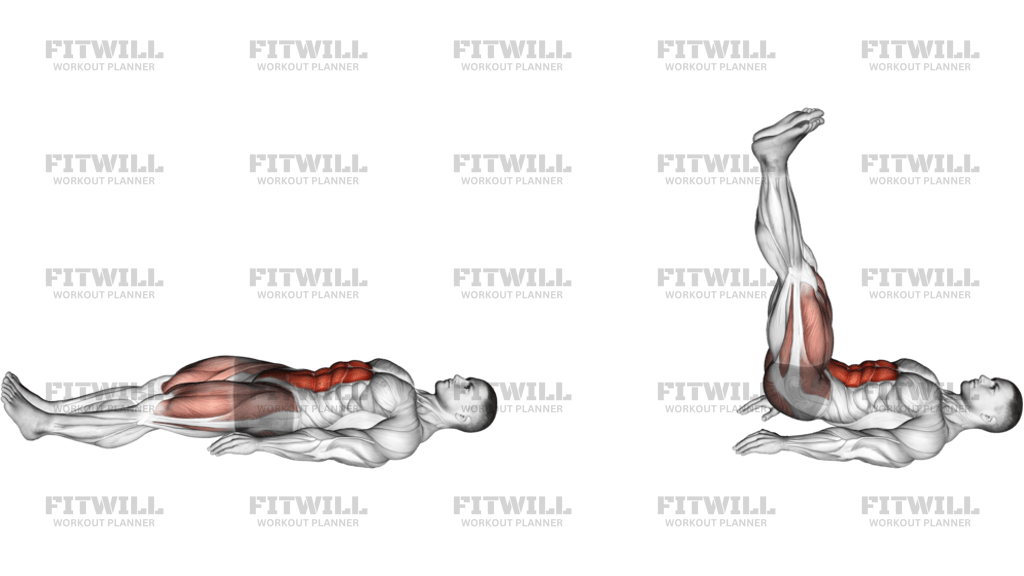
Instructions
- Lie on a mat or flat floor with your legs straight, feet together, and arms resting by your sides for balance.
- Press your lower back gently into the floor by tucking your pelvis and pulling your ribs down.
- Keep your chin slightly tucked and brace your abs before the first lift.
- Raise both legs together without bending the knees, keeping the feet stacked over each other.
- Lift only as high as you can while the lower back stays in contact with the floor.
- Pause briefly at the top and keep the pelvis curled instead of letting it arch.
- Lower the legs slowly until the heels hover just above the floor, keeping tension on the abs.
- Reset the brace between reps and stop the set if your back starts to lift or your legs begin to swing.
Tips & Tricks
- If your lower back pops off the floor, shorten the lowering phase and stop the rep higher.
- Keep the legs together; letting them drift apart usually makes pelvic control worse.
- A small knee bend is a valid regression if straight legs pull too hard on your hip flexors.
- Use your palms on the floor for stability, or slide your hands under your hips if you need a little more feedback.
- Think about curling your pelvis toward your ribs at the top instead of just lifting your feet higher.
- Make the descent slower than the ascent so the abs stay loaded through the whole rep.
- If your hip flexors cramp, reduce the range and pause before the legs reach the floor.
- Avoid swinging the legs up from momentum; the first inch of the lift should feel deliberate and controlled.
Frequently Asked Questions
What does Lying Leg Raise train most?
Lying Leg Raise mainly trains the abs, especially the lower portion of the rectus abdominis, while the hip flexors help move the legs.
Is Lying Leg Raise good for beginners?
Yes, but beginners should keep the range shorter, bend the knees slightly if needed, and stop before the lower back starts arching.
Why does my lower back lift during Lying Leg Raise?
That usually means the legs are lowering farther than your abs can control. Raise them a little higher and keep the pelvis tucked into the floor.
Should my legs stay completely straight?
Straight legs are the standard version, but a soft knee bend is fine if it helps you keep the torso still and the movement strict.
How high should I lift my legs?
Lift only as high as you can while the lower back stays glued down. For most people, that is somewhere between a low-angle raise and vertical.
Should I put my hands under my hips?
You can if the floor version feels too hard on your low back. It gives a little extra support and helps you notice when the pelvis starts to tilt.
Why do I feel Lying Leg Raise more in my hip flexors than my abs?
Usually the range is too large or the pelvis is not tucked enough. Shorten the rep, keep the ribs down, and think about curling the pelvis upward instead of just lifting the legs.
What is the best way to make Lying Leg Raise harder?
Slow the lowering phase, add a brief pause near the bottom, or keep the legs lower as long as the lower back stays controlled.