Lever Alternate Biceps Curl
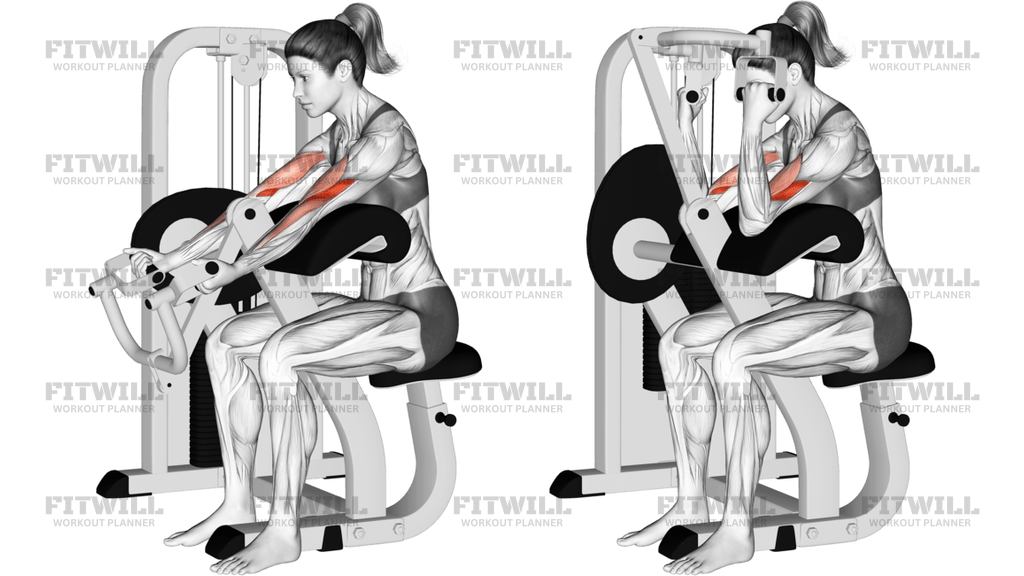
The Lever Alternate Biceps Curl is a machine-based arm exercise performed seated at a leverage biceps curl station. You sit with your back against the upright pad, take a handle in each hand with your arms hanging down at your sides, and curl one arm up at a time toward the shoulder while the other arm stays extended. The machine's lever arms and weight plates provide resistance along a fixed arc, which keeps the movement smooth and predictable from rep to rep.
This exercise primarily trains the biceps brachii on the front of the upper arm, with solid involvement from the brachialis underneath it and the brachioradialis and forearm flexors working to hold the handles. Because each arm works on its own, you can also spot and correct side-to-side strength differences in a way that is hard to do with a barbell.
The seated setup matters more than it might seem. With your back braced against the pad and your upper arms hanging vertically beside your torso, the shoulders have very little chance to swing forward or lean back to help the weight. That means the tension stays on the elbow flexors, where you want it, instead of drifting into the front of the shoulders or the lower back. The fixed lever path also removes the balance demands of free weights, letting you focus purely on squeezing the biceps.
To execute it well, keep the movement deliberate: curl one handle up until your elbow is fully flexed, pause briefly at the top to feel the contraction, then lower under control until the arm is nearly straight before switching sides. Avoid letting the working shoulder hike up, and resist the temptation to shorten the range at the bottom, since the stretch portion is where a lot of the growth stimulus lives.
The Lever Alternate Biceps Curl fits well as a primary arm builder in a machine-focused program, as a finisher after heavier free-weight curls, or as a beginner-friendly introduction to biceps training since the machine guides the path. It is also a practical choice for anyone managing grip fatigue, because the handles are supported by the machine rather than hanging from a bar.
A few practical points will keep it productive. Choose a load you can lower slowly for every rep, keep both feet flat on the floor for a stable base, and match the rep count on each arm so the weaker side sets the pace. If the seat height allows adjustment, set it so the handles sit roughly at hip level with your arms fully extended and relaxed before you begin.
[ Workout Log & Planner ]
Put your next workout in Fitwill
Keep your plan and training log ready when you are.


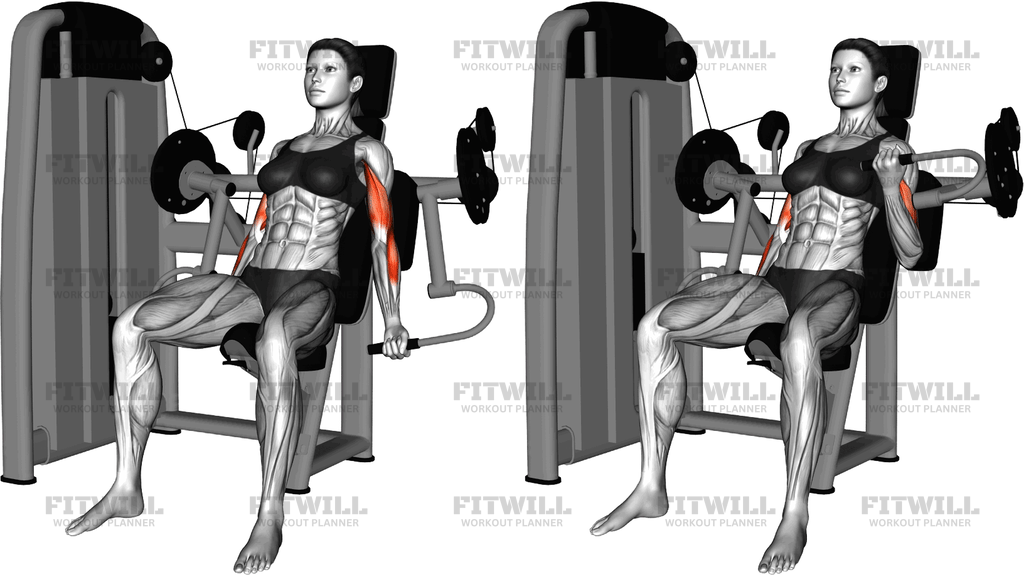
Instructions
- Sit on the leverage curl machine with your back flat against the upright pad, both feet flat on the floor about hip-width apart.
- Grip one handle in each hand using an underhand (supinated) grip, letting your arms hang straight down at your sides with elbows fully extended.
- Adjust the seat if needed so the handles align with your relaxed arms and your shoulders stay down and back.
- Brace your core lightly and press your upper back into the pad to lock your torso in place before starting.
- Exhale and curl one handle up in a smooth arc toward the same-side shoulder, keeping your upper arm vertical and your elbow pinned beside your torso.
- Squeeze the biceps at the top of the curl, holding the fully flexed position for a brief pause.
- Inhale and lower the handle under control until your arm is nearly straight, resisting the weight on the way down.
- Begin the next rep with the opposite arm, alternating arms throughout the set so both sides get equal work and rest.
- Complete all reps on both sides, then release the handles and let the lever arms settle before standing up.
- Reset your posture against the pad between sets rather than letting your hips slide forward or your shoulders round.
Tips & Tricks
- The most common fault is leaning the torso back to help the handle up; if you feel your back press harder into the pad as you curl, the weight is too heavy or you are rushing the rep.
- Keep the working elbow glued to your side. If it drifts forward, the front shoulder starts taking over and the biceps lose tension at the top.
- Alternate arms rep for rep rather than doing all reps on one side first; this keeps fatigue even and makes side-to-side comparison honest.
- Let the working arm reach near-full extension at the bottom before switching. Cutting the bottom range short is the fastest way to stall progress on this machine.
- Squeeze the handle firmly but do not crush it; excessive grip tension can pull the forearm into the movement and shift work away from the biceps.
- If your shoulder rises toward your ear as you curl, consciously pull it down and back before the next rep.
- The machine's fixed arc should feel natural at the elbow. If your wrist or elbow joint feels jammed at the top, check your grip width on the handle before changing the load.
- Take two to three seconds on the lowering phase. The leverage setup makes it easy to let the arm drop, and a fast eccentric wastes most of the set.
- Start lighter than you think you need for the first session; the seated position removes momentum, so loads often feel heavier than the equivalent dumbbell curl.
Frequently Asked Questions
Which muscles does the Lever Alternate Biceps Curl work?
The biceps brachii is the primary mover, with the brachialis and brachioradialis assisting elbow flexion. The forearm flexors also work isometrically to hold the handles throughout each rep.
Why curl one arm at a time instead of both together?
Alternating arms lets you focus on each side's contraction fully and prevents your stronger arm from compensating. It also gives the resting arm a brief recovery, which can help you keep technique sharp on later reps.
Is the Lever Alternate Biceps Curl good for beginners?
Yes. The fixed lever path removes the balance and stabilization demands of dumbbells, so a beginner can learn what a proper biceps contraction feels like without worrying about swinging or wrist position.
How does this machine curl compare to a standing dumbbell curl?
The machine locks your torso against the pad and guides the arc, which eliminates body English and makes the resistance curve consistent. Dumbbells allow freer wrist and elbow paths but also make it easier to cheat with momentum.
What is the most common mistake on this exercise?
Leaning back into the pad or letting the elbow travel forward to finish the curl. Both errors shift work away from the biceps, so keep the upper arm vertical and reduce the weight if you cannot move it cleanly.
How should I set the seat height?
Adjust it so your arms hang fully extended and relaxed at your sides with the handles roughly at hip level. If the seat is too high or low, the lever arc will not match your natural elbow path.
What can I use if my gym does not have a leverage curl machine?
Seated alternating dumbbell curls with your back braced against an upright bench are the closest substitute. Cable curls with a single handle also work well since the cable provides constant tension in a similar manner.
How many reps and sets should I do?
Two to four sets of 8 to 15 reps per arm works well for muscle growth. Since each arm counts as one rep in an alternating set, track the per-arm count so both sides get equal volume.
Is it safe for my elbows and wrists?
Generally yes, because the machine supports the weight and fixes the path. Stop and reassess your grip or seat height if you feel pinching at the elbow or wrist, and avoid locking the elbow hard at the bottom of each rep.
Should I fully straighten my arm at the bottom of each curl?
Getting close to full extension is worthwhile because the stretched position contributes meaningfully to the training effect. Just lower with control rather than letting the weight yank the arm straight.