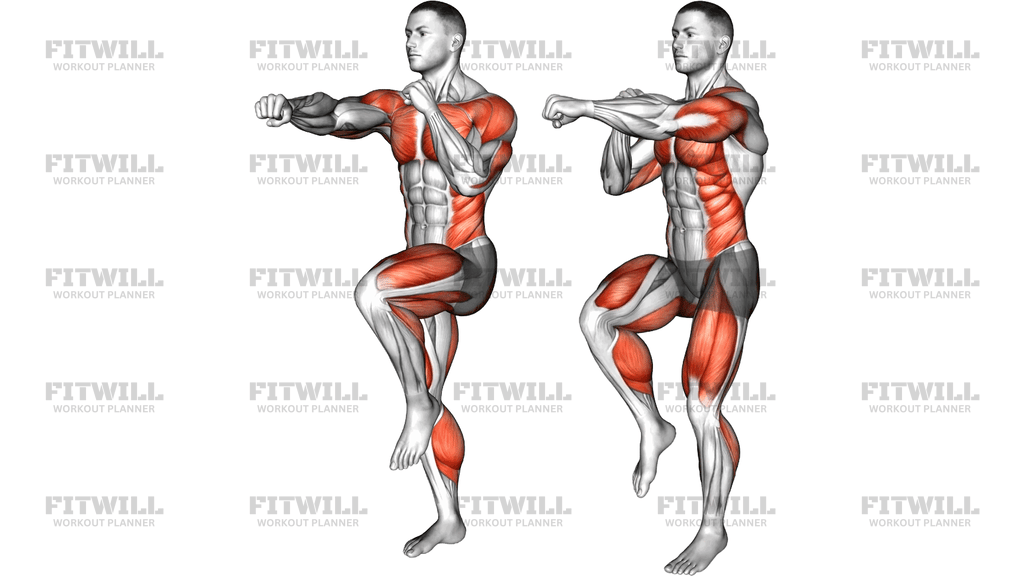
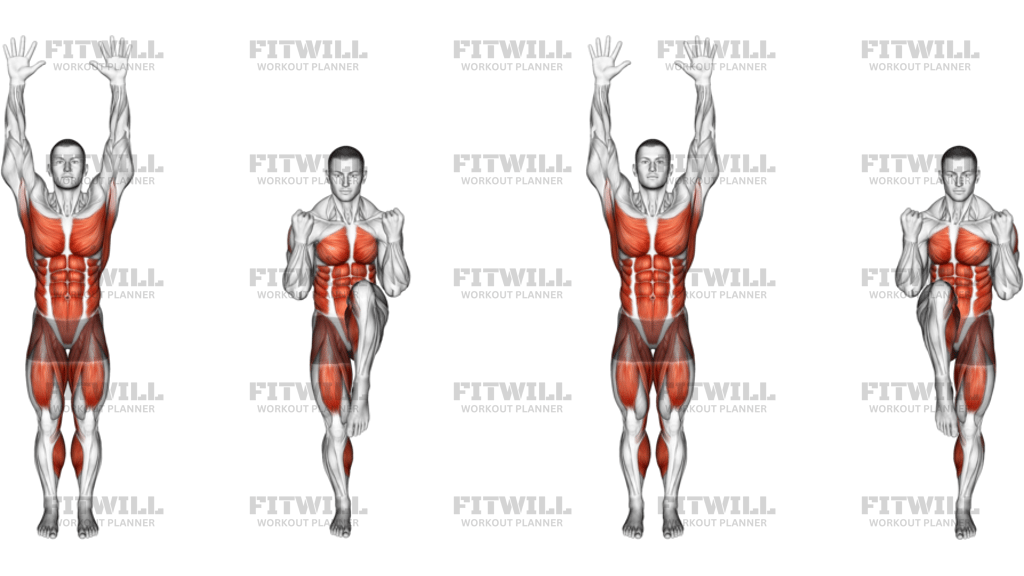
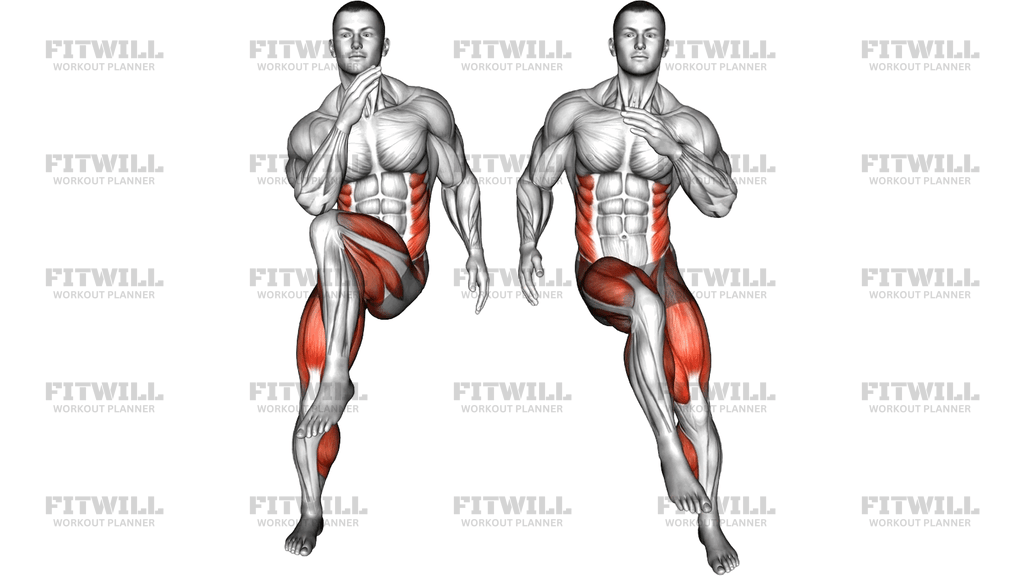
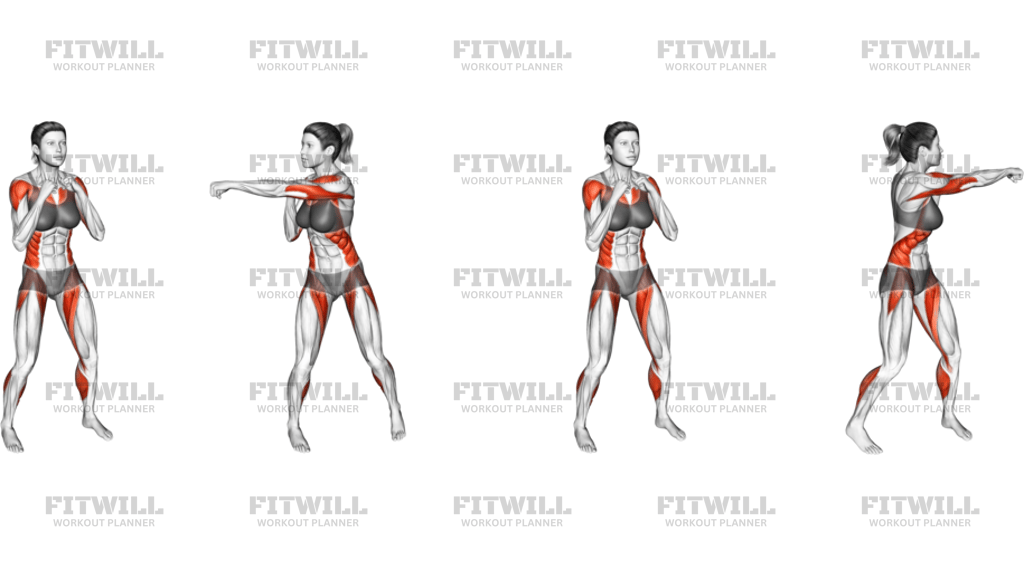
Jump Split
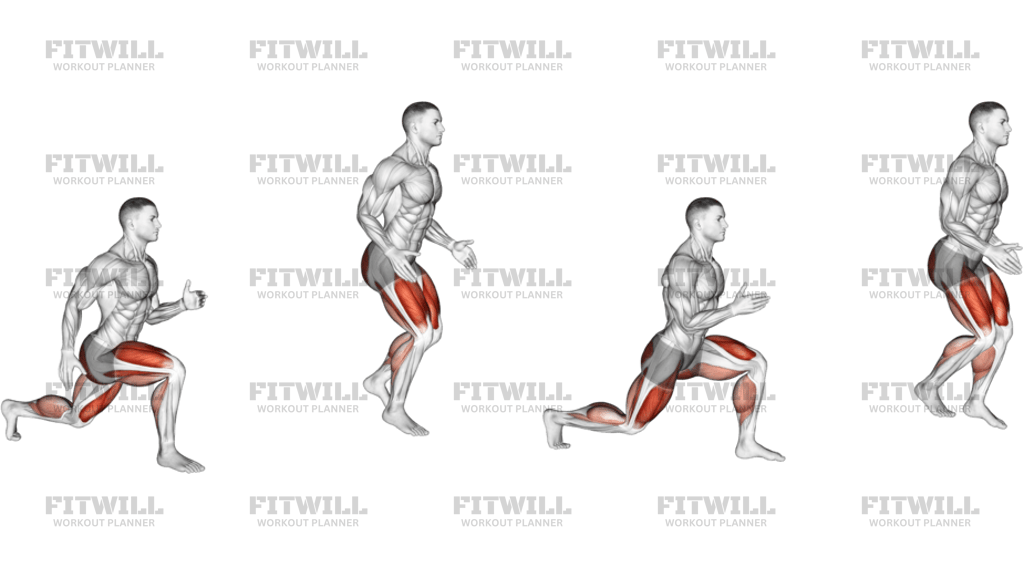
Jump Split is a bodyweight plyometric split jump performed from a staggered lunge stance. It trains lower-body power, coordination, and landing control by asking you to explode vertically, switch the legs in midair, and absorb force quietly on the way down. The movement is simple, but the quality of each rep depends on how well you keep the pelvis level, the torso organized, and the landing balanced.
This exercise loads one leg in front and the other behind, so the front thigh, glute, calf, and hip stabilizers do most of the work while the trailing leg helps produce and absorb the jump. Because both legs alternate every rep, Jump Split is useful for athletic conditioning, sprint preparation, and plyometric work where you want quick force production without a machine or external load.
The setup matters more than it looks. Start with a long but natural split stance, front foot flat, rear heel lifted, and both knees soft. Keep your hips squared forward and your ribs stacked over the pelvis so the jump starts from a stable base instead of a forward lean. If the stance is too narrow, you will feel unstable; if it is too long, the landing becomes slow and hard to control.
Each repetition should be a vertical jump, not a leap forward. Lower under control into a split squat, then drive through the floor and switch legs while you are still in the air. Land in the opposite split stance with bent knees, a quiet foot strike, and enough control to immediately repeat the next rep. The arms can help with rhythm, but they should not throw the body off balance or twist the trunk.
Use Jump Split when you want explosive lower-body work with a clear landing mechanic. It fits well in warmups, jump training blocks, circuits, or conditioning sessions, but it is not the right choice when your knees, Achilles, or balance are already irritated. Keep the reps crisp, stop when the landings get noisy, and regress to a split squat or low-amplitude switch step if you need to clean up the pattern before jumping higher.
Fitwill
Log Workouts, Track Progress & Build Strength.
Achieve more with Fitwill: explore over 9600 exercises with images and videos, access built-in and custom workouts, perfect for both gym and home sessions, and see real results.
Start your journey. Download today!




Instructions
- Stand in a split stance with one foot forward and the other back, front foot flat, rear heel lifted, and hips facing straight ahead.
- Keep your torso tall, ribs stacked over your pelvis, and arms set in a running-style position for balance.
- Lower into a split squat until both knees are bent and the back knee is close to the floor without touching it.
- Brace your midsection, then drive forcefully through the front foot and the ball of the back foot to jump straight up.
- Switch your legs in the air so the back leg becomes the front leg before you land.
- Land softly in the opposite split stance with bent knees, a flat front foot, and the rear heel off the floor.
- Absorb the landing with control, keeping the front knee tracking over the toes and the hips square.
- Reset your balance and repeat for the planned number of reps, exhaling on the jump and inhaling on the descent.
Tips & Tricks
- Keep the jump vertical; if you drift forward, the landing becomes harder to control and the rear leg will swing instead of helping you switch positions.
- Land quietly. A loud foot strike usually means you are dropping too hard or losing tension through the hips and ankles.
- Let the front knee travel in line with the second or third toe instead of collapsing inward.
- Use a split stance that feels athletic, not extreme. A stance that is too long makes the switch sluggish and stresses the hips.
- Think of pushing the floor away with both legs, especially the front foot, rather than trying to leap with the upper body.
- Keep your torso long and slightly forward from the hips, not rounded through the lower back.
- Use your arms to help timing, but do not fling them so aggressively that you twist sideways in the air.
- If your landings start getting uneven, reduce the jump height or switch to alternating split squats before fatigue turns the reps sloppy.
Frequently Asked Questions
What muscles work most during Jump Split?
The front leg takes the biggest share, so you will feel the quads, glutes, calves, and hip stabilizers working hardest.
Is Jump Split the same as a split squat jump?
Yes. It is the same alternating plyometric lunge jump pattern, with the legs switching in the air each rep.
How low should I drop before jumping?
Lower only as far as you can keep the front foot stable and the rear knee controlled. You do not need a deep lunge to get a good plyometric effect.
What is the biggest form mistake on this exercise?
The most common issue is jumping forward or collapsing the front knee inward instead of staying tall and landing in a clean split stance.
Can beginners do Jump Split safely?
Beginners can try it if they already control a split squat and can land softly. Otherwise, start with alternating split squats or small switch steps.
Should my back heel touch the floor?
No. The rear heel stays lifted so you can switch legs quickly and keep tension through the lower body.
Where should I feel the landing?
You should feel the load spread through the front foot, shin, thigh, and glute, with the rear leg helping you balance and switch sides.
When should I stop the set?
Stop when the landings become noisy, the torso starts wobbling, or you can no longer switch legs cleanly in the air.