Front Plank Side Hop
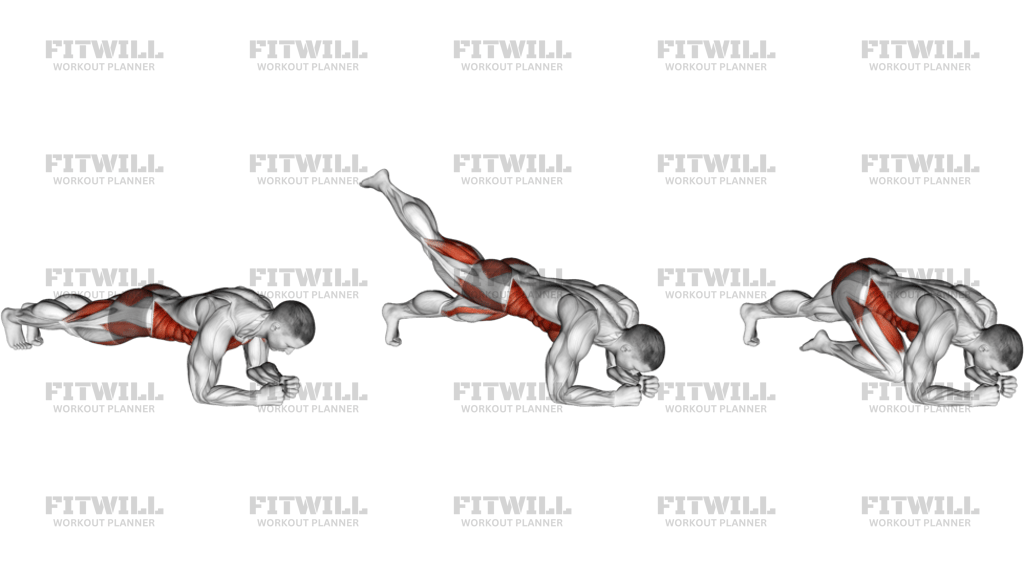
Front Plank Side Hop is a bodyweight plyometric core drill performed from a strong high-plank position. The hands stay under the shoulders while the feet spring laterally to one side and back through center, creating a fast side-to-side loading pattern without losing the plank line. The exercise asks the trunk to resist rotation while the shoulders keep the upper body steady and the legs provide the hop.
This movement is usually used for core endurance, athletic foot speed, and conditioning. It trains the ability to keep the ribs stacked over the pelvis while the lower body changes position quickly. The primary work comes from the abdominals, obliques, shoulder stabilizers, glutes, and hip stabilizers, with the wrists and chest supporting the body against the floor.
Set the movement up with the wrists under the shoulders, fingers spread, neck long, and legs extended behind you. Before each hop, brace the midsection and squeeze the glutes so the lower back does not arch. The feet should land softly and close to the floor; the goal is a quick, controlled shift, not a big jump. If the torso starts twisting or the hips rise too high, shorten the hop and slow the pace.
Front Plank Side Hop works well in warmups, plyometric circuits, or core finishers when you want speed without a lot of equipment. It is also a useful regression to coach plank stability before more advanced locomotion work. Keep the range small, breathe rhythmically, and stop the set as soon as the shoulders drift, the low back sags, or the landing stops feeling quiet and controlled.
[ Workout Log & Planner ]
Put your next workout in Fitwill
Keep your plan and training log ready when you are.


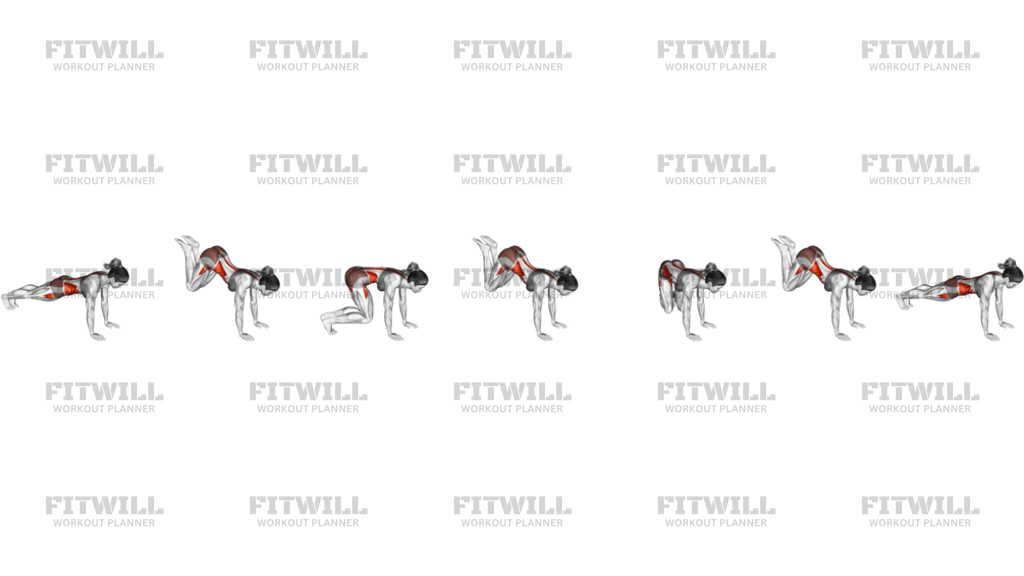
Instructions
- Start in a high plank with your palms under your shoulders, arms straight, feet together, and your body in one long line from head to heels.
- Spread your fingers, press the floor away, and keep your shoulders stacked over your wrists.
- Brace your abs and squeeze your glutes before the first hop so your low back stays flat.
- Hop both feet a short distance to one side while your hands stay planted and your chest keeps facing the floor.
- Land softly on the balls of your feet with bent knees and minimal hip sway.
- Hop the feet back through center or to the opposite side, depending on how the set is prescribed.
- Keep each hop low and rhythmic so the torso does not bob up and down.
- Exhale on each hop and reset the plank quickly on the landing.
- Stop the set if your shoulders drift forward, your hips pike up, or your lower back starts to sag.
Tips & Tricks
- Keep the hop short; a larger jump usually breaks the plank line before it improves the drill.
- Think of your hands as anchors and let the feet do the moving so the torso stays quieter.
- Press through the whole palm and spread your fingers if the wrists feel overloaded.
- Aim for quiet landings, since loud feet usually mean the hop is too high.
- Keep your eyes on the floor a little ahead of your hands so your neck stays neutral.
- If your hips start to pike, slow the cadence and bring the feet back under control before the next rep.
- Use a steady exhale on each hop to keep the ribs from flaring and the core from relaxing.
- Step the feet side to side instead of hopping if wrist, shoulder, or trunk control is the limiting factor.
Frequently Asked Questions
What muscles does Front Plank Side Hop work?
It mainly challenges the core, especially the abs and obliques, while the shoulders, glutes, and hip stabilizers keep the plank from shifting.
Is this the same as a plank jack?
No. A plank jack moves both feet in and out symmetrically, while a side hop sends the feet laterally across the floor.
Should my hands move during the rep?
No. Keep your palms planted under your shoulders and let the feet do the work.
How do I know if my plank is strong enough?
You should be able to hold a clean high plank first without your low back sagging or your shoulders drifting forward.
Can I do this if my wrists get sore?
Yes, but reduce the hop size, spread the load through your whole hand, or regress to a slower stepping version if the wrists still complain.
What is the biggest form mistake?
Usually it is letting the hips twist or pike while chasing speed. The torso should stay much quieter than the feet.
How can I make it easier?
Shorten the hop, slow the cadence, or step the feet side to side instead of jumping.
How can I make it harder?
Increase speed only if the plank stays solid, and keep the hops low so the core has to resist rotation under faster footwork.