Lying Air Cycles
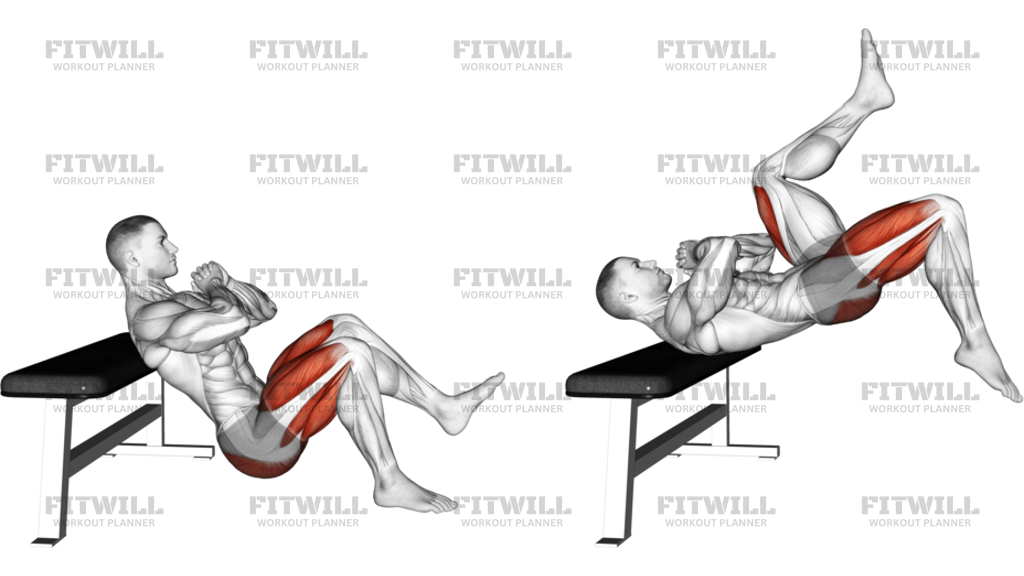
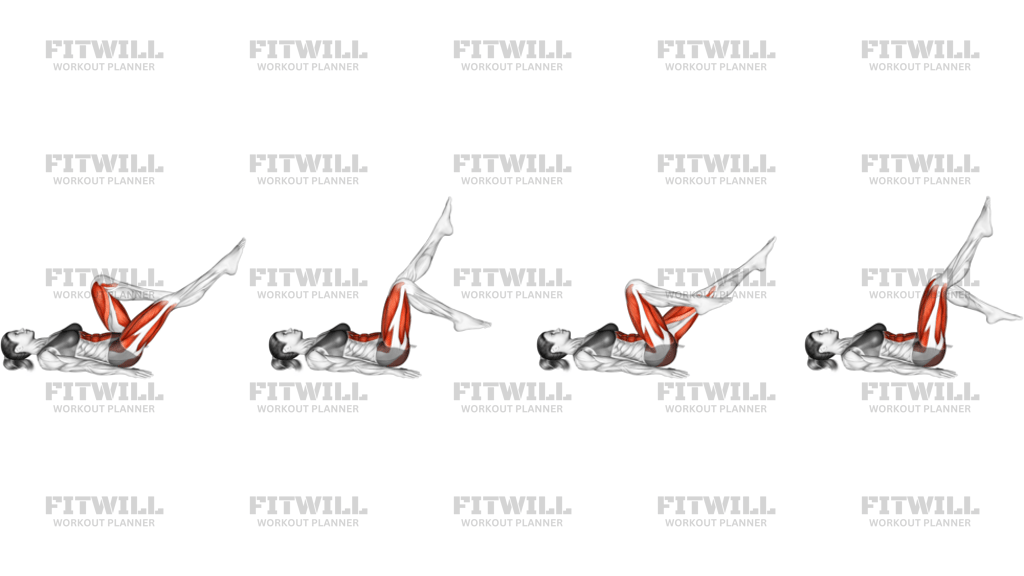
Lying Air Cycles is a bodyweight floor exercise that combines alternating leg extension with a crunch and torso twist. In the image, the body stays on the back while one knee draws in as the other leg reaches long, creating a cycling pattern through the core. It is best thought of as a controlled abdominal drill, not a speed exercise, because the quality of each switch depends on how well the ribs, pelvis, and neck stay organized.
The main training effect comes from the front of the trunk working with the obliques to lift and rotate the torso while the hip flexors help drive the pedaling action. That makes the exercise useful for core endurance, trunk coordination, and conditioning blocks where you want repeated tension without external load. The working range is small, but the demand rises quickly when the extended leg is held low and the twist is kept honest.
Setup matters more here than it first appears. Lie flat with the lower back lightly pressed into the floor, shoulders lifted just enough to clear the shoulder blades, and hands kept light behind the head or at the temples. From that position, one knee comes toward the chest as the other leg lengthens away without letting the low back arch. The goal is to keep the pelvis steady while the legs and rib cage move in opposite directions.
Each repetition should feel like a smooth pedal rather than a frantic kick. Twist from the rib cage to bring the opposite shoulder toward the bent knee, then switch sides under control. Exhale through the crunch, inhale as you pass through the center, and avoid yanking the head forward or forcing the elbow to touch the knee. The movement should stay continuous, but it should never turn into swinging through the hips or collapsing through the neck.
Use Lying Air Cycles as a warmup core drill, an ab finisher, or accessory work inside a conditioning circuit. It is especially useful when you want a floor-based exercise that challenges rotation and anti-extension at the same time. If the low back starts to lift, the hip flexors dominate, or the neck feels strained, shorten the leg reach and slow the cadence. Clean reps matter more than fast reps in this movement, and the image shows exactly why: the useful tension comes from controlled alternation, not from momentum.
Fitwill
Log Workouts, Track Progress & Build Strength.
Achieve more with Fitwill: explore over 9600 exercises with images and videos, access built-in and custom workouts, perfect for both gym and home sessions, and see real results.
Start your journey. Download today!




Instructions
- Lie on your back on the floor and lift your shoulders so the shoulder blades hover off the ground.
- Place your hands lightly behind your head or at your temples, and keep your elbows wide instead of pulling forward.
- Press your lower back into the floor before you start so your ribs stay stacked over your pelvis.
- Bend one knee toward your chest while extending the other leg long without letting the low back arch.
- Twist your torso so the opposite elbow moves toward the bent knee, using your ribs to rotate rather than your neck.
- Switch legs in a smooth pedaling motion as the bent knee extends and the long leg comes back in.
- Exhale during each crunch and twist, then inhale as you pass through the center and change sides.
- Keep the movement continuous but controlled for the planned number of reps, then lower your shoulders and feet to finish.
Tips & Tricks
- Think about lifting your rib cage and rotating your torso, not reaching your elbow toward your knee.
- Keep the extended leg low enough to challenge your abs, but high enough that your lower back never pops off the floor.
- A small twist is enough; forcing the elbow to touch the knee usually turns the rep into neck pulling and hip swinging.
- If your hip flexors take over, bend the working knee a little more and shorten the leg extension.
- Move one leg out only as far as you can keep the opposite side of your pelvis steady.
- Hold your head lightly instead of pushing it forward, and keep your chin slightly tucked to avoid neck strain.
- Slow the switch between sides so each rep has a clear crunch phase and a clear extension phase.
- Stop the set when your legs start to bicycle faster than your torso can stay organized.
Frequently Asked Questions
What muscles does Lying Air Cycles work most?
It primarily trains the rectus abdominis and obliques, with the hip flexors assisting during the alternating leg drive.
Should my elbow touch the opposite knee?
No. The twist should come from the rib cage and shoulder, and the rep is still effective even if the elbow never reaches the knee.
Why do I need to keep my lower back on the floor?
Keeping the lower back down prevents the movement from turning into a hip-flexor swing and keeps the work on the abs and obliques.
How low should the straight leg go during the cycle?
Only as low as you can control without arching your back; the image shows a long reach, but range should always stay clean.
Can beginners do this exercise?
Yes. Beginners usually do better with a smaller range, bent knees, and a slower cadence until they can keep the torso steady.
Why does my neck get tired during bicycle crunches?
That usually means the hands are pulling the head forward or the torso is not rotating enough. Keep the hands light and let the ribs initiate the crunch.
How can I make Lying Air Cycles harder?
Slow the switches, keep the extended leg lower, and pause briefly at the top of each twist without losing floor contact through the low back.
What should I change if my hip flexors burn before my abs?
Shorten the leg extension, bend the moving knee more, and focus on exhaling through the crunch so the abs drive the rep instead of the thighs.