Broad Jump To Vertical
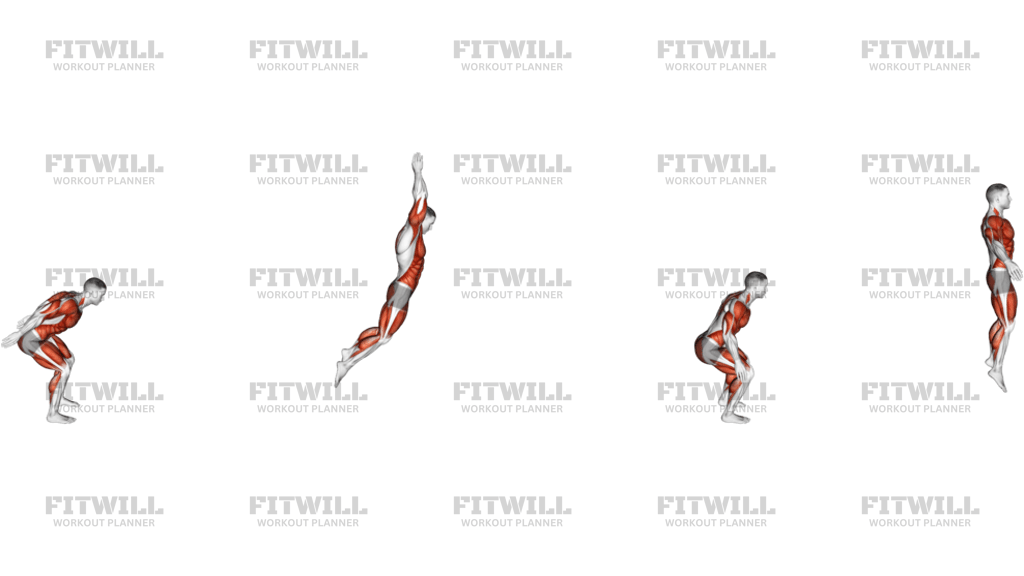
Broad Jump to Vertical is a bodyweight plyometric drill that combines a horizontal leap with a second explosive takeoff straight upward. It is built to train lower-body power, elastic rebound, and landing control rather than pure strength or endurance. The value of the movement is in how cleanly you can transfer force from the first jump into the second without losing posture, balance, or rhythm.
The exercise starts from an athletic quarter-squat with the hips loaded, the chest slightly over the thighs, and the arms ready to swing. From there, you jump forward for distance, absorb the landing, and then rebound vertically with a tall finish overhead. That transition matters: the forward jump should set up the vertical jump, not turn into a collapse, shuffle, or extra reset.
This pattern loads the glutes, quads, hamstrings, calves, and trunk in a coordinated way. The trunk and upper back keep the body organized while the lower body produces the force. If the knees cave inward, the torso folds too far forward, or the landing gets loud, the exercise stops being a power drill and turns into a sloppy hop sequence.
Use this movement when you want athletic plyometric work in a warm-up, speed session, or conditioning block that still prioritizes mechanics. It is especially useful for athletes who need to project force forward and then reorient it vertically. The best reps are crisp, repeatable, and short enough to keep each landing under control.
Because this is a high-impact drill, the setup and spacing matter. Give yourself enough room to land and recover, use a non-slip surface, and keep the jump distance conservative at first. If the landing feels heavy or unstable, reduce the forward distance before trying to jump higher. Clean power is the goal, not maximum distance or height on every rep.
[ Workout Log & Planner ]
Put your next workout in Fitwill
Keep your plan and training log ready when you are.


Instructions
- Stand on a clear, non-slip surface with your feet about hip-width apart and enough space to land forward and then jump vertically.
- Lower into a loaded athletic squat with your hips back, chest slightly forward, and arms behind you to prepare for the swing.
- Brace your midsection, then drive your arms forward and jump out in front of you for a controlled broad jump.
- Land softly on both feet with your knees tracking over your toes and your hips ready to absorb the impact.
- As soon as you have control of the landing, rebound straight up into a vertical jump with an aggressive arm swing.
- Reach tall at the top of the vertical jump without arching your lower back or losing a stacked ribcage.
- Land quietly again with bent knees and stable feet, then reset your stance before the next rep if needed.
- Keep each repetition crisp and stop the set when the forward jump or the vertical rebound loses height, speed, or control.
Tips & Tricks
- Choose a broad-jump distance you can stick cleanly before you worry about jumping higher.
- Use the arm swing to help both jumps; if the arms are late, the second takeoff usually feels weak.
- Keep the first landing quiet and centered over the midfoot instead of reaching so far forward that your heels slam down.
- Think hips back on takeoff and hips back again on landing; that repeatable hinge keeps the knees from drifting inward.
- If the rebound vertical turns into a shallow hop, shorten the broad jump and rebuild the transition.
- Keep the chest proud enough to stay organized, but do not let the torso pitch so far forward that you lose the vertical finish.
- Use full recovery between reps if you want power; this drill is about quality output, not fatigue.
- Stop the set when the landing gets loud or the vertical jump loses snap, because that is usually the first sign of power drop-off.
Frequently Asked Questions
What does Broad Jump to Vertical train?
It trains lower-body power, reactive strength, and the ability to absorb and reapply force through the hips, knees, and ankles.
Is Broad Jump to Vertical good for beginners?
Yes, if the jumps are kept short and the athlete can land softly and balance before the vertical rebound.
How should my feet land after the broad jump?
Land with both feet under control, knees tracking over the toes, and pressure spread through the whole foot instead of collapsing onto the heels or toes.
Do I reset after the broad jump or rebound immediately?
The intended pattern is to absorb the landing and rebound quickly into the vertical jump, but the landing still has to be controlled first.
Why is the arm swing important in this exercise?
The arm swing helps create distance on the broad jump and helps drive the body upward on the vertical jump.
What are the main mistakes with Broad Jump to Vertical?
Jumping too far forward, landing too stiff, letting the knees cave inward, and losing the vertical finish are the most common problems.
What surface is best for this drill?
Use a flat, non-slip surface such as turf, a gym floor, or another forgiving area with enough room to land safely.
How do I progress Broad Jump to Vertical?
Progress by improving landing quality, then gradually increasing jump distance, vertical intent, or total reps while keeping the mechanics sharp.