Swim Leg Circle
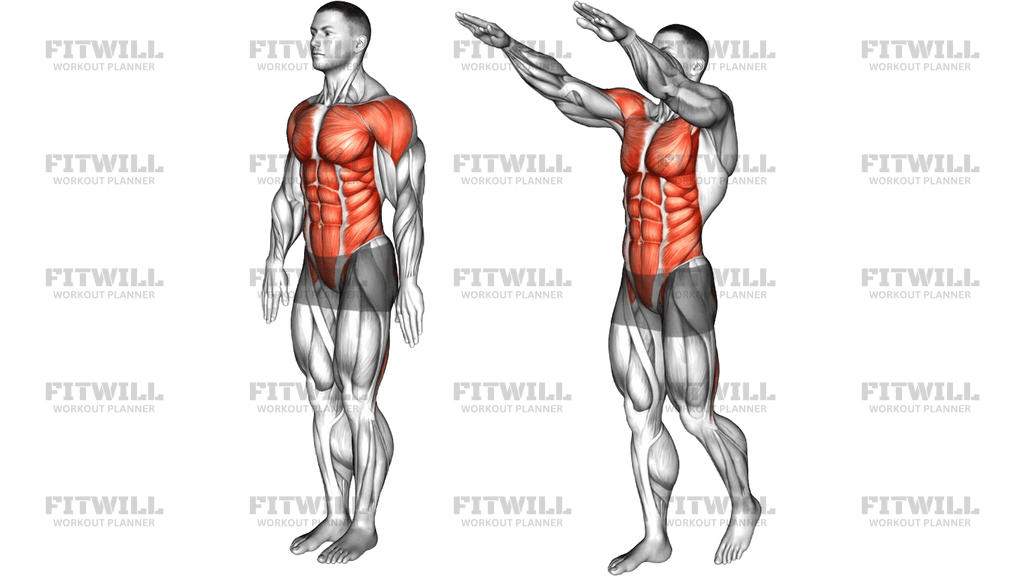
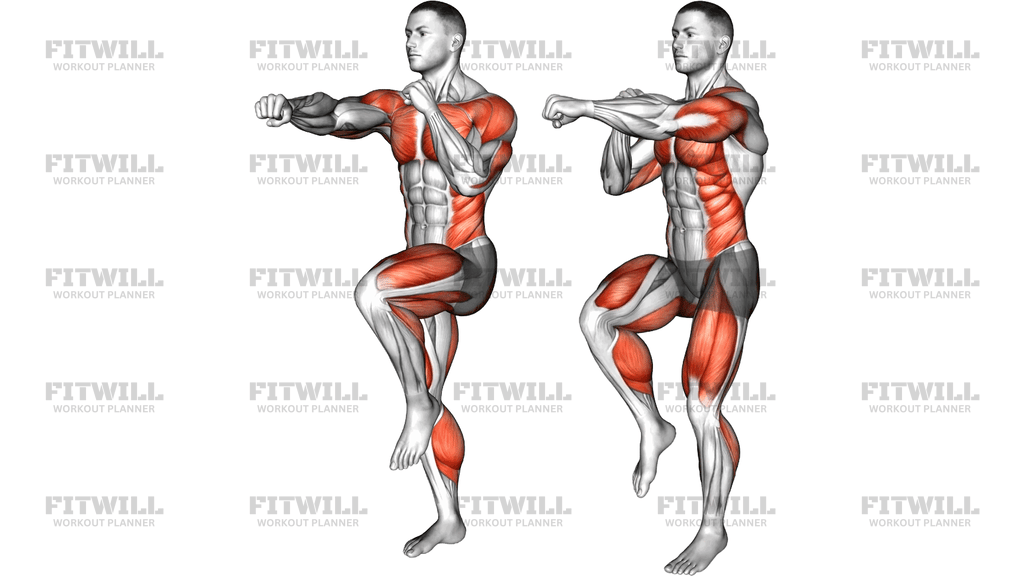
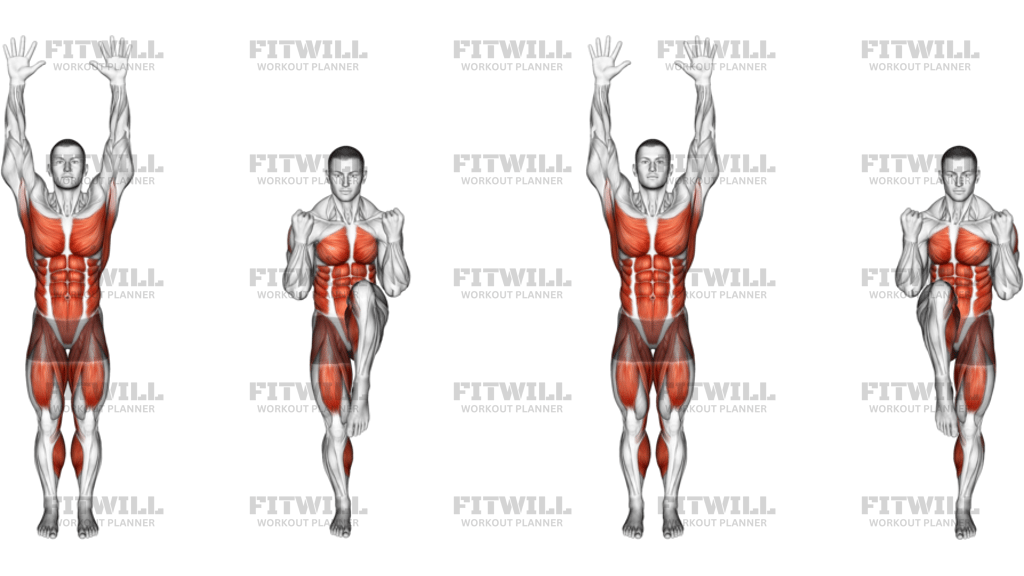
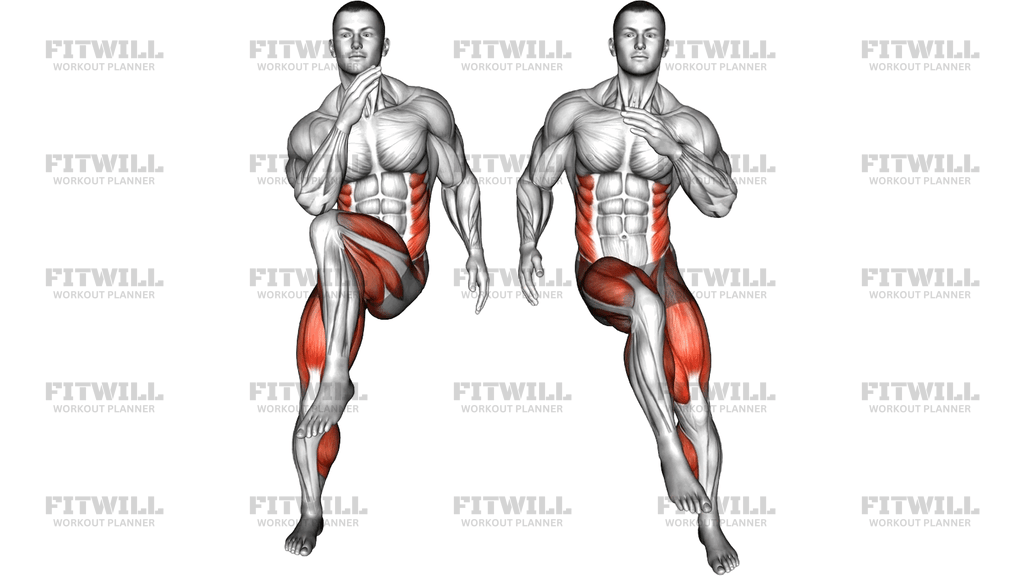
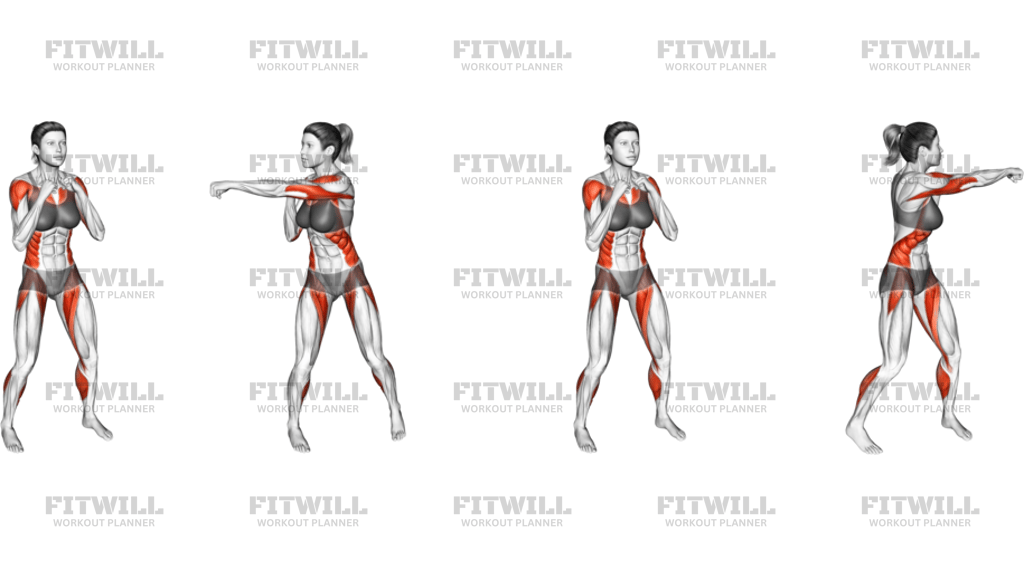
Swim Leg Circle is a body-weight standing mobility and balance drill where one leg traces a controlled circular path while the torso stays tall and the supporting foot stays planted. In the image, the arms are held out to the sides to create balance and the working leg moves through a smooth arc instead of a quick kick. The goal is not height or speed; it is a clean hip-driven circle that keeps the pelvis level and the trunk quiet.
This movement trains hip control, lateral stability, and coordinated trunk bracing. The standing leg and foot have to stabilize the body while the moving leg challenges the hip flexors, glute medius, adductors, and deep core muscles that keep the pelvis from tipping or twisting. That makes the drill useful for warm-ups, pre-run prep, swimming dryland work, rehab-style coordination, and any session where you want better single-leg control before harder lower-body work.
Set up in a tall stance with the supporting knee softly unlocked, ribs stacked over the pelvis, and the arms out for counterbalance if needed. Keep the working leg long enough to draw a clear arc, but do not swing it from the lower back or let the torso chase the leg. A smaller circle with a steady base is better than a larger circle that shifts the hip. If balance is limited, use a wall or rail with the fingertips so the movement stays deliberate.
Sweep the free leg forward, out to the side, and around under control, then return it to the start without dropping the opposite hip. Breathe smoothly and let the exhale match the effort of lifting and circling the leg. Reps should look almost identical from the first to the last. If the standing knee collapses inward, the pelvis rotates, or the lower back takes over, shorten the circle and slow the tempo before adding more range.
Use Swim Leg Circle when you want a light but focused drill that improves body awareness rather than brute-force strength. It pairs well with hip mobility work, glute activation, and dynamic warm-ups. The safest version is the one that keeps the standing foot rooted, the pelvis square, and the leg path smooth. If you feel pinching in the front of the hip or strain in the back, reduce the circle and reset the posture before continuing.
[ Workout Log & Planner ]
Put your next workout in Fitwill
Keep your plan and training log ready when you are.


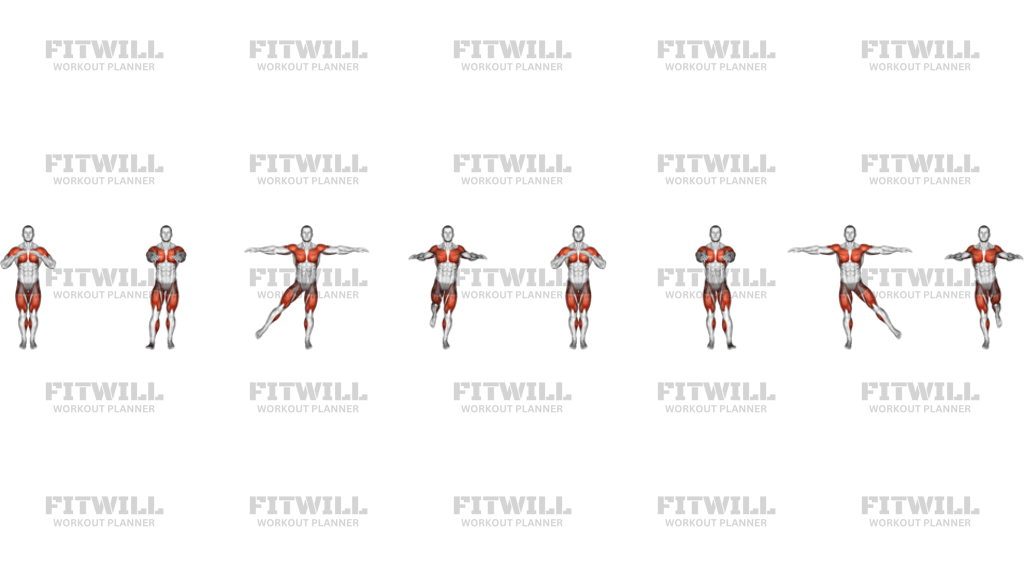
Instructions
- Stand tall in open space with your arms out to the sides for balance and your weight on one supporting foot.
- Keep the standing knee softly bent and stack your ribs over your pelvis before you start the circle.
- Lift the free leg just off the floor and keep it long enough to trace a smooth arc from the hip.
- Sweep the leg forward, out to the side, and around under control without leaning your torso.
- Keep the circle small enough that the standing foot stays rooted and the pelvis stays level.
- Bring the leg back to the start position under control before beginning the next rep.
- Repeat for the planned reps, then switch sides or reverse direction if your program calls for it.
- Breathe out as the leg moves through the circle and inhale as you return to center.
Tips & Tricks
- Start with ankle-high circles; bigger is not better if the pelvis starts moving.
- Press evenly through the big toe, little toe, and heel of the standing foot to keep balance.
- If you wobble, touch a wall or rail with two fingers instead of making the circle larger.
- The circle should come from the hip joint, not from a kick or twist through the low back.
- Keep the moving leg long, but do not force extra turnout if it makes the pelvis rotate.
- Match both directions so one side does not become sloppy or rushed.
- Slow down the return phase; control matters more than the outward sweep.
- Stop the set if you feel pinching in the front of the hip or if your torso starts swaying.
Frequently Asked Questions
What does Swim Leg Circle work?
It mainly challenges the hip stabilizers, glutes, adductors, hip flexors, and core muscles that keep the pelvis from shifting.
Is this a strength exercise or a mobility drill?
It is mostly a mobility and control drill, with enough single-leg tension to train stability.
Do I need to keep my leg straight?
Keep it long with only a soft knee; bending it usually shrinks the circle and reduces the hip challenge.
Can I hold onto something for balance?
Yes, a wall, rack, or rail is fine if it helps you keep the circle smooth and the pelvis level.
How big should the leg circle be?
Use the smallest circle that lets you stay upright, keep the standing foot grounded, and avoid hip twisting.
Should my torso move with the leg?
No, the trunk should stay quiet while the hip moves the leg through the arc.
Is this good before running or swimming?
Yes, it works well as a warm-up for hip coordination, balance, and control.
What should I do if I feel it in my lower back?
Reduce the range, slow the motion down, and keep your ribs stacked over your pelvis before continuing.