Medicine Ball Rear Lunge
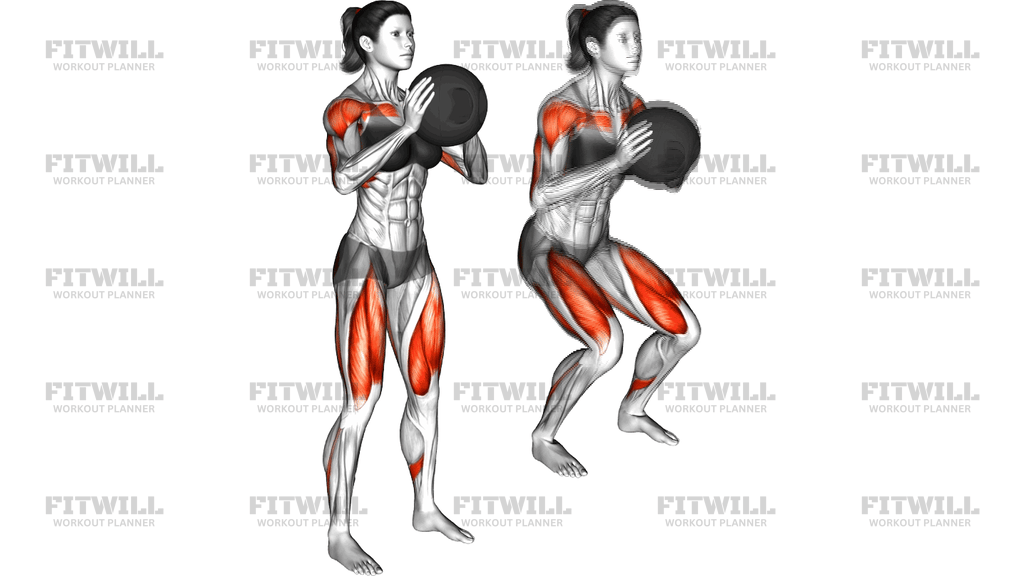
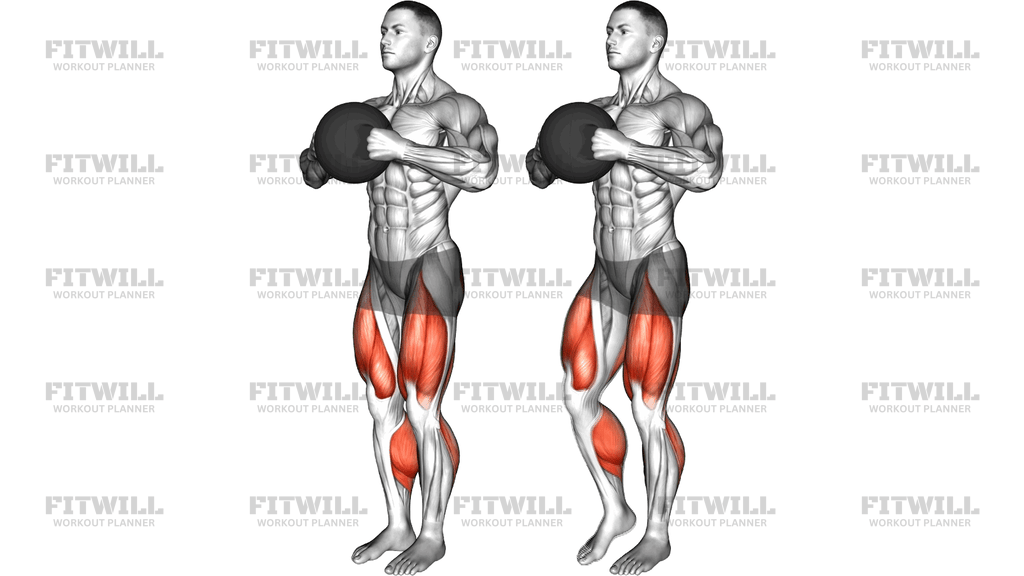
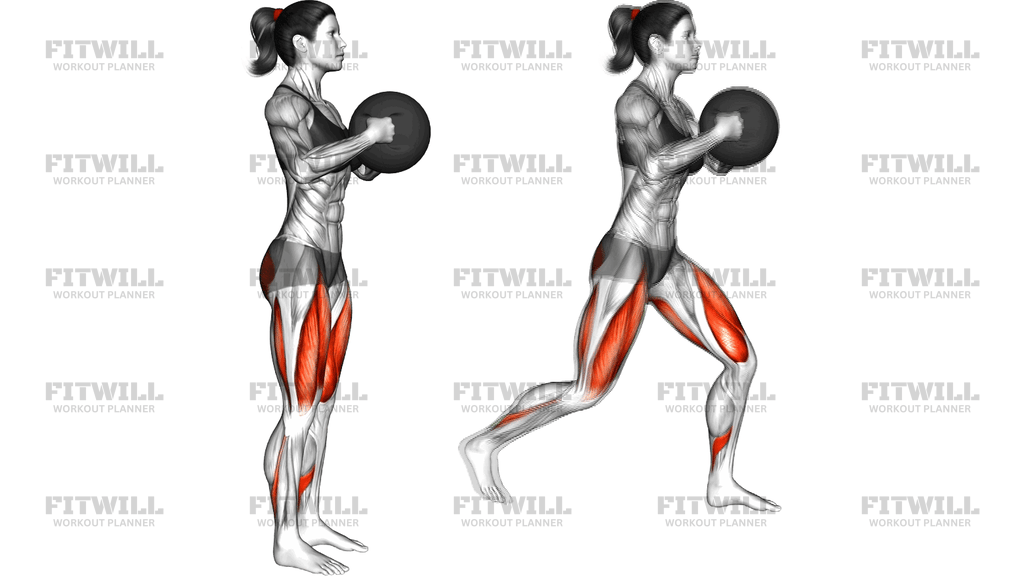
The Medicine Ball Rear Lunge is a reverse lunge performed while holding a medicine ball at chest height. Instead of stepping forward, you step one foot backward and lower your back knee toward the floor, then drive through the front heel to return to standing. Holding the ball close to your chest shifts your center of gravity slightly forward, which keeps your torso upright and forces your core to work to keep you balanced through every rep.
This movement is useful for almost anyone, from beginners learning lunge mechanics to experienced lifters who want a lower-impact way to load their legs. Because the rear lunge places less shear stress on the front knee than a forward lunge, it is often the friendlier option for people who feel twinges when stepping forward. It also makes a good conditioning tool: with a lighter ball and steady rhythm, you can turn it into a continuous leg and core drill.
The main work comes from the quadriceps of the front leg, with strong contributions from the glutes and hamstrings as you lower and push back up. The rear leg's glute and hip flexors assist with the step-back and the return, while your calves and ankle stabilizers handle balance. Holding the ball at the chest means your abs, especially the deep core, brace continuously to stop your torso from collapsing forward or rotating.
Setup matters more than most people expect. Stand tall with feet hip-width apart and the ball held with both hands at chest height, elbows tucked in rather than flared wide. Keep your weight distributed so you can push off through the front foot. If you start each rep from a sloppy, leaning-forward stance, the lunge will inherit that sloppiness and you will lose the upright torso that makes the ball-hold position valuable.
To execute well, step straight back with one leg, land softly on the ball of that foot, and drop your hips until your front thigh is roughly parallel to the floor and your back knee hovers just above the ground. Your front shin should stay close to vertical, and your torso should stay tall with the ball pressed lightly against your chest. Push through the front heel to stand and bring your feet back together, then alternate legs or complete all reps on one side before switching.
Common uses include warm-up circuits, home workouts where a medicine ball is the main piece of equipment, and finisher sets after heavier lower-body lifting. Practical safety points: keep the working knee tracking over the middle of the foot, never let it cave inward, and stop short of a depth where your torso rounds or your balance breaks down. A ball that is too heavy is the most common setup mistake; choose one you can hold at chest height for a full set without your shoulders creeping up toward your ears.
[ Workout Log & Planner ]
Put your next workout in Fitwill
Keep your plan and training log ready when you are.


Instructions
- Stand upright with your feet hip-width apart and hold a medicine ball with both hands at chest height, elbows tucked close to your sides.
- Draw your shoulder blades down and back so your chest stays open, and set your gaze on a point at eye level to keep your neck neutral.
- Brace your core as if preparing for a light push, and take a balanced breath before stepping.
- Step one foot straight back, landing on the ball of that foot with your heel lifted, while keeping most of your weight over the front leg.
- Lower your hips straight down until your front thigh is about parallel to the floor and your back knee is just above the ground, keeping the ball pressed to your chest.
- Check that your front shin stays near vertical and your knee tracks over the middle of your foot, not inward.
- Drive through the front heel and mid-foot to push back up, pulling your rear leg forward until your feet are together again.
- Exhale as you rise out of the lunge, and inhale as you step back into the next rep.
- Repeat on the same leg for the planned reps, or alternate legs each rep, resetting your stance and brace between reps.
- When finished, set the ball down with a slight bend in your hips and knees rather than rounding over it with straight legs.
Tips & Tricks
- If your front knee shoots past your toes, your step-back is too short; lengthen the stride so your shin can stay closer to vertical.
- A heavy ball usually shows up as a rounded upper back and elbows drifting wide. Drop to a lighter ball and re-tuck your elbows before adding load again.
- Slamming the back knee into the floor is a common fault; control the descent for a beat at the bottom instead of dropping through the rep.
- Keep the ball against your sternum, not floating out in front of you, or the lever arm lengthens and your lower back starts doing the bracing.
- If you wobble side to side, narrow your focus to one fixed point and slow the step-back; balance usually improves before strength does.
- Press the floor away evenly through the whole front foot, not just the toes, to keep the glutes involved in the drive back up.
- Your rear foot should stay on the ball of the foot with the heel up the entire set; letting the heel drop flattens the lunge and reduces range.
- Alternate legs rep for rep if you are training balance and coordination, or work one side fully before switching if you are chasing strength on a weaker leg.
- If the front knee tracks inward, consciously spread the floor with your front foot as you lower; this lights up the outer hip and cleans up the path.
Frequently Asked Questions
Which muscles does the Medicine Ball Rear Lunge work the most?
The quadriceps of the front leg do the primary work, with the glutes and hamstrings heavily involved in lowering and driving back up. Holding the ball at chest height also keeps your core engaged for the whole set.
Is the Medicine Ball Rear Lunge better than a forward lunge for beginners?
For many beginners it is easier to control, because stepping backward is gentler on the front knee and the ball gives a clear anchor point for an upright torso. Start with a light ball and shallow depth, then progress as your balance improves.
How heavy should the medicine ball be for this exercise?
Pick a weight you can hold at your chest for an entire set without your upper back rounding or your shoulders shrugging. For most people that is somewhere between 4 and 8 kg; form should decide the load, not the other way around.
Should I hold the medicine ball at my chest or extend it in front of me?
Holding it at the chest, as in this exercise, keeps the emphasis on the legs and challenges your core to resist forward collapse. Extending the ball forward is a different variation that increases the core demand but changes the balance point.
Why does my back knee hurt when doing the Medicine Ball Rear Lunge?
The rear knee rests on the ball of the foot with the heel lifted, so discomfort there usually comes from dropping the knee too hard or from a stride that is too long. Control the descent and let the knee stop just above the floor rather than hitting it.
Can I do the Medicine Ball Rear Lunge without any equipment?
Yes, the plain bodyweight rear lunge uses the same movement pattern and is a solid substitute if no ball is available. You can hold a dumbbell, a water jug, or simply clasp your hands in front of your chest.
How deep should I go on each rep?
Lower until your front thigh is roughly parallel to the floor and your back knee hovers just above the ground. Going deeper is fine only if your torso stays tall and your front knee keeps tracking over the middle of your foot.
Should I alternate legs or complete all reps on one side?
Alternating legs each rep is convenient for conditioning and balance, while completing all reps on one side before switching makes it easier to compare left and right strength. Either approach works; pick one based on your goal.
Is the Medicine Ball Rear Lunge safe if I have knee issues?
The rear lunge is generally easier on the front knee than a forward lunge because the shin stays more vertical, but individual situations vary. Reduce depth, use a lighter ball, and check with a qualified professional if you have a known knee condition.
How can I make the Medicine Ball Rear Lunge harder without adding weight?
Slow the lowering phase to a three-count, add a brief pause at the bottom, or perform the lunge from a small deficit so the range increases. These changes raise the demand without needing a heavier ball.